

The challenge of buying 20 of the same plate in Vietnam

I went to the market to buy plates to use at my husband's company. The staff has grown, and there are now more occasions when everyone eats lunch together. It seems wasteful to throw away paper plates every single time. So I decided to look for cheap plastic plates that can be washed and reused many times. One day, I found some plastic plates at the market whose colors I loved. Lotus blue and mango yellow.
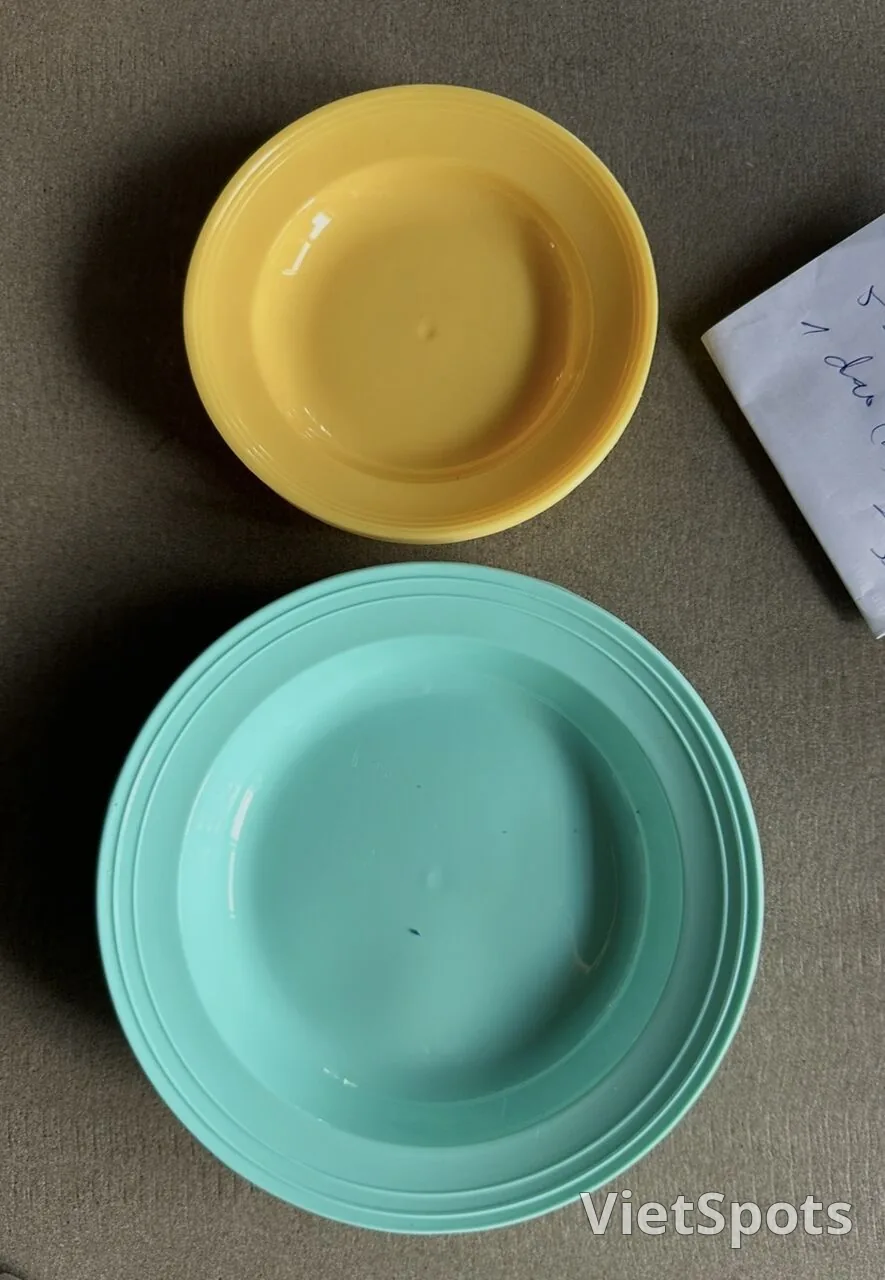
This color is really nice, isn't it~" If so, then let's get a matching set — that was the request from my husband. "Twenty of the larger plates, in lotus blue." "Twenty of the smaller plates, in mango yellow." That was all there was to it. In Japan, this would be a five-minute errand at the home center. But this being Vietnam, it didn't go so smoothly. I went to the same place I'd bought from last time — the kitchenware section of the market — and, "I'd like twenty each of this one and this one." I brought samples along, and as I showed them and said this, "OK! Got it, I'll go get them!" said the shopkeeper, an older gentleman. Just when I thought that was the end of it, what came next dragged on and on. The man tilted his head. It seemed he was short on stock. He searched the back of the shelves. He opened boxes. He brought over another bundle. Then he called out to the shop next door. Before I knew it, the man had become even more serious about it than I was. "Hold on a moment." As he said that, plates kept coming out one after another. To the point that even mouse droppings got unearthed along with them...
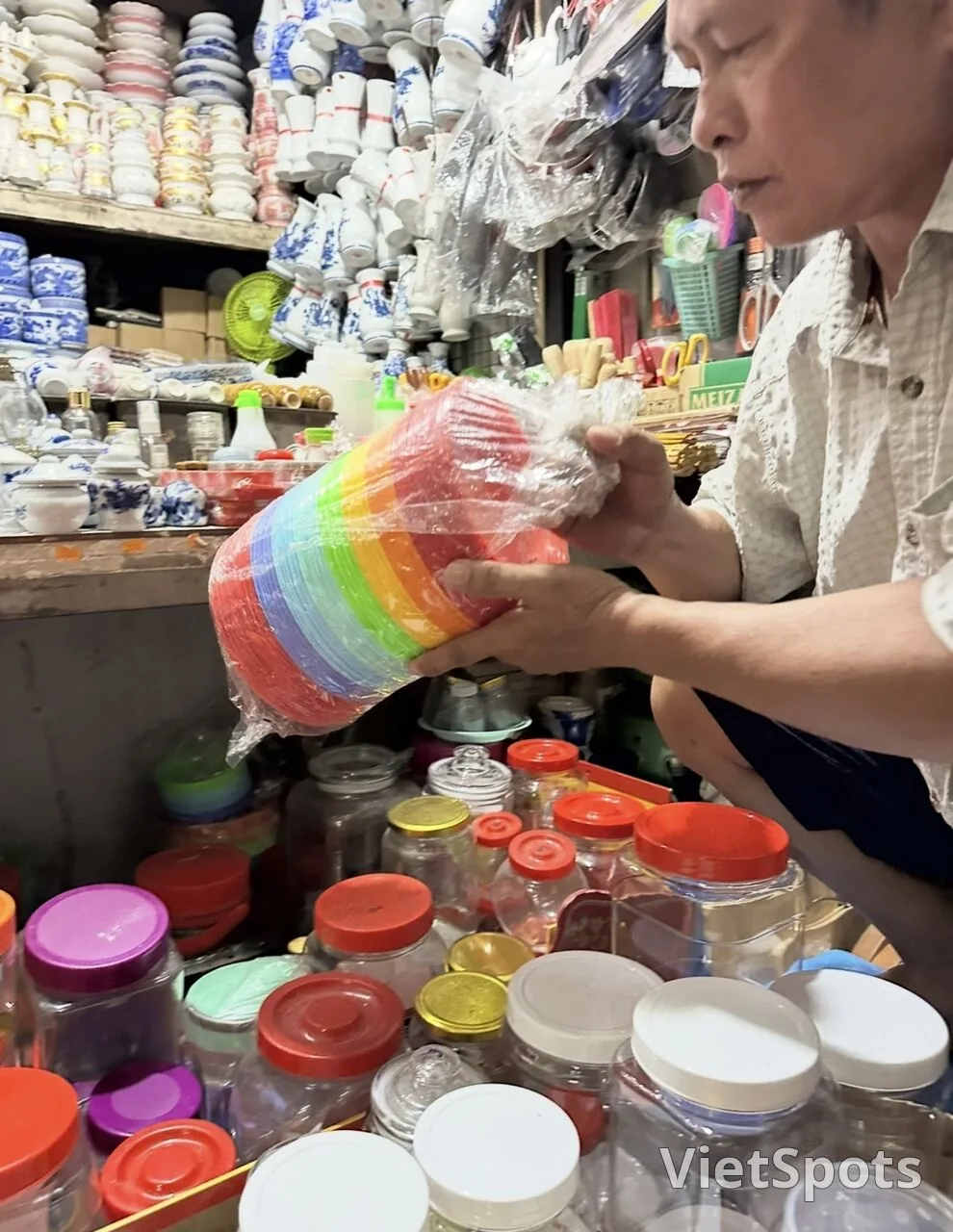
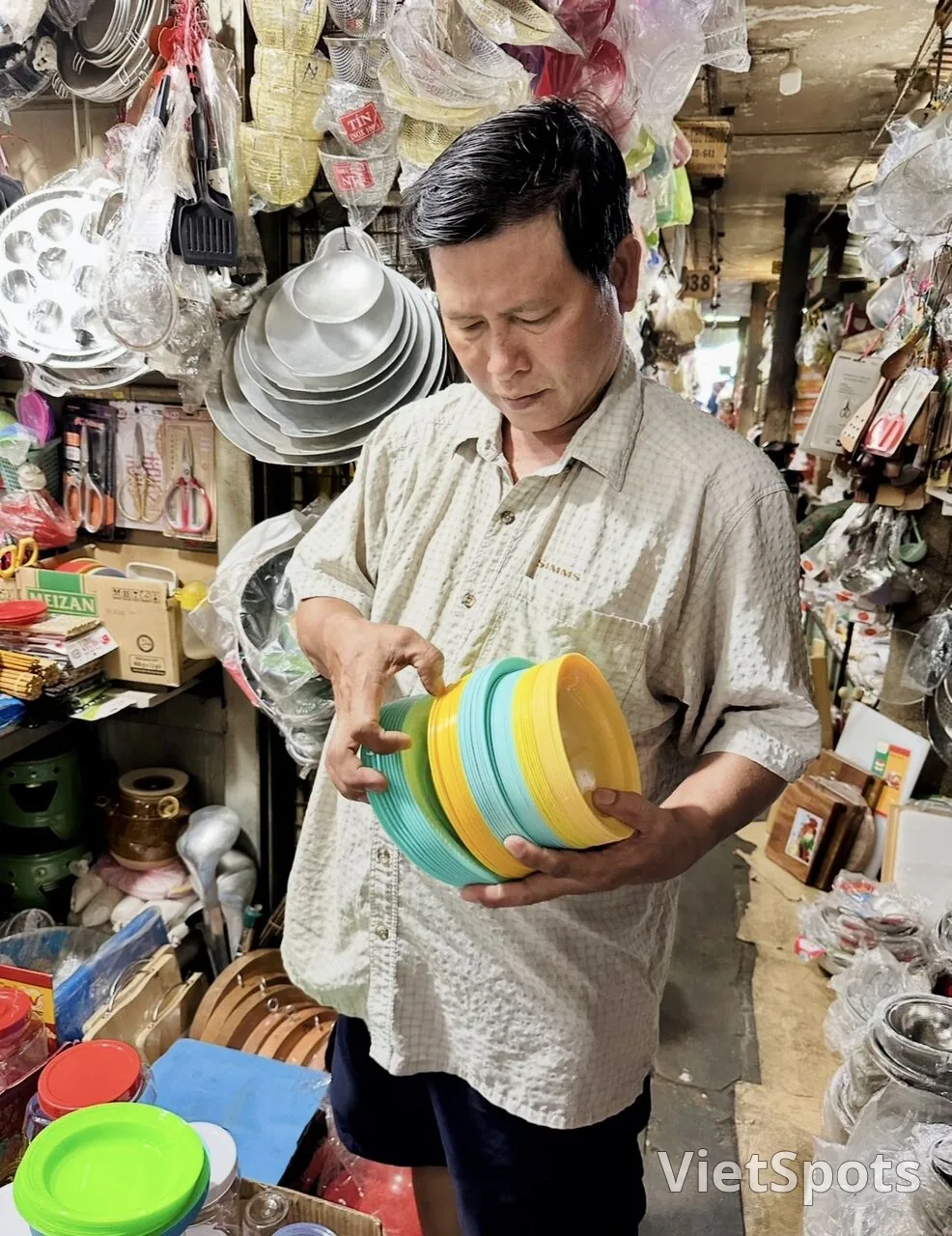
But what was interesting was that even though they were supposed to be the same color, they were subtly different. What I thought was lotus blue turned out to have a bit more green, or more blue. What I thought was mango yellow turned out to be lemon-colored, or sunflower-colored. The patterns were different too. The shapes were a little different too. When stacked, even the heights were different. It made me doubt whether they were really from the same series. Even so, the old man lined them up with a proud face, saying, "See, they're the same, right?" As I kept watching, my own sense of things started to go a little strange. Seen from far away, they looked the same. But looking at them up close, they really were different. We repeated exchanges like that. I'd heard it before—that matching colors is difficult in Vietnam. I'd been half in doubt, but on this day I understood it well. It was true. When you find something you like, buy it on the spot. The reason my senior friends living in Vietnam all say this in unison—I understood it well on this day. The same item often won't be there anymore the next time you come. In the end, I went around many shops in the market, and the plates I gathered came to 58. I could no longer figure out the combinations, so I bought together the ones that were close in shape and color. The price was 165,000 dong. In Japanese yen, that's about 1,000 yen. Around 17 yen per plate. Market prices that don't rip you off are a blessing.
I brought them home, washed them, and lined them up. Looking closely, the colors are subtly different. There are about three shapes, each subtly different.
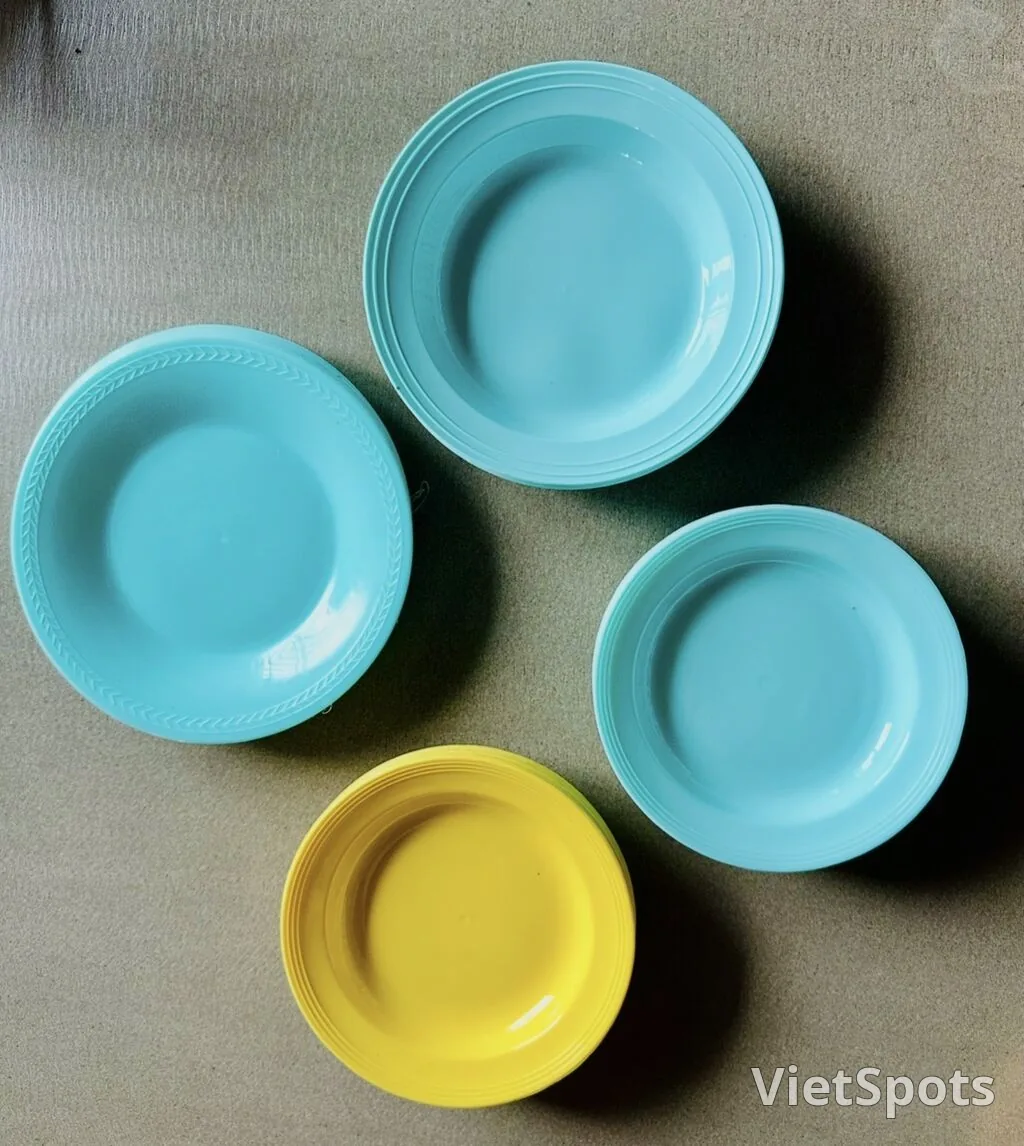
Some have patterned rims and some don't; some are taller than others. And yet, somehow, on the whole it's not bad at all. You get a little sense of freedom from it. In the sight of plates that each differ ever so slightly lined up in a row, the air of the marketplace still lingers. "I'll take 20 of the same ones, please." Even though the shopping began from such a simple order, they never came out perfectly matched. Just a little bit mismatched.
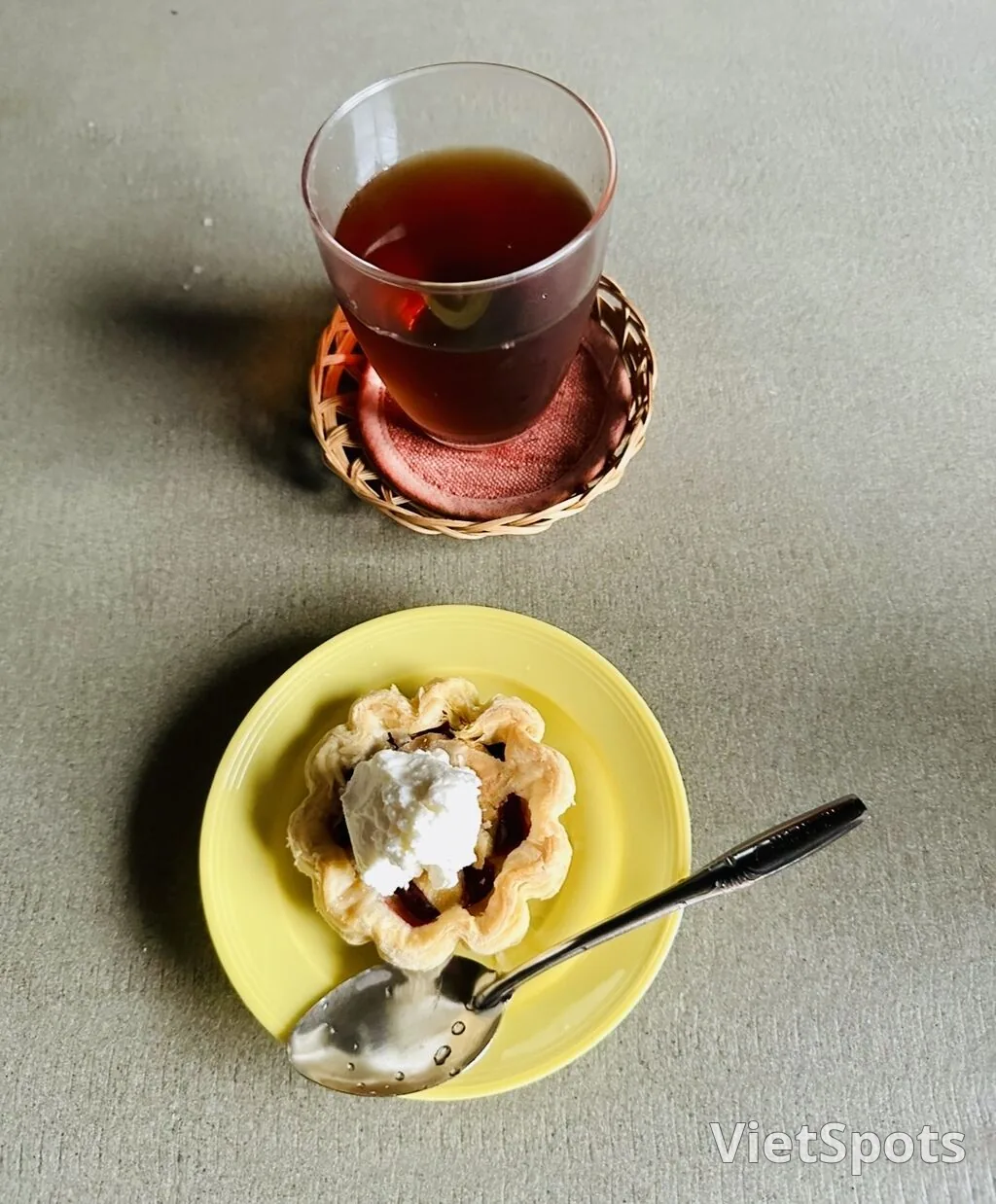
But it feels oddly Vietnamese and I like it. Relocation Life Ranking
Order Shopping in Ho Chi Minh City — in English on vietSpots
- 🎁 Sign up and get 14 Welcome Pack coupons — e.g. Motorbike Rental 45%
- 👑 Member tier discount up to 15% on site (Silver 5% · Gold 15%)
- 🛂 Auto-fill arrival card📶 Compare lowest eSIM prices🚻 Find toilets
Comments