

When I made karaage (fried chicken) for the Vietnamese staff, 3 kilograms disappeared!

The chicken that had been sitting in the fridge since the night before had an almost eerie presence. Three kilos. As a number, that's all it is, but once you set it down on the kitchen cutting board, it really has quite an impact. It turned out I'd be having lunch with my husband's coworkers, and the menu was decided: karaage and rice balls, a perfectly ordinary combination in Japan. Living abroad, you can find karaage and rice balls too, but they're just not the same as the ones you grew up with, so this is exactly the kind of menu that makes you want to make it yourself after all. As I was cutting with the knife, it suddenly reminded me — this is the same smell as sports day back when I was a kid. Even though it was still early in the morning, Mom would already be standing in the kitchen, shaping rice balls and frying karaage. There were rolled omelets and little sausages in there too, weren't there. It's the kind of lunchbox any family might have, and yet somehow, only on sports day, it felt special. The rice balls we ate on the school grounds, the fried chicken that was already cold but still packed with flavor — why did they taste so incredibly good? Back then all I did was eat it, but now, standing here in front of all this chicken, I feel like I understand my mother's feelings a little now. The desire to make something delicious! Our family has always loved making things by hand, so the sight of my mother standing in the kitchen was a familiar one, and it always gave me a sense of comfort. I wonder what she's making right now? And so, I too found myself moving a kitchen knife. I just kept cutting the chicken into bite-sized pieces. One, two, three. At some point I stopped counting, but I think it probably came to close to two hundred pieces. By the time I finished, the knife was slick with oil and had lost its sharpness. Wobbling my shoulders and arms back and forth, I somehow managed to cut it. Even so, preparing food for someone else to eat isn't something I strangely dislike. That's because the purpose this time is to have the staff taste Japanese home cooking, so my strong ally today is Nisshin Seifun Welna's karaage flour.
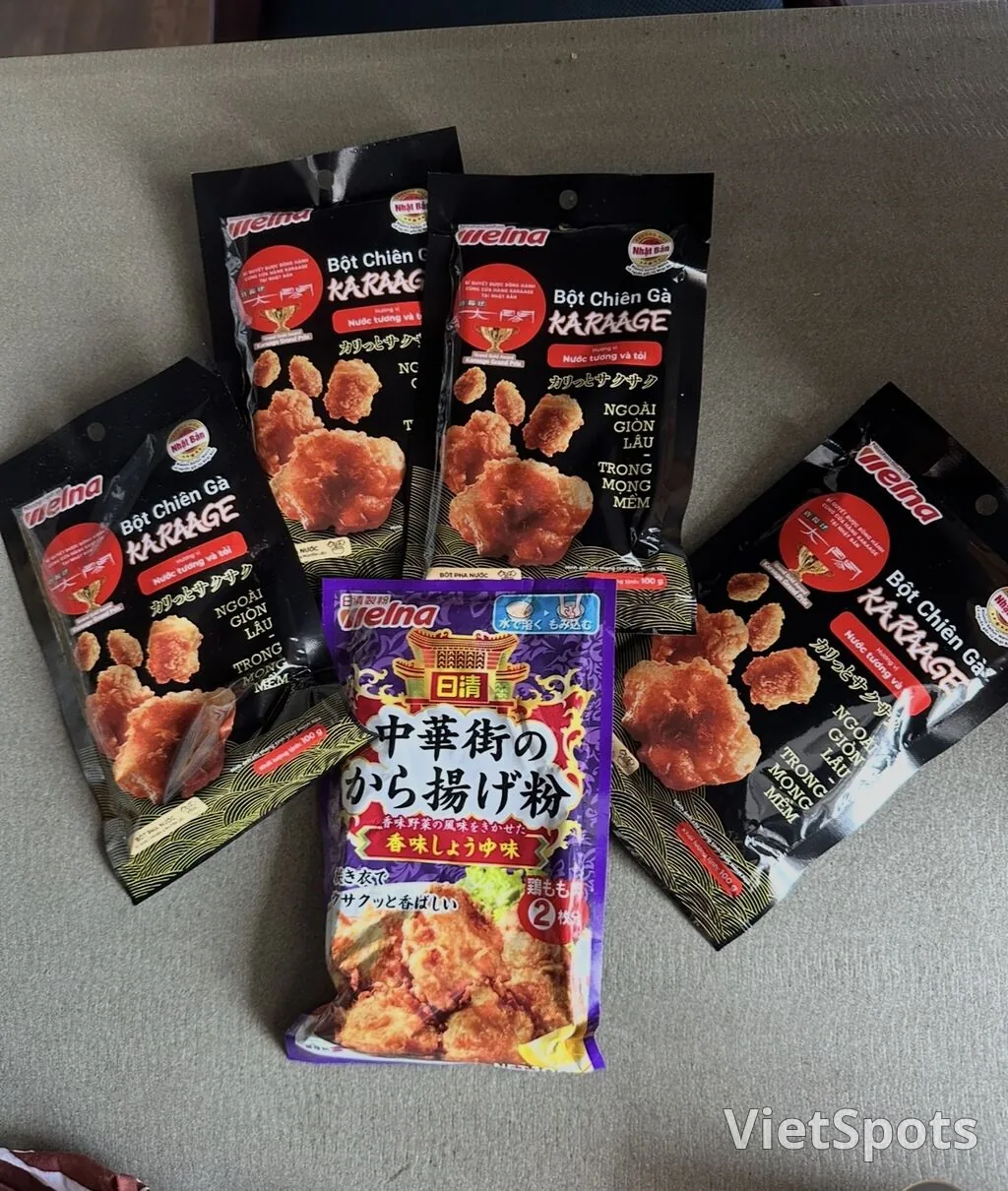
The longer I live abroad, the more grateful I become for products like this. Maybe it's just my age, but I've stopped insisting on making everything from scratch.
There are things to work hard at, and things to rely on others for. I'm gradually starting to understand that balance.
The next morning began with cooking rice. One was plain white rice. The other was seasoned rice cooked with other ingredients.
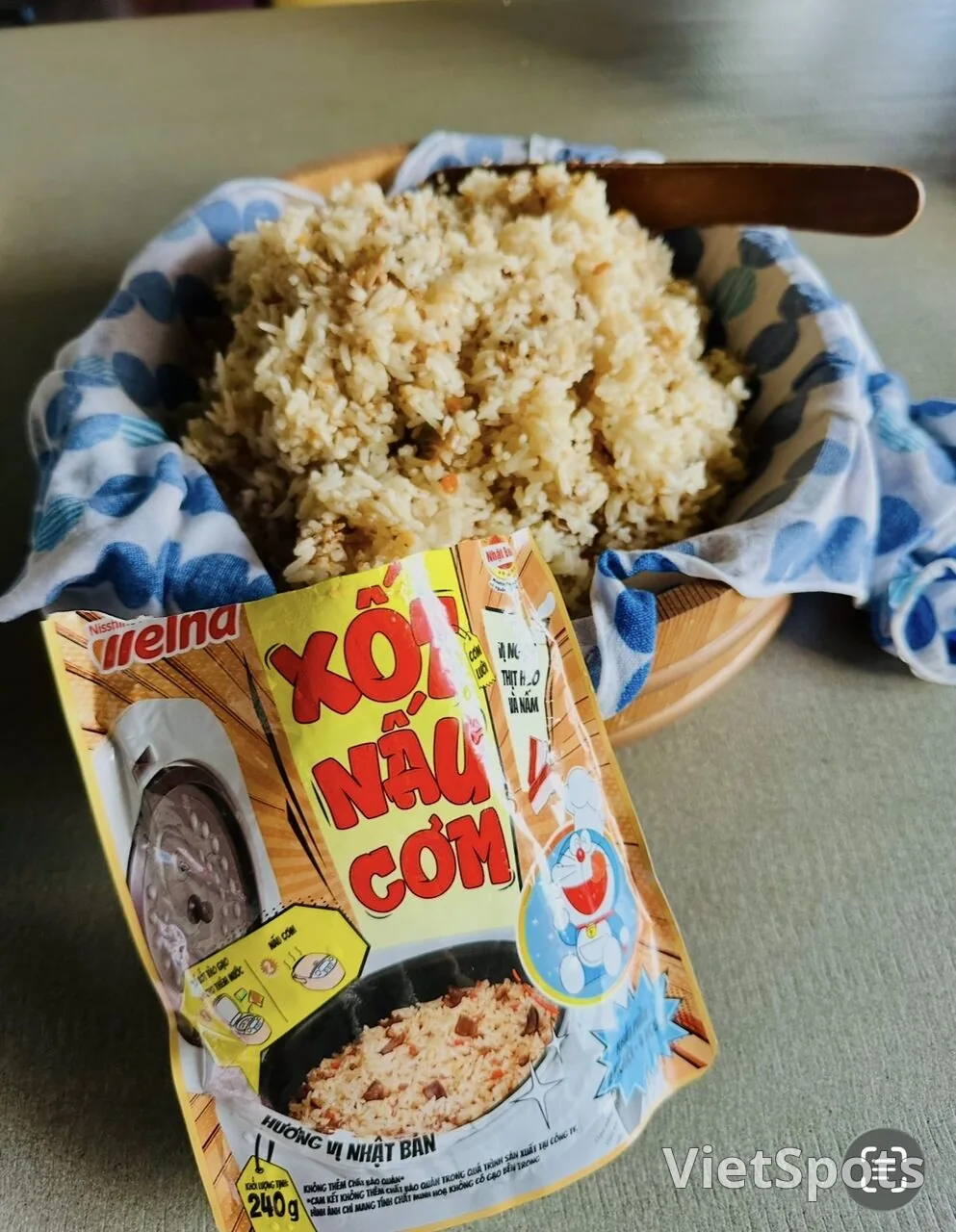
The Doraemon package is also popular in Vietnam. This one is also from Nisshin Seifun Welna, and it uses a takikomi gohan (mixed rice) mix. The aroma of soy sauce and dashi broth wafts up gently... mmm, I just want to dig into it with a rice bowl!
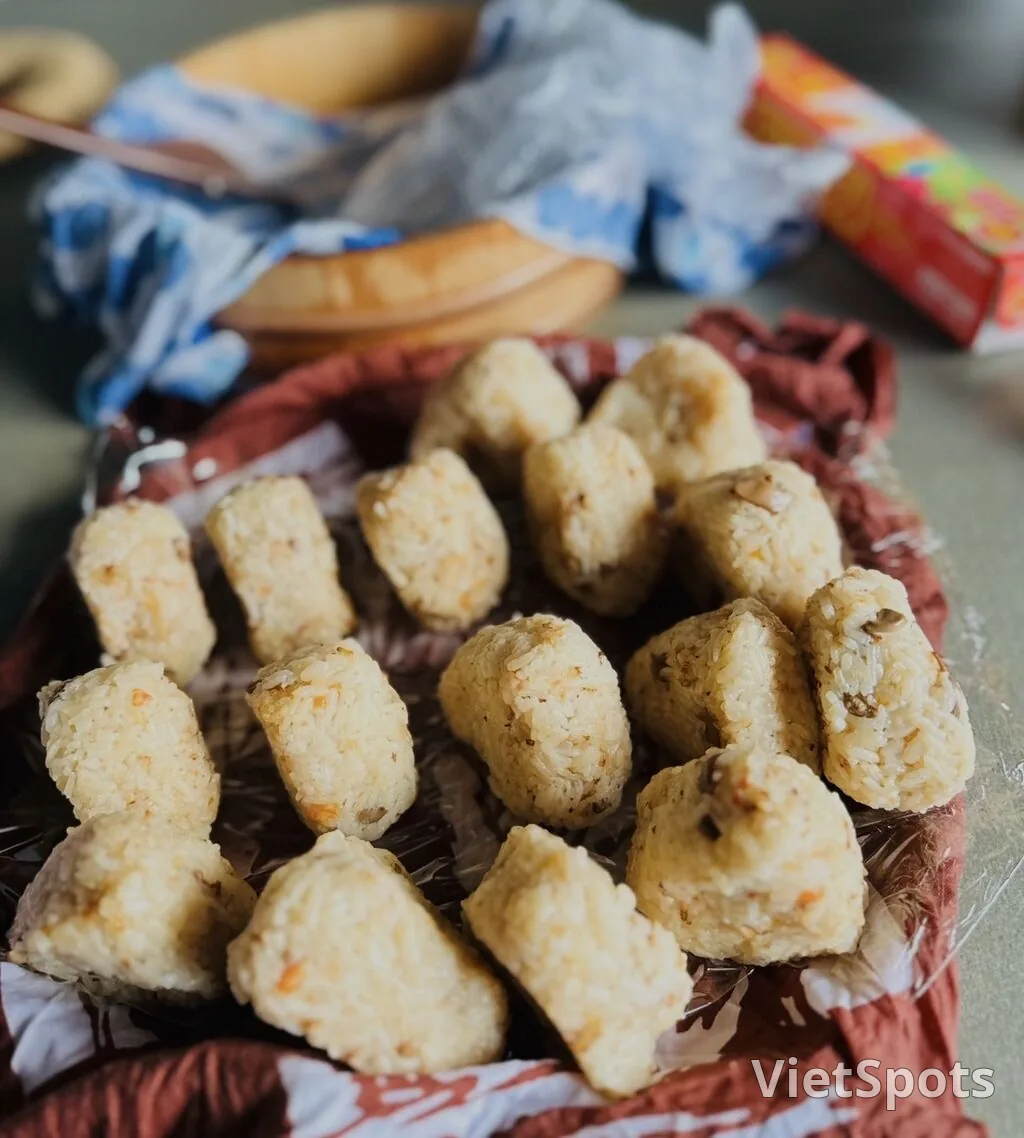
I gave in and made rice balls instead. It would have been cool to have a proper rice tub, but this is Vietnam after all. So instead, I used a styrofoam box, the kind you often see at the market. I dampened a Japanese tenugui cloth, laid it inside, and transferred the rice onto it.
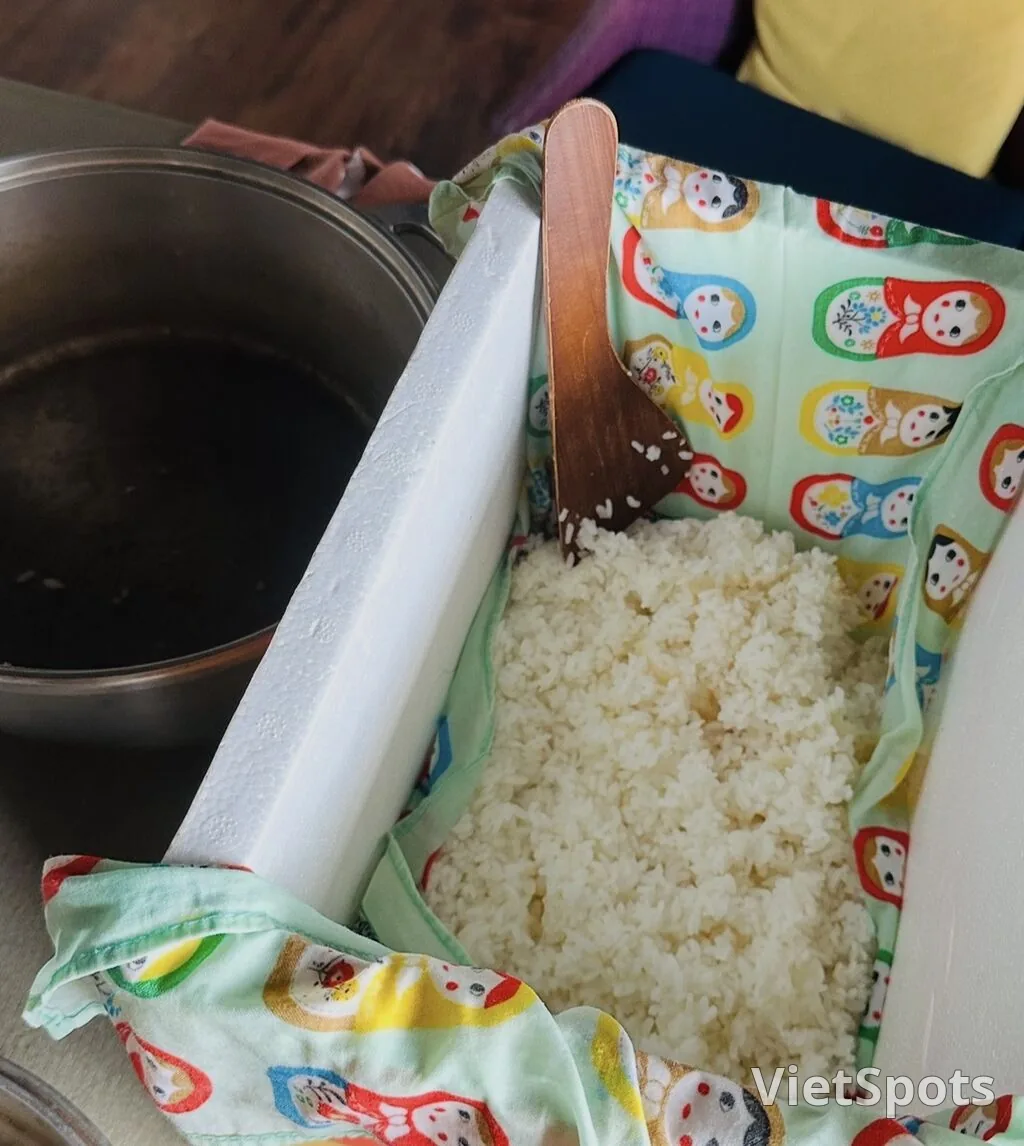
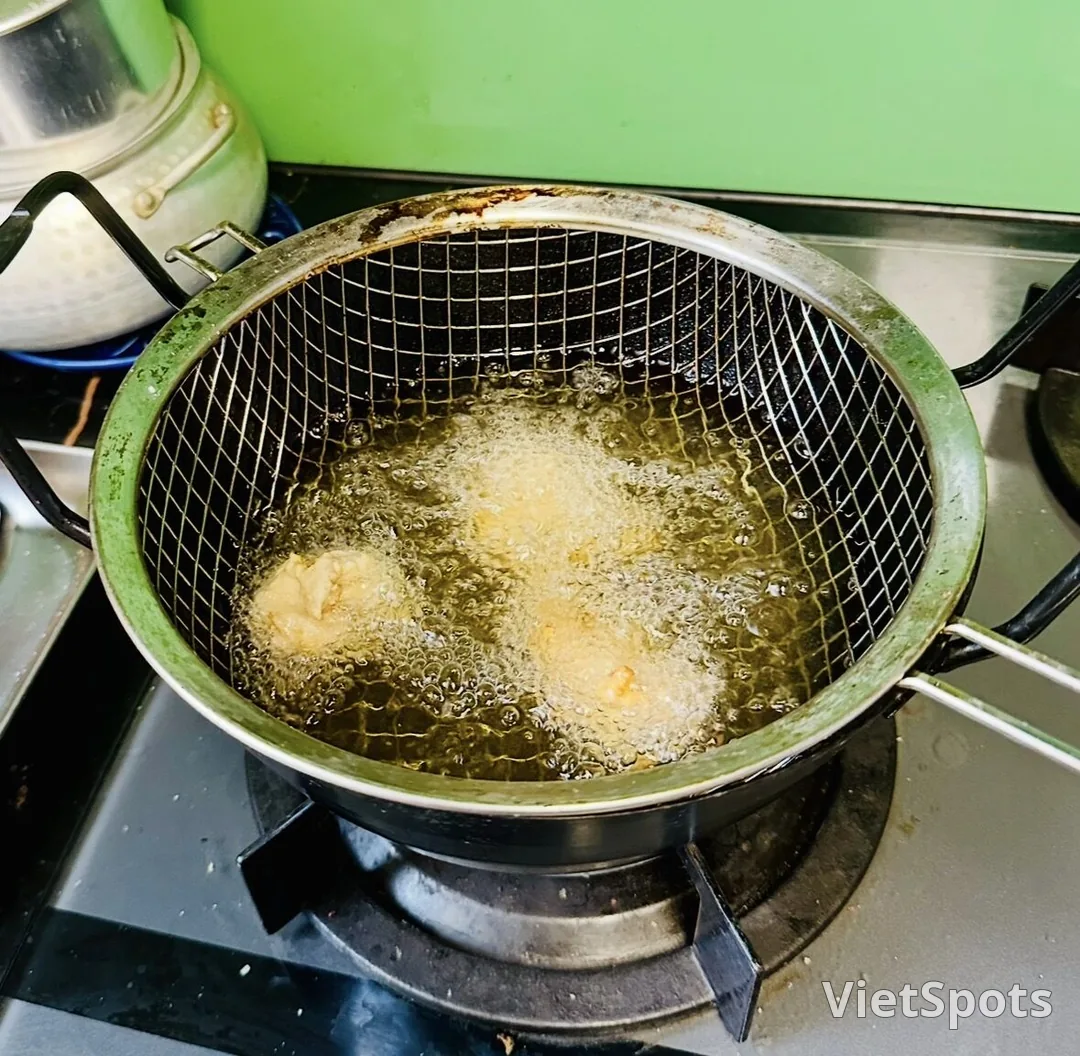
This turned out surprisingly excellent. It holds just the right amount of steam, keeping the rice moist and settled. On top of that, I gently drape a Japanese hand towel over it. Styrofoam and a hand towel. It's a strange combination indeed, but this is more than enough. Life abroad is built up from little bits of ingenuity like this. Relying only on things from Japan makes life feel stifling. But relying only on local things feels a bit lacking too. So I choose whatever's convenient to use, depending on the moment. When noon comes, the staff gather to make onigiri. We put rice on the plastic wrap and squeeze it firmly. It doesn't come out triangular, but round. Then this time it turns square. We all laugh together—that kind of time. And as for me, I just keep frying karaage.
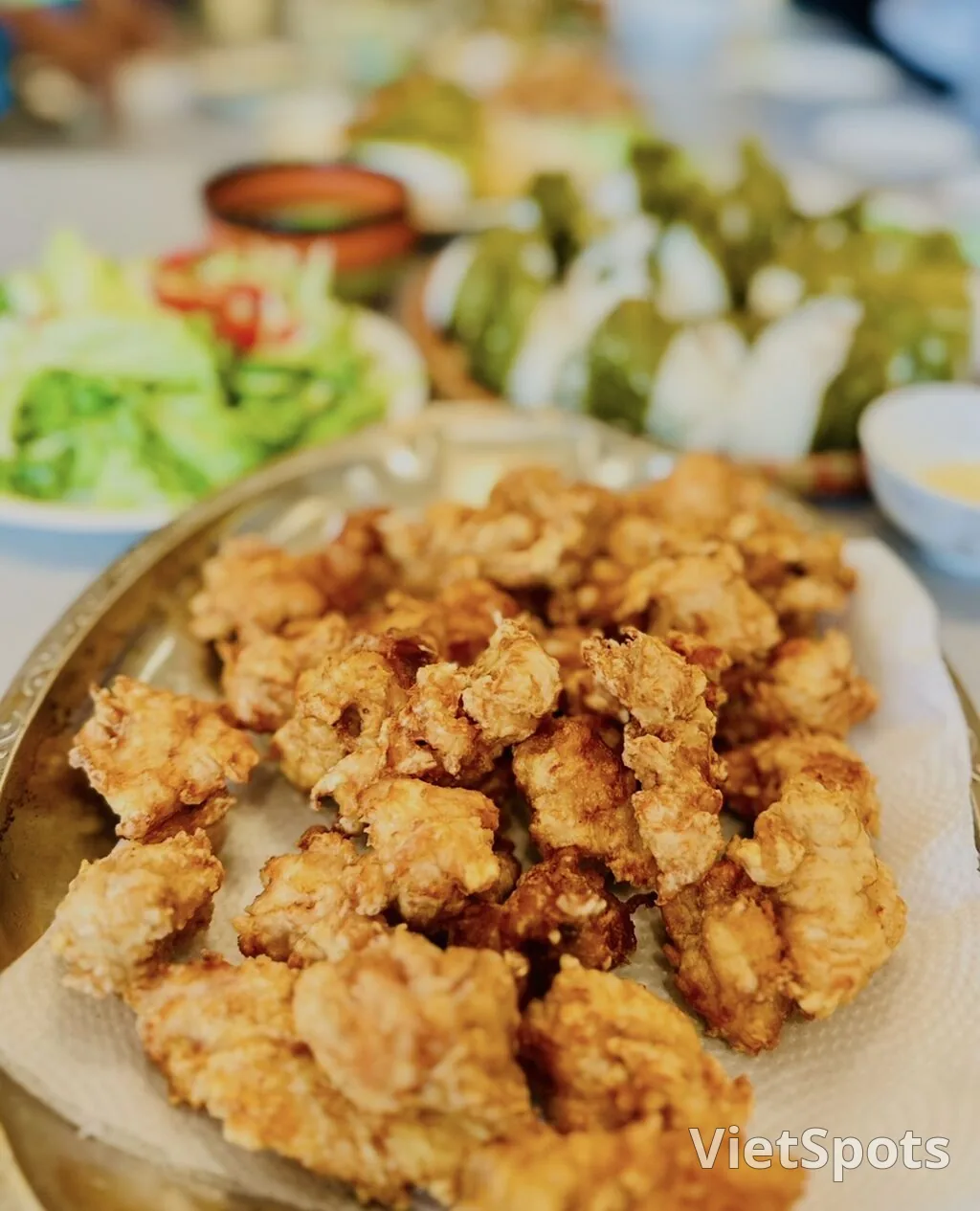
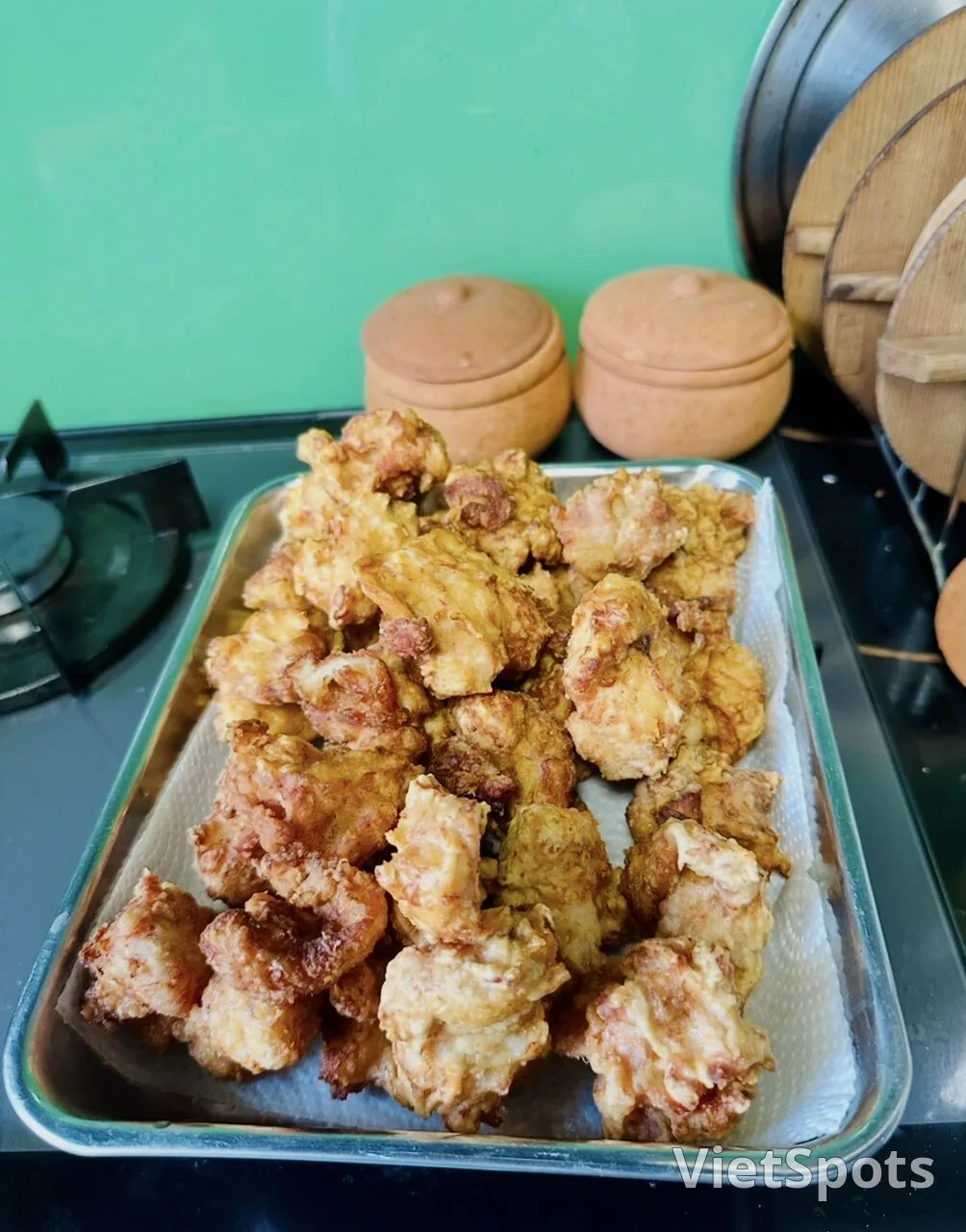
The staff members, who usually eat pho, bun cha, and com tam, are also very curious about Japanese home-style cooking. They bring the freshly fried karaage to their mouths and keep eating it, saying "delicious!" one after another. Although they do dip it in the spicy Vietnamese-style ketchup. Watching that scene, I was reminded of lunch break at a sports day. Even though the countries and languages are different, the sight of people gathering to eat the same food and laugh together doesn't really change all that much. The mountain of karaage that had been piled up dwindled away before our eyes. In no time at all, three kilograms of chicken disappeared into everyone's stomachs. Making Japanese home cooking abroad. It's not really that big a deal. There are reliable Japanese food products, there are convenient local tools, and there's a little bit of ingenuity. You don't have to carry the whole burden yourself. Not pushing yourself too hard, and skillfully using what's available in the place you live — maybe that's the trick to living comfortably abroad. Expat Life Ranking
Travel Vietnam with vietSpots, in English
- 🎁 Sign up and get 14 Welcome Pack coupons — e.g. Motorbike Rental 45%
- 👑 Member tier discount up to 15% on site (Silver 5% · Gold 15%)
- 🛂 Auto-fill arrival card📶 Compare lowest eSIM prices🚻 Find toilets
Comments