

🌉 A 400-year legend hidden in Vietnamese banknotes: Hoi An's Lai Vien Bridge (Japanese Covered Bridge)


Hello 😊
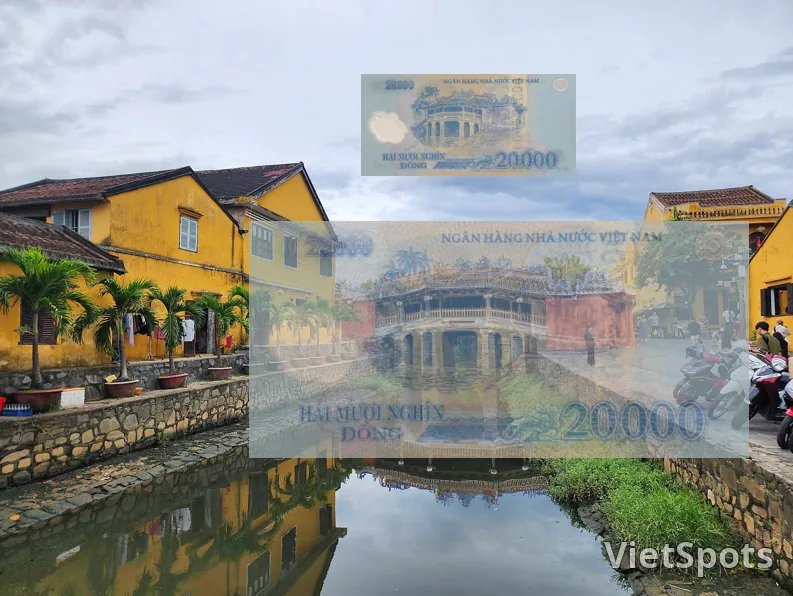
If you flip over a Vietnamese 20,000 dong banknote, you'll see a small covered bridge with a roof drawn on it 💵
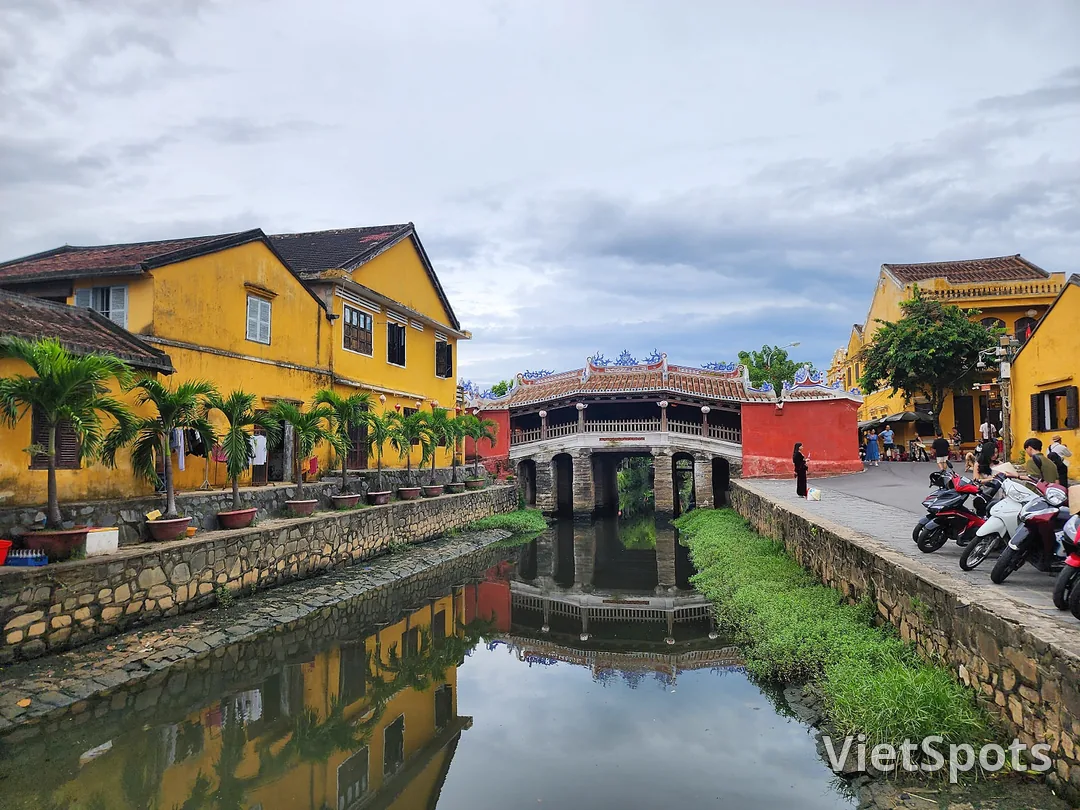
This is the very symbol of Hoi An, the Lai Vien Bridge (來遠橋, Japanese Covered Bridge)!
Today, I'll introduce you to the 400 years of history and legends surrounding this bridge ✨
______________________________________________________________________________________________________________
📍 Where is Naewon Bridge?
✔️ At the western end of Hoi An Old Town, at the far end of Trần Phú Street
✔️ It sits over a small canal that flows into the Thu Bon River
✔️ About 40–50 minutes by car from downtown Da Nang (when traffic is light)
______________________________________________________________________________________________________________
🏗️ Why was it built?
In the 16th century, Hoi An was one of the bustling international trading ports, known as 'Faifo' ⛵
✔️ The Japanese merchant town and the Chinese merchant town sat facing each other across a single waterway, and
✔️It is said that Japanese merchants lived in a town on the east side of the river, while Chinese merchants lived in a town on the west side of the river.
✔️ It is said that the bridge was built in the 1590s to connect the two villages
✔️ That's why it's still known by the nickname 'Japanese Bridge' today
______________________________________________________________________________________________________________
🐉 The Legend Behind the Bridge
🐟 The Giant Catfish Monster 'Namazu
In Japanese legend, the Namazu is a monster that causes earthquakes every time it twists its body.
People believed that its head was in India, its body in Vietnam, and its tail in Japan.
There's a story that Japanese merchants tried to keep this monster pinned down by driving a bridge (Lai Vien Bridge) into this spot, right at the crown of its head, like a sword 🗡️
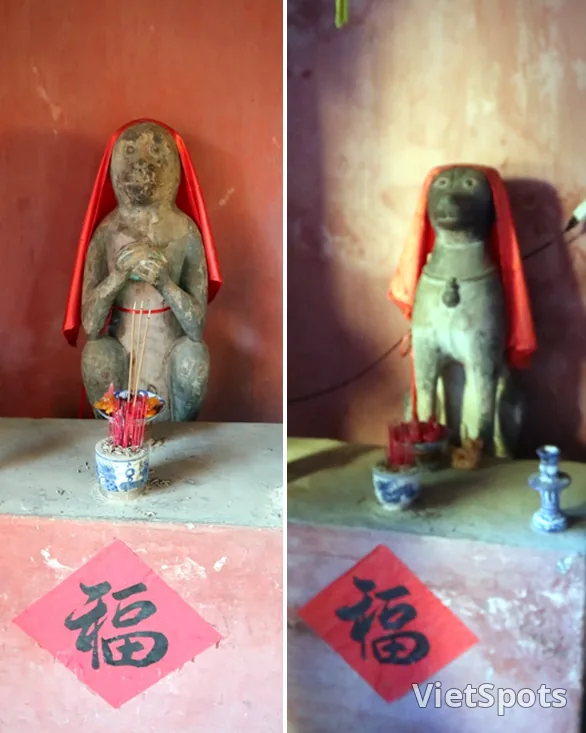
🐒 Monkey and Dog Stone Statues 🐕
At both ends of the bridge, there are stone statues of monkeys and dogs.
✔️ The story that it began construction in the Year of the Monkey and was completed in the Year of the Dog
✔️ The theory that they are the two guardian deities who rule over the Namazu
That's why people believe it has stood its ground for 400 years without collapsing, even through great floods.
No one knows which one is right, and that makes it even more mysterious 😮
______________________________________________________________________________________________________________
💕 An Interesting Story: The Love of Dani Yajirobe
In the 17th century, the Japanese merchant Tani Yajirobei fell in love with a Vietnamese woman in Hoi An.
But they had to return home by force because of Japan's national isolation edict 😢
In the end, he returned to Hoi An once again, and it is said that he spent the rest of his life here.
In the fields north of Old Town, his grave from 1647 still remains to this day.
______________________________________________________________________________________________________________
📜 Historic Moments of the Japanese Covered Bridge
🗓️ 1653: A small shrine added to the north side of the bridge
🗓️ 1719: Lord Nguyễn Phúc Chu gave it the name 'Lai Vien Kieu (來遠橋)', meaning "the bridge that welcomes friends from afar
🗓️ 1990: Designated as a Vietnamese National Historical and Cultural Relic
🗓️ 1999: Hoi An Ancient Town inscribed as a UNESCO World Heritage Site
🗓️ 2006: Appeared on the 20,000 dong polymer (plastic) banknote 💵
🗓️ 2022–2024: Reopened in August 2024 after extensive renovation work
※ After the restoration, some people said it looked "too new," but it's said that this was a choice made to protect the bridge.
______________________________________________________________________________________________________________
🎫 Viewing Tips
✔️ It's included in the Hoi An Old Town combined ticket (120,000 VND for foreigners)
✔️ You can enter 5 attractions with just one combined pass
✔️ Early mornings with fewer people around, or evenings when the lanterns light up, are great times to take photos 📸
______________________________________________________________________________________________________________
🚶 Things to see near Naewongyo Bridge
🏠 Tan Ky Old House: A Merchant's Home Over 200 Years Old
🏯 Fujian Assembly Hall: A Magnificent Chinese Merchants' Assembly Hall
🏮 Thu Bon River Wish Lantern Boat: Make a Wish While Floating Lanterns at Night
🌉 Thanh Toan Tile-Roofed Bridge: A quiet countryside bridge 7km away
______________________________________________________________________________________________________________
💙 Hoi An Trip
💆 Herbal Spa Hoi An: It's right inside the Old Town, so you can go straight there after a stroll!
💆 Gold Rose Spa: Near the Old Town, get a welcome pack + discount when you book through the VietSpot app 🎁
Walk across a bridge that holds 400 years of stories 😊
Travel Vietnam with VietSpots, in English
- 🎁 Sign up and get 17 Welcome Pack coupons — e.g. Motorbike Rental 45%
- 👑 Member tier discount up to 15% on site (Silver 5% · Gold 15%)
- 🛂 Auto-fill arrival card📶 Compare lowest eSIM prices🚻 Find toilets
Comments