

How good is the Japanese level of a child (7 years old) who grew up in Vietnam?



Xin chào! We're Yuki, a Japanese husband living in Ho Chi Minh City, Vietnam, and Ngoc, his Vietnamese wife. On this blog, we share information about moving to and living in Vietnam, as well as travel information from all over the country. If you come across an article that catches your interest, please follow us first! ♪ This time, we'd like to talk about the language situation of our child (our 7-year-old daughter), who has settled into life in Vietnam with us. Our daughter was born and is being raised in Vietnam, so she doesn't really get many chances to be exposed to Japanese. Aren't you a little curious about the Japanese level of a child like that...? (Lol) Introducing the school situation of our child growing up in Vietnam
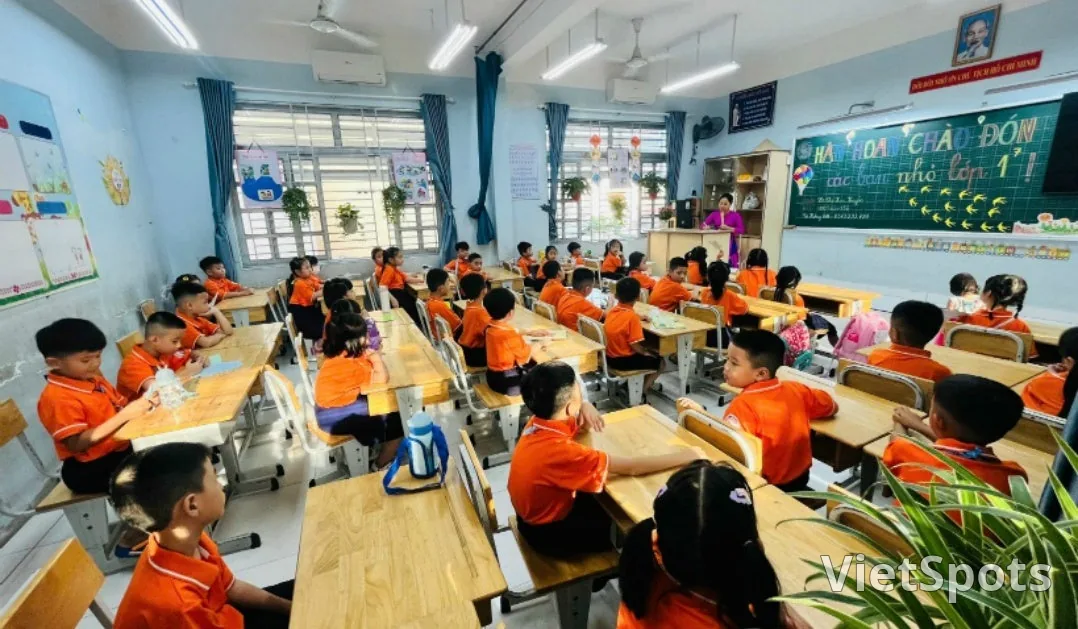
My child is currently 7 years old and lives in a local area of Ho Chi Minh City. Naturally, they attend a local school, so they are the only mixed-heritage child in their class. At this Vietnamese school, they are now in the 2nd grade (the new school year for children starts in September). They are also attending an English cram school. In Vietnam, simply being able to speak a foreign language brings quite favorable treatment in terms of salary once you enter society.That's why, starting from this age, many children are already attending language schools. Our child is the same — she goes to an English cram school twice a week. The teachers are native speakers from Canada and Australia. Lately it seems our daughter can no longer understand her dad's broken English (lol) What about Japanese school? On the other hand, she also attends a Japanese cram school once a week.Honestly, it would be great if I could send them to a Japanese school or an international school, but the tuition fees are a real obstacle, so we can't afford it. Also, the high school issue is another hurdle that still hasn't been resolved (;∀;)(This is a Vietnamese greeting) This blog shares the story of Japanese husband yuki and Vietnamese wife goc as they settle into life in Ho Chi Minh City, Vietnam, along with travel information from all over Vietnam. …ameblo.jp

How good is my child's Japanese level at the weekly Japanese cram school?

My child isn't exactly what you'd call smart (every time, math gets a failing grade (-_-;)), but even attending Japanese cram school just once a week, their Japanese pronunciation is native-level! Since the grammar of Vietnamese and Japanese is different, sometimes the word order in Japanese sentences ends up reversed. For example, when trying to say "○○-chan's mom was so kind," it comes out backwards as "Mom's ○○-chan was——," you know? But now that I've been raising my child abroad, the thing I was most worried about — their "pronunciation" — has become native-level, so for now I'm relieved and thinking, "That's such a relief!" The ultimate tool that let them master Japanese without even attending Japanese school

First of all, as a premise, what I want to convey is that the greatest advantage of a Japanese language school is not simply that you can learn the Japanese language, but that you can learn about Japanese culture and the common sense that Japanese people share. Also, since the curriculum follows the official course of study guidelines, you'll be able to keep up with classes even after returning to Japan. However, if all you want is to acquire the Japanese language itself, it seems there's no real need to attend a school for that. The strongest tool for my child's Japanese language acquisition is none other than "YouTube." There are so many videos of child YouTubers around similar ages, right? Leo-kun, Hanemari, Ma-chan and O-chan, and so on. When they watch their videos every day, they start imitating the way they speak. Even if dad teaches them individual words, it's really hard to teach them spoken, conversational expressions. For example, when they drop something, I can teach them to say "the thing fell / the thing is falling," but it's really hard to teach the expression "oops, the thing fell (物が落ちちゃった)!" By watching YouTube every day, they picked up that kind of colloquial expression before I even realized it. The Japanese anime my child is hooked on My child has also recently gotten really into Japanese anime.NARUTO seems to be popular at local schools in Vietnam. When my child comes home, up until last year it was Demon Slayer, and since this year it's been Kaiju No. 8 every single day. Anime turns out to be an excellent learning tool for studying Japanese, too. He gets completely absorbed in it, and whenever he doesn't understand the Japanese, he rewinds it over and over, asking "What did Kafka-kun just say?" I've been thinking lately that it's probably these little accumulations that really matter. Summary: Japanese conversational ability is high, but reading comprehension still has a long way to go As I've introduced this time, raising children while living abroad comes with all sorts of challenges, but when it comes to Japanese conversation skills alone, I don't think there's that much to worry about. On the other hand, what Dad is worried about is "reading comprehension.For example, my child still has trouble understanding the wording of math problems, and even when reading "Swimmy" in Japanese language class, there are words they don't understand, so they struggle to comprehend the text — there still seems to be quite a gap in Japanese language ability compared with second graders in Japan. Since we don't live in Japan, it's not something I worry about too much right now, but my husband is working hard because he feels it's his duty to make sure our child develops Japanese language ability equal to that of native Japanese kids by around high school age (;∀;) If you have any questions about raising kids abroad, please feel free to leave a comment!
Travel Vietnam with VietSpots, in English
- 🎁 Sign up and get 16 Welcome Pack coupons — e.g. Motorbike Rental 45%
- 👑 Member tier discount up to 15% on site (Silver 5% · Gold 15%)
- 🛂 Auto-fill arrival card📶 Compare lowest eSIM prices🚻 Find toilets
Comments