

What to eat in Hue: divided by meal time, because in Hue each dish has its own hour

This question is usually answered with a list of ten dishes. But in Hue, knowing what the dishes are is not enough — you need to know when to eat them, because many vendors only sell them at exactly one time, and once they're sold out they close shop.
Short answer: eat bun bo or com hen in the morning. In the afternoon, eat banh beo, banh nam, banh loc. At night, eat che. If you go by that rhythm, you'll get to eat the best food; if you go off schedule, you'll arrive to find the doors closed.
MORNING
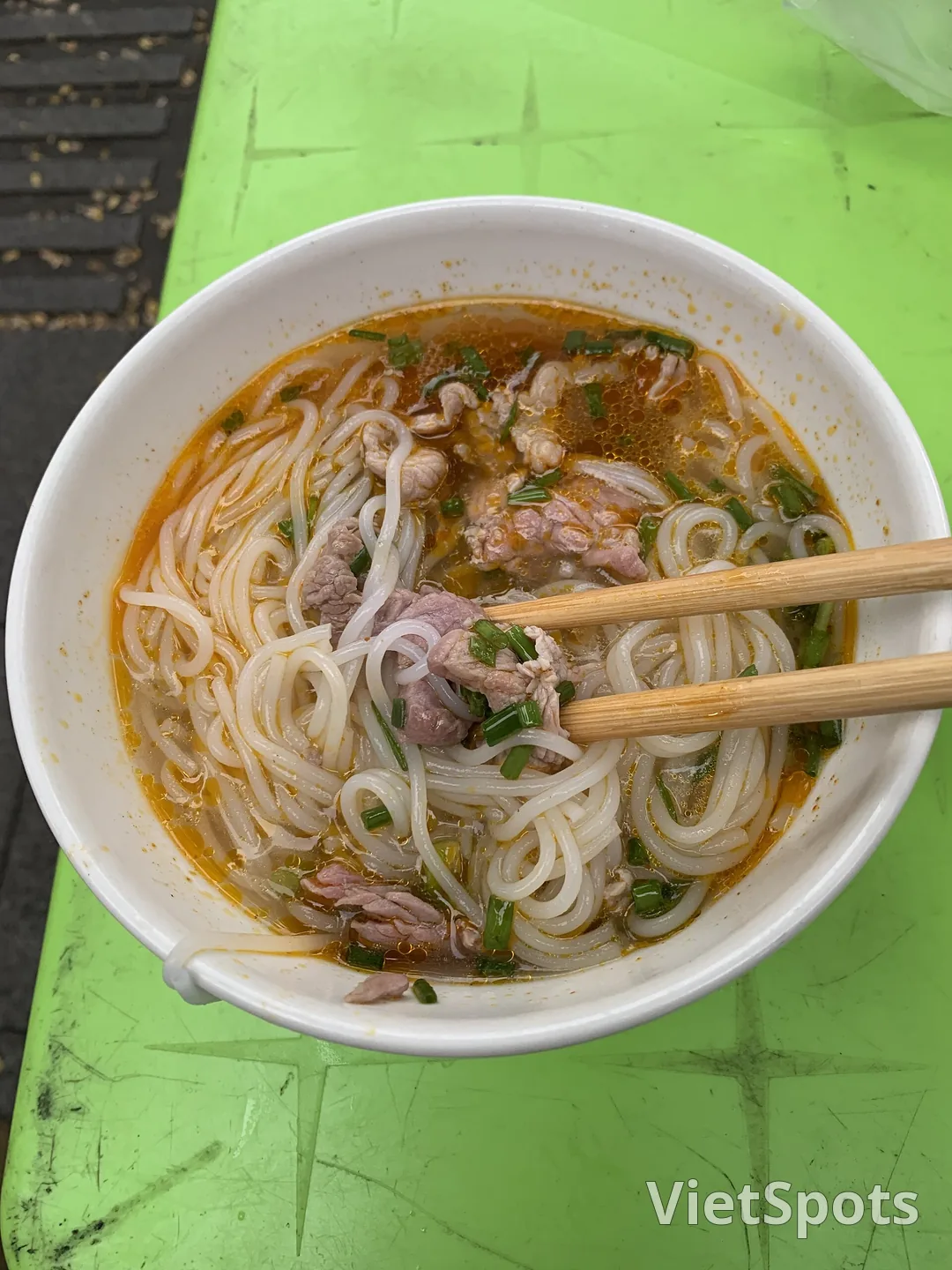
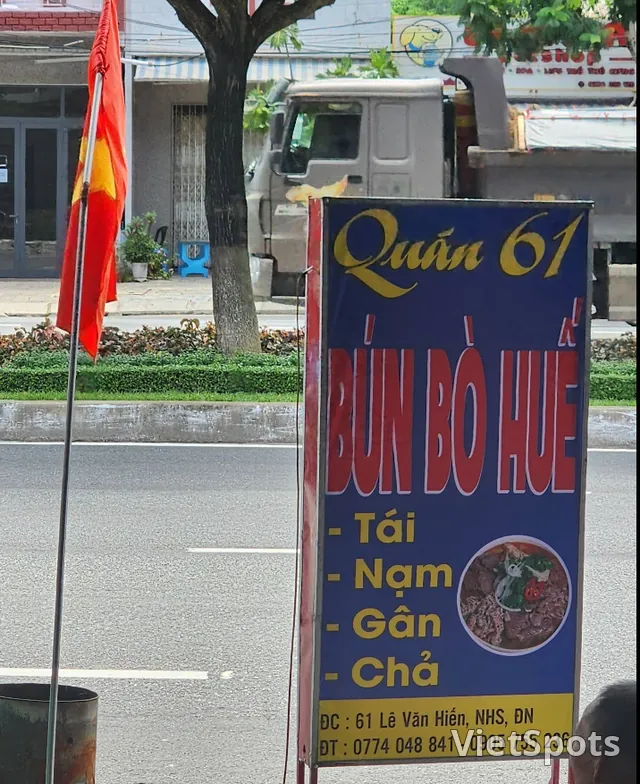
Bún bò — in Huế people simply call it 'bún bò', nobody adds the word Huế after it. And it's quite distinctly different from the bowl of Huế bún bò you eat elsewhere.
General trend: bowls in Hue are smaller, the broth leans salty rather than sweet, the aroma of lemongrass and shrimp paste is more pronounced, and the colored chili is usually served separately for guests to add themselves. The further south you go, the bigger the bowl of bun bo gets, the sweeter it gets, and the more ingredients there are in the bowl. Neither side is wrong — but if you're used to a sweet, rich bowl of soup, the one in Huế might taste a bit sharp at first.
Bún bò is a breakfast dish. Good shops usually sell it from early morning until around noon, then close. The reason why bún bò in Central Vietnam is so spicy is discussed in detail in the article Bún bò in Đà Nẵng is spicier than you think — and it's intentional.
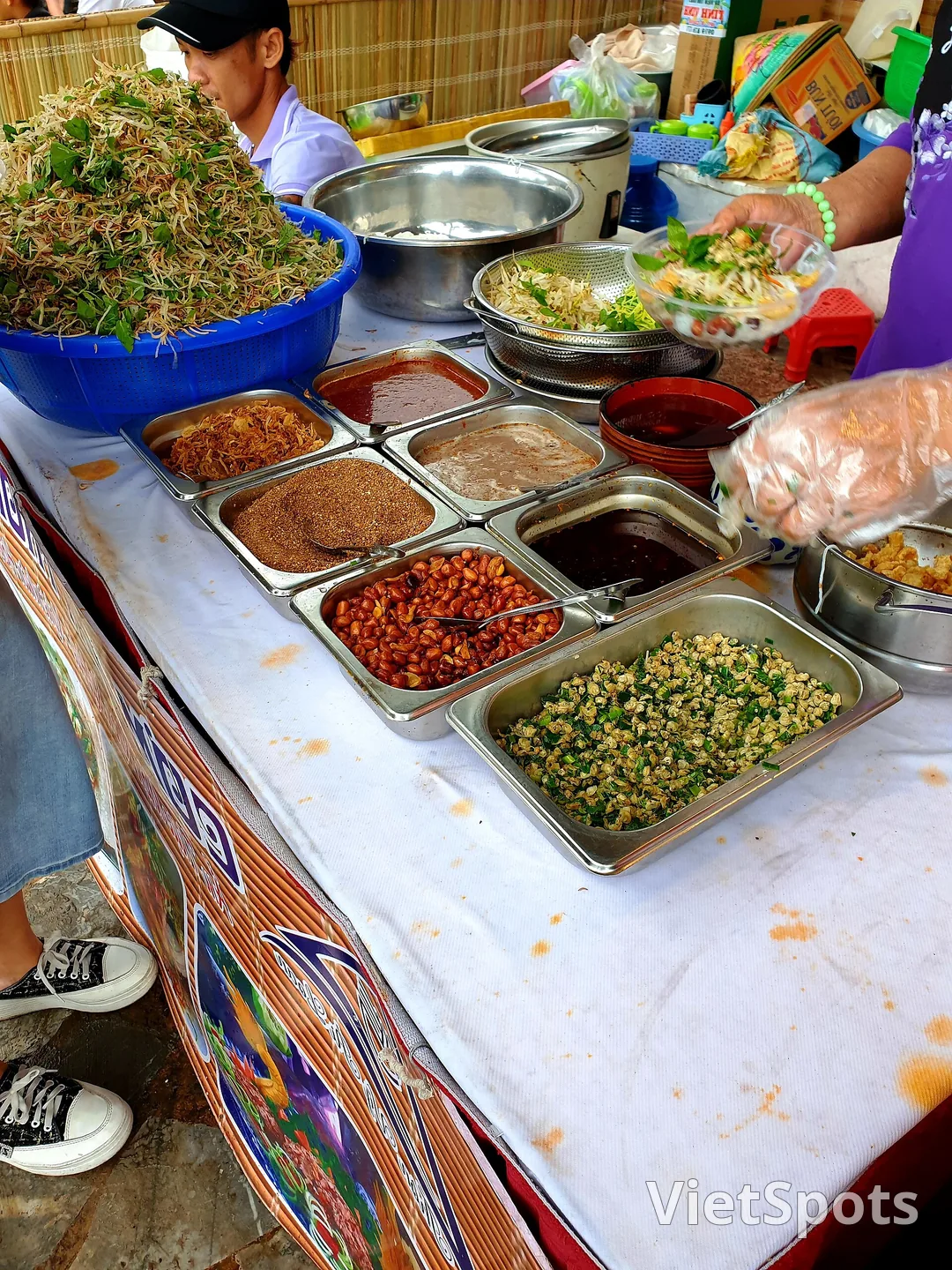
Cơm hến (baby clam rice) — the dish that surprises first-time guests the most, because it's served cold.
It's not cold because it's been sitting long — being cold is the correct recipe. White rice left to cool, clams stir-fried separately, clam broth kept separately in a small bowl, then a dozen things sprinkled on top: shrimp paste, pork fat cracklings, puffed pork skin, roasted peanuts, banana blossom, fresh herbs, star fruit, chili. You mix it yourself. Anyone expecting to get a piping-hot bowl will be a bit surprised.
Two more things you should know: it's very spicy and very salty — the saltiness comes from the fermented shrimp paste, and the spiciness is the default, not an option. Also, the bowls are small, so it's normal for people to eat two or three bowls. As for what's in a bowl of clam rice, I dissected it in detail in the article a bowl of cold rice has more than ten things in it.
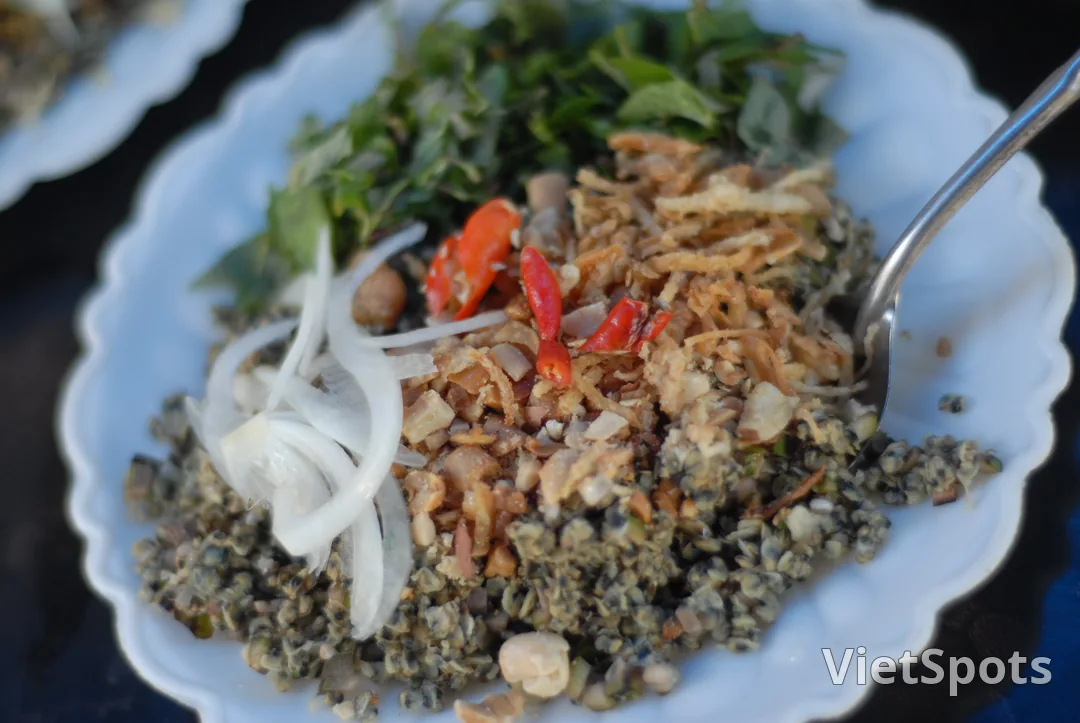
Along the same clam-broth family, there's also mixed clam salad (no rice, eaten with rice paper) and clam vermicelli. If you find cold rice hard to get into, try the mixed clam salad first — it's easier to warm up to.
Afternoon
Noon is the easiest time to eat because every place is open. This is a great time to try cơm âm phủ — a plate of white rice with grilled meat, eggs, Vietnamese pâté, shrimp, vegetables, all arranged in portions around the plate and then mixed together. The name sounds creepy, but the dish itself is mild and harmless, and it's a specialty unique to Huế rather than being common elsewhere.
Also there's bánh canh, vả trộn (fig salad), and cơm bình dân (everyday rice meals) — Huế has many small rice shops where you pick your dishes from a tray, great for solo travelers.
AFTERNOON
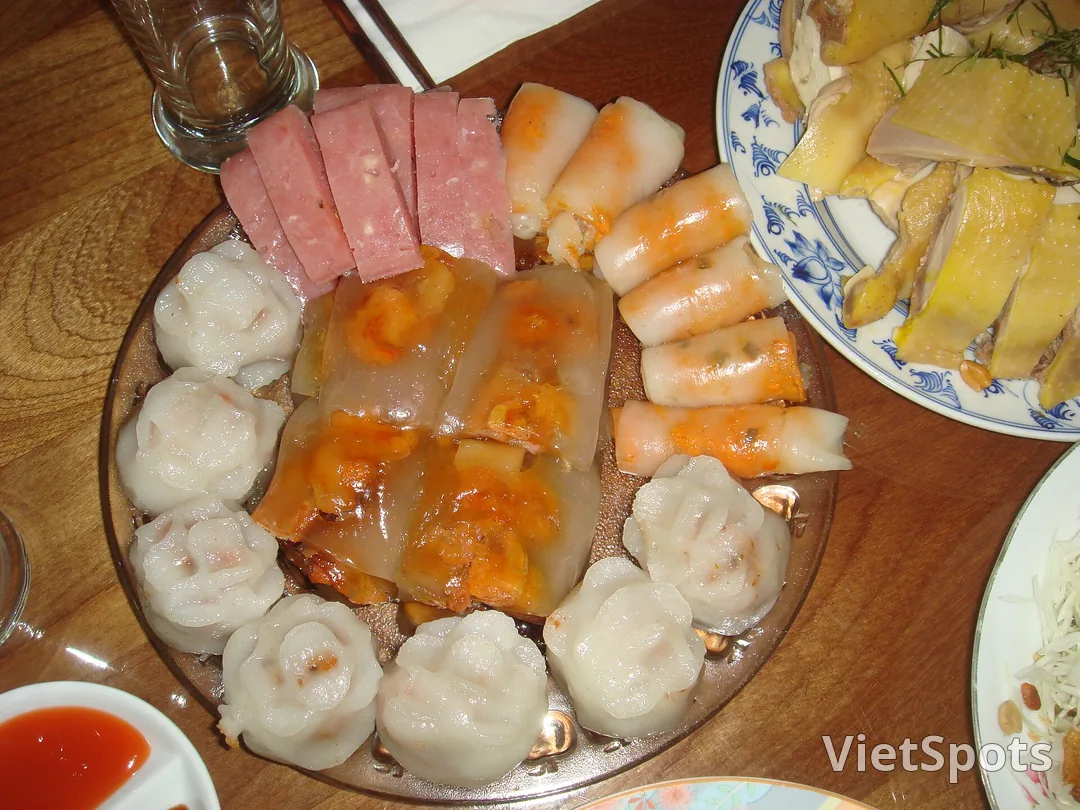
It's Hue cake hour: banh beo (each in its own small dish, one piece per plate), banh nam (thin, wrapped in leaves), banh loc (clear dough, with the shrimp visible inside), banh ram it (half crispy, half chewy). Most of these cake stalls open in the afternoon, not in the morning.
How to eat it: order several types all at once rather than just one dish. Each item is only one or two bites, so if you order too little you'll still be hungry after you finish. And everything depends on the dipping sauce — if the dipping sauce is bad, the whole platter is bad.
As for why people in Central Vietnam make such tiny little cakes, I wrote about that separately in why people in Central Vietnam make cakes so small.
EVENING
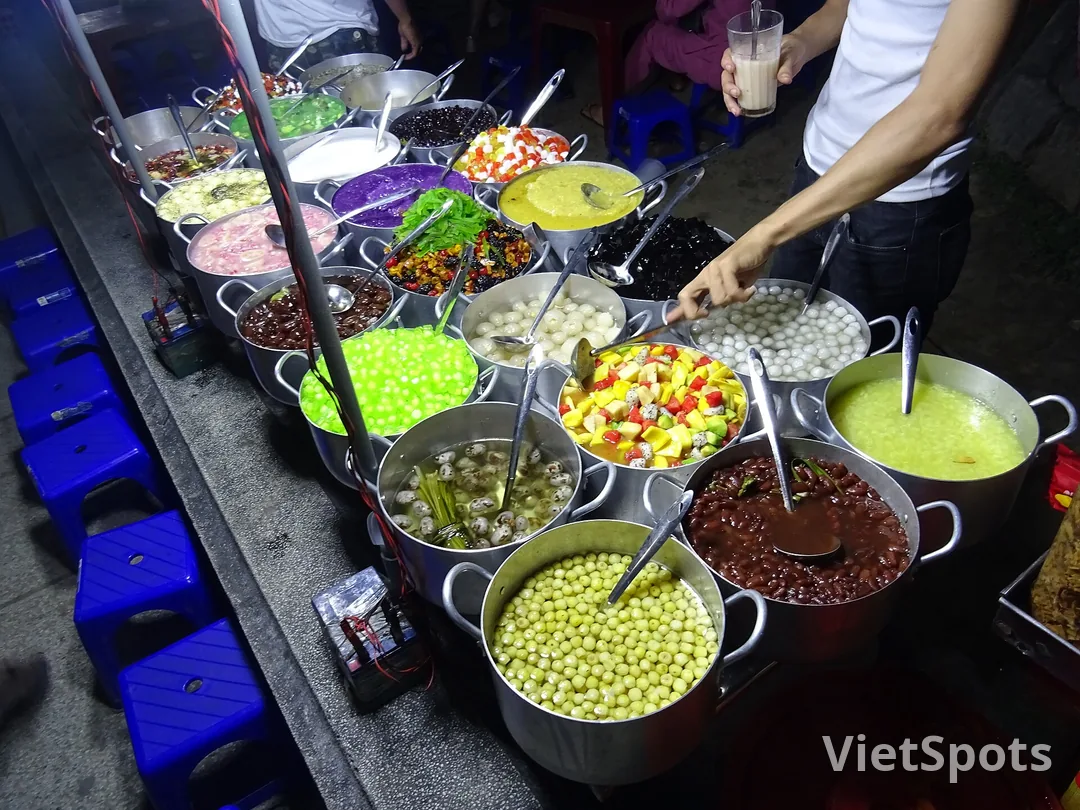
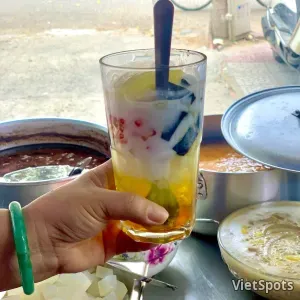
Evening in Huế is chè. Not just one type — a decent chè cart has twenty to thirty pots, each one a different kind, and people order by simply pointing at the pot they want.
The strangest and also most famous dish is chè bột lọc heo quay (roast pork tapioca dumpling sweet soup): a clear tapioca ball, with a piece of roast pork inside, topped with ginger sugar syrup. Sweet and salty together in the same ball. If you like it, you'll want it right away; if not, you'll never order a second one — but once you're in Hue, you should try a piece just to see.
The sweet soup here is sold at night, with many stalls tucked away in small alleys, and the prices are so cheap that ordering four or five kinds still feels light on the wallet. I have a separate post about chè — a dessert that Da Nang people eat all year round.
One thing that should be said straight out
Hue's food is noticeably saltier and spicier than Da Nang's or Hoi An's. This isn't about restaurants going overboard — it's the taste of the whole region, tied to the heavy use of shrimp paste and fish sauce. If you can't handle spicy food, mention it right away when ordering — don't wait until the dish arrives and then try to pick out the chili peppers, since the chili is usually already mixed into the broth from the start.
For bringing home, there's mè xửng (sesame peanut candy), tôm chua (fermented sour shrimp), and ruốc (shredded pork floss). Mè xửng is the easiest to carry; tôm chua and ruốc are liquid items, so they must be checked in as luggage and wrapped very tightly.
And if your trip has room for something other than eating, then I wrote yesterday about which tomb to choose in Hue.
Photo: Chainwit. (CC BY 4.0); Phương Huy, Christophe95 (CC BY-SA 4.0); Lucas Jans, Thang Nguyen (CC BY-SA 2.0) — Wikimedia Commons
Book Food in Hue — in English on vietSpots
- 🎁 Sign up and get 14 Welcome Pack coupons — e.g. Motorbike Rental 45%
- 👑 Member tier discount up to 15% on site (Silver 5% · Gold 15%)
- 🛂 Auto-fill arrival card📶 Compare lowest eSIM prices🚻 Find toilets

Comments