

Pork rolls in crispy rice paper with crispy skin on both ends: the specialty that only Da Nang makes with the perfect taste


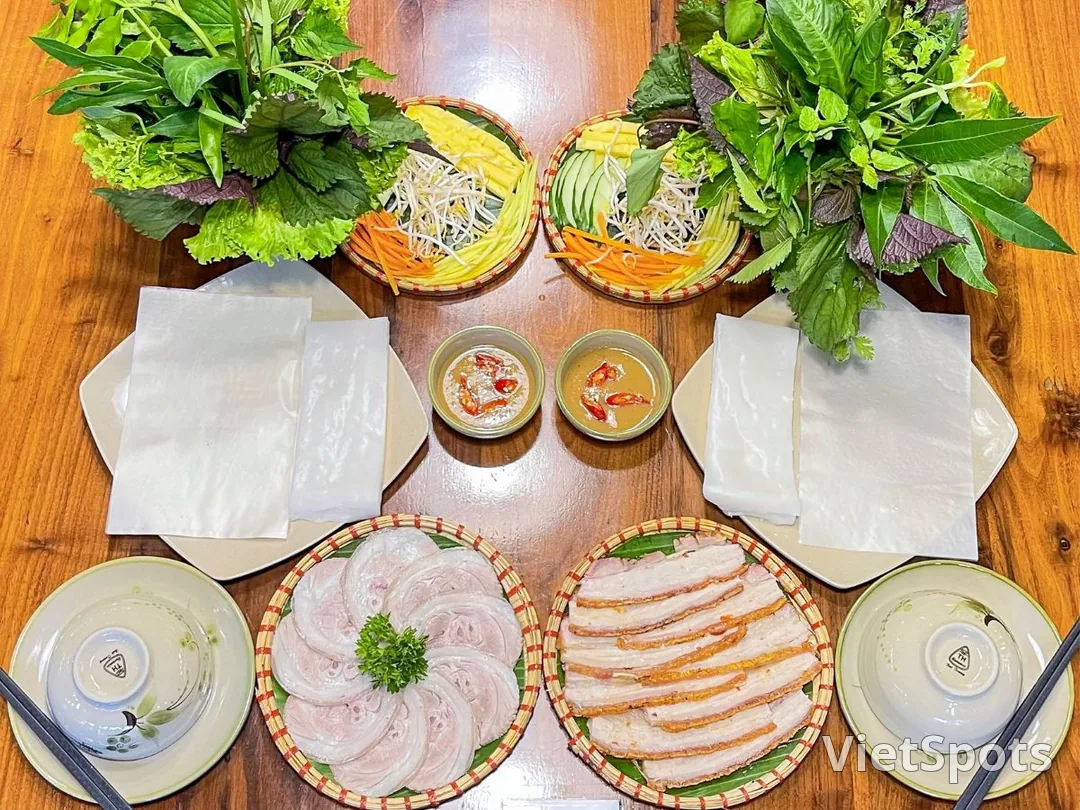
If you tell someone from Da Nang that you've had banh trang cuon thit heo in Saigon or Hanoi, they'll laugh and say "you haven't really eaten it yet." Because this dish — although popular all over Vietnam — is only made according to the original recipe in Da Nang: the pork must be pork belly with skin on both ends, boiled for exactly the right number of minutes, sliced so thin you can see through it, and eaten with mam nem (fermented fish sauce) — not the sweet-and-sour dipping sauce typical of the south.
Why do "both sides of the skin" matter?
Đà Nẵng pork belly is cut in a special way: each piece must have two thin layers of skin at both ends, with a layer of fat sandwiched between them, and a thick layer of lean meat in the middle. When boiled for the right amount of time (20–25 minutes), the skin is crispy but not chewy, the fat is clear and not greasy, and the lean meat is evenly cooked without being dry. This is a technique that restaurant owners have mastered through 20–30 years of learning — not just any street food stall can do it.
How to eat properly — don't roll greedily
A "full" tray of rice-paper rolls includes: thin rice paper (the un-toasted, chewy kind), fresh flat rice noodles used instead of vermicelli — a point that sets it apart from the South — a plate of fresh herbs including spicy mustard greens, mint, perilla leaves, cucumber, star fruit, and green banana, thinly sliced pork belly, and a bowl of pineapple fermented fish sauce — fish sauce mixed with minced pineapple, chili, garlic, and lime.
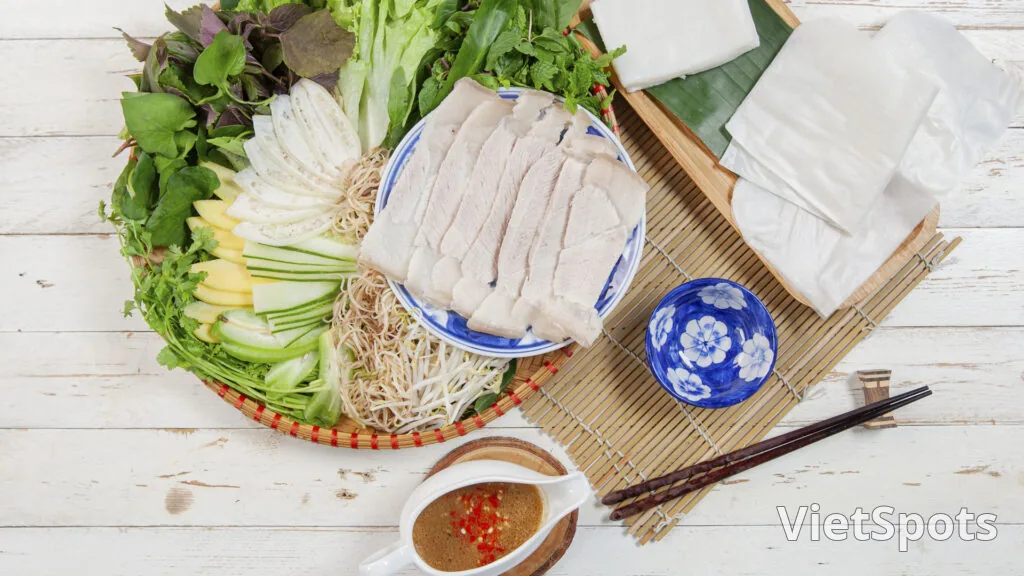
How to roll: Spread the bánh tráng, layer phở noodles, add one leaf of spicy greens, a few slices of unripe banana and star fruit, two pieces of meat, and roll tightly. Don't be greedy with filling — rolling too thick will break the bánh tráng. Dip generously in fish sauce, no dripping.
The first piece might shock you with fish sauce. By the third piece, you won't want to stop.
The first bite might shock you with mắm nêm (fermented anchovy sauce) — the pungent smell, the strange salty-sweet taste. By the second bite, you start to understand it. By the third bite, you don't want to stop.
Why are Korean tourists so hooked on this dish?
Korean cuisine has the concept of ssam (쌈) — grilled meat wrapped in fresh vegetables. Rice paper rolls with boiled pork are a Vietnamese-style ssam, differing in 3 ways: (1) The meat is boiled, not grilled — lighter and less greasy. (2) Fresh rice noodles serve as the “base” — you'll be full without needing rice. (3) Fermented fish sauce (mắm nêm) — a bold umami flavor that kimchi or ssamjang just don't have.
This is why a Korean customer, after finishing their meal, usually orders another serving and tells their family, 'This dish tastes so much better than I thought.
Where should we eat?
No need to go far. The Trần Kế Xương area (near Hàn Market) and Nguyễn Tri Phương Street have many restaurants specializing in rice paper rolls with pork that have been operating for over 20 years. The average price is 80,000–150,000 VND per tray, enough to fill up 2 people. If you want to go for dinner, book ahead — the popular spots are fully booked from 6:30 PM.
📍 Da Nang Specialty · 💰 80,000 – 150,000₫/tray (for 2 people) · 🕐 Golden Hours 5:00 PM – 9:00 PM · 🍺 Served with cold Larue beer · 🍧 Dessert: chè xoa xoa hạt lựu (grass jelly with pomegranate seed sago dessert).
Book Food in English on VietSpots
- 🎁 Sign up and get 16 Welcome Pack coupons — e.g. Motorbike Rental 45%
- 👑 Member tier discount up to 15% on site (Silver 5% · Gold 15%)
- 🛂 Auto-fill arrival card📶 Compare lowest eSIM prices🚻 Find toilets
Comments