

Da Nang
Cẩm Lệ's "seven-fire" cake: a hollow royal-tribute cake that, when broken open, reveals sugar stretching into golden silk threads — a Da Nang specialty few Western tourists know about



Translated from Vietnamese
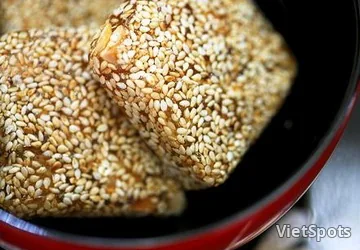
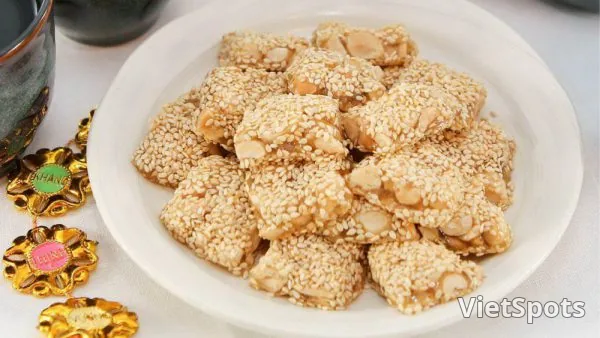
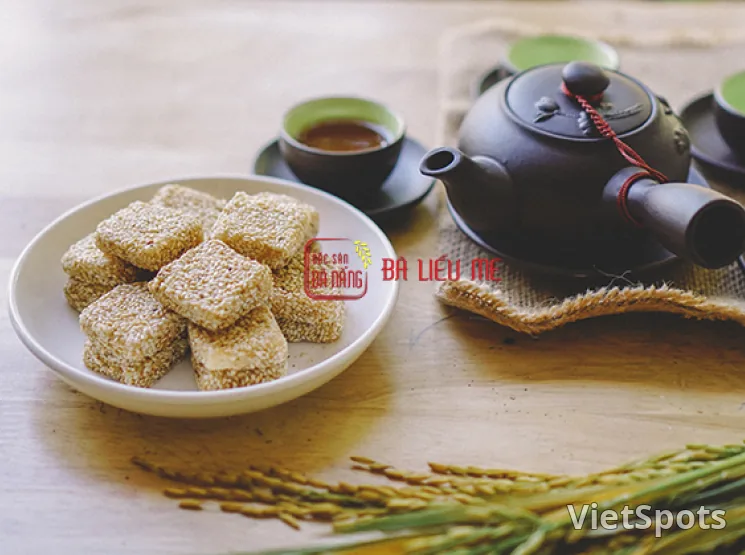
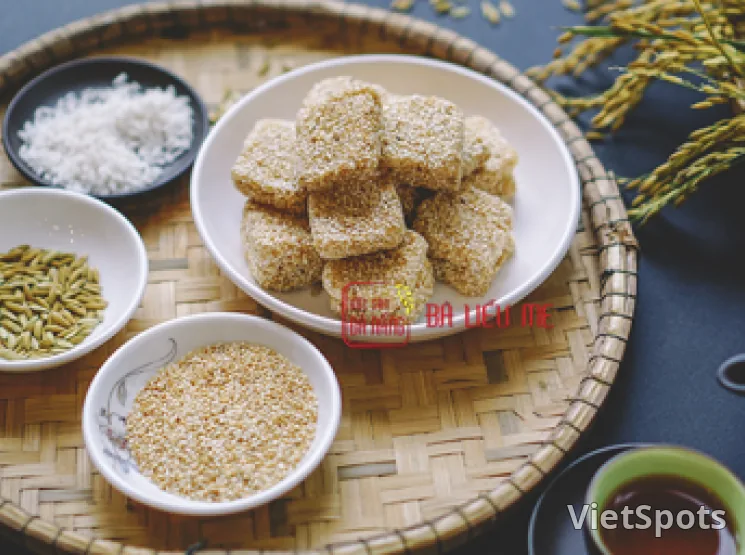
In Da Nang, almost everyone heads to Nam O to eat raw fish salad, goes to the beach for seafood, or slurps a bowl of Mi Quang noodles in the morning. But there is one specialty that is almost "invisible" to foreign visitors, even though it is older than most of the dishes mentioned above and carries a very fierce name: **"seven-fire" cake**.
Its birth name is **bánh khô mè**, and its craft village is in **Cẩm Lệ**, an area along the Cẩm Lệ River that is now part of Đà Nẵng's inner city. It's called "bảy lửa" ("seven fires") because, according to the traditional method, the cake had to pass through fire as many as seven times before it was done (sources describe the number slightly differently; today the process has been simplified). Legend has it that this was once a **cake offered as tribute to the king** during the Nguyễn dynasty — this detail belongs to the "anecdote" part, so I'm leaving it as oral tradition rather than asserting it as historical fact.
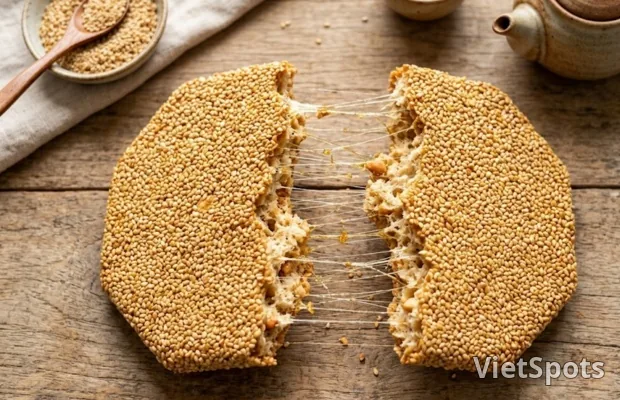
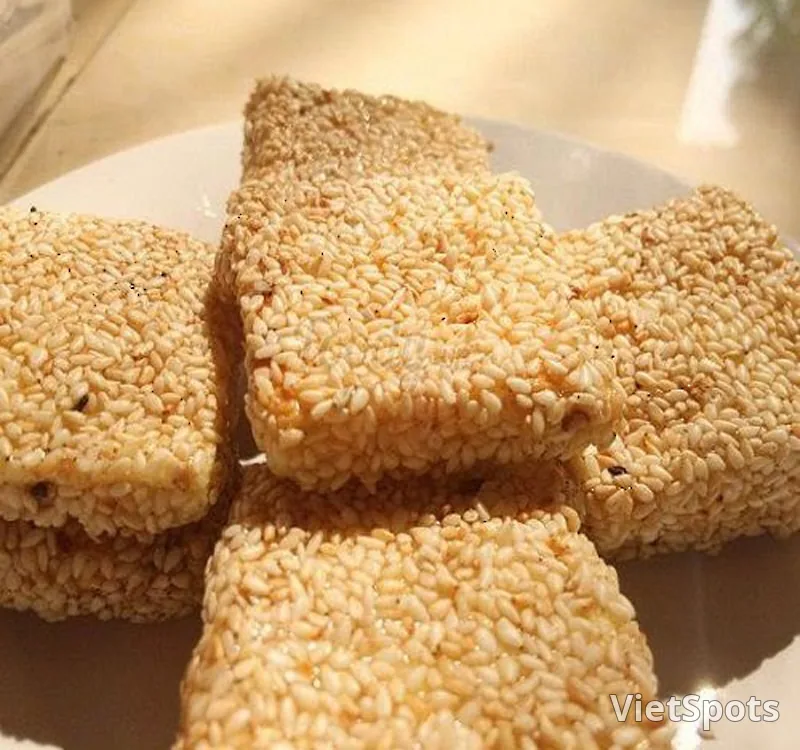
What makes this cake special isn't its appearance — at a glance, it's just a neat square block, golden yellow and covered in sesame seeds. The real charm lies **inside**: the crumb is **airy like a honeycomb**, dry and shatteringly crisp. And the most rewarding moment is when you **break** the cake **in half**: the layer of ginger syrup (maltose) between the two pieces stretches into **delicate golden threads**, lightly sticky and shimmering under the light. Villagers in the craft village often use that very detail as the "yardstick" for a cake that meets the standard: the sugar must be able to stretch into silky threads, rather than breaking into crumbs.
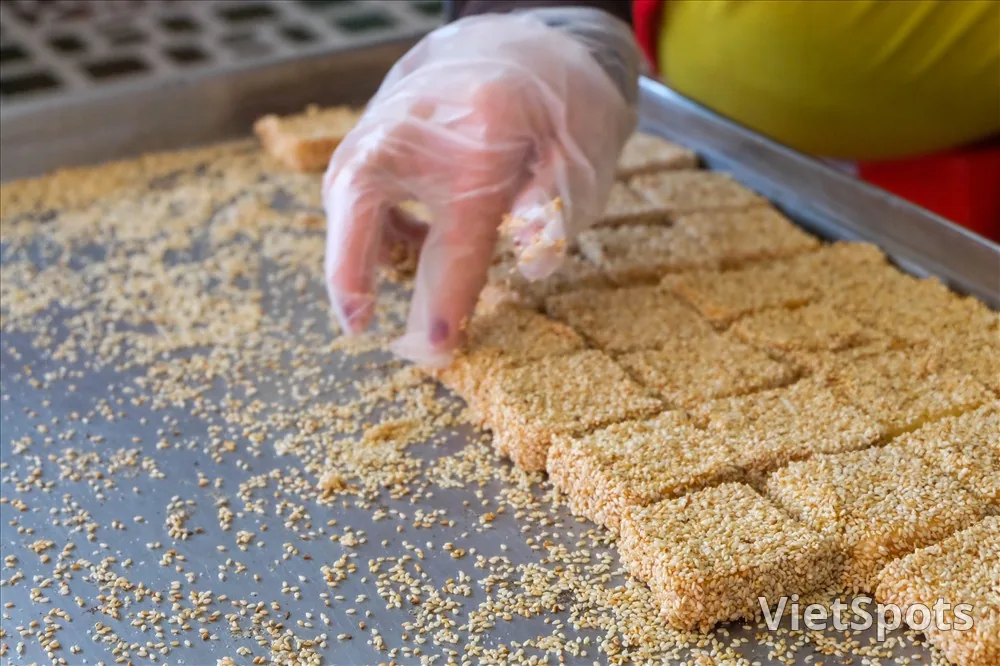
Here's the method, briefly, as described in the press: rice and glutinous rice are soaked for **about** an hour, ground into a wet batter, pressed into square molds, **steamed over boiling water**, and then **baked (dried) several times** until the cakes are dry, hollow, and crispy. Then dip them in **ginger sugar syrup** to create a stringy sugar coating, and roll them in a layer of **sesame** (sesame seeds)
that has been toasted. The core ingredients are simply: glutinous rice flour – rice flour – sugar (cane sugar/maltose) – ginger – sesame. No filling, no food coloring, no fancy preservatives — but getting the cake to be both dry and light without turning soggy takes real skill and careful control of the heat, and that's where the true challenge lies.
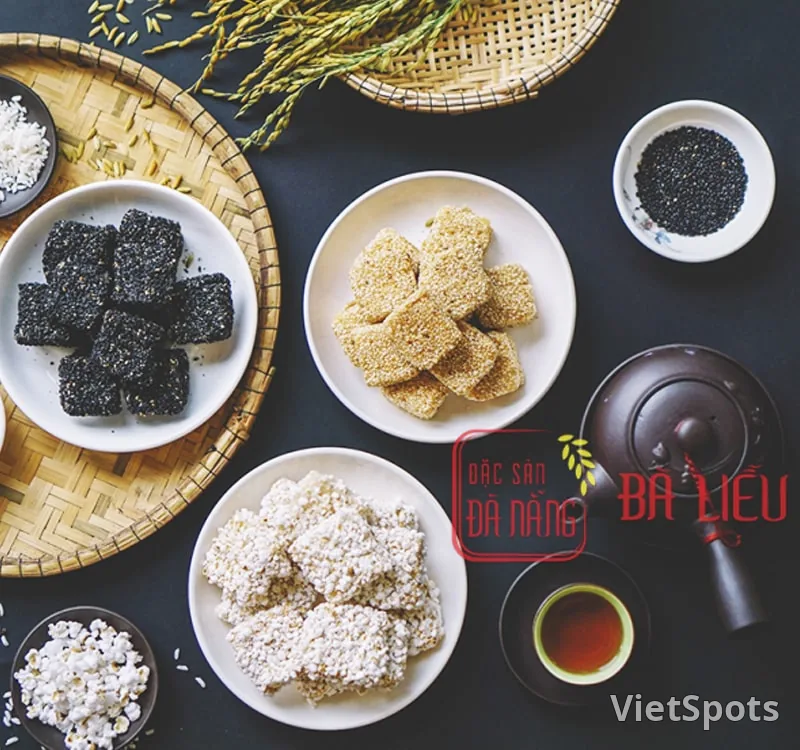
In Cẩm Lệ, the name most closely tied to the craft is the **Bà Liễu** brand (her real name is Huỳnh Thị Điểu). This shop now runs things in a professional way: it has been recognized as a **4-star OCOP product** of Da Nang, it packs its cakes in boxes of many small, individually separated pieces that are easy to take with you, they keep for **about** a few months, and there is even a **black sesame dry cake (brown rice)** variant. (Note: in Cẩm Lệ there are a few quite similar shop names, such as "Bà Liễu" and "Bà Liễu Mẹ" — I'm not sure about the exact relationship between these shops, so when buying, just look for the **OCOP** label and the add
just to be sure.)
Why do I want to introduce this to the community? Because it's something **very Da Nang yet easy to take home**: it's not fresh food, there's no worry about it spoiling on the way, and it makes a great gift. Locals have long been used to placing dry sesame cakes on the ancestral altar on **death anniversaries and during Tết**, which means they live in their family memories and aren't just something sold to visitors. Enjoy it with a pot of **hot tea**, bite into the cake with a "crunch", and savor the gentle sweetness of sugar, the warm spice of ginger and the nutty aroma of roasted sesame — that's a side of Da Nang very different from Da Nang
the sea-and-seafood that everyone has already seen.
- Dish: Cẩm Lệ sesame crispy cake (also called "bánh bảy lửa", or "seven-fire cake"); there is a white sesame version and a black sesame/brown rice version.
- Suggested craft village / long-established shop: Bà Liễu Sesame Cake (Bánh khô mè Bà Liễu) — **309 Ông Ích Đường, Cẩm Lệ, Đà Nẵng** (one English-language source lists "K200/1 Ông Ích Đường"; please double-check before you go). The Cẩm Lệ area also has several other shops in the same craft village.
- Price: **there is no reliable official price source yet** for this exact product — most of the prices floating around on blogs belong to other products/brands (baked coconut cakes, Bà Ly sesame dry cakes...), so I am NOT quoting them to avoid giving you wrong information. Sesame dry cakes (bánh khô mè) are usually sold in **gift boxes** containing several pieces. Please ask the shop directly or check the official sales page to get the current price.
- When to buy: year-round, but **close to Tết** is when the craft village is busiest, with the freshest cakes and the widest choice of gift boxes.
- Tips:
* If you're buying them as gifts, go for boxes with a long expiry date, and choose ones with small individually wrapped pieces so they don't go soft once opened.
* How to "test" a good one: break it in half — if the sugar inside pulls into silky threads, it passes; when you bite into it, you should hear a crisp crunch, and the sesame should smell fragrant, not burnt.
* Best enjoyed slowly with **hot tea**; the cake is quite dry, so have it with a drink to avoid that "sweet and stuck in your throat" feeling.
* Guests watching their sugar intake should keep in mind — this is a sweet cake.
Travel Vietnam with VietSpots, in English
- 🎁 Sign up and get 16 Welcome Pack coupons — e.g. Motorbike Rental 45%
- 👑 Member tier discount up to 15% on site (Silver 5% · Gold 15%)
- 🛂 Auto-fill arrival card📶 Compare lowest eSIM prices🚻 Find toilets
#Da Nang#Delicious Dishes#Snacks#Confectionery#Specialties#Gift Ideas#Sesame Cake
Comments