

Bún riêu: riêu is not crab meat, and that's where many people misunderstand



The name is quite misleading to many people. Riêu is not crab meat.
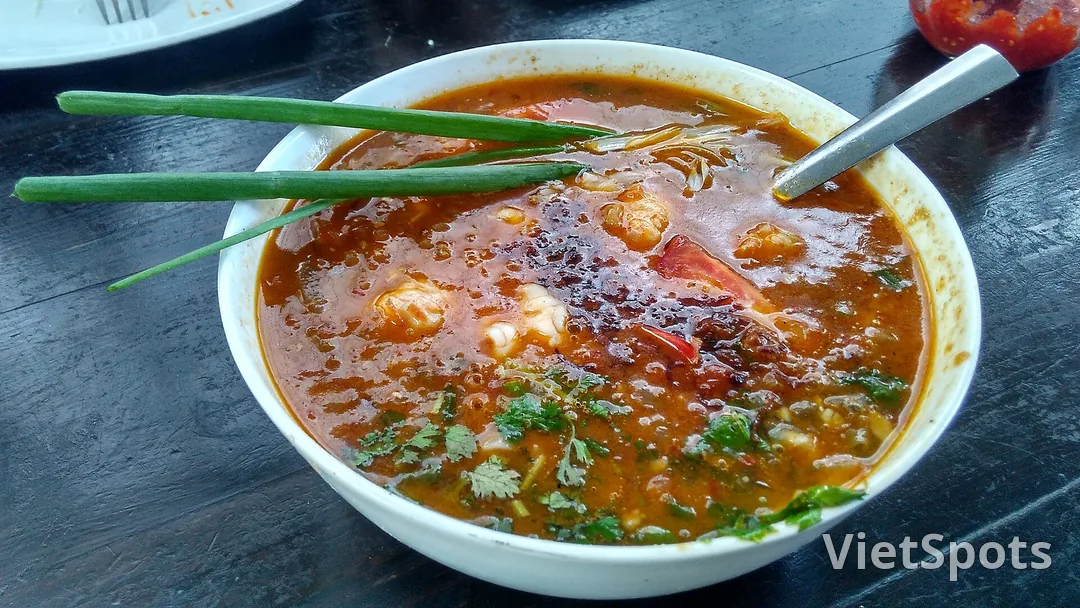
Riêu is the protein part of the rice paddy crab that has changed state. The crab is pounded whole with its shell, the liquid is filtered out, then boiled — when hot, the protein in the crab liquid clumps together into spongy clusters that float up to the surface of the pot. That thing is riêu (crab paste). It's spongy, soft, and slightly crumbles when touched by a spoon, completely different from the feeling of biting into a piece of crab claw meat.
This misunderstanding leads to another misunderstanding: many customers order bun rieu and then feel disappointed because there's "too little crab." Actually, if the bowl has the crab custard set into a nice solid block, then all the crab has already gone into it.
Bún riêu broth has an orange-red color, but that color actually comes from tomato and cashew oil rather than chili peppers — so while it looks red, it's actually not spicy. The base flavor is the tangy sweetness of tomato and tamarind, the saltiness of shrimp paste, and the sweetness of crab broth. If you're afraid of shrimp paste, just let us know to keep it separate, but without it the bowl of noodles loses quite a lot of flavor.
Inside the bowl aside from the crab paste, there's usually also fried tofu, sausage/cha, and sometimes pork knuckle or snails added — depending on the shop, and this is where bún riêu in the South differs from the North. The Northern version is more compact, mainly crab paste with tofu; the Southern version is heartier and sweeter.
The side vegetables are almost mandatory: split water spinach and shredded banana blossom. These two are crunchy and slightly astringent, added to balance out the softness of the crab paste and tofu. Without the vegetables, the bowl of noodles just slides right down, and after eating, nothing lingers.
In Da Nang, bún riêu is not as abundant as Quang noodles or fish cake noodles, but it's not hard to find. Common prices range from 30–45 thousand. This dish is sold both morning and afternoon, and it's especially good on rainy days — slightly sour, hot, and not heavy.
Photo: Sohini.sen (CC BY-SA 4.0) — Wikimedia Commons

Comments