

Hoi An Sweet Soup – A Sweet Specialty You Can't Miss When Visiting the Ancient Town


When it comes to Hoi An cuisine, many people immediately think of cao lau, Phuong banh mi, or Hoi An chicken rice. However, few people know that Hoi An tea is also a very special part of the ancient town's culinary culture. The small chè (sweet soup dessert) stalls along the roadside, along with family-run chè shops that have existed for decades, have become a familiar stopping point for both local residents and tourists.
What Makes Hoi An Chè So Special Compared to Chè from Other Regions?
Vietnam has many famous types of tea ranging from North to South. However, Hoi An tea still possesses its own distinctive characteristics that make many tourists remember it fondly long after they taste it. This difference comes from local ingredients, traditional cooking methods, and the unique chè-eating culture of the people in the old quarter.
Traditional Central Vietnamese Ingredients
One of the factors that gives Hoi An chè its charm is its natural ingredients, closely tied to the everyday life of the people of Quang Nam. Most types of chè are cooked from familiar ingredients such as:
Cẩm Nam sticky corn, mung beans, red beans, hyacinth beans, roasted black sesame, lotus seeds, taro, seaweed and herbs
These ingredients are usually sourced from the countryside surrounding Hoi An, such as Cam Nam, Cam Kim, or Duy Xuyen. That's why the tea always retains its fresh, delicious quality and its distinctive natural flavor.
According to many local chefs, the secret to making delicious chè lies in choosing fresh ingredients and cooking slowly over low heat to preserve the full flavor. This is also why many chè shops in Hoi An have kept up their traditional way of cooking for decades.
A sweet, light flavor that's easy to enjoy
If you've ever tried chè in the South, you'll notice it's often quite sweet and rich, since a lot of coconut milk is used. Hội An chè, on the other hand, has a lighter, more delicately sweet flavor.
This characteristic makes tea in the old quarter very well-suited to the tastes of many international tourists. According to surveys by many famous travel blogs like Lonely Planet, desserts with a light, delicate flavor are often rated more highly by foreign tourists when they experience Asian cuisine.
That's why, even though it's just a simple snack, Hoi An chè still makes many visitors come back to enjoy it again and again during their trip.
The evening tea culture in the old town
One interesting thing you'll easily notice when strolling around the old quarter in the evening is that the small chè (sweet dessert soup) shops are always packed with customers. After visiting famous spots such as:
Cau Bridge, Hoi An Night Market, Lantern Street, Tan Ky Ancient House
Visitors often stop by to enjoy a cool bowl of chè (sweet dessert soup).
The nighttime atmosphere of the Old Quarter, warm golden lantern light, and a bowl of lightly sweet chè create a truly special culinary experience that few other places can offer. This is also why many travel bloggers call eating chè in Hoi An "the perfect closing ritual for a day of exploring the ancient town.
12 Most Famous and Delicious Types of Chè in Hoi An
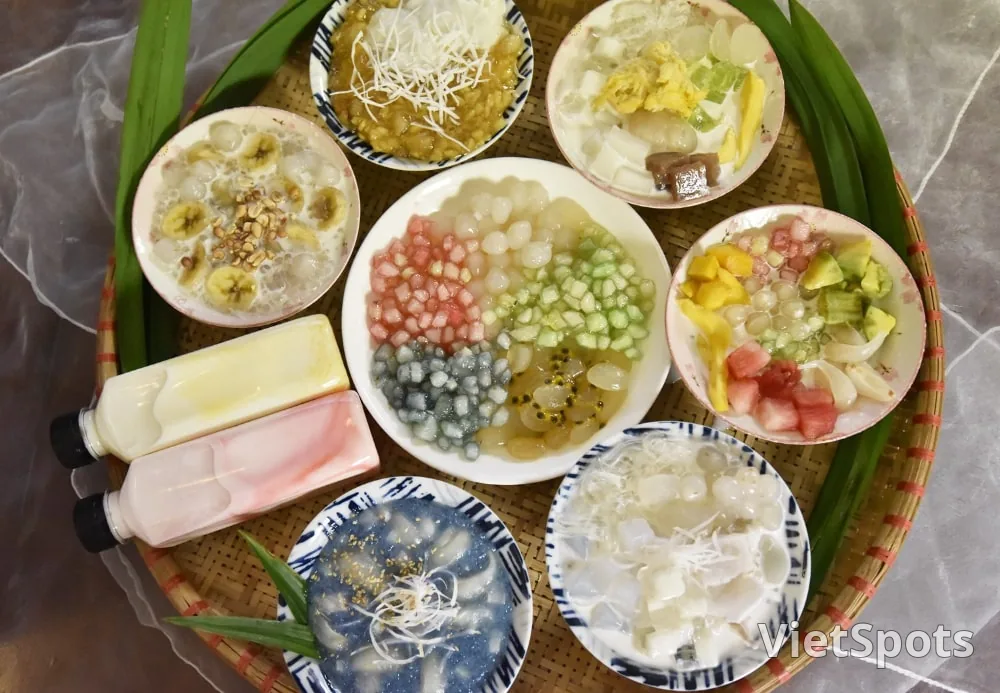
Hoi An cuisine is not only diverse but also very refined. Among it, Hoi An chè (sweet dessert soup) comes in many different variations, each carrying its own unique flavor. Below are the most famous chè dishes that you should try when visiting the ancient town.
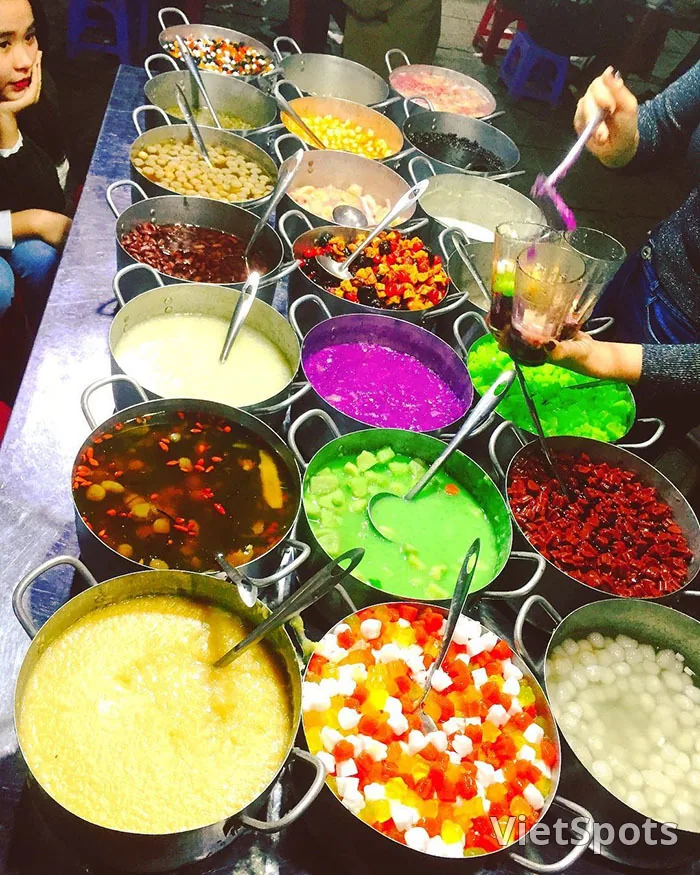
Hoi An Corn Sweet Soup – The Most Famous Specialty Sweet Soup
When it comes to Hoi An sweet teas, the first thing most local residents will introduce you to is corn sweet tea. This is considered the famous specialty of the ancient town.
Corn sweet soup (chè bắp) is made from a variety of sticky corn grown in Cẩm Nam, a land located just across the Hoài River. The corn here has small, chewy, and very fragrant kernels, creating a special flavor that is hard to find anywhere else.
The way to cook corn sweet soup (chè bắp) is quite simple, but it requires some skill and finesse:
Remove fresh corn kernels from the cob. Cook the corn with water and sugar. Add a bit of tapioca starch to give it a thicker consistency. Serve with coconut milk.
When you taste it, you'll notice the delicate sweetness of corn blending with the light richness of coconut milk – a flavor that's truly distinctive of Central Vietnamese cuisine.
Black Sesame Tea (Black Sesame Drink)
Another very famous chè in Hoi An is black sesame chè, also known as chè xí mà. This chè originates from the Chinese community that has lived in the ancient town for many centuries.
The main ingredients of the sweet soup dish include:
Black sesame powder, arrowroot starch, sugar, traditional herbs
The tea has a distinctive black color, a slightly rich flavor and a hint of bitterness from roasted sesame. According to Eastern medicine, black sesame has good health benefits such as:
Nourishes the blood, aids digestion, and helps keep the body warm.
That's why many people in Hoi An often eat black sesame sweet soup in the evening or on chilly days.
Refreshing Sweet Lotus Seed Chè
If you love light, nourishing sweet soups, then Hoi An lotus seed sweet soup is definitely a wonderful choice. The lotus seeds are cooked until just tender, keeping their natural mealy texture, and are usually simmered with rock sugar to give a light, refreshing sweetness.
According to many nutrition experts, lotus seeds have many health benefits such as:
Helps you sleep well, reduces stress, and supplements nutrients
That's why this tea is not only delicious but also very good for your health.
Hoi An Red Bean Tea
On the list of familiar Hoi An sweet soups (chè), red bean chè has always been a favorite choice among many tourists. After being soaked until soft, the red beans are slow-cooked over a low flame to preserve their rich, nutty texture and natural aroma. When eaten, the sweet soup has a light sweetness, and the beans are soft but not mushy.
According to the experience of many locals, red bean sweet soup tastes best when cooked with a bit of rock sugar and served with coconut cream. This sweet soup is not only delicious but is also considered a dish that carries good luck, especially in East Asian culture.
Mung Bean Sweet Soup (Chè Đậu Ván)
A dessert soup that is quite characteristic of Central Vietnam and also very popular in Hoi An is che dau van (lima bean sweet soup). Lima beans are larger in size compared to ordinary beans and have a very distinctive nutty, savory flavor.
After being cooked until soft, the lima beans are mixed with sugar and a little coconut milk to add a light, creamy flavor. This sweet soup has a fairly thick texture, tastes wonderfully fragrant, and is easy to get "addicted" to.
Che Thung (sweet soup dessert)
Chè thưng is a traditional sweet beverage familiar to many families in the central region, especially during Tet holidays. In Hoi An, this beverage is also quite commonly sold at long-established dessert and beverage shops.
The ingredients of chè thưng usually include:
Mung Beans, Taro, Tapioca Pearls, Coconut Milk, Shredded Coconut
The combination of multiple ingredients creates a tea with rich flavor, creamy and fragrant, while still preserving the characteristic sweet and fresh taste of Hoi An tea.
Sam Bo Luong Sweet Soup (Vietnamese Herbal Dessert Soup)
If you visit the ancient town on hot sunny days, sâm bổ lượng sweet soup is definitely a wonderful way to cool down. This dessert originated from Chinese cuisine but has become very popular in Hoi An.
A cup of sam bo luong sweet soup usually has ingredients such as:
Dried longan, jujube, lotus seed, seaweed, job's tears, rock sugar
Thanks to the combination of many herbal ingredients, this sweet soup is not only cooling but is also believed to help clear internal heat and be good for your health.
Floating Sweet Rice Balls (Chè Trôi Nước)
Chè trôi nước (floating sweet rice balls in ginger syrup) is a familiar traditional Vietnamese dessert, but in Hội An this dessert is given a slight twist to suit local tastes.
These round balls are made from soft, chewy glutinous rice flour, filled with a sweet and rich mung bean paste. When served, the sweet soup is poured over with warm ginger syrup and sprinkled with fragrant roasted sesame seeds. This combination creates a truly irresistible flavor.
Taro Sweet Soup
Taro is a fairly popular ingredient in Central Vietnamese desserts. Hoi An's taro sweet soup has a distinctive rich, nutty flavor and a fairly thick, smooth texture.
The taro is cut into bite-sized cubes and simmered until soft with sugar and coconut milk. When you taste it, you'll notice a light, creamy richness that's just right for enjoying in the evening while strolling through the old quarter.
Banana Sweet Soup
Banana tea is a humble beverage that has become beloved by many visitors when they come to Hoi An. Ripe bananas are cooked with coconut milk, tapioca flour, and sometimes roasted peanuts are added to enhance the flavor.
This chè has a light, creamy flavor with the fragrant aroma of ripe bananas and is usually eaten hot. It is a very familiar dessert in many families in Central Vietnam.
Mixed Tea
If you want to try many flavors in one dish, Hoi An mixed sweet soup (che thap cam) is definitely a fitting choice. A glass of mixed sweet soup usually includes many ingredients such as:
Red BeanGreen BeanJellyTapioca PearlsShredded CoconutCoconut Milk
The variety of ingredients makes the sweet soup (chè) more appealing and suitable for many different tastes.
Seaweed Sweet Soup (Chè Rong Biển)
During the hot summer days, many locals often choose seaweed sweet soup to cool down. The seaweed has a light, crunchy texture, and when cooked with rock sugar, it creates a refreshing sweet soup that's very easy to enjoy.
Book Food in Da Nang — in English on VietSpots
- 🎁 Sign up and get 15 Welcome Pack coupons — e.g. Motorbike Rental 45%
- 👑 Member tier discount up to 15% on site (Silver 5% · Gold 15%)
- 🛂 Auto-fill arrival card📶 Compare lowest eSIM prices🚻 Find toilets
Comments