

[Chengdu Day2] Paying Respects to Water, Seeking the Way: A One-Day Tour of Dujiangyan and Qingcheng Mountain


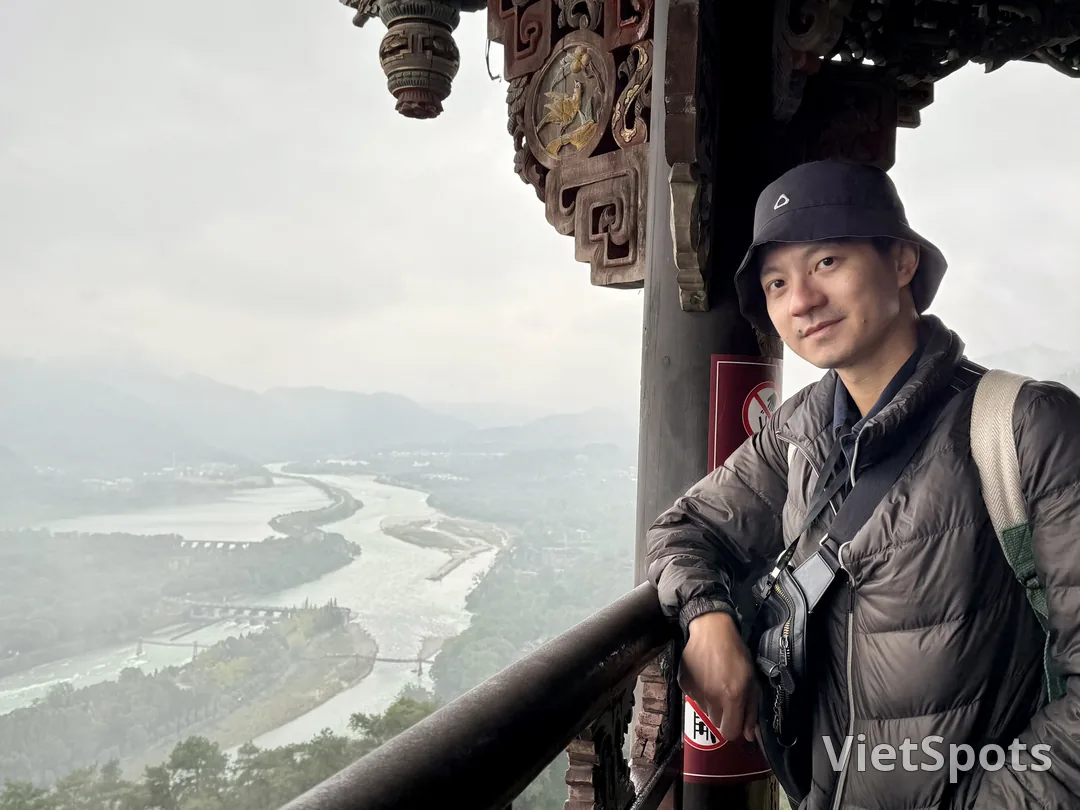
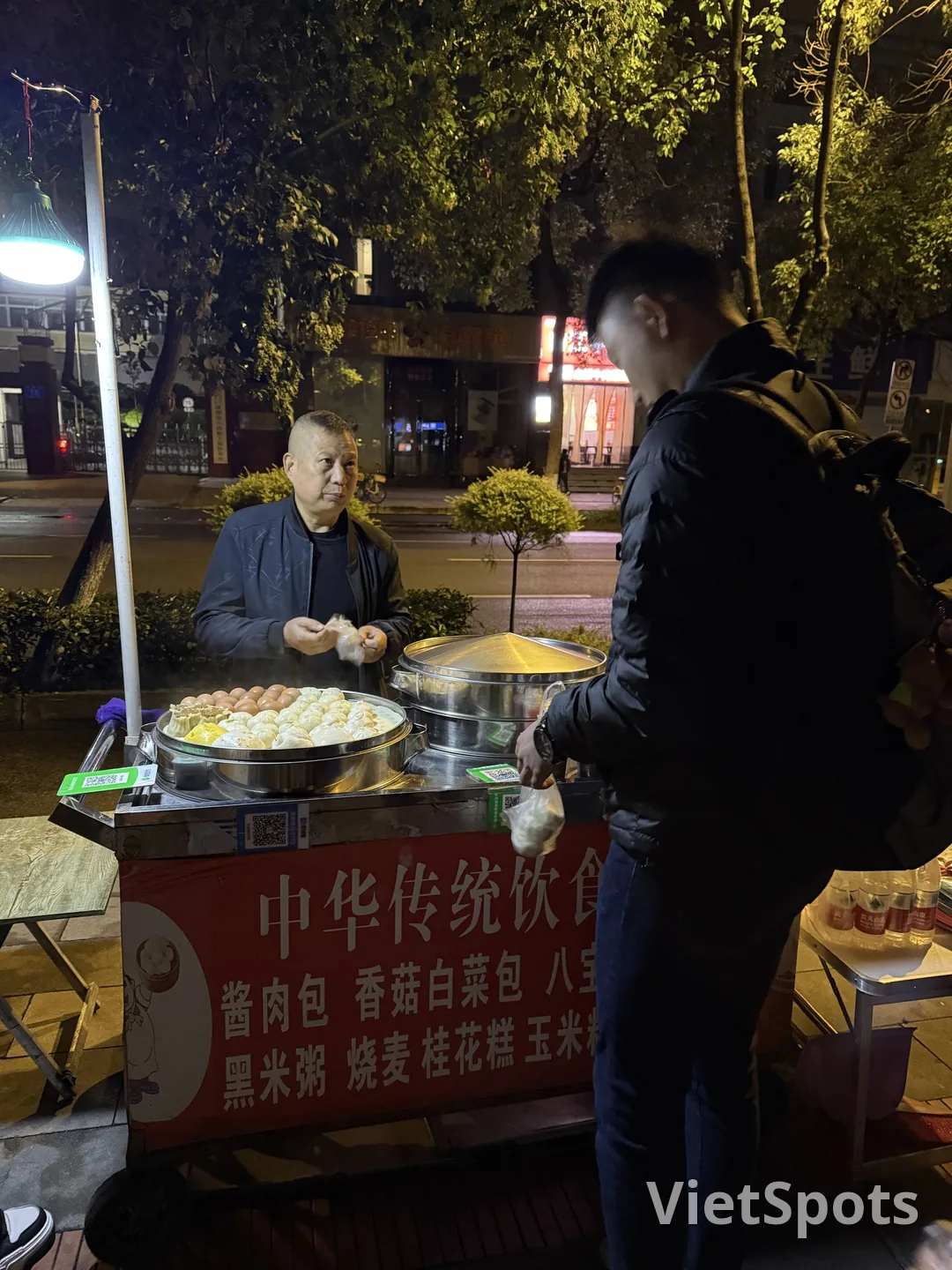
From the legendary water management by Li Bing and his son, to the serene mountains where Zhang Daoling founded Daoism, we stepped into two of Sichuan's most spiritually blessed destinations on the same day——Dujiangyan and Qingchengshan. 🗓 Today's Itinerary Chengdu → Dujiangyan → Qingchengshan → Chunxi Road Dujiangyan: Fish-mouth Weir・Fulong Taoist Temple・Yulei Pavilion|Qingchengshan: Yuecheng Lake・Shangqing Palace Departure Before Dawn At 5:30 AM the alarm went off, luggage had been mostly packed the night before, and after a quick wash we headed out the door. The vehicle that came for us was a 9-seater minibus, and I thought "Oh no, how tiring it would be if we had to sit in this van all day!"——fortunately it was just a shuttle to the main boarding location. Taking advantage of the opportunity, we bought some breakfast to tide us over.
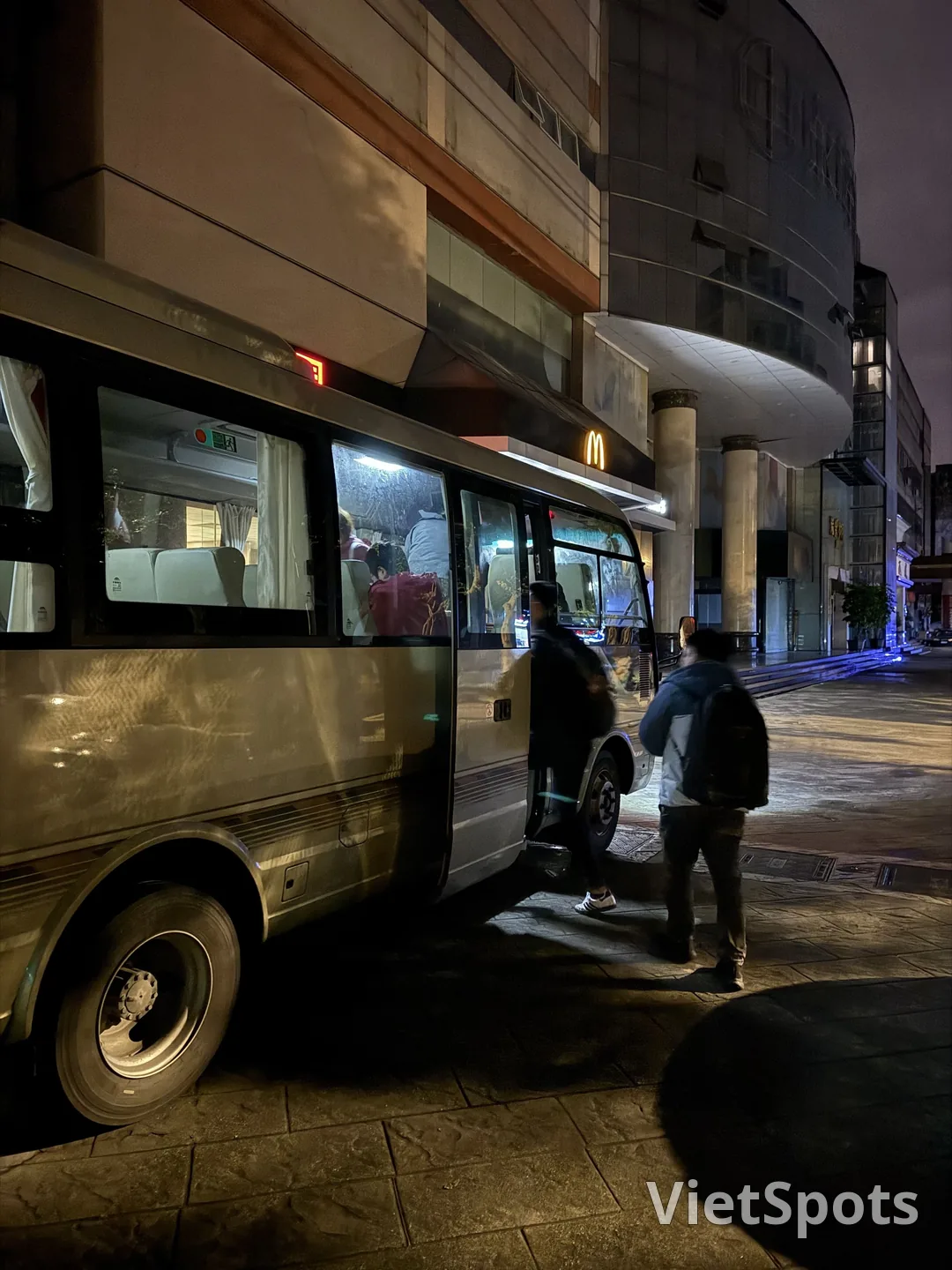
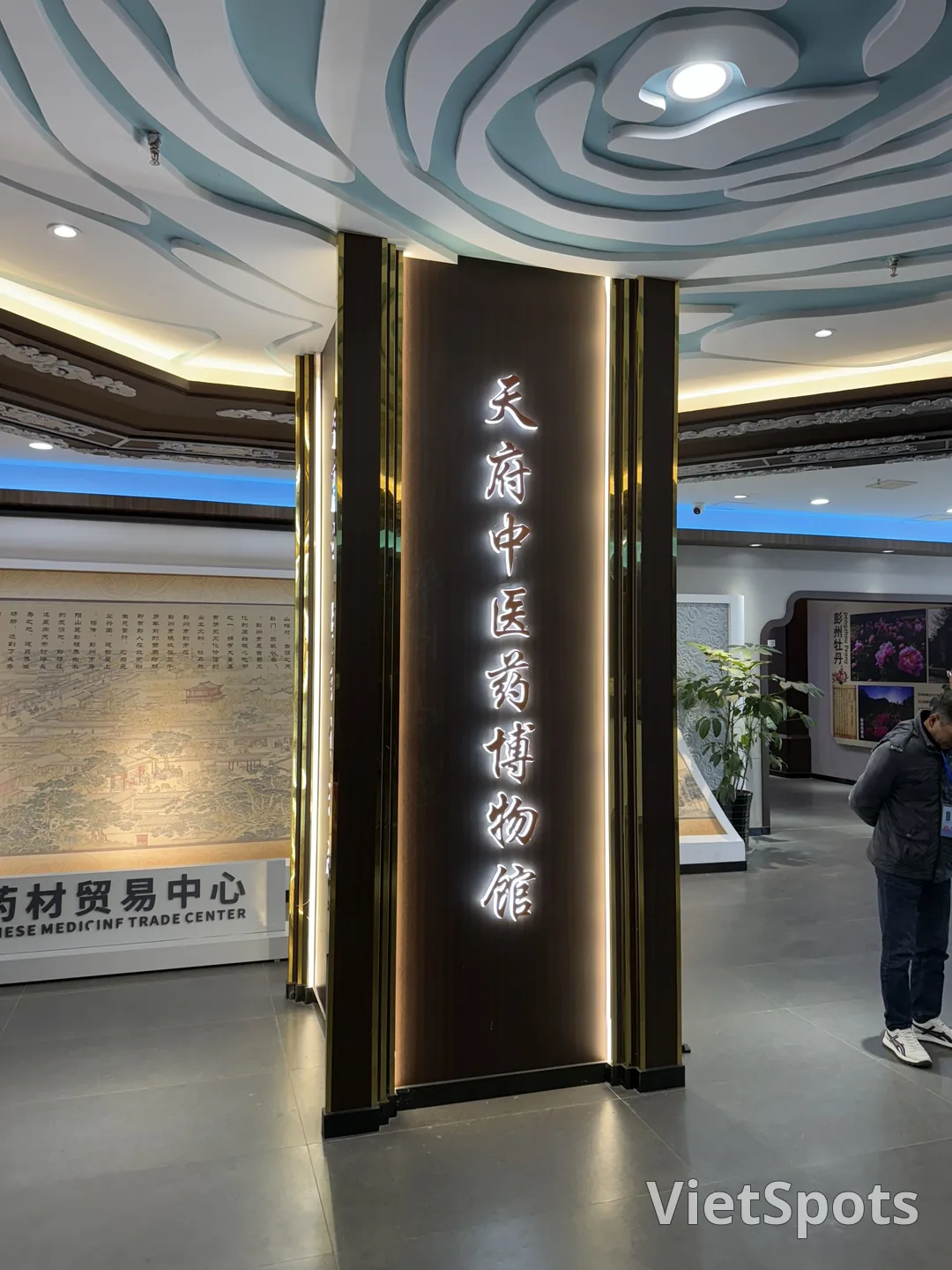
The first stop was a shopping station, which the travel agency had already explained beforehand, but originally scheduled for 30 to 40 minutes, it ended up stopping for nearly 50 minutes. On site, they mainly introduced Tibetan medicine, health products, and souvenirs. Although the sales pitch was obvious, there was no forced purchasing.
Dujiangyan: An Ancient Feat of Wisdom in Water Conservancy We went back to the car to continue our nap, and arrived at the Dujiangyan scenic area at around 9 a.m. The most well-known line about this place comes from Yu Qiuyu: "Worship the water at Dujiangyan, seek the Tao at Qingcheng Mountain.
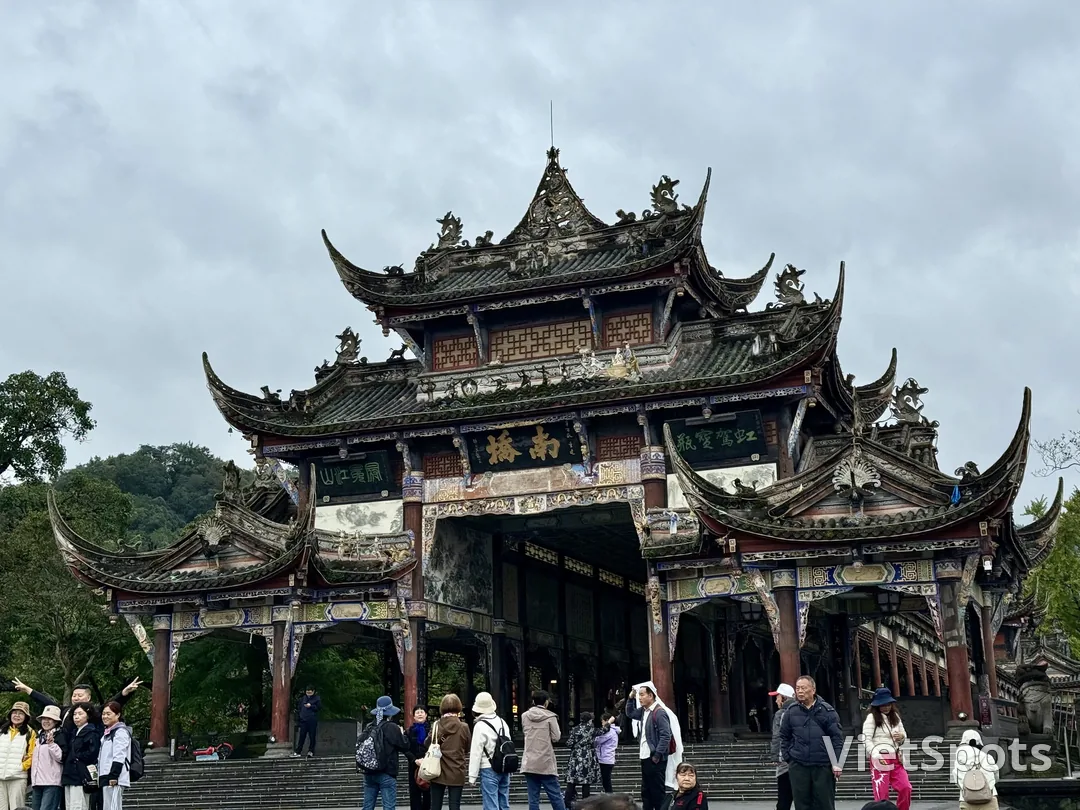
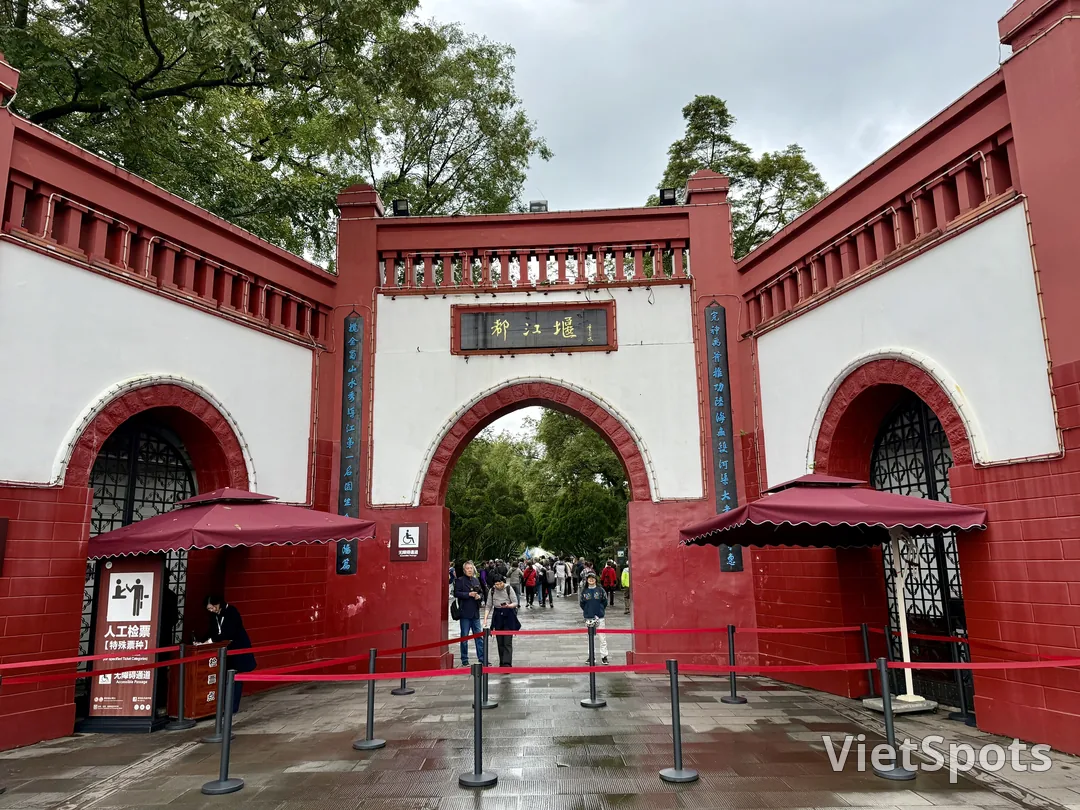
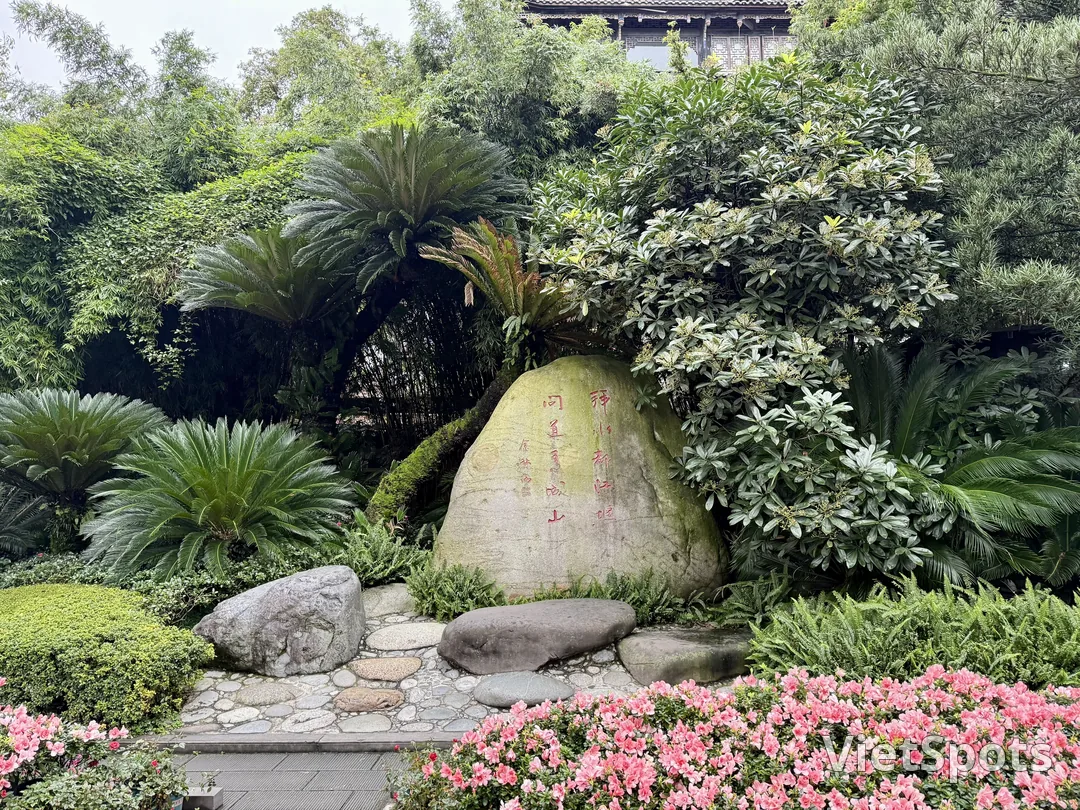
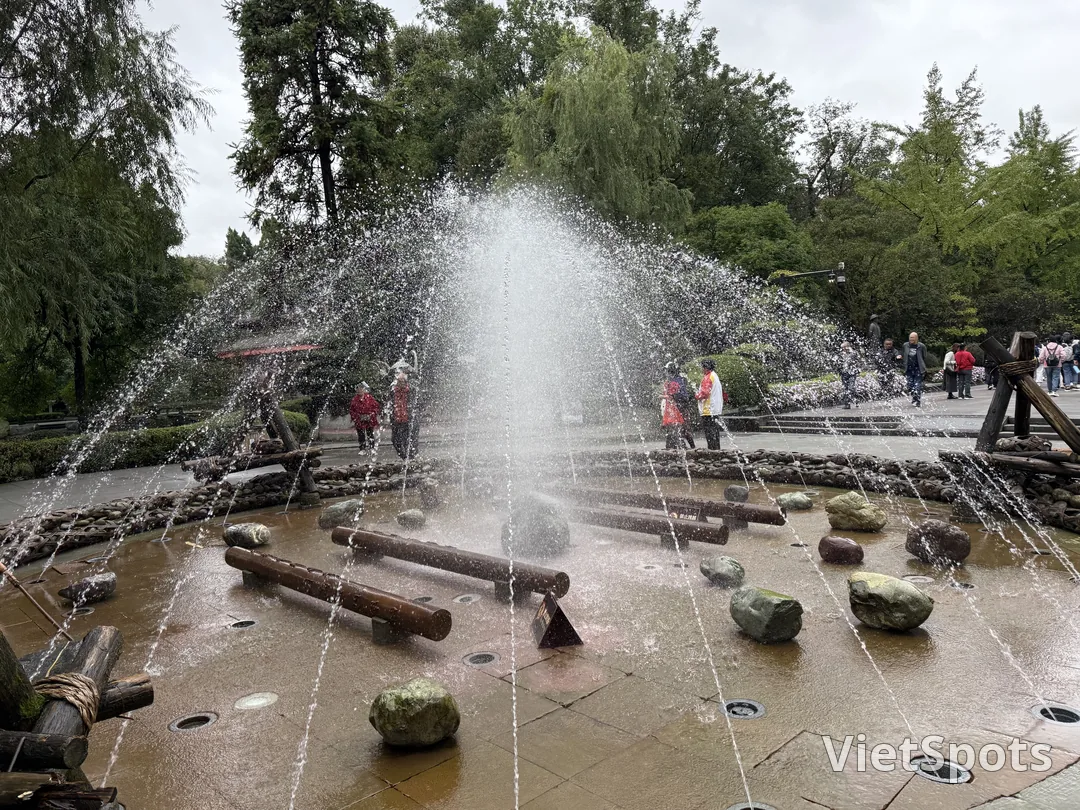
At the entrance stands a fountain designed around the imagery of the "Macha" (wooden weir), symbolizing the wisdom of ancient people in dredging silt and diverting water.
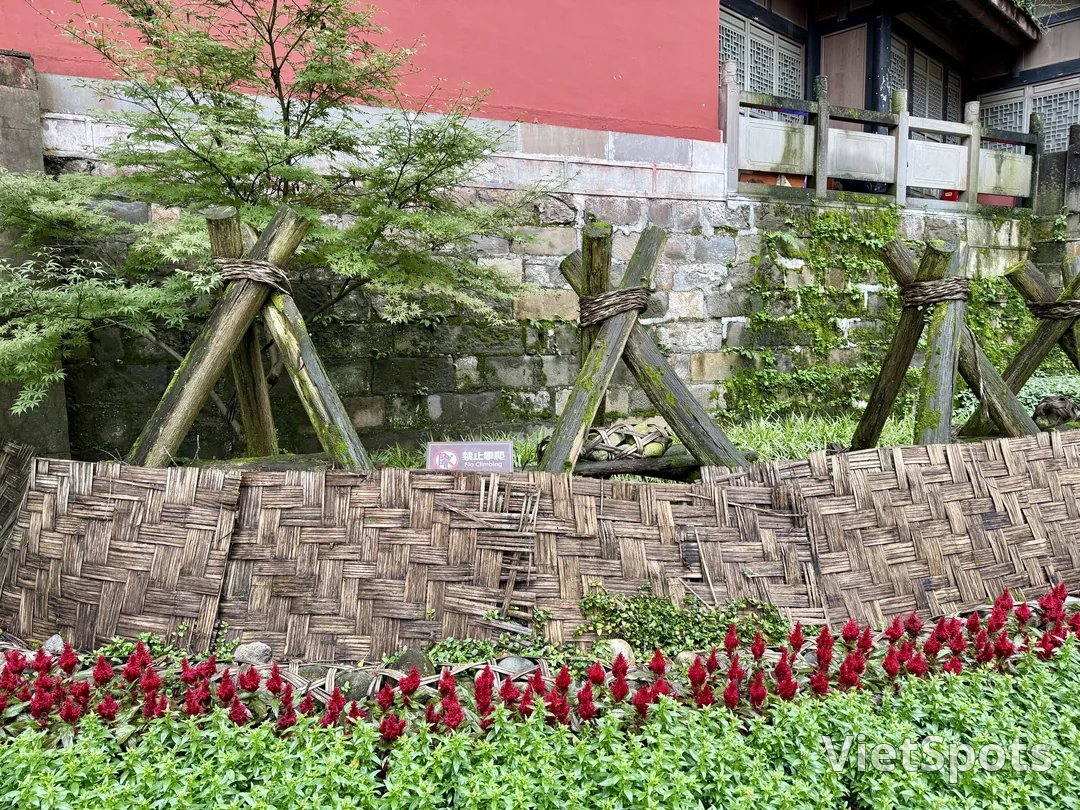
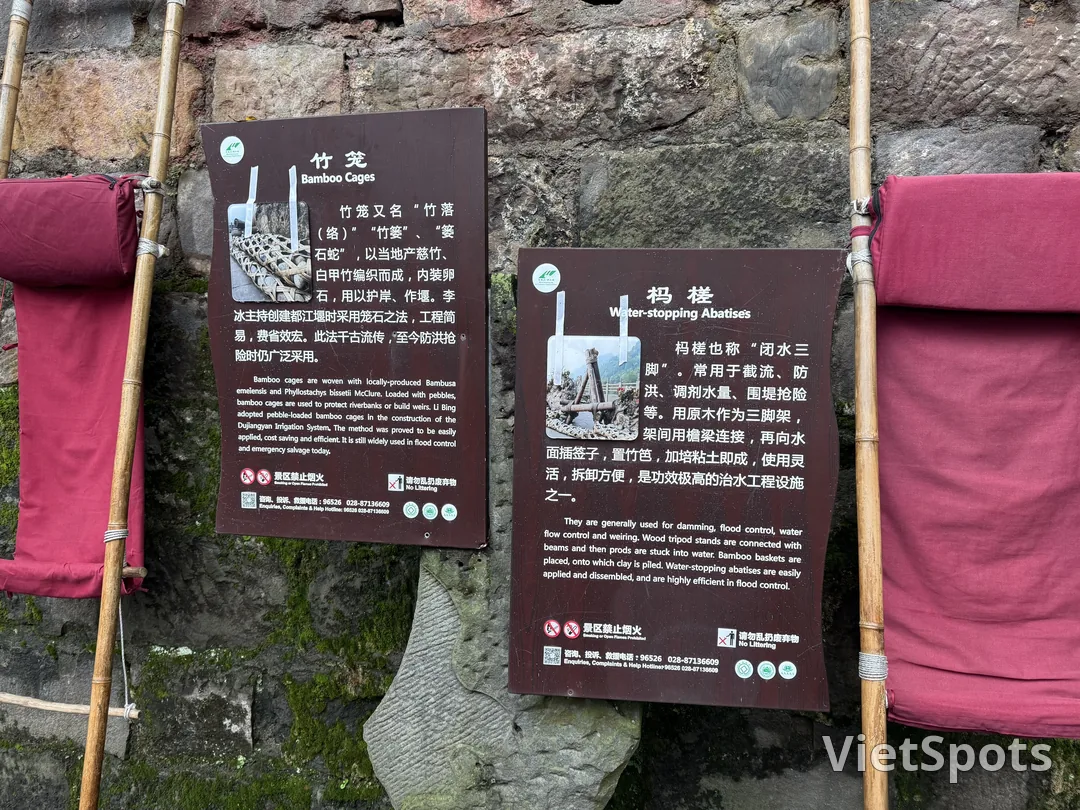
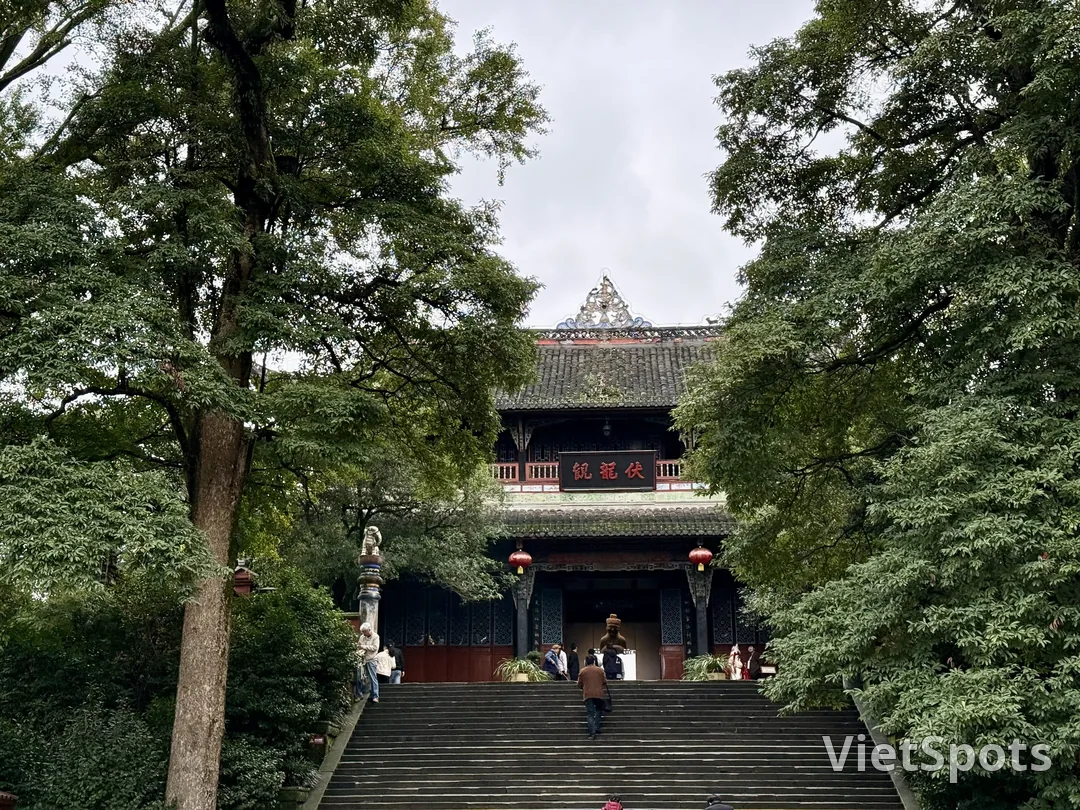
In addition to the history of Li Bing and his son controlling the waters, Dujiangyan also incorporates the mythology of the Second Lord subduing the river dragon; therefore, the scenic area features the 'Fulong Guan'.
We started our tour at Baopingkou, with the guide explaining along the way: Baopingkou is the water diversion inlet of the Inner River, controlling the amount of water flowing into the Chengdu Plain;
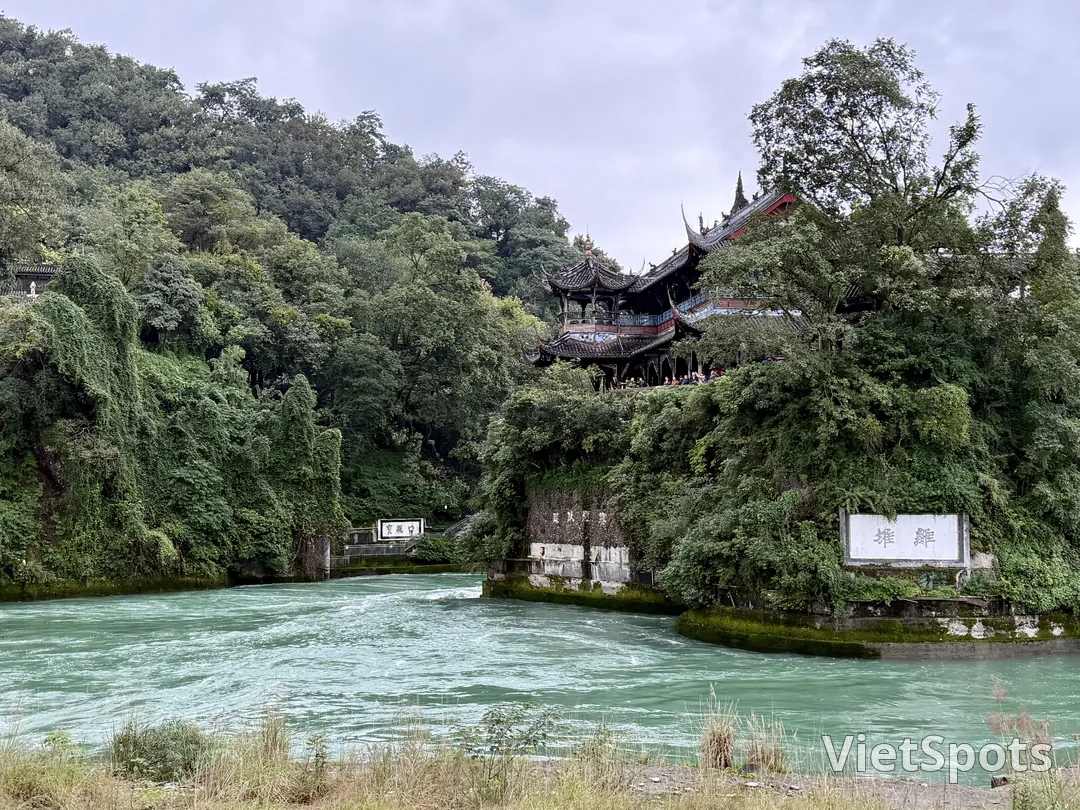
The Feisha Weir is located between the inner and outer rivers, responsible for sediment discharge and flood diversion, ensuring the quality of irrigation water;
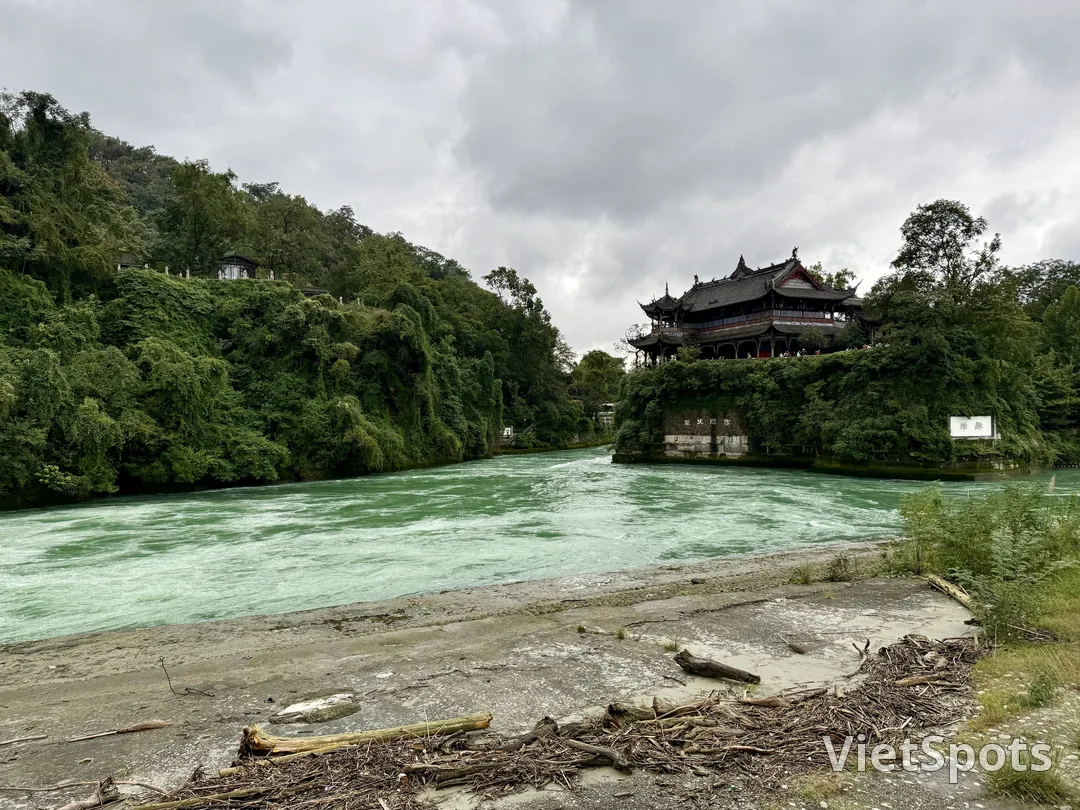
The Fish Mouth (Yuzui) is the starting point of the entire system, dividing the Min River into the Inner River and the Outer River.
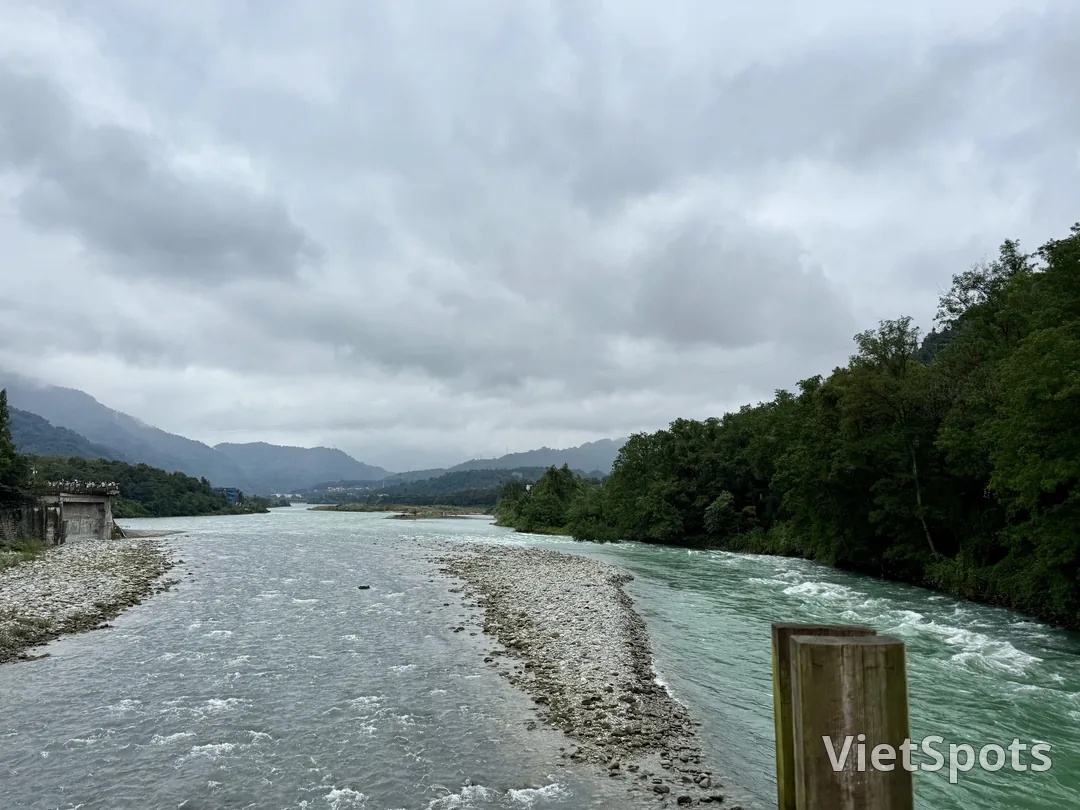
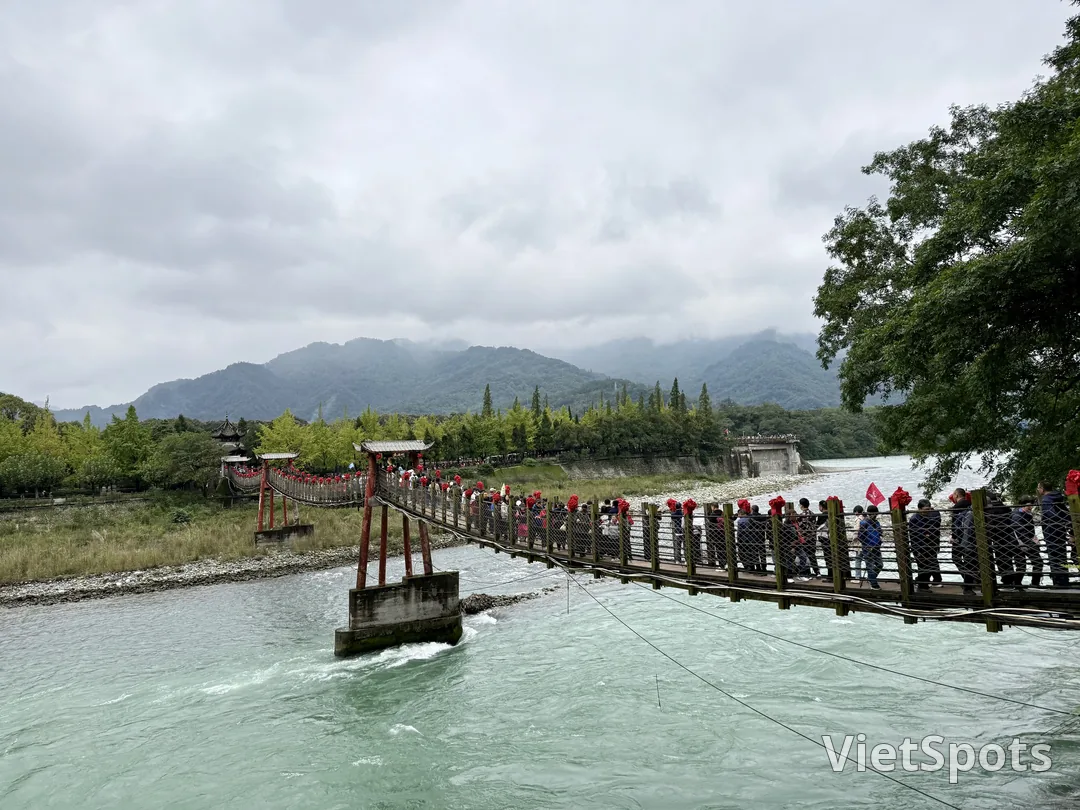
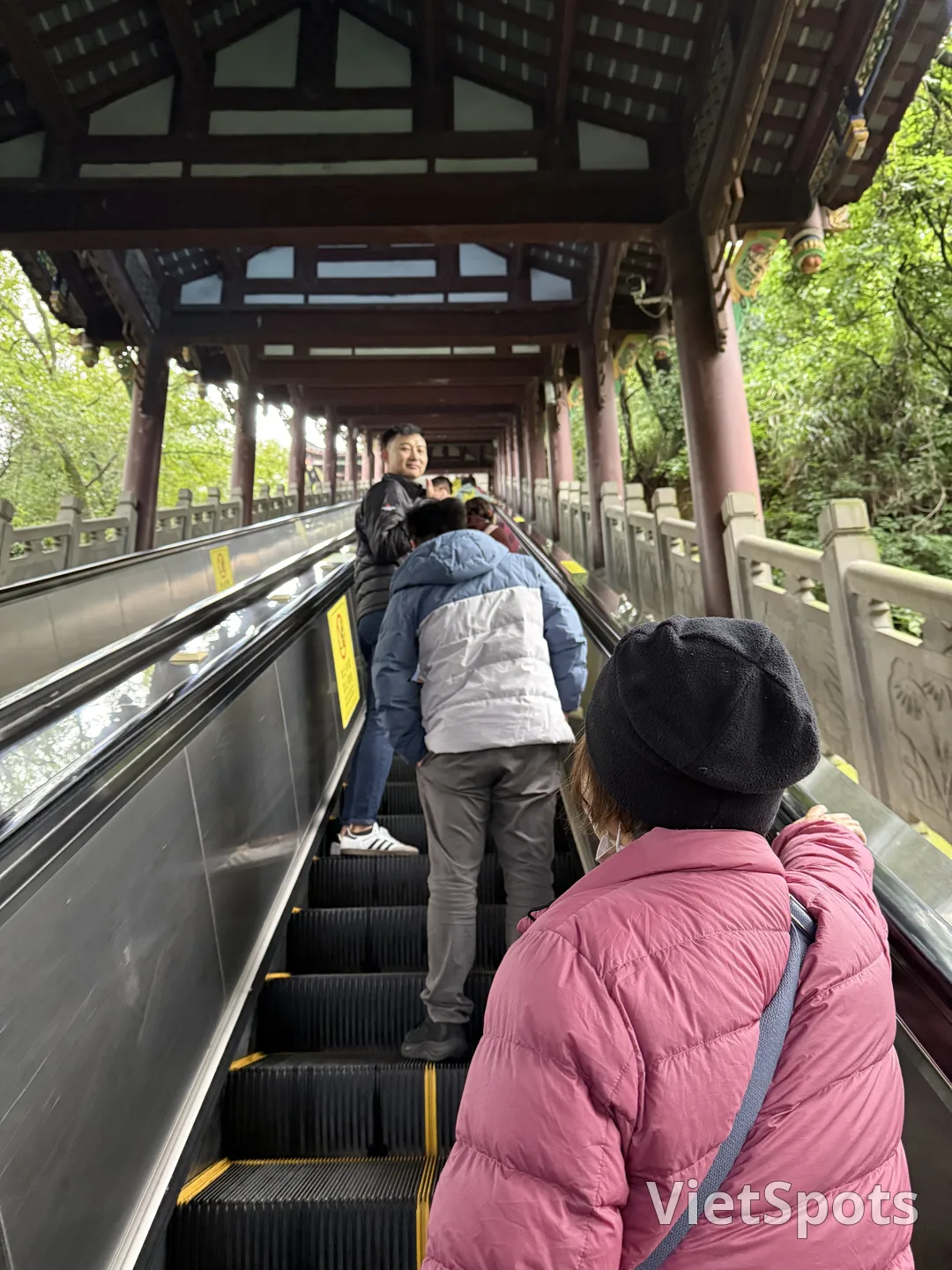
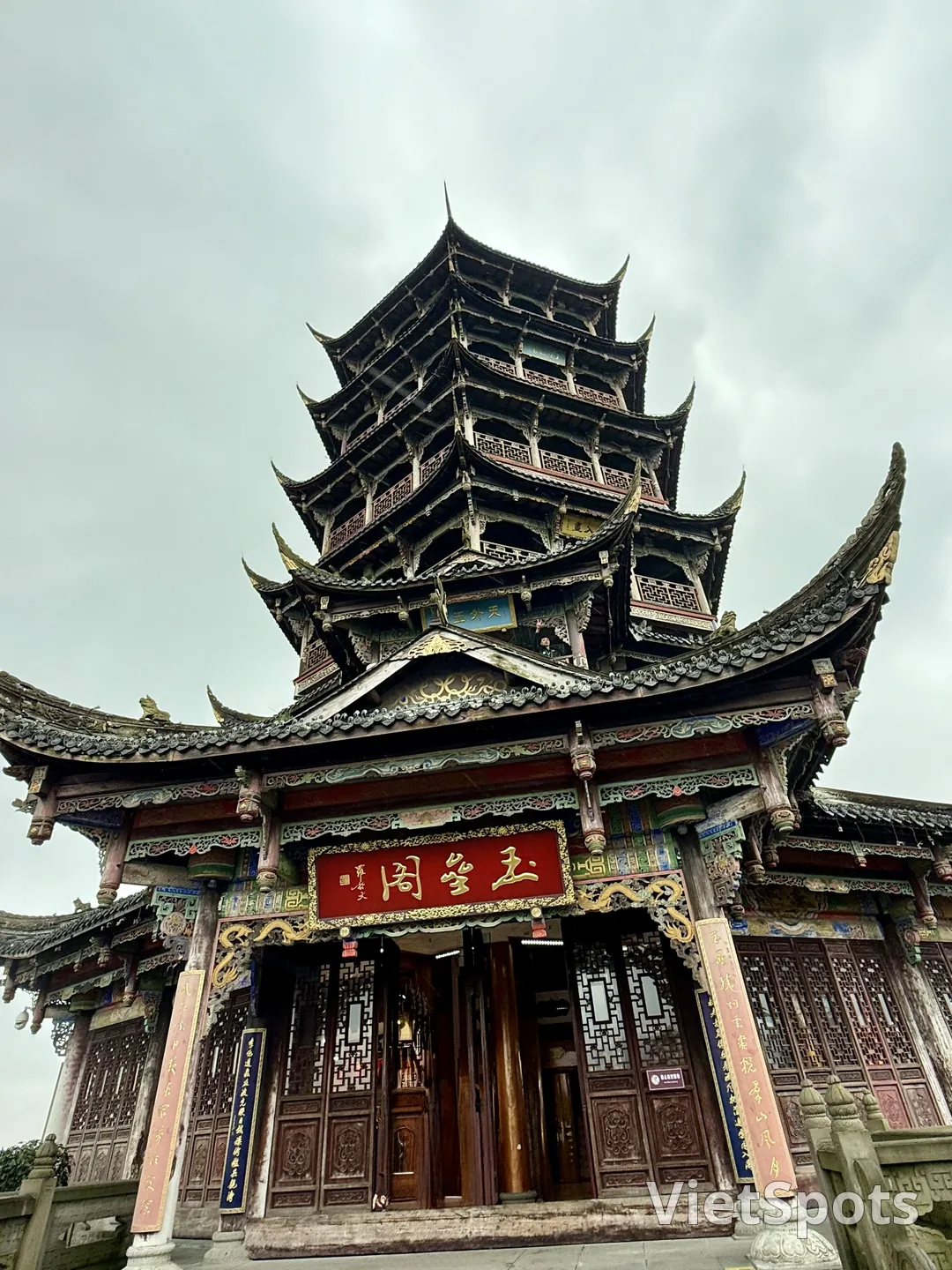
Although it is the dry season in winter, the water flow is still turbulent and powerful. Our guide explained that in summer, the water flow is reversed, using design to control the amount of incoming water, showcasing the engineering wisdom from two thousand years ago. Next, we took the escalator up the mountain to Yulei Pavilion. Yulei Pavilion has six floors in total, and on a clear day you can overlook the entire Dujiangyan. But today the fog was thick, and we could only faintly make out the outer river and the hydroelectric power facilities.
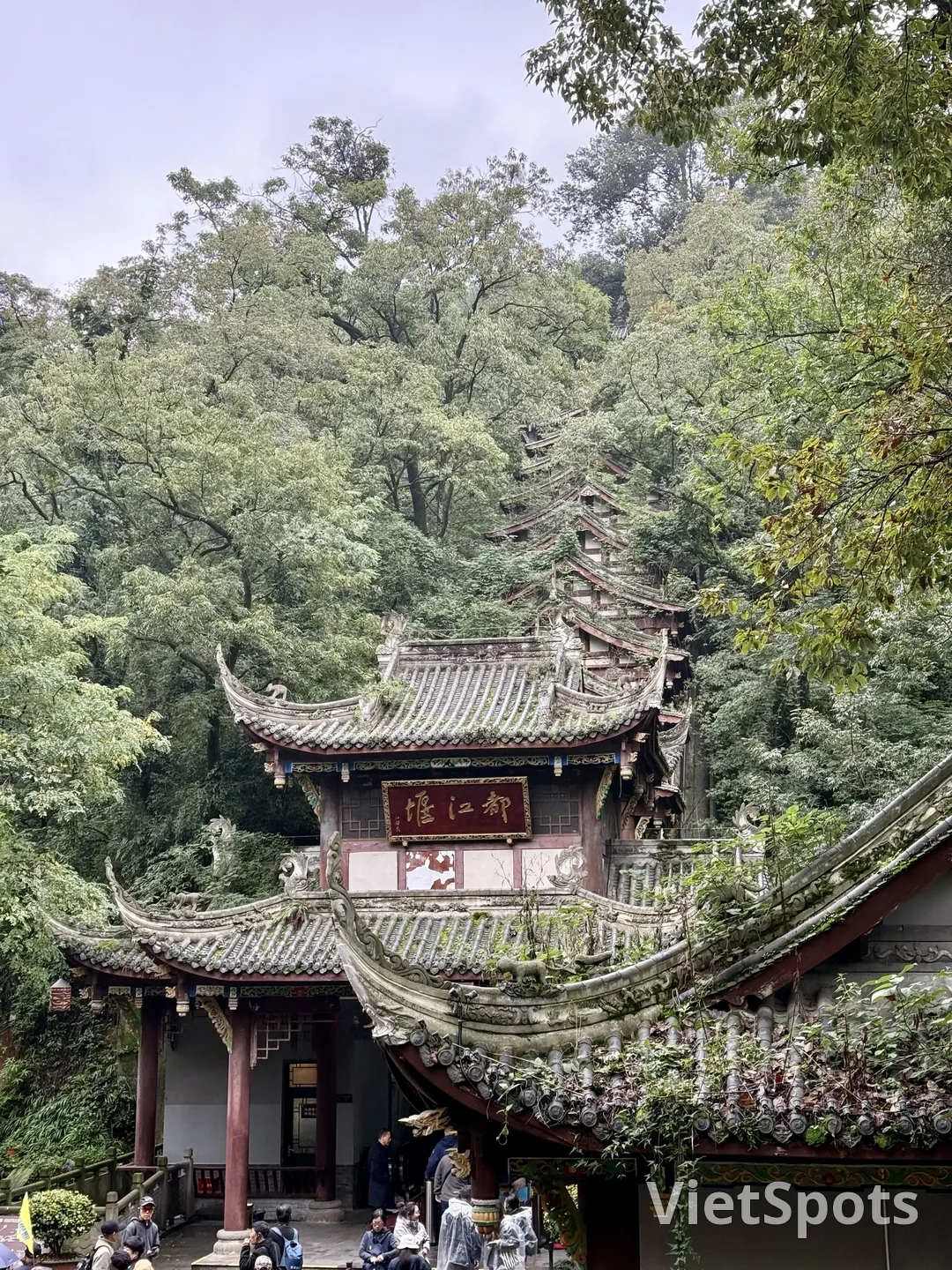
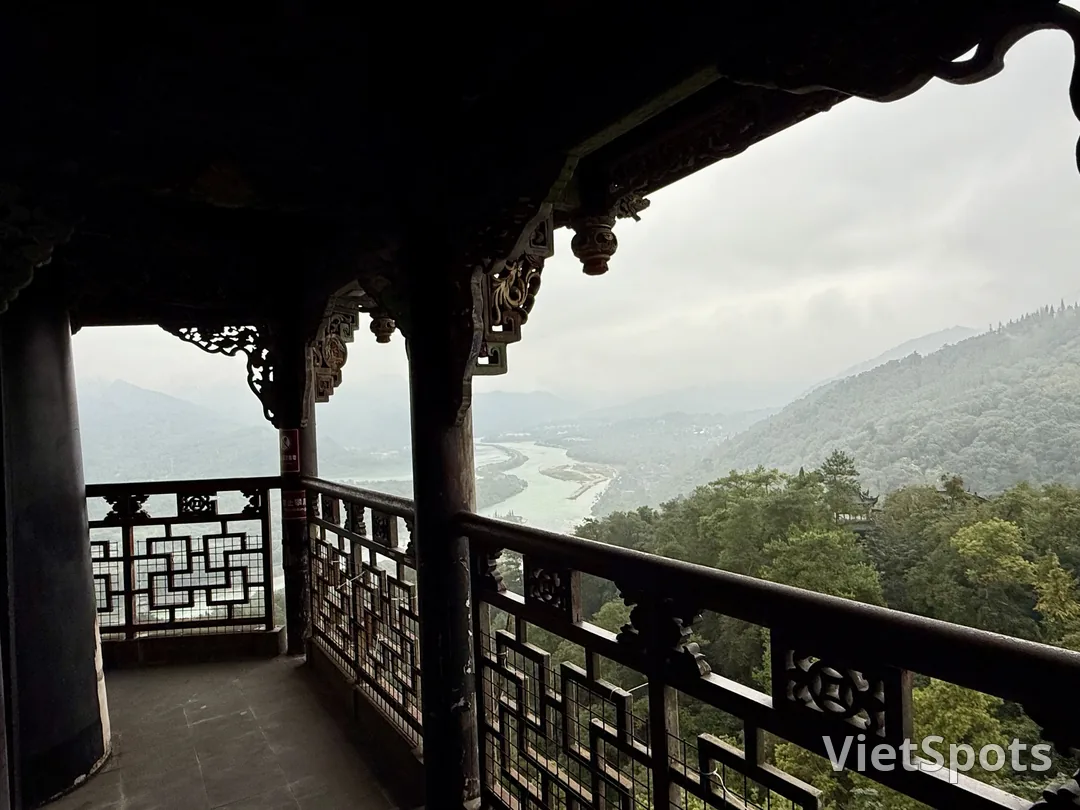
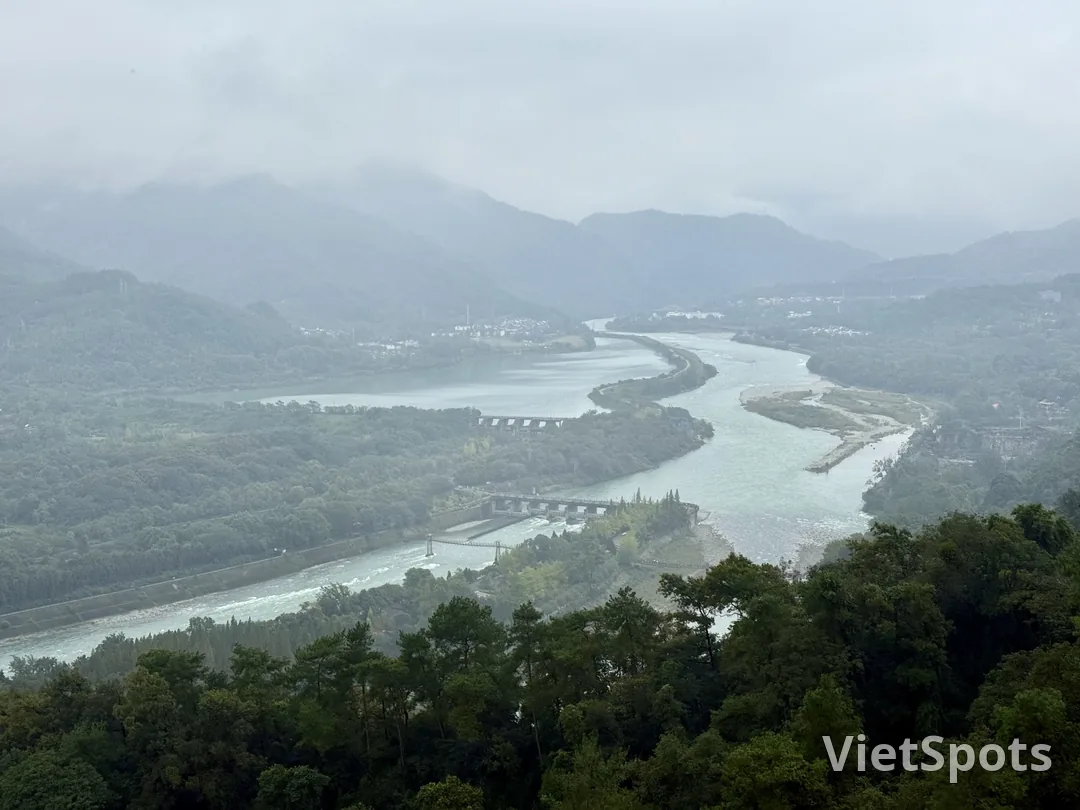
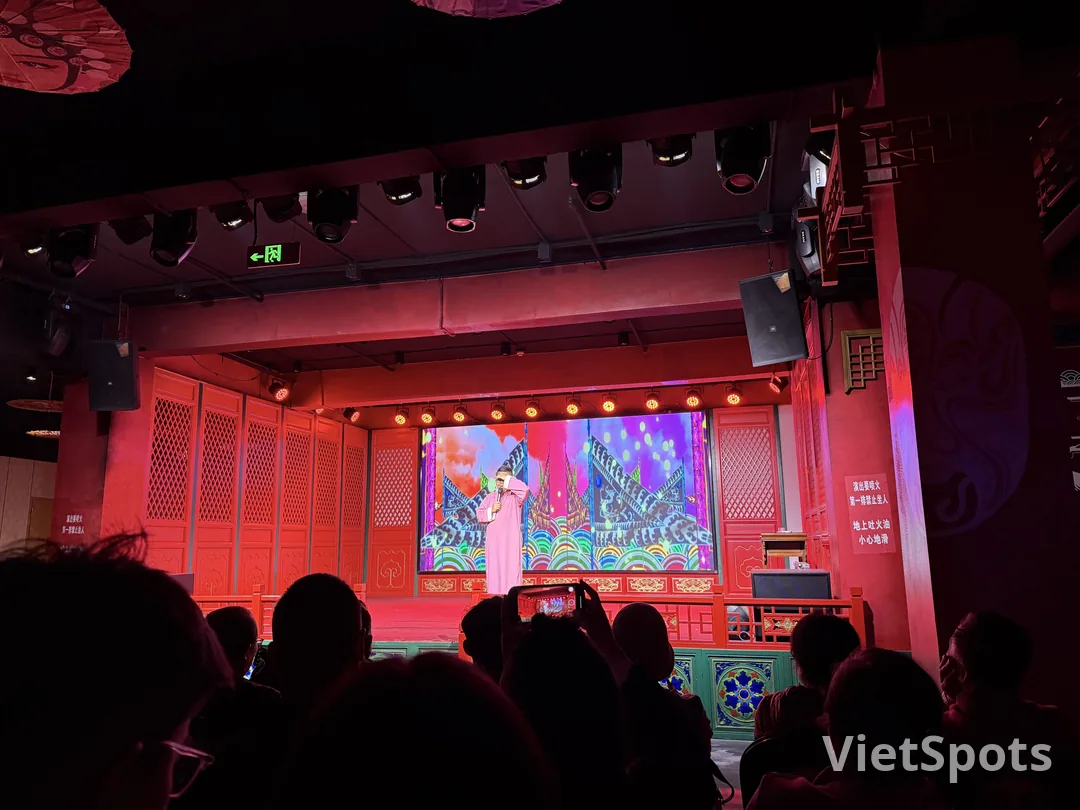
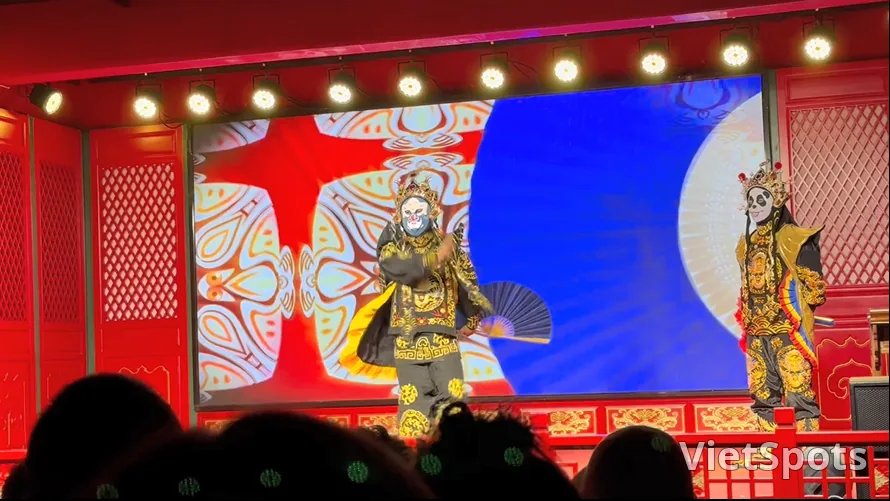
I thought to myself: "I already felt that surging power just now looking at the Inner River — if this is the Outer River, it must be even more stunning!" From the entrance to Yulei Pavilion, the whole route takes about 2.5 hours. Midway Break: The "Encounter · Dujiangyan" Show Because the itinerary went smoothly, we arrived early at the lunch spot, so the guide arranged for us to watch the "Encounter · Dujiangyan" performance (only later did we find out this was actually part of the extra charges 😅). The show was divided into three parts: the Fire Lantern Dance, the shadow puppet play of Li Bing Taming the Waters, and the grand finale, the face-changing act. The performance was truly wonderful, except the shadow puppet segment was a bit too calm and I almost dozed off. However, I later found out that tickets for this show cost 50 RMB, so independent travelers probably wouldn't go out of their way to see it.
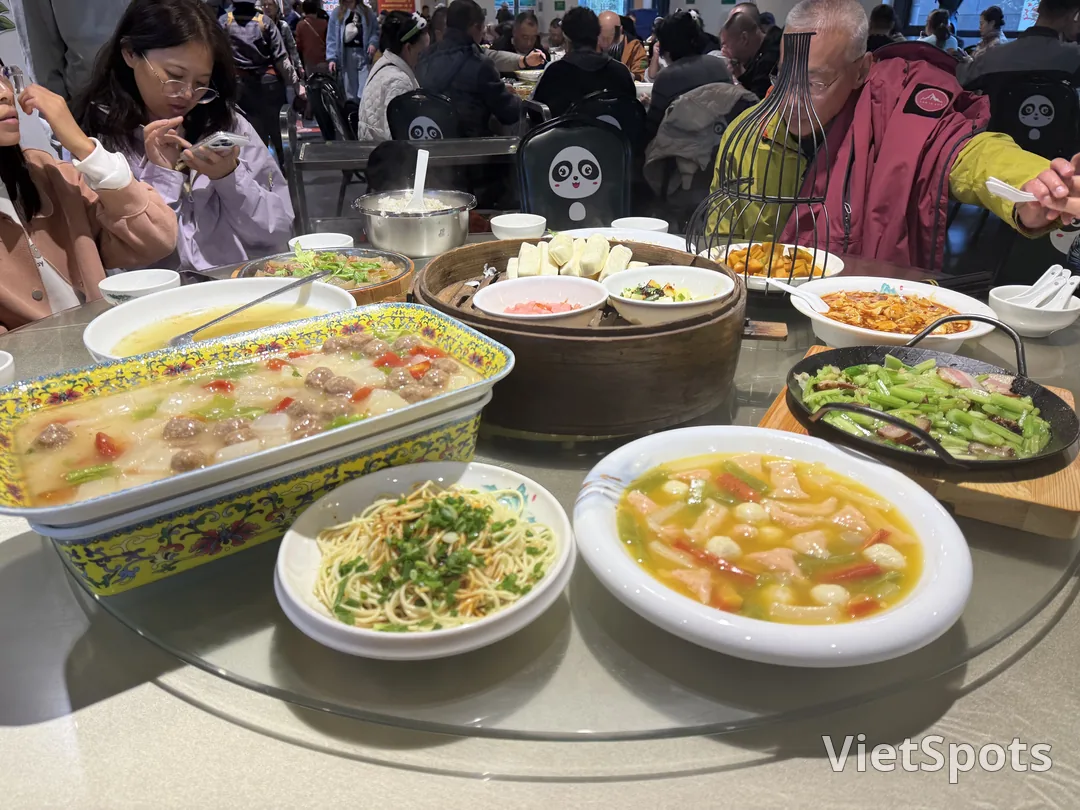
Lunch was unexpectedly abundant — although there weren't many meat dishes, there were plenty of choices, and vegetarians also had a variety of options.
Mount Qingcheng: A Place to Ask About the Tao In the afternoon, we headed to Mount Qingcheng. This is one of the birthplaces of Taoism, known as the "Ancestral Mountain of Taoism," and is the place where Celestial Master Zhang Daoling practiced and attained immortality. The Mount Qingcheng scenic area is extremely vast, so multiple transportation transfers are necessary: The first segment involves taking an electric cart to the mountain entrance (if walking would take about 40 minutes);
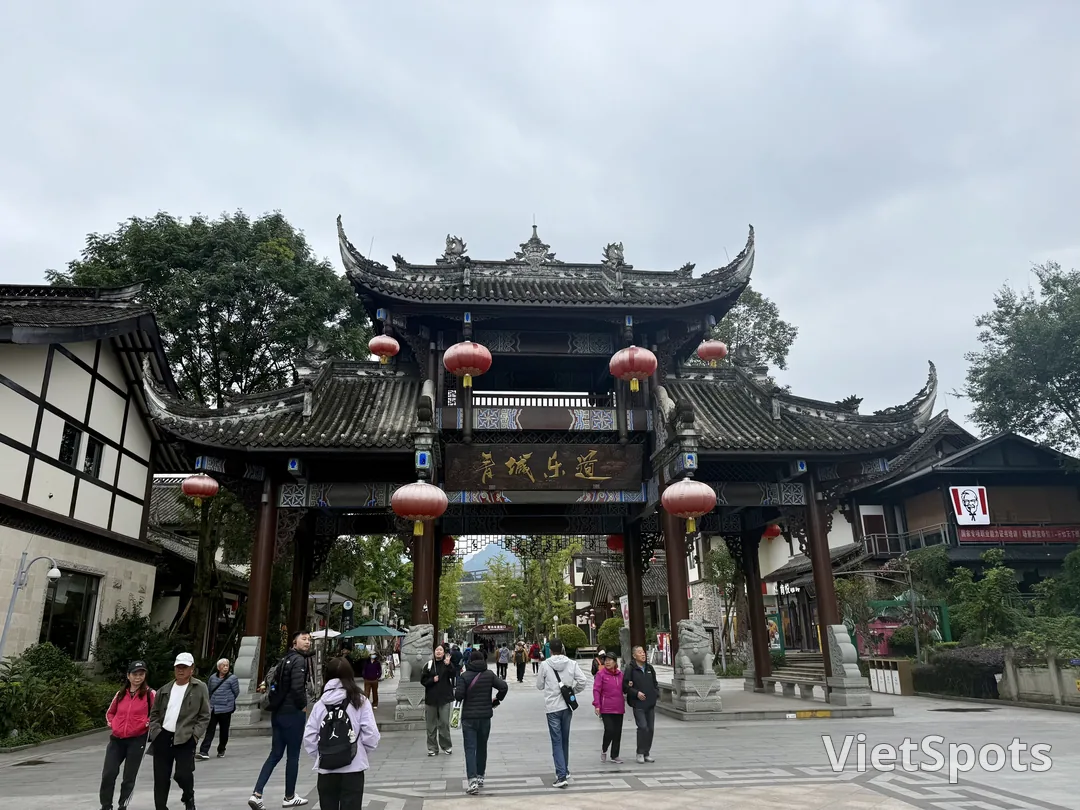
On the way, we passed by a Taoist college, where students must practice for 3 to 5 years before becoming official disciples; The first attraction is Yuecheng Lake, where you can take a boat to the other side (one-way 5 RMB), but we chose to walk along the lake instead;
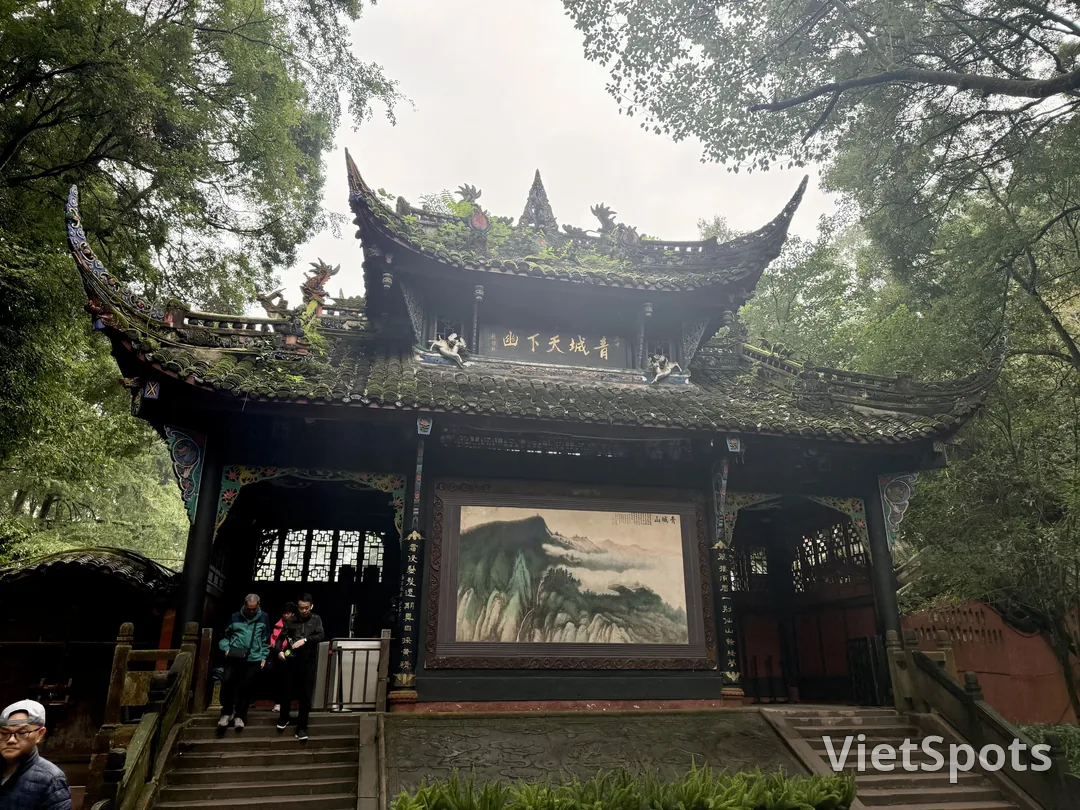
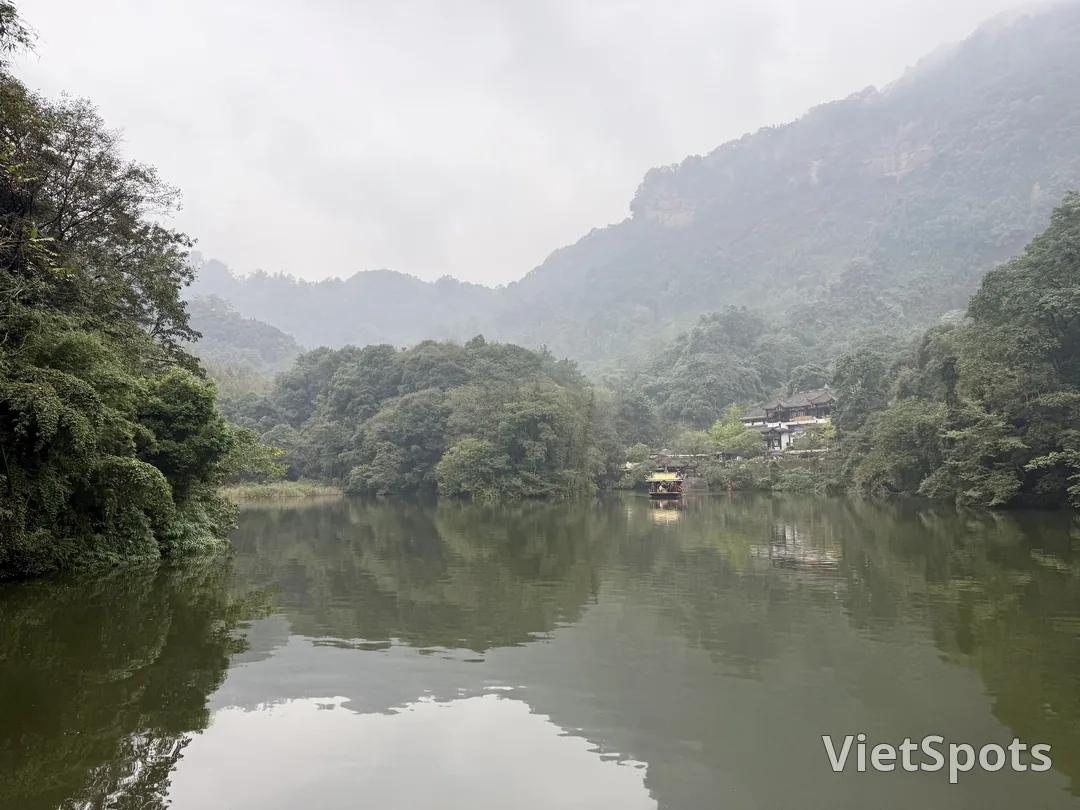
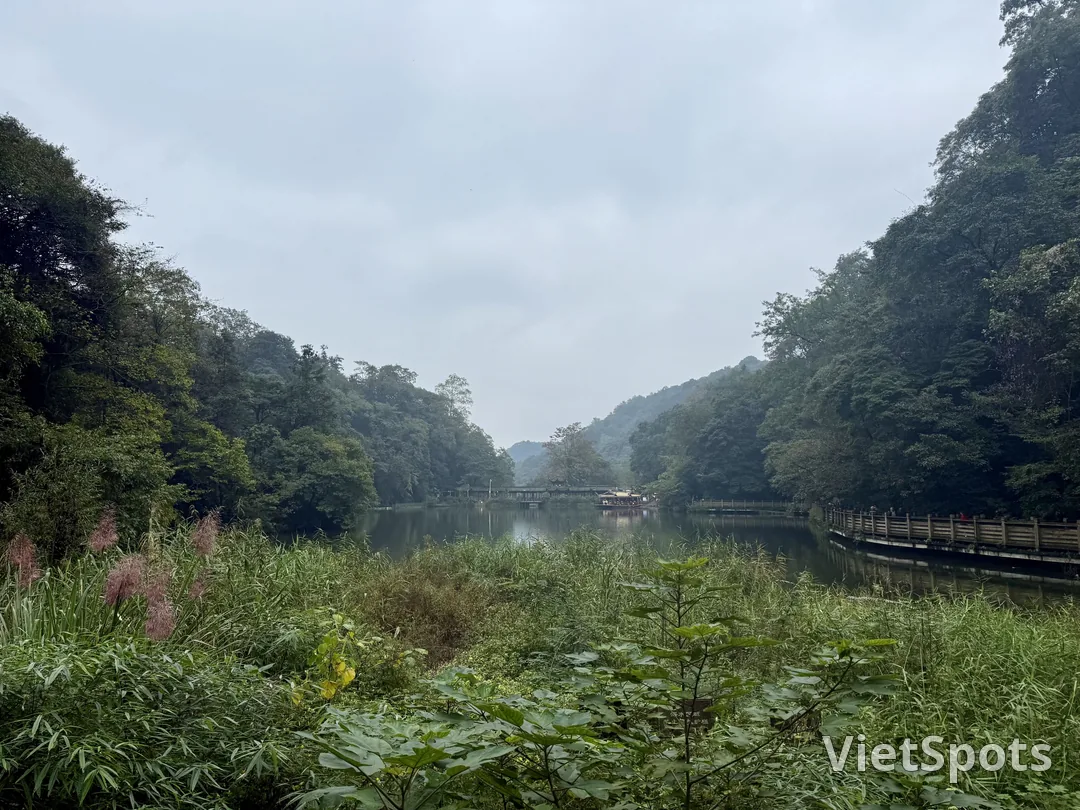
Then walk for about 30–40 minutes to reach the cable car station, and take a 5-minute cable car ride up the mountain.
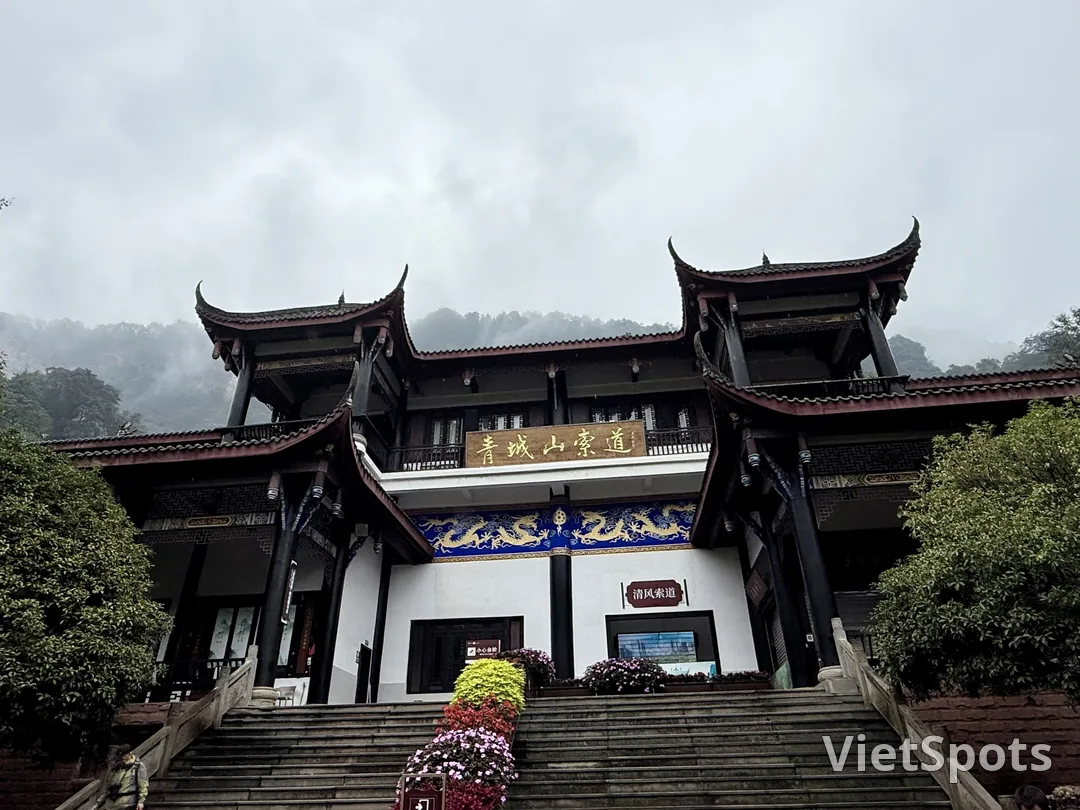
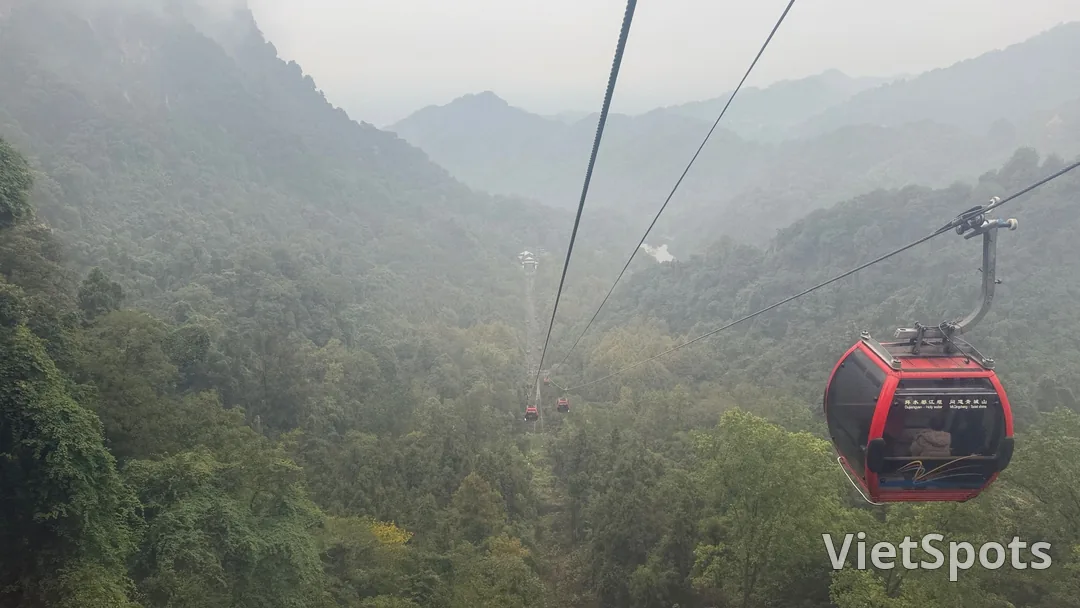
After leaving the cable car, you first arrive at Ciyun Pavilion, which enshrines a male-form Guanyin; further up is the Shangqing Palace. The three characters on the temple's plaque, "Shangqing Palace," were personally inscribed by Chiang Kai-shek, and thanks to the abbot's quick wit, they survived unscathed during the Cultural Revolution.
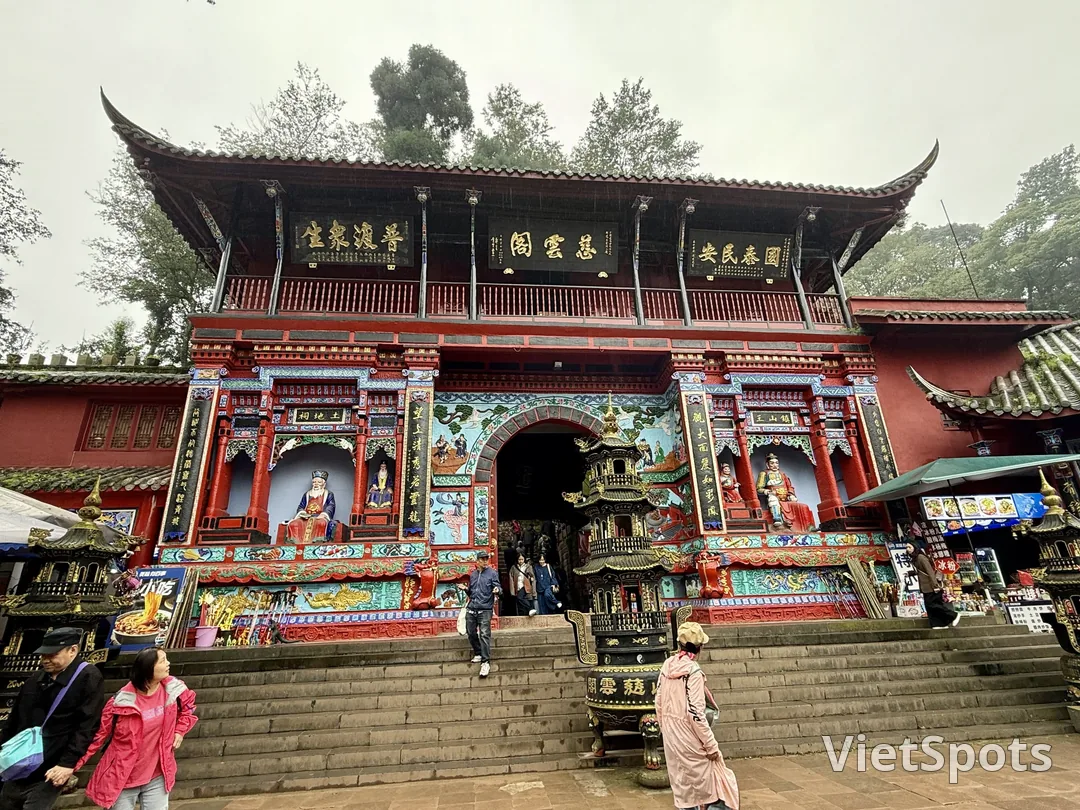
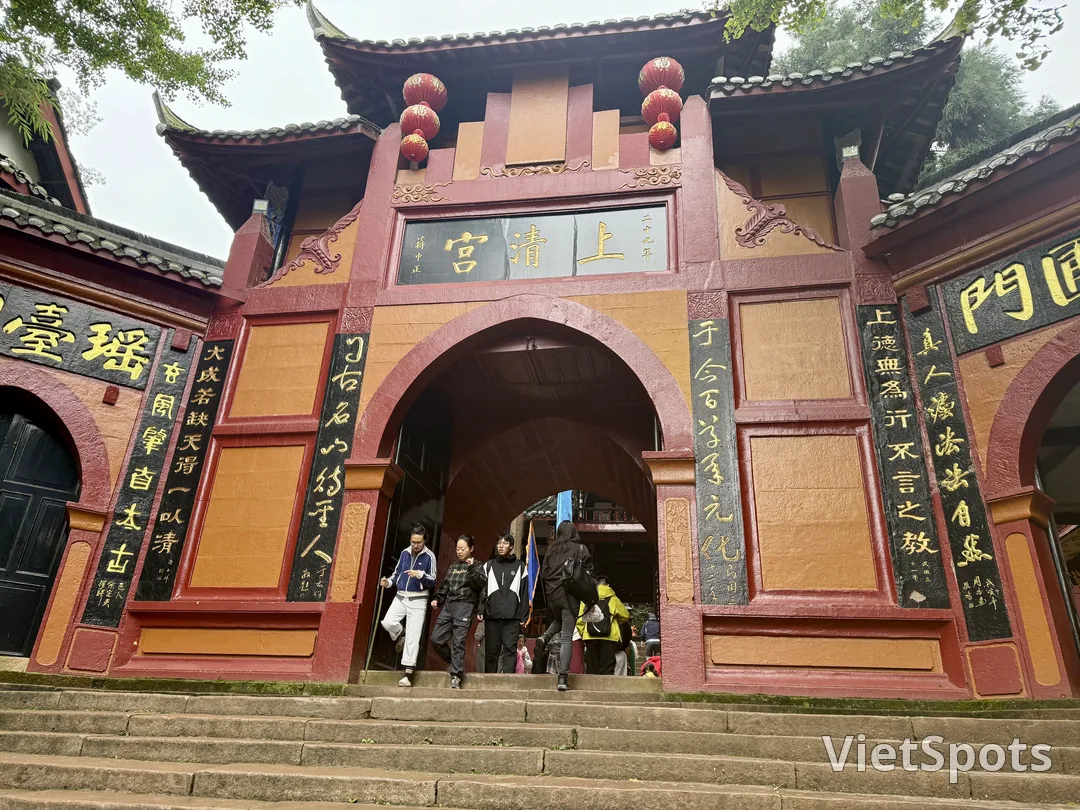
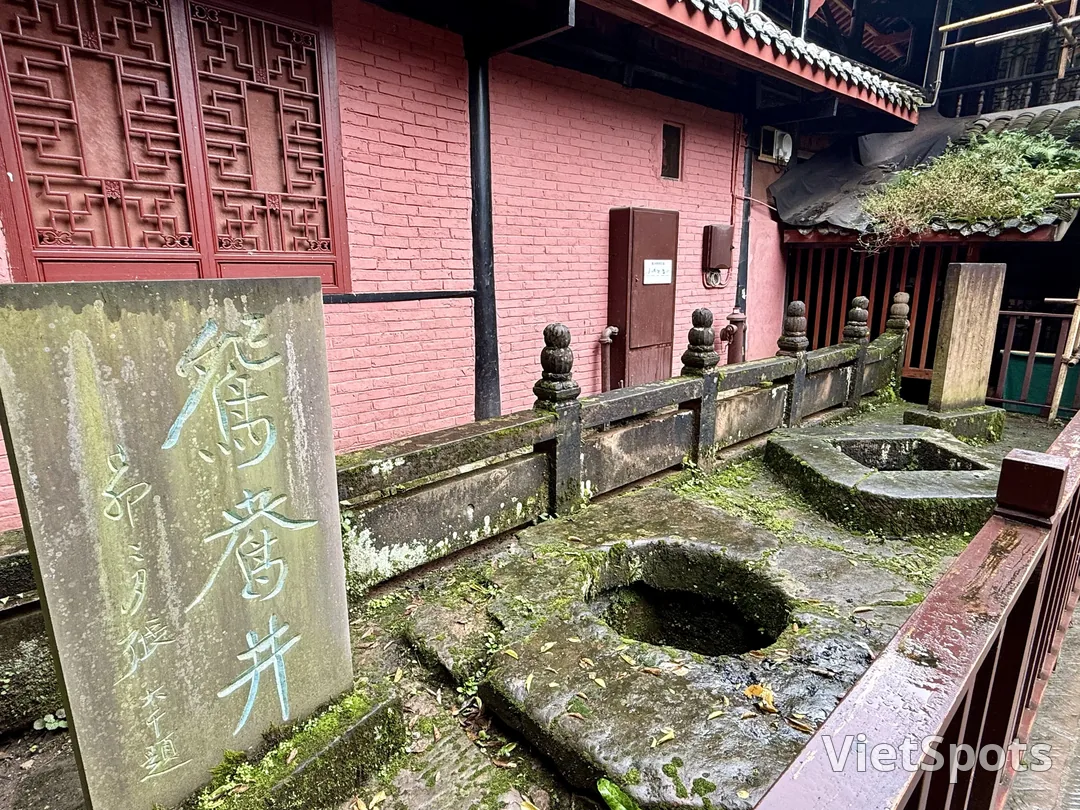
The couplets outside the hall are all works by renowned calligraphers. Inside the courtyard stand the Azure Dragon and White Tiger guardian deities and the "Mandarin Duck Well," symbolizing yin and yang, along with a stone tablet inscribed by Zhang Daqian.
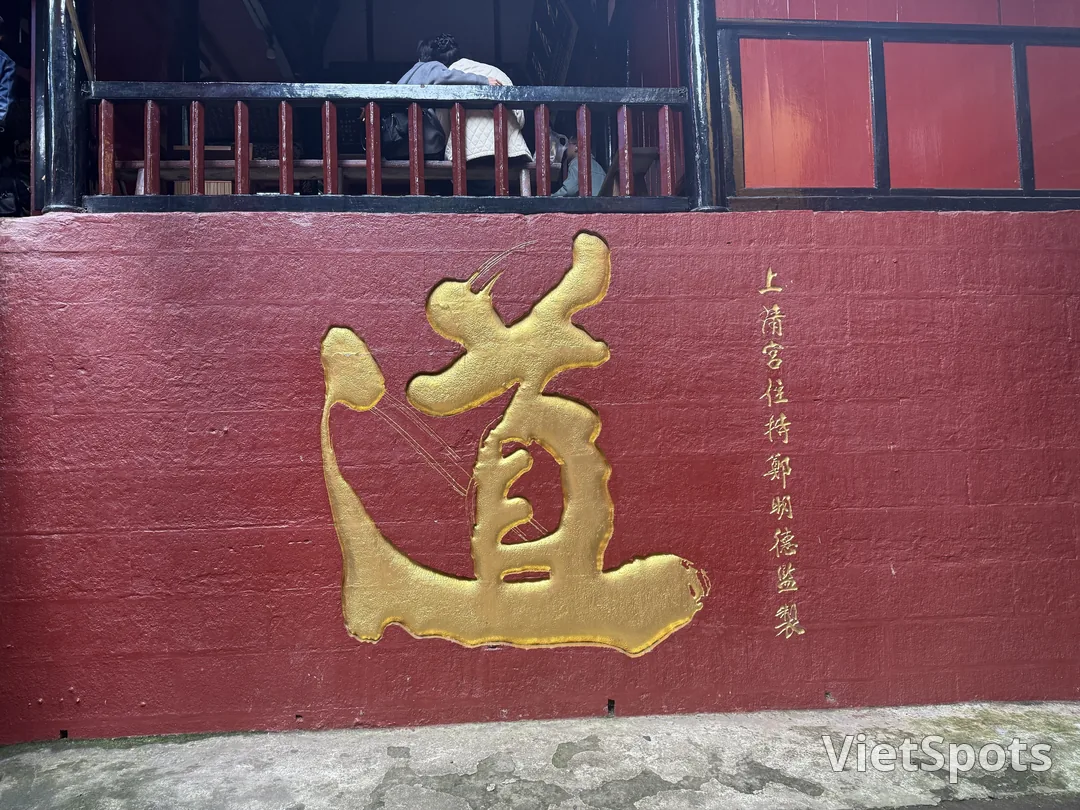
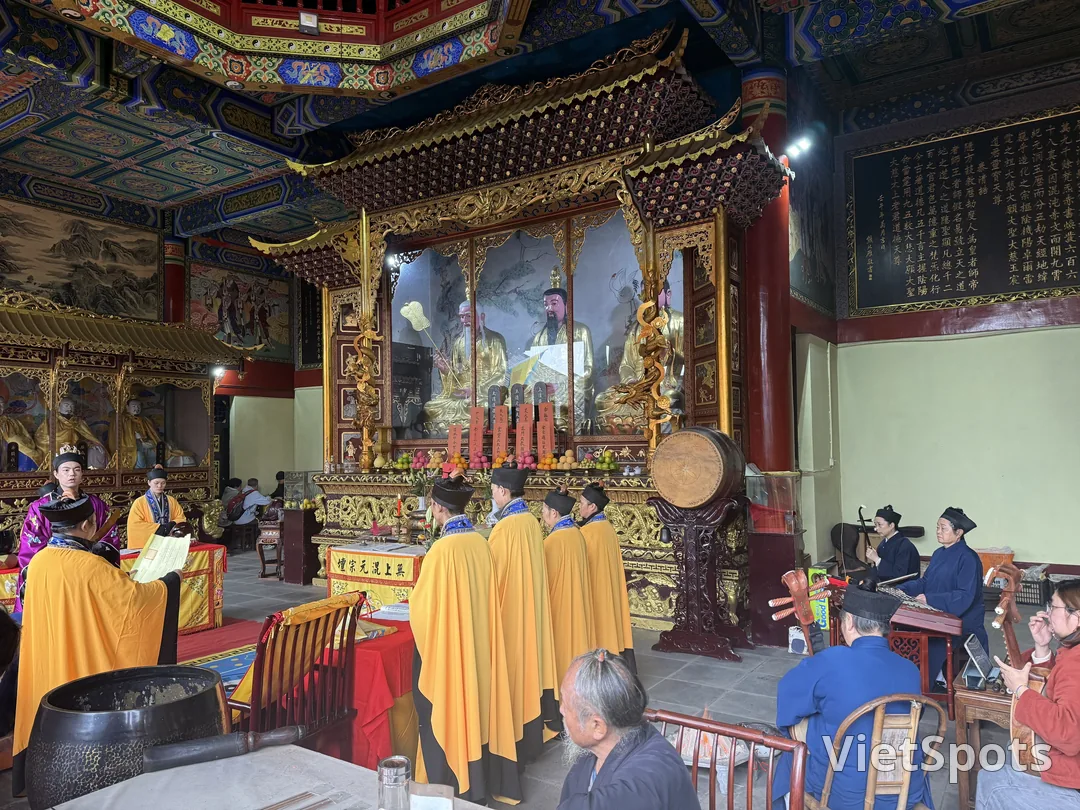
In the palace, we came across a Taoist blessing ceremony, and the atmosphere was solemn.
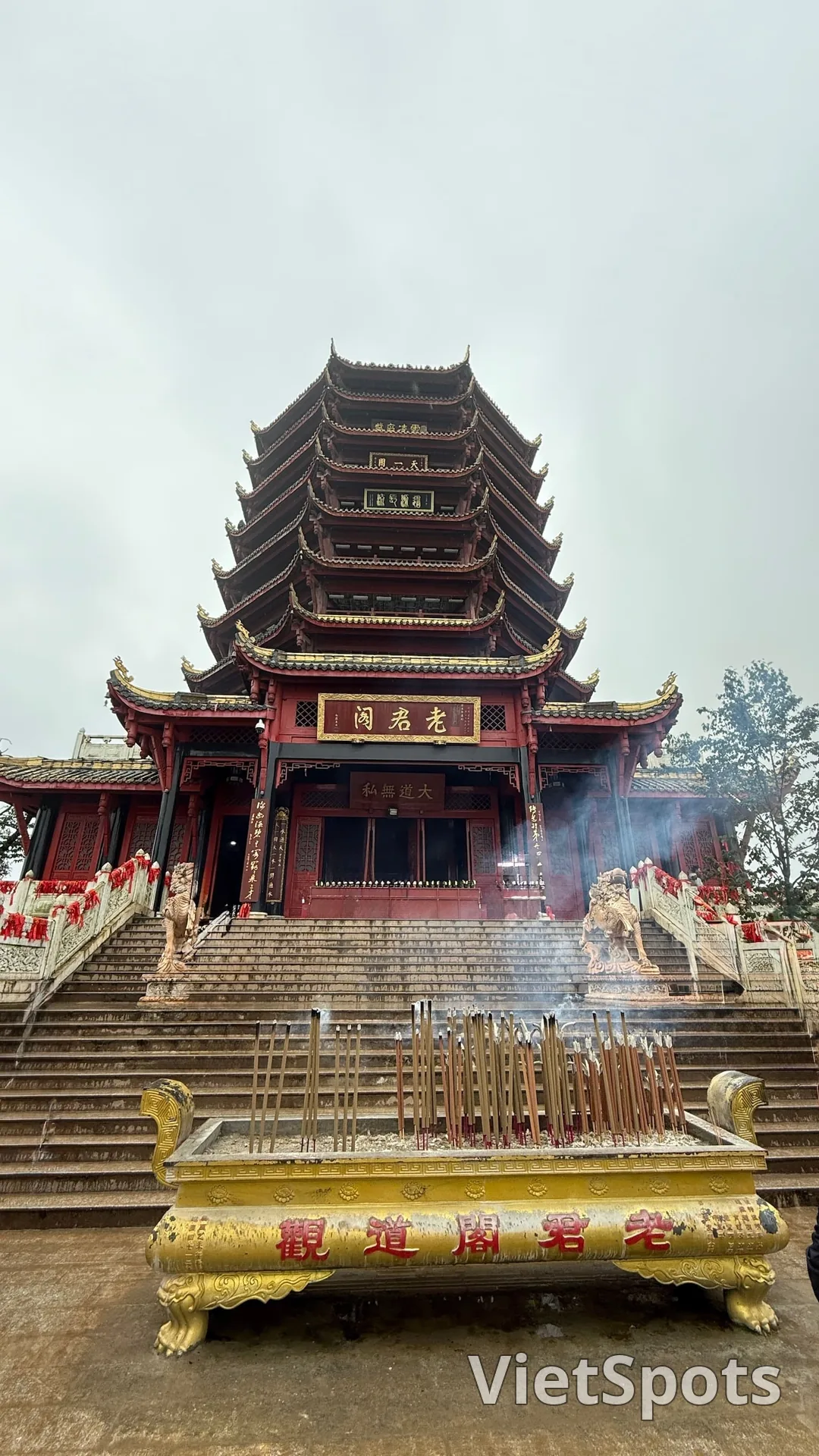
Finally ascend to the Laojun Pavilion, which enshrines a giant statue of Taishang Laojun.
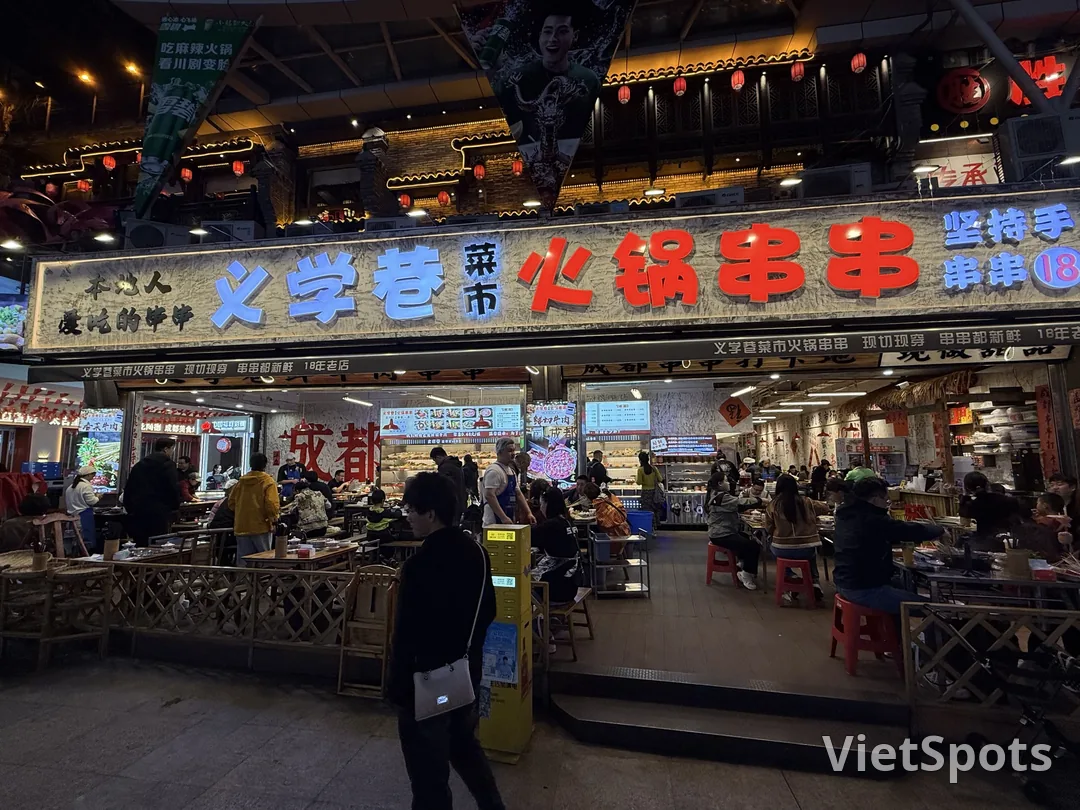
The entire visit took about 3 hours — the itinerary was packed but wonderful. Back to Chengdu and evening snacks The return trip was originally scheduled for 16:30, but departed 10 minutes late due to delays, and we got back to the city about an hour and a half later. The drop-off point arranged by the travel agency was still half an hour's drive from Chunxi Road, and since it happened to be rush hour, traffic was heavy — which is understandable. For dinner we chose to eat "chuan chuan" (skewer hotpot). Since it was our first time, we didn't dare take too much, and everyone at the table was quite restrained; it was only when we saw the guests at other tables grabbing handfuls and handfuls, standing the skewers up like campfires, that we realized we had been way too conservative. In the end, it only cost 50 RMB per person, even lower than the online average of 80 RMB — that's when we realized just how conservatively we had eaten.
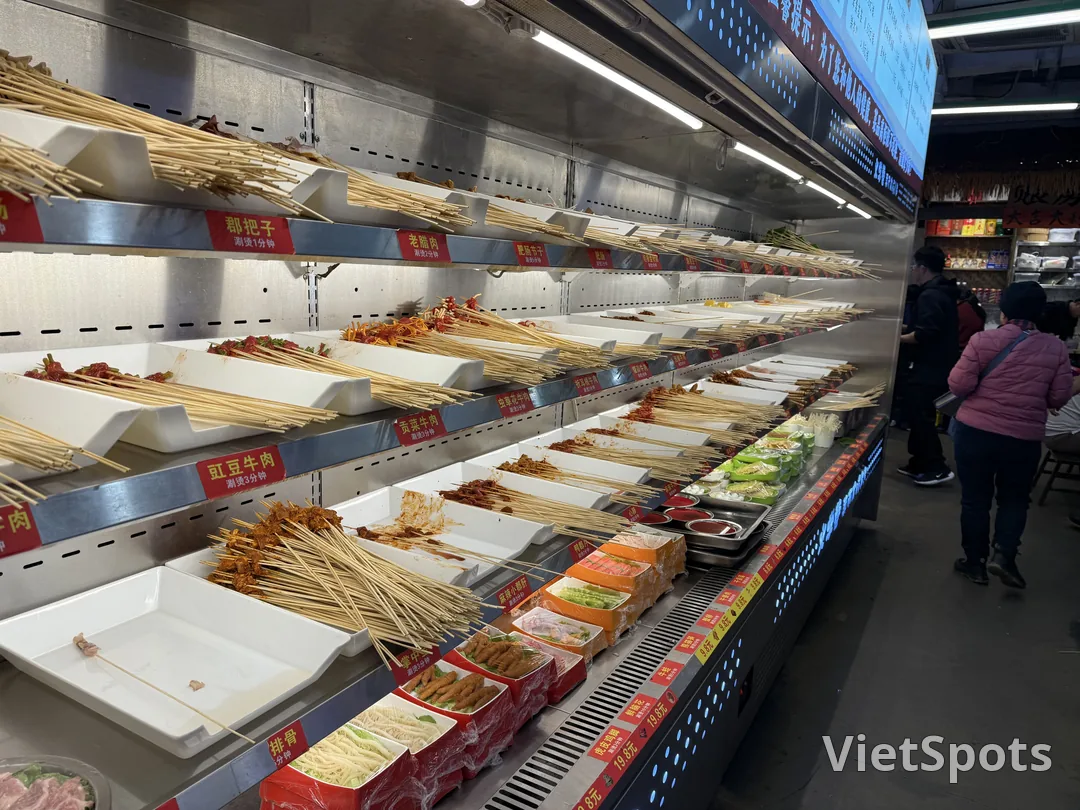
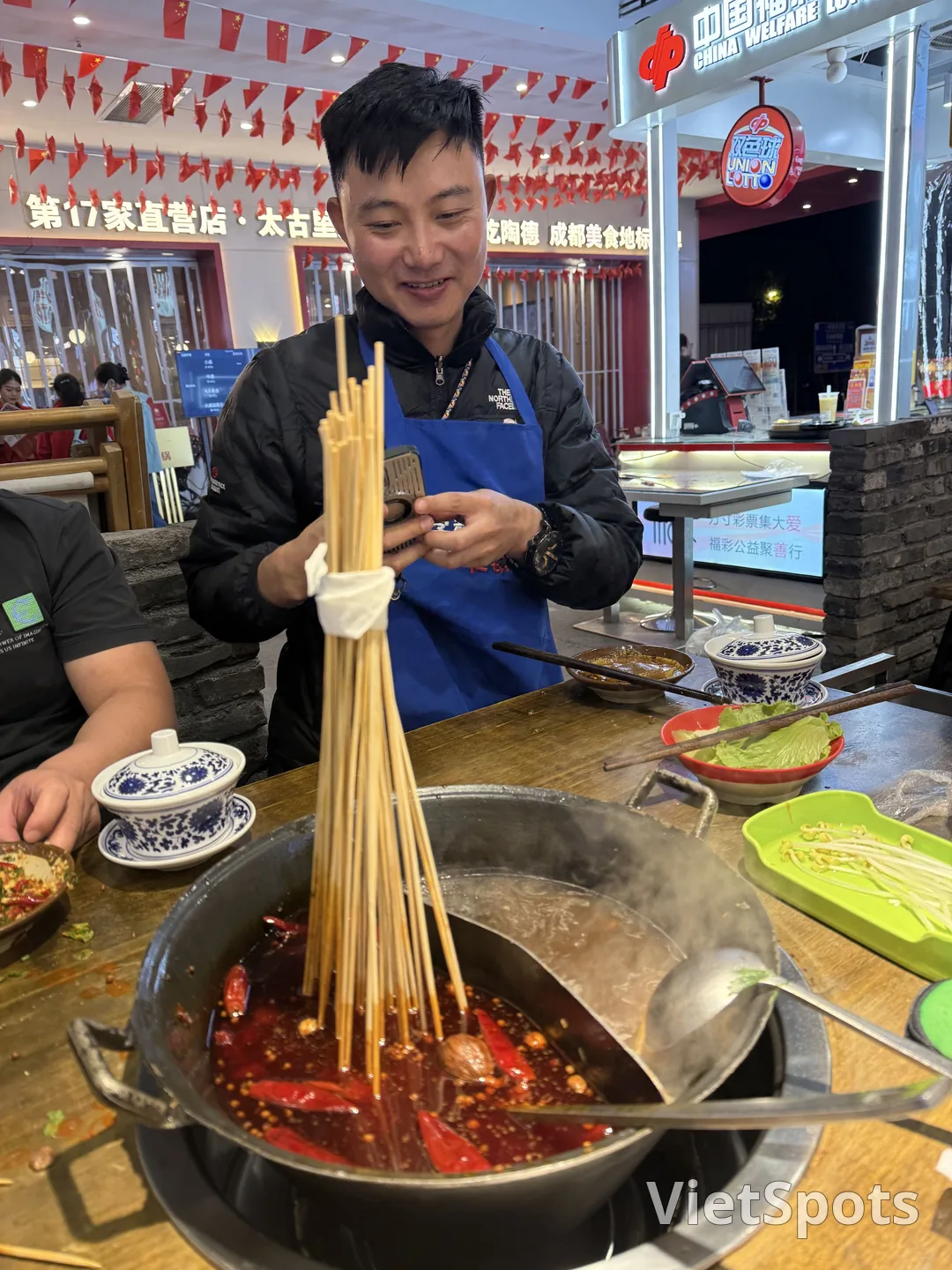
After eating, we went back to the hotel to pick up our luggage and headed to the accommodation next to the airport. We assumed the "airport hotel" would be right next door, so we chose to take the 15 RMB shuttle bus — but it turned out we had to transfer and pay another 100 RMB before finally arriving. The hotel, though a business-style one, had comfortable space. After a brief rest, we're about to set off — heading to Lhasa to begin our Tibet journey. 🌄 Summary: Impressions of joining a tour to Dujiangyan / Mount Qingcheng Tour cost: Basic tour fee: 200 RMB/person (including transportation, admission tickets, and guide) Additional charge: 260 RMB: Dujiangyan audio guide headset + sightseeing shuttle ticket: 50 RMB (required) Yulei Pavilion escalator: 40 RMB (required to reach the summit) Qingchengshan audio guide headset + sightseeing shuttle ticket: 60 RMB (required) "Encounter · Dujiangyan" show: 50 RMB (optional) Qingchengshan cable car: 60 RMB (required if reaching the summit) Benefits of joining a group tour: No need to worry about transportation or transfers, saving time; For travelers who want to visit both attractions in one day, the overall cost is more economical; The tour guide's explanations were rich in content, helping us understand the historical background. Drawbacks of joining a group tour: The itinerary schedule is tightly controlled, so you can only visit the main highlights; The arranged shopping stop wastes about 1 hour; There are many additional charges, so actual spending ends up higher than the registration fee. If you only want to explore one place in depth (such as visiting Qingcheng Mountain alone), chartering a car for a self-guided tour costs about 300 RMB, giving you more flexibility and freedom.
Book Travel in English on VietSpots
- 🎁 Sign up and get 16 Welcome Pack coupons — e.g. Motorbike Rental 45%
- 👑 Member tier discount up to 15% on site (Silver 5% · Gold 15%)
- 🛂 Auto-fill arrival card📶 Compare lowest eSIM prices🚻 Find toilets
Comments