

Sardine or herring… The Appeal of Gỏi Cá (Written by Ho)


A reflection on the moving raw fish salad I ate in Phu Quoc The spark was... a single comment from my husband Sei: "The sardine and coconut flake salad is delicious~~". I thought it was probably just another one of the local specialties, but when I tried it, I was completely and utterly hooked — what a dish.
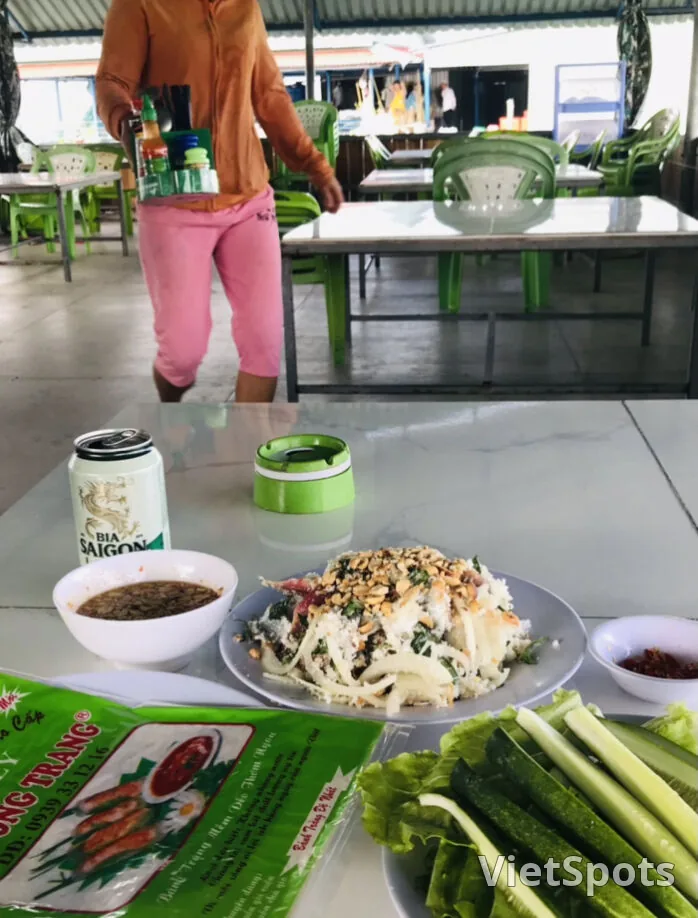
I think it was food worth traveling all the way to the floating seafood restaurant for. But then, when I later looked into the menu carefully... It turned out the fish was herring. When I told my husband, "I was so embarrassed, I kept writing sardine, sardine everywhere," he said, "Whaat, really? You shouldn't just assume things, huh~~" Just when I thought that settled the matter... "But that size, that fatty texture... I still think it's sardine. Besides, Vietnamese translations can be wrong too, lol." Setting aside whether or not you believe the taste buds of my stubborn husband Sei, a brand-new question was born. In the first place, can herring even be caught in Vietnam? Clang, clang, clang— inside me, whose head had gone completely empty at the resort, the bell of doubt rang out. I absolutely love the fish, but where on earth do they come from? Let's return to this question once more. Instead of just eating and ending with "mmm, delicious~~~." But... I'm not well versed in fish...
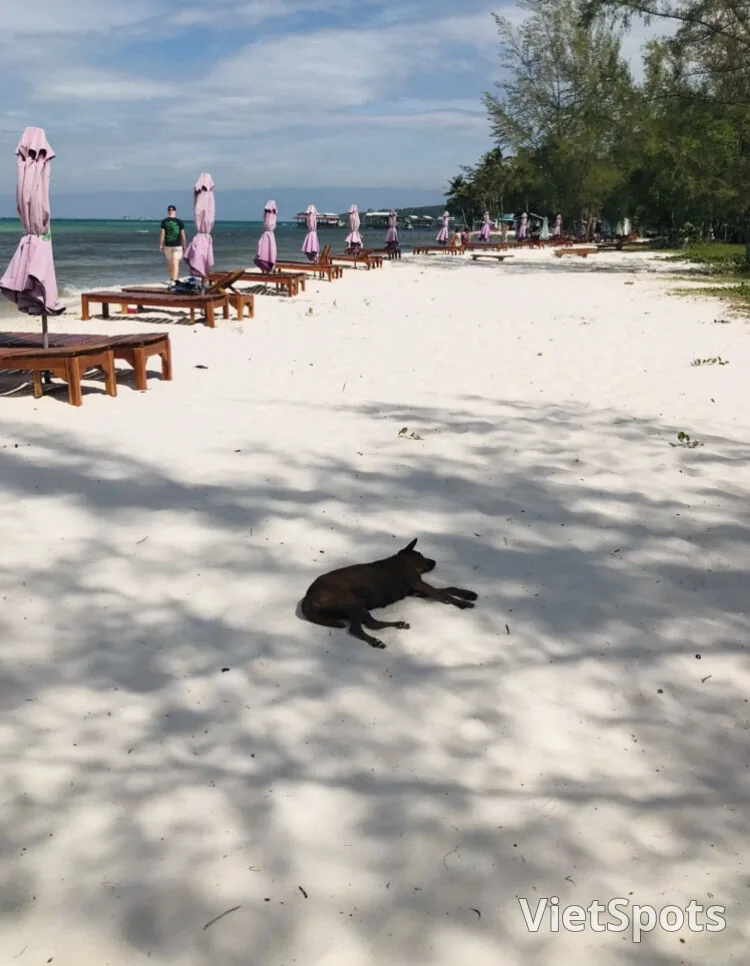
Like a dog napping on Starfish Beach, my head is completely empty... and then I flip the switch. Now that you mention it, herring makes me think of herring roe, and they're caught up in Hokkaido, right? Processed herring with a rich, savory flavor is the kind you put on top of soba and eat, isn't it? Huh, huh, huh, hold on—so then— what's the difference between herring and sardines??? ●In terms of fish categories, "sardine" is a collective name for several kinds of fish in the order Clupeiformes, suborder Clupeoidei. In other words, even though you just say "sardine," there are all sorts of varieties. There seem to be more than 300 kinds. And they're eaten all around the world. ●As for herring, they belong to the order Clupeiformes, family Clupeidae. The regions they inhabit are the North Pacific, the Sea of Japan, and the northern Yellow Sea, and on the American side, the southern limit seems to be around San Diego, California. Since San Diego's lowest average water temperature is apparently around 15°C, maybe they could even be caught in Phu Quoc? I haven't seen the actual fish, and I haven't watched them being filleted, so I haven't been able to pin down the type of fish. I can't reach an answer... it's so hazy and unresolved. It looks like I'll need to dig much deeper with some on-site research. Let's go to Phu Quoc again!! And let's ride the hammock out over the shallow sea too!
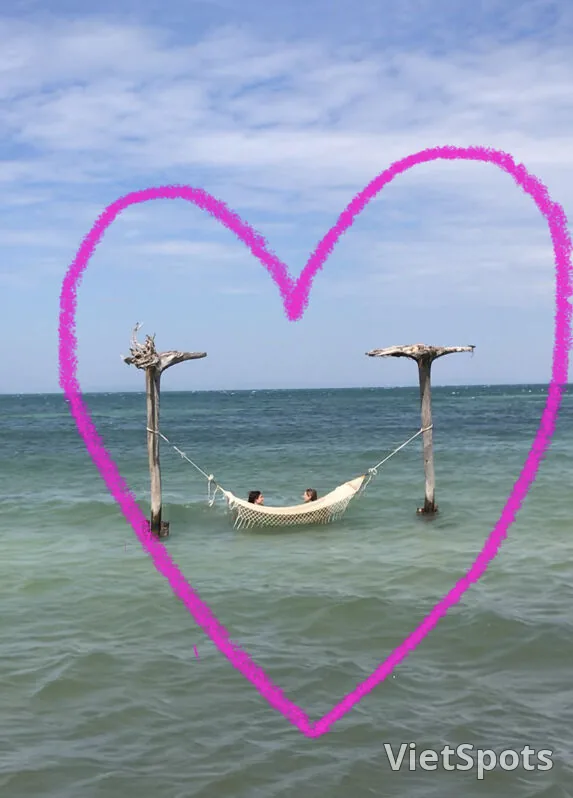
Despite the storm, the young people were diving into the sea and enjoying a swim. They tried the hammock over and over again. So cute~~~ If I were young, I would have plunged in too~~! Since it was delicious, I feel like it doesn't really matter whether it's herring or sardine... is what I partly think, but I just can't stop being curious. If it turned out to be sardine, I'd want to tell them "the menu should be different, you know~" (meddlesome of me). Because I got a real sense of just how deep the world of raw-fish dressed dishes is, I've come to want to know even more about it. Let's head out through that red clay soil once again!
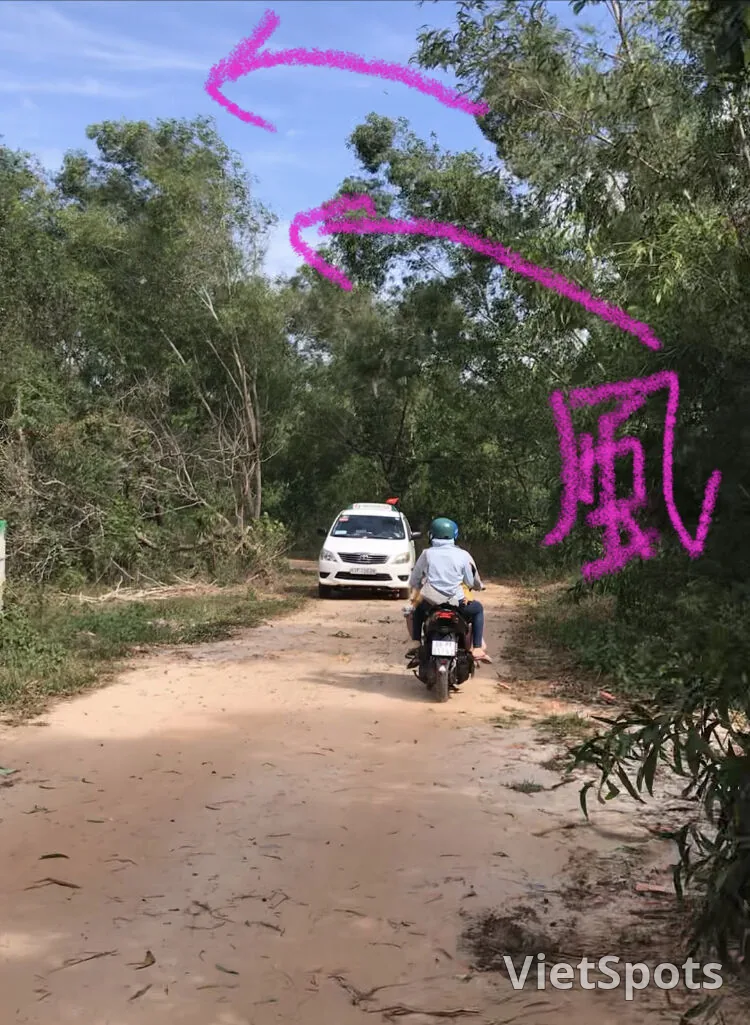
Undefeated by the storm. When you pass through the red-clay road that may someday become asphalt... the sea suddenly comes into view!
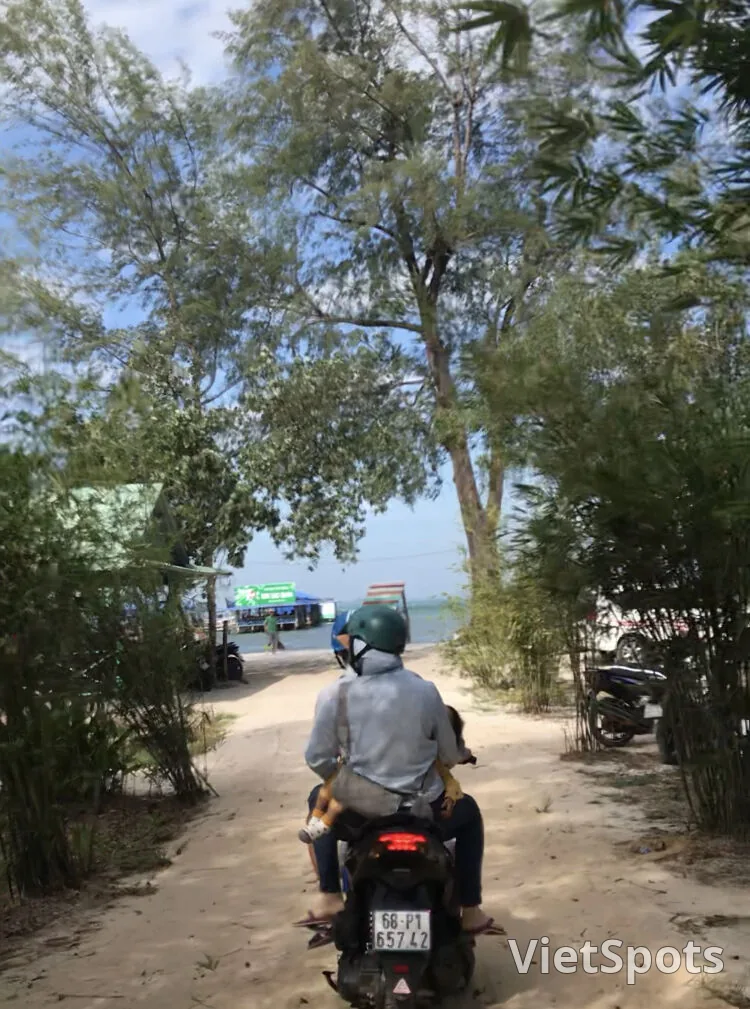
The bike ahead of us — a young Vietnamese couple arrived on it, the wife cradling their daughter, maybe about two years old. She had a hood on for sun protection, but on her feet were sandals — that's the Vietnamese style! I love this easygoing lightness! Homework's piling up — our trip to Phu Quoc Expat Life Ranking
Book Travel in Phu Quoc — in English on vietSpots
- 🎁 Sign up and get 14 Welcome Pack coupons — e.g. Motorbike Rental 45%
- 👑 Member tier discount up to 15% on site (Silver 5% · Gold 15%)
- 🛂 Auto-fill arrival card📶 Compare lowest eSIM prices🚻 Find toilets
Comments