

[In-Depth Attraction Guide] Hagia Sophia | A Millennium-Spanning Palace of Byzantine and Islamic Art


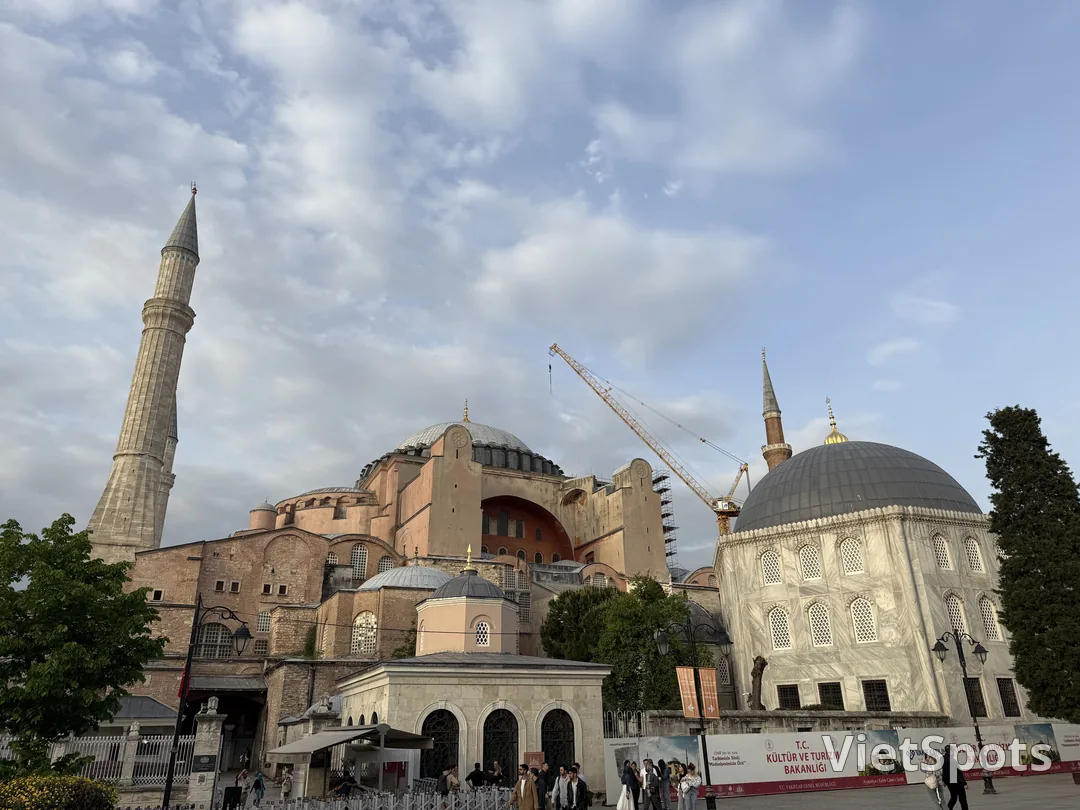
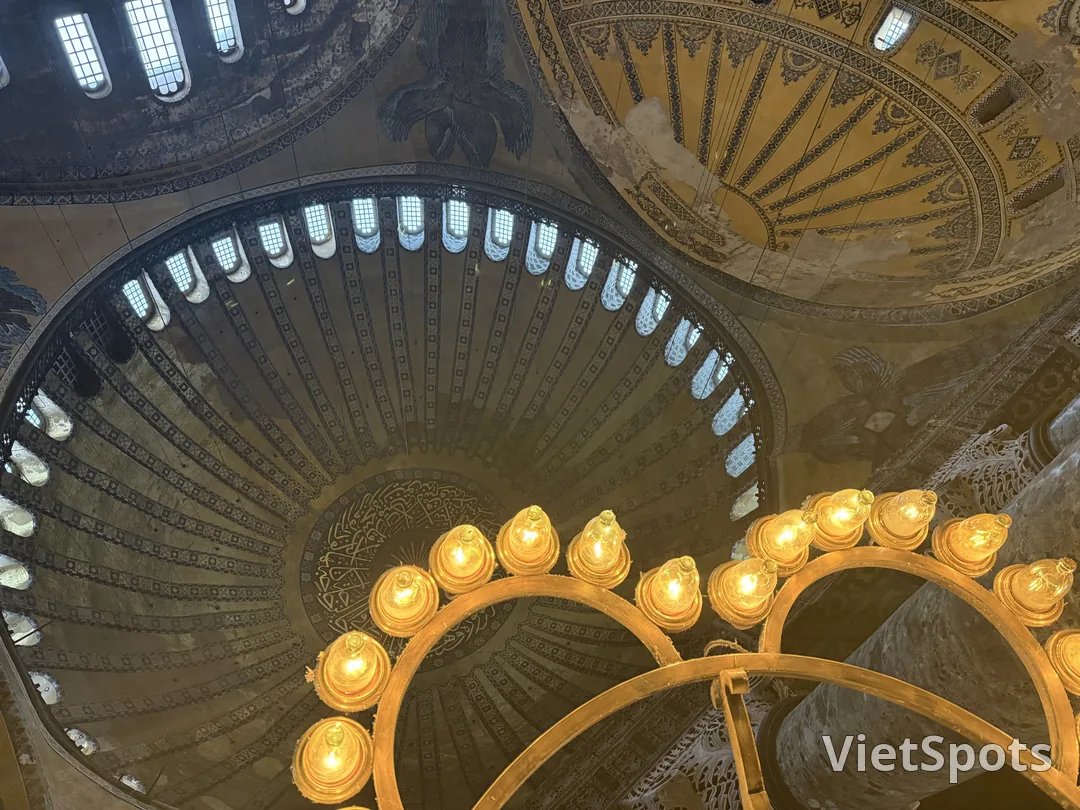
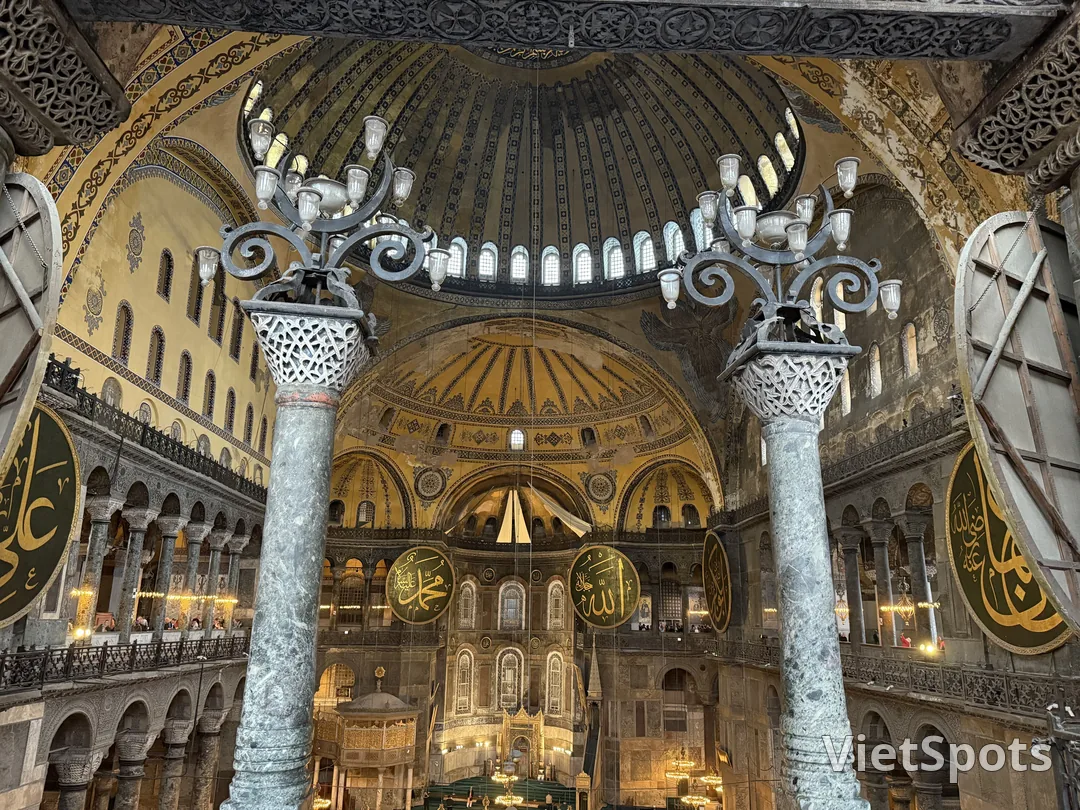
Istanbul spans Europe and Asia, an ancient capital where civilizations meet, and the Hagia Sophia is its most dazzling symbol. From an Eastern Roman Christian cathedral, to a mosque under the Ottoman Empire, to today's museum and place of worship, this building has endured a thousand years, carrying the interwoven threads of history and faith. This report will take you through the most fascinating commentary from the audio guide, letting you hear the whispers between the stone walls. Architectural Highlights and Must-See Details The Dome and the Medallions of Light (Calligraphic Medallions) What stands out most about the Hagia Sophia is the central dome, standing 55 meters high with a diameter exceeding 31 meters. Suspended beneath the dome are massive circular wooden plaques added during the Ottoman period, measuring 7.5 meters in diameter, inscribed with Arabic calligraphy reading the "Verse of Light" (including the names of Allah, the Prophet Muhammad, and the first four Caliphs). These plaques serve not only as religious symbols but also infuse the Byzantine original space with a strong Islamic atmosphere.
Eight Calligraphic Panels Made by the renowned Ottoman calligrapher Kazasker Mustafa Izzet, distributed around the main hall, these panels represent the pinnacle of Ottoman calligraphic art. Each calligraphic panel features bold and elegant characters that form a striking contrast with the golden mosaics of Byzantium, embodying the fusion of religion and culture.
Sultan Mahmud I Library (Mahmud I Library) Built in 1739, the library is located on the south side of the mosque. It houses precious Islamic scriptures and historical documents, and its exquisitely carved wood decorations and bookshelves reflect the great importance the Ottoman royal family placed on knowledge and religion.
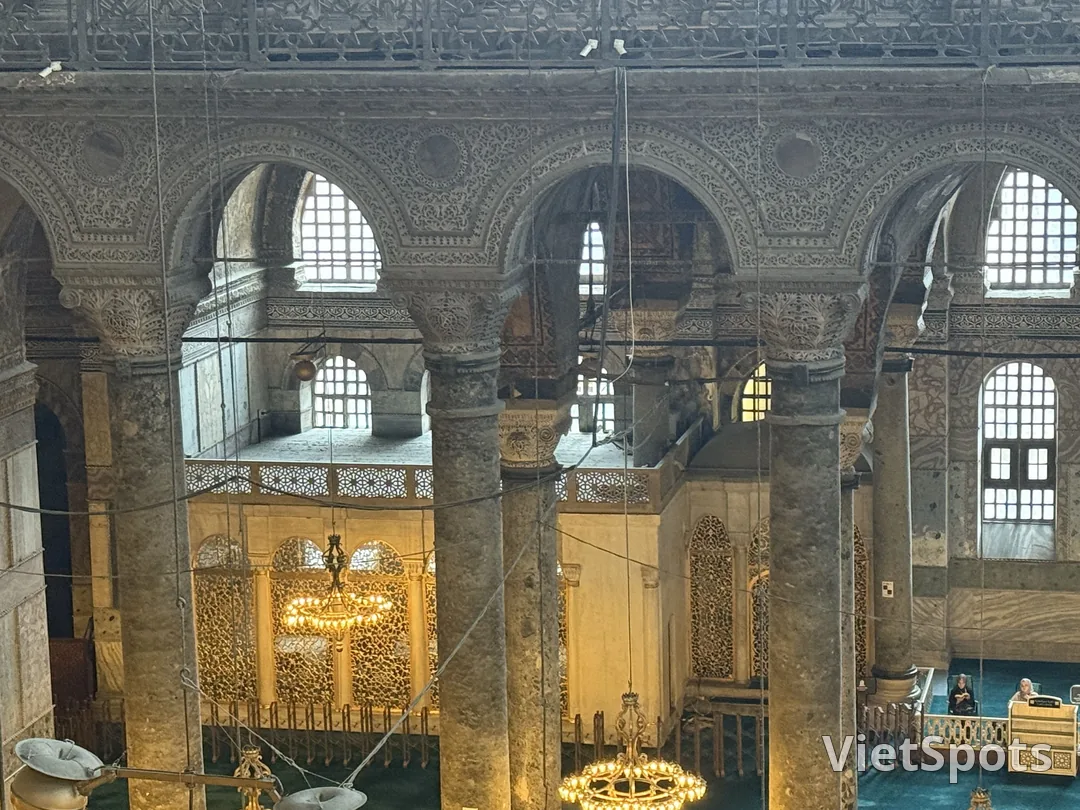
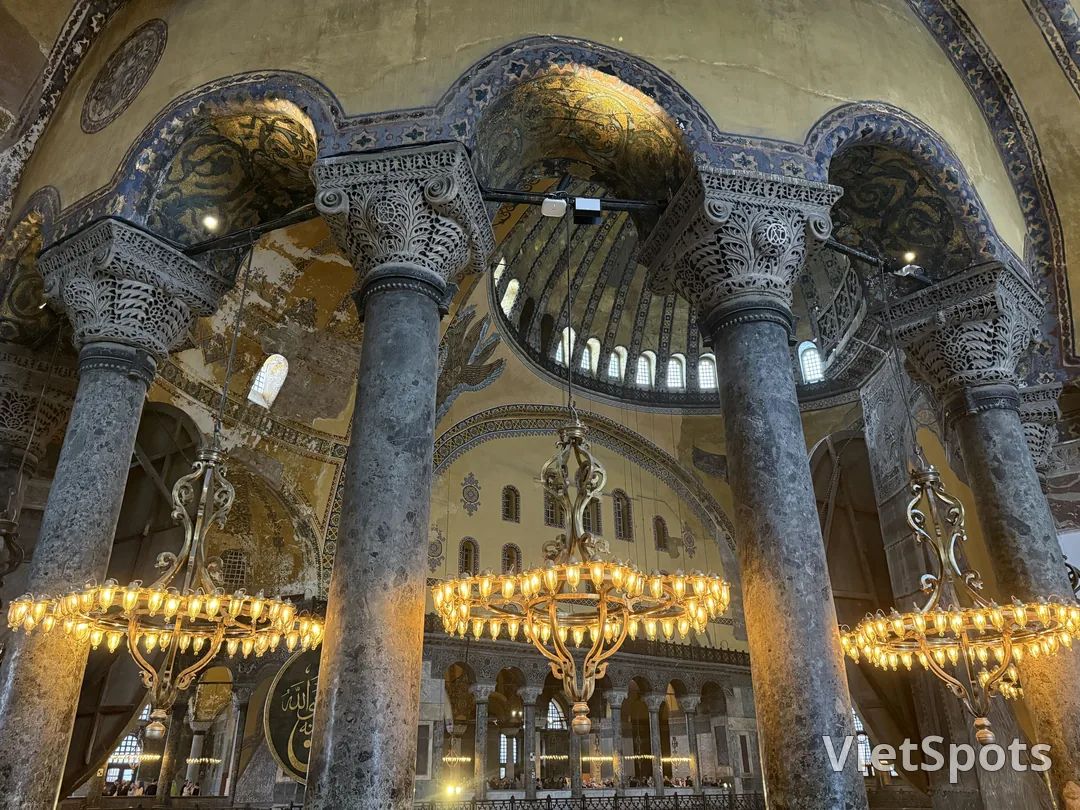
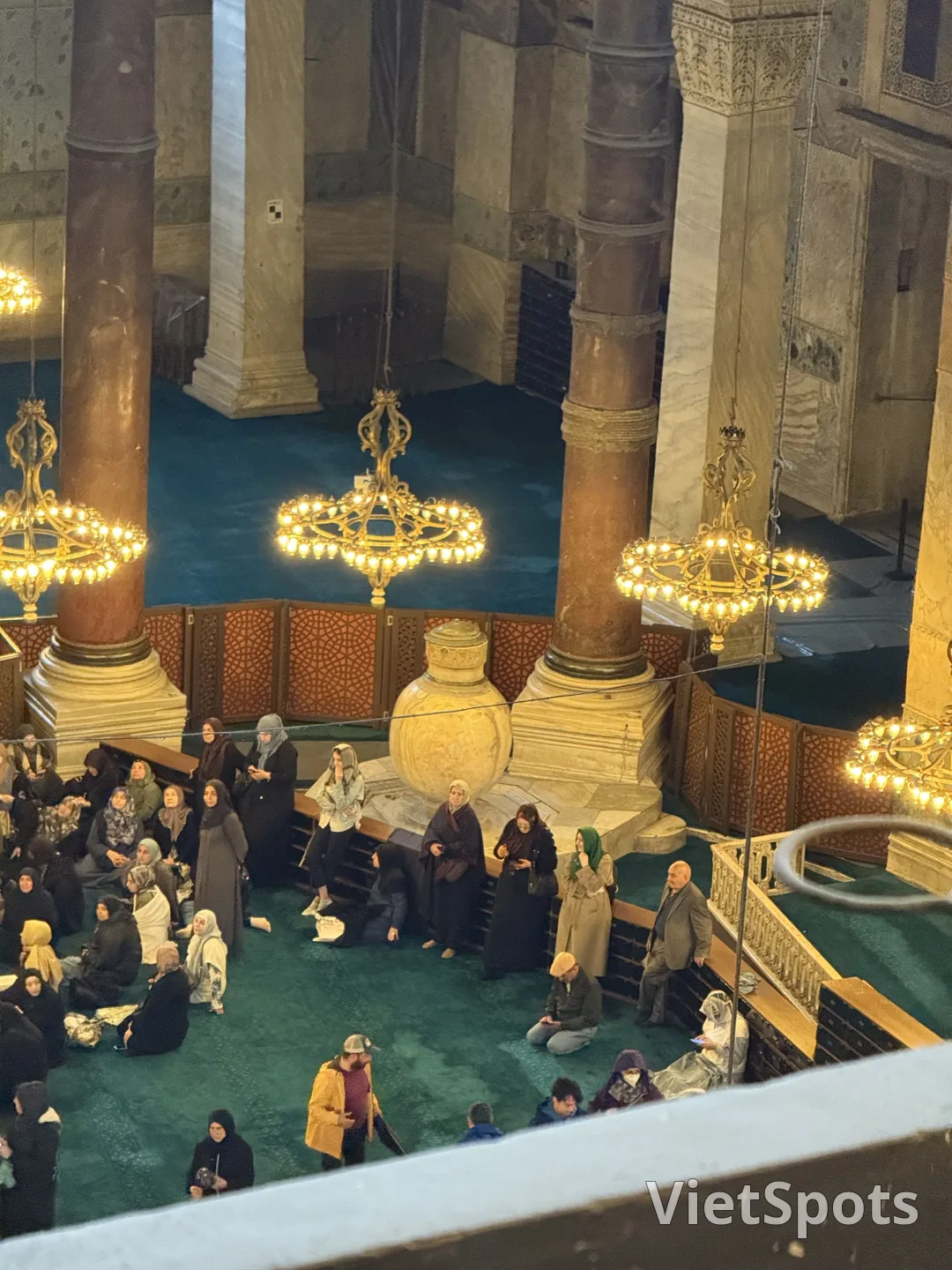
Marble Columns Rare marble columns sourced from across the Mediterranean support the majestic structure of the great hall, many of them reclaimed from ancient Roman and Greek sites—showcasing the Byzantines' remarkable skill in repurposing materials.
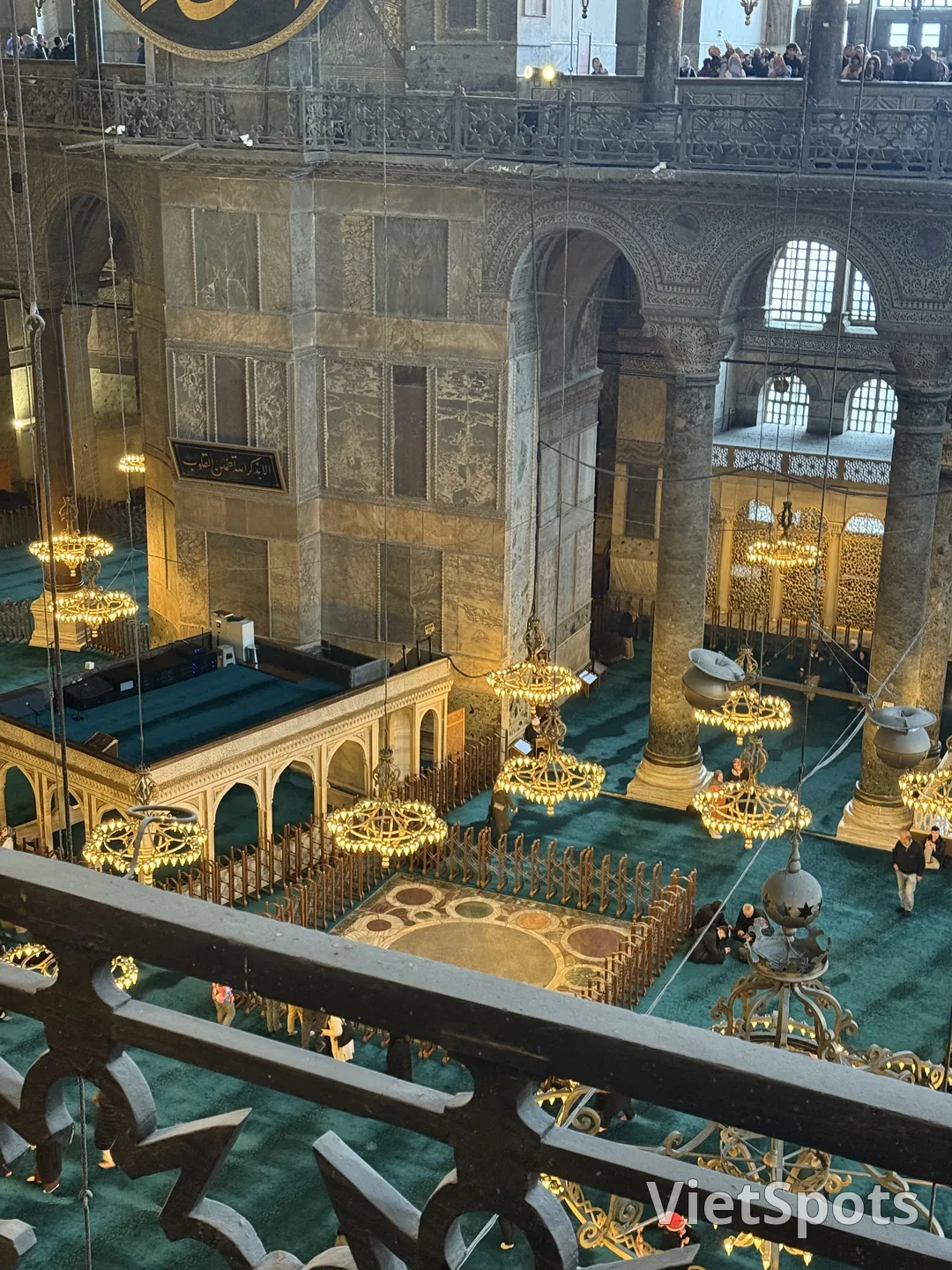
The Navel of the World (Omphalion) A geometric patterned area on the floor of the main temple, this is the place where Byzantine emperors were crowned, known as "The Navel of the World." This circular floor inlaid with multi-colored marble symbolizes the center of the empire and is one of the most historically significant sites in the Hagia Sophia.
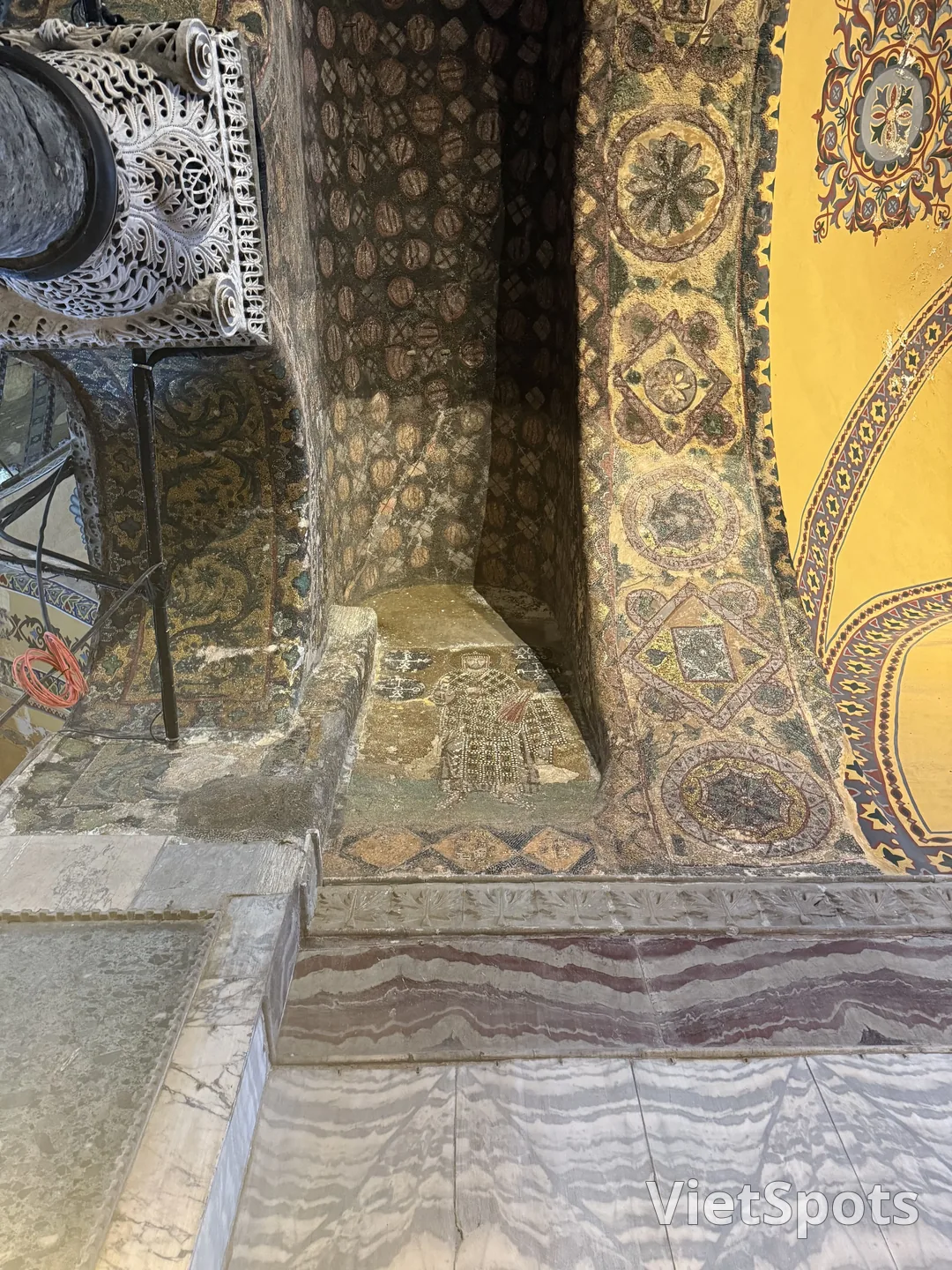
Mosaic Masterpiece Mosaic Portrait of Alexander the Great: This delicate mosaic composition depicts the legendary Alexander, showcasing the exquisite realism of Byzantine art.
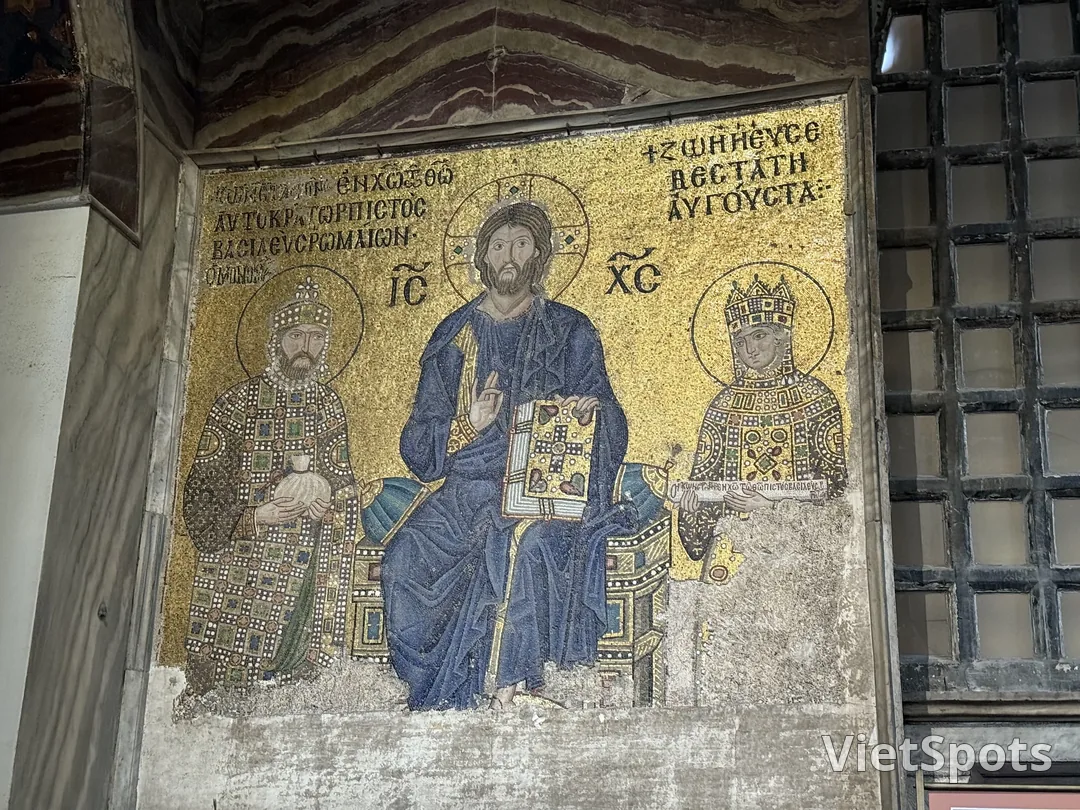
Constantine IX Monomachos Mosaic Portrait: Christ is seated in the center, with Emperor Constantine IX Monomachos and Empress Zoe on either side. The two figures hold scrolls and gold bags presented to the church, symbolizing the 'donation—protection' relationship. The inscriptions in the upper section were rewritten due to a change of spouse and name, reflecting shifts in palace politics.
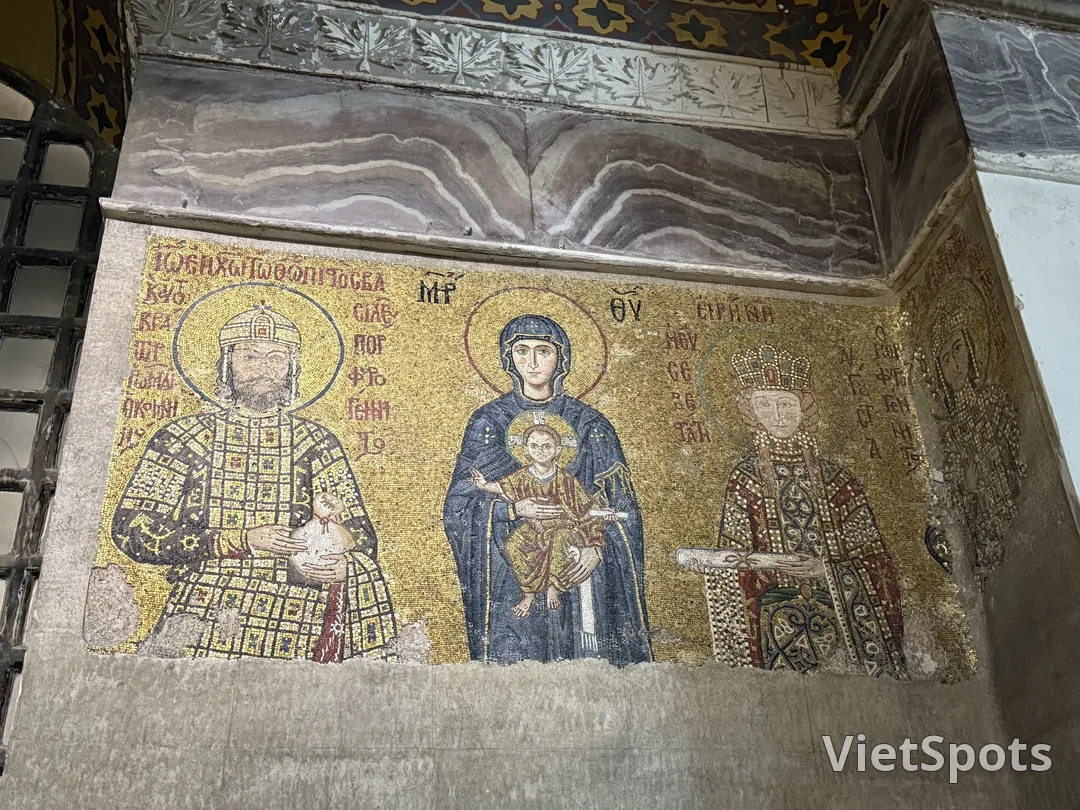
Komnenos Mosaic: Christ in the center, John II Komnenos (John II Komnenos) on the right, and Empress Irene with Prince Alexios on the left. The delicate facial features and jeweled garments exemplify the mature style of mid-Byzantine mosaics.
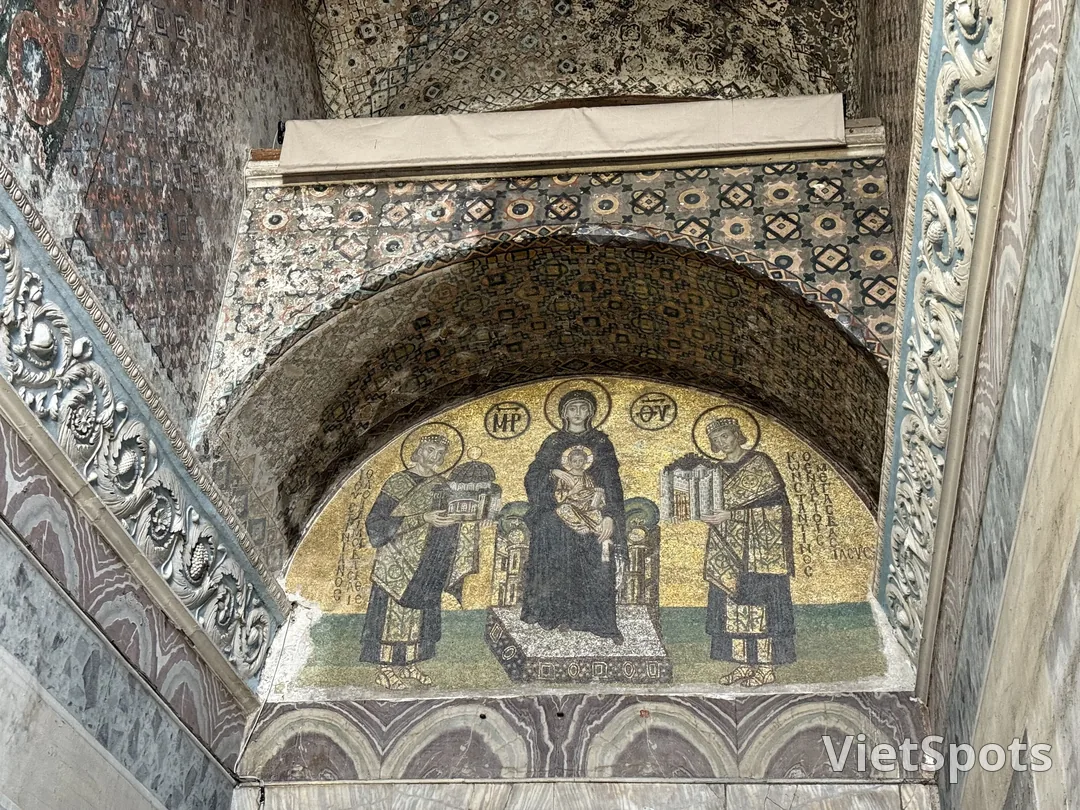
Statue of Constantine and Justinian Presenting the City: Depicts the two emperors separately offering models of Constantinople and the Hagia Sophia to the Virgin Mary, symbolizing devout dedication.
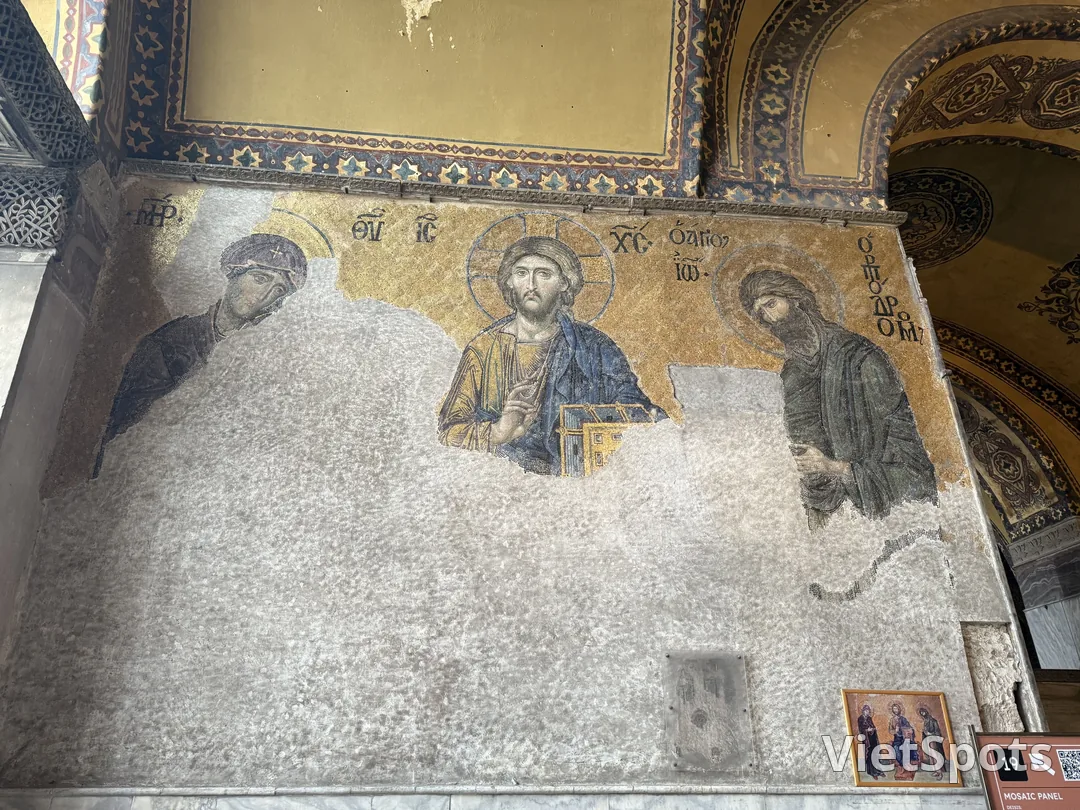
Deesis Mosaic: A 13th-century work depicting Christ in the center, with the Virgin Mary and John the Baptist on either side, pleading for forgiveness. The figures' expressions are delicate and full of human emotion.
Empress Lodge (皇后齋) Located in the viewing gallery on the second floor, this was the space reserved exclusively for the Byzantine empress during religious ceremonies, offering an open view overlooking the entire main hall.
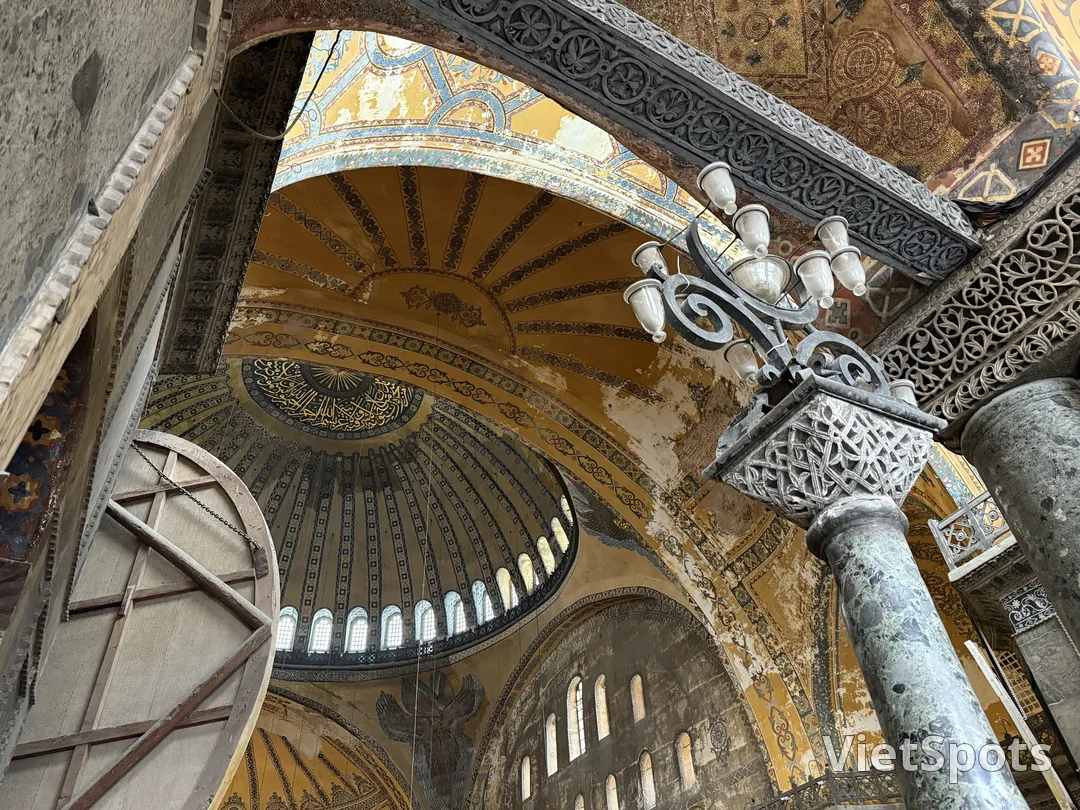
Seraphim The six-winged seraphim mosaics at the four corners of the dome were covered over during the Ottoman period; in recent years, parts of them have been restored and brought back to light, with the details still remaining clear.
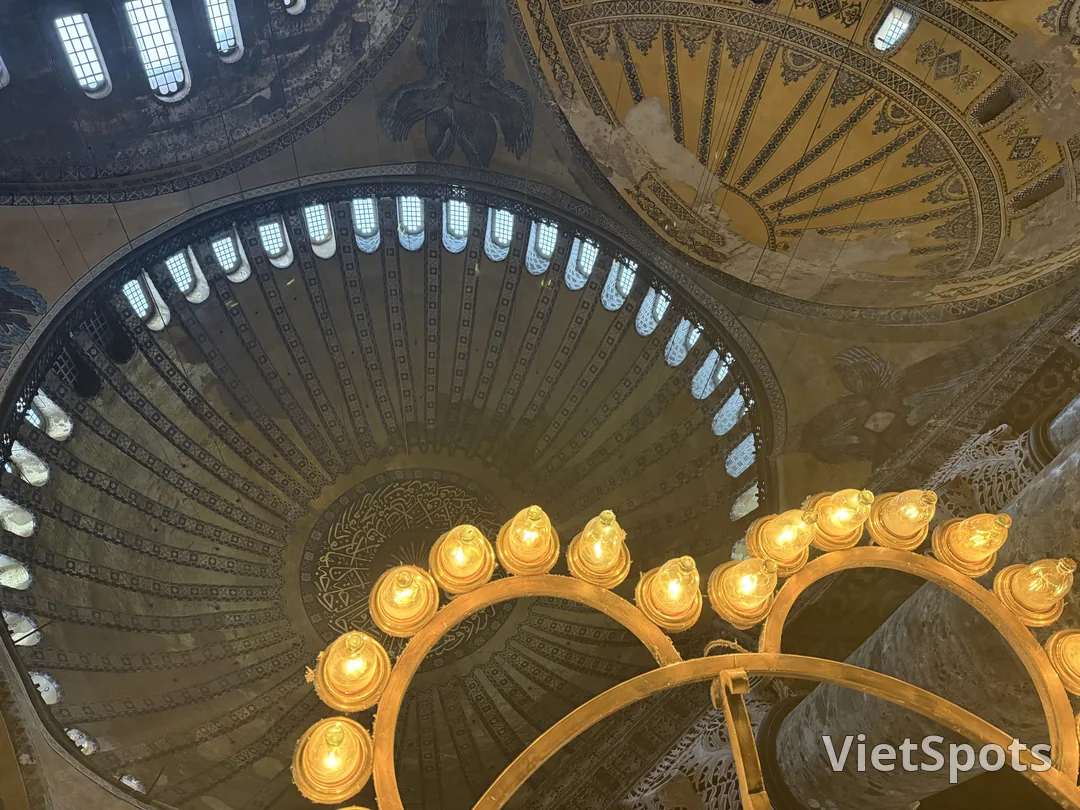
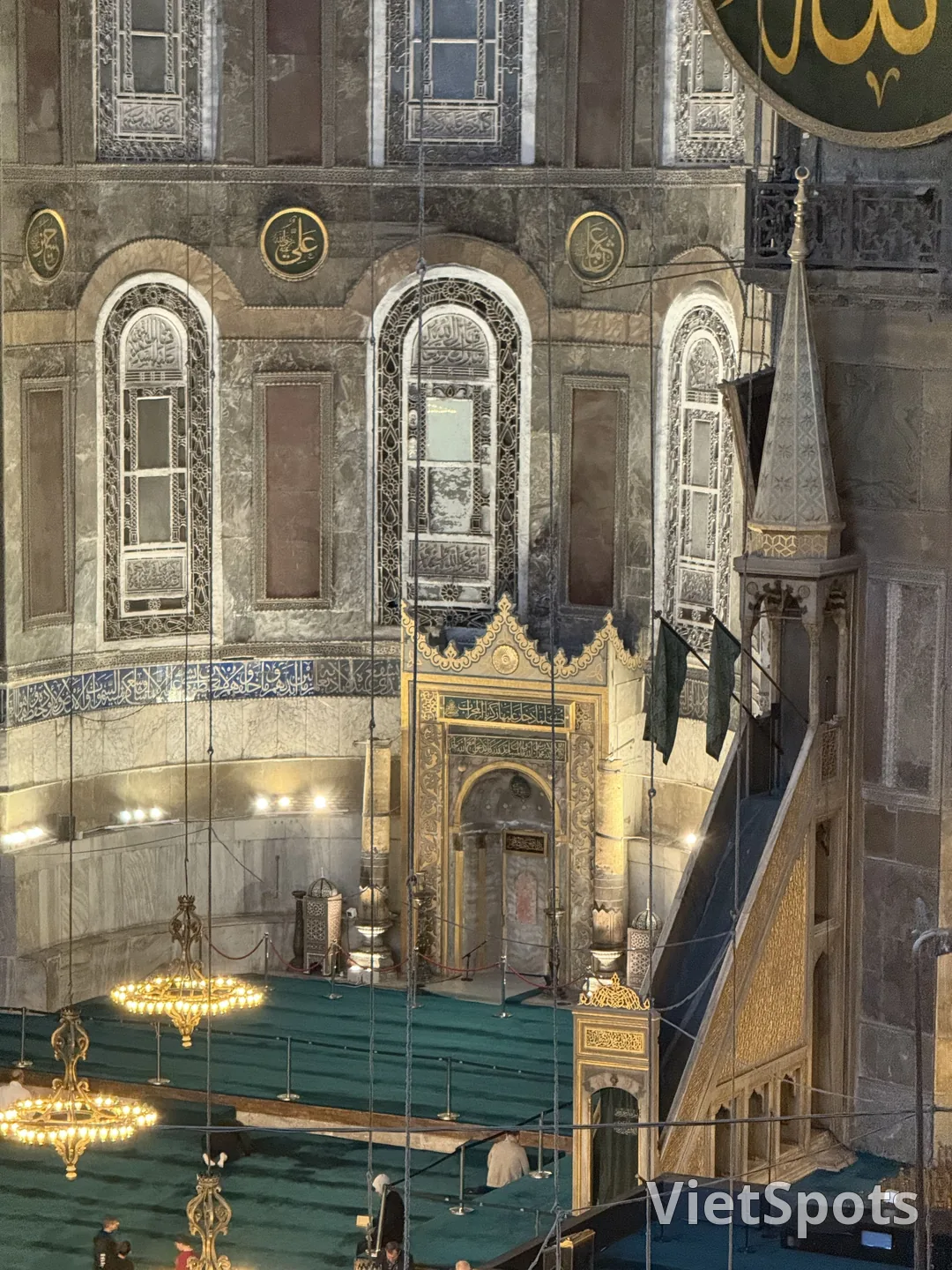
Minbar and Mihrab The minbar and the mihrab facing Mecca, added during the Ottoman period, transformed the Byzantine space for use as a mosque, while preserving its original grand proportions.
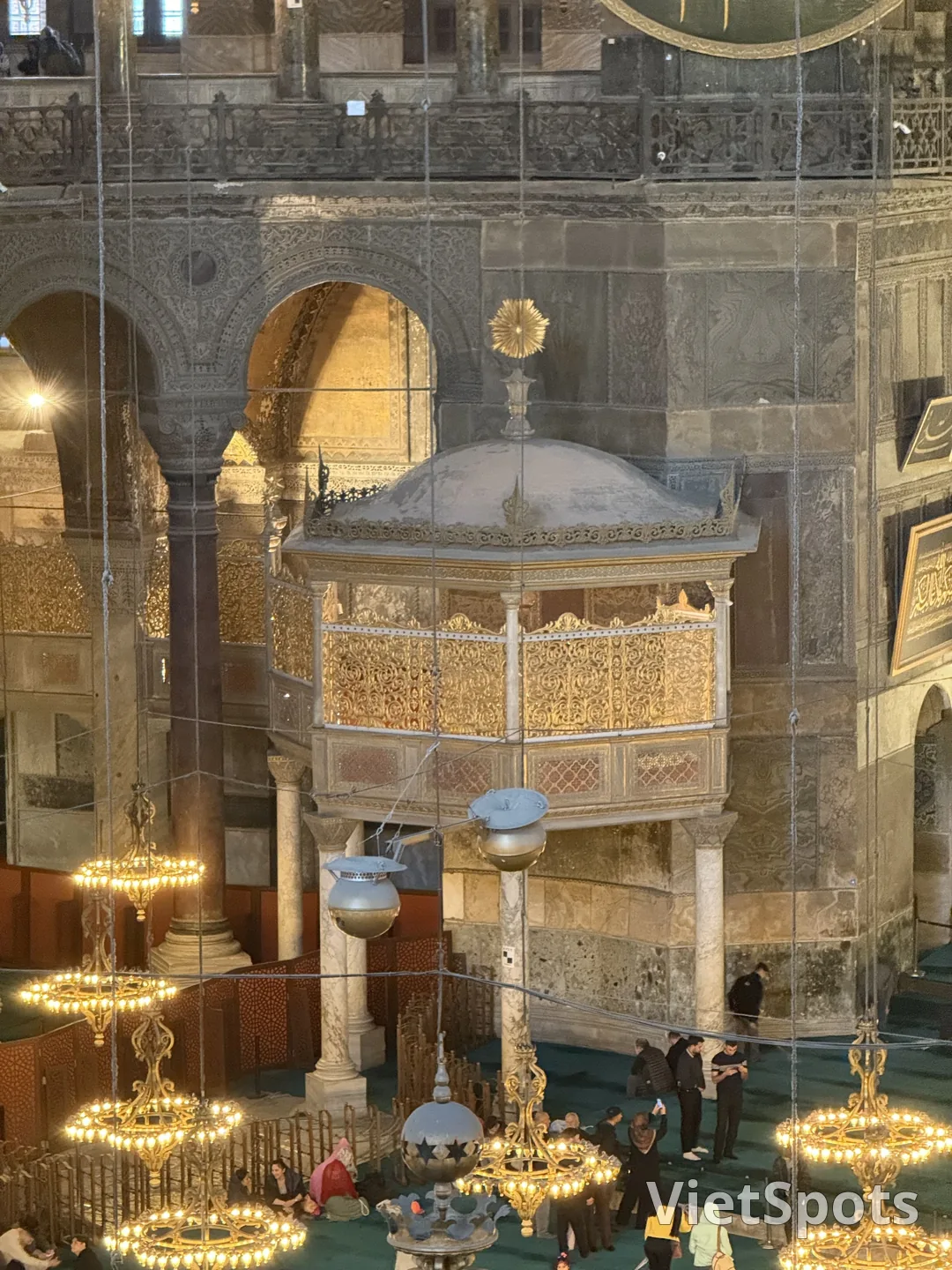
Sultan's Loge A private viewing space for the Ottoman Sultan to use during prayer, offering both protection and a clear view.
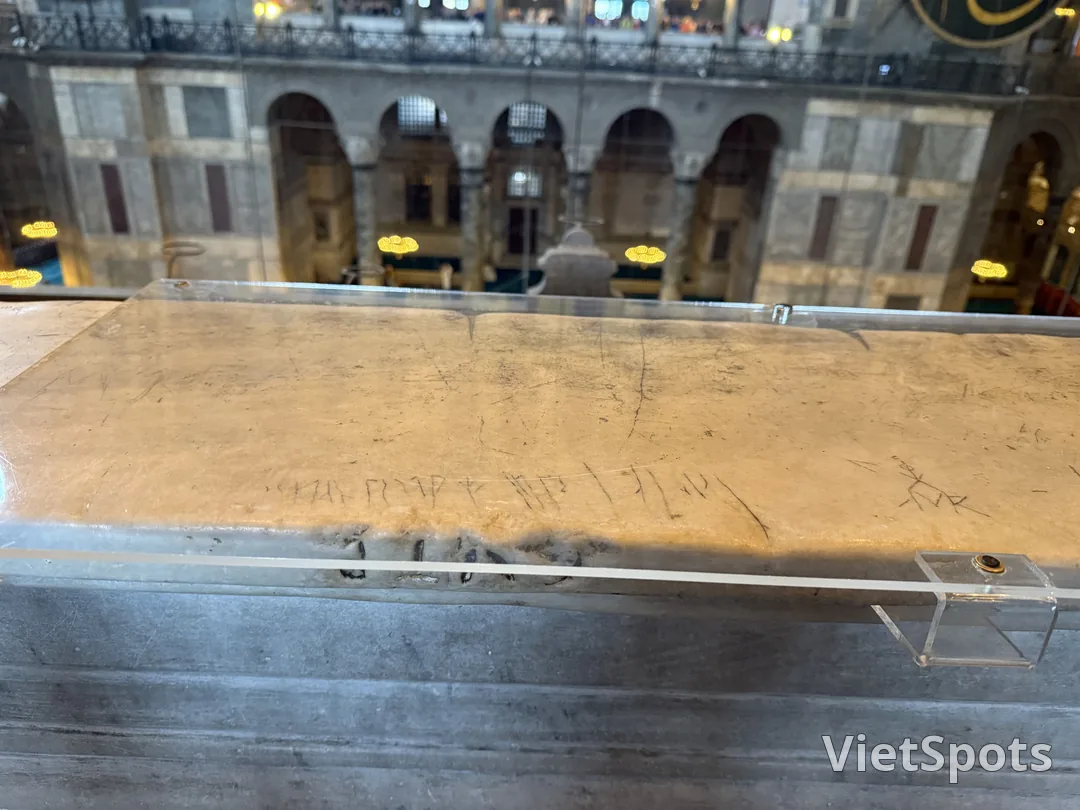
Viking Graffiti On the railings of the second floor, one can still see runic carvings left behind by medieval Norse Viking mercenaries, bearing witness to Hagia Sophia's history as a crossroads of the world.
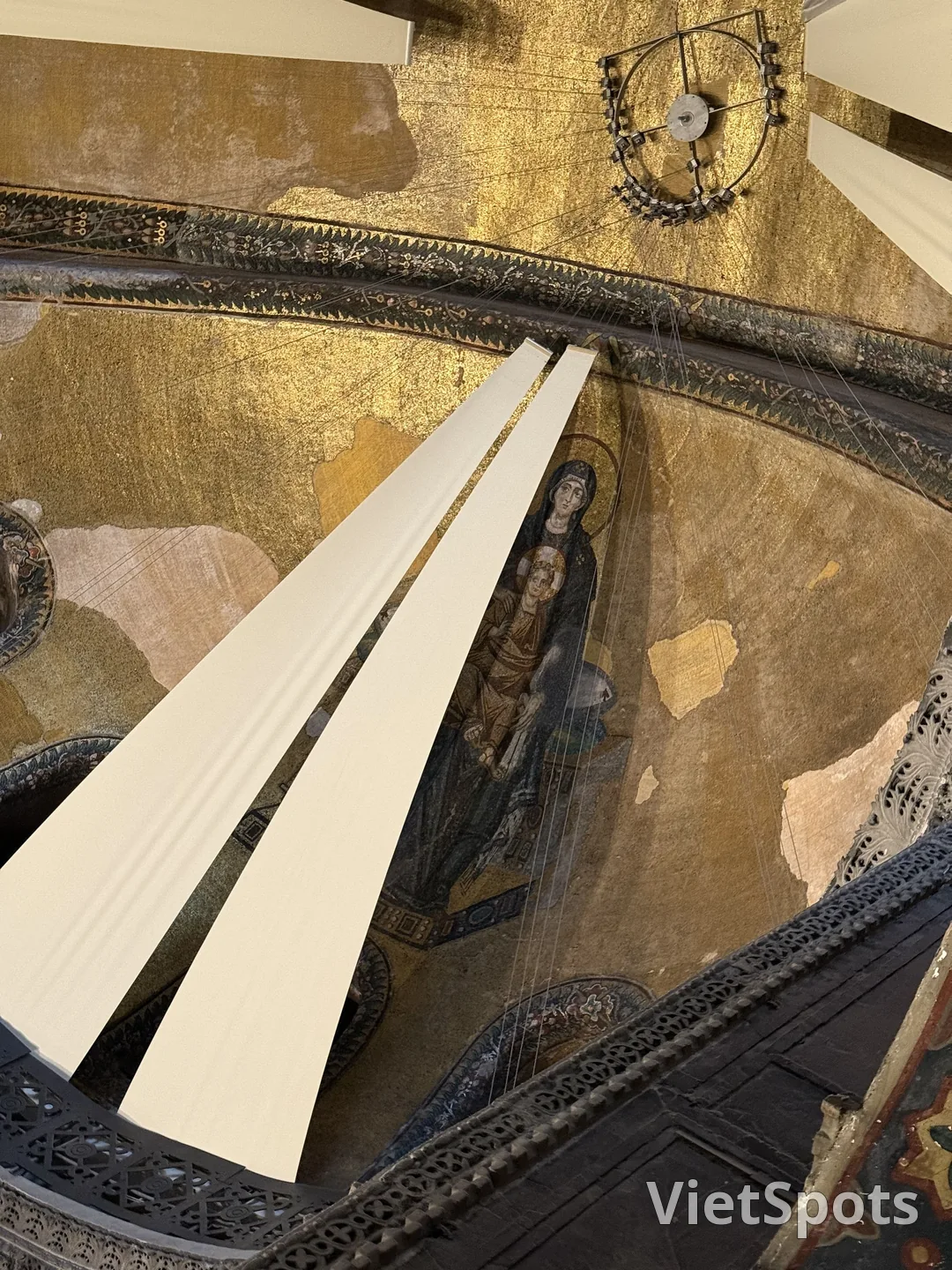
Icon of the Madonna and Child Located above the altar, against a golden background, the tender and solemn image of the Virgin cradling the Christ child is a masterpiece representing the restoration of religious imagery in the 9th century.
Visit Information How to get audio guide: Use the mobile App, remember to bring your own headphones. Admission tickets and opening hours: Adult ticket is about 25 euros, open daily, visits are paused during prayer times. How to get there: Take the tram to Sultanahmet Station, about a 5-minute walk. Recommended visit duration: 2–3 hours, allow more time if you want to closely examine the mosaics and calligraphy art. Visit Impressions Walking into the Hagia Sophia, the first thing that struck me was the soaring dome and the natural light pouring in, as if I had stepped into a time tunnel spanning a thousand years. Whether it's the Islamic calligraphy plaques or the Christian mosaics that can still be faintly made out, they all serve as reminders of the multiple faiths and histories this place once carried. Compared to other mosques or churches, the atmosphere here is more complex: both solemn and diverse, at times even feeling contradictory, yet it is precisely because of this that it feels so utterly unique. If you're planning an Istanbul trip, I recommend spending at least 2 hours exploring it thoroughly. Don't forget to look up and notice the play of light and shadow on the dome—it's a breathtaking sight that words and photos simply cannot fully capture. Further Reading 【Destination Guide】Topkapi Palace | A Reflection of Ottoman Empire's Power and Splendor 📌 Complete Record of Turkey & Greece Travel Turkey Day 1-2: First Impressions of Istanbul | Day 3: Hagia Sophia and Grand Bazaar Day 4: Cappadocia Hot Air Balloon Wonder | Day 5: Exploring the Green Line Underground City Day 6: Salt Lake Mirror and Konya Whirling Dervishes | Day 7: Antalya Theatre and Old Town Day 8: Salda Lake and Golden-Light Pamukkale | Day 9: Marmaris Resort Day Greece Chapter Day 1: The Knights' Path of Rhodes | Day 2: Morning Swim in the Aegean and Old Town Tour Day 3: Delphi and Monastery Day Trip | Day 4: Classic Route of the Athens Acropolis Day 5: Flea Market & Acropolis Museum | Day 6: Attica Department Store & Archaeological Museum
Book Travel in English on VietSpots
- 🎁 Sign up and get 16 Welcome Pack coupons — e.g. Motorbike Rental 45%
- 👑 Member tier discount up to 15% on site (Silver 5% · Gold 15%)
- 🛂 Auto-fill arrival card📶 Compare lowest eSIM prices🚻 Find toilets
Comments