

Vietnam National Founding Day - Heading to Can Tho, Part 3: Making Hu Tieu Noodles (Written by Ho)


A trip to Can Tho, the largest city in the Mekong Delta in southern Vietnam. The main event was the early-morning water tour at 6 a.m. Of course, the floating market was fun too... But personally, another goal of mine was to get off the boat partway through and visit a hu tieu noodle-making factory. Vietnamese noodles come in many varieties—pho, bun, mi, mien, and more— but hu tieu is the noodle that represents the south.
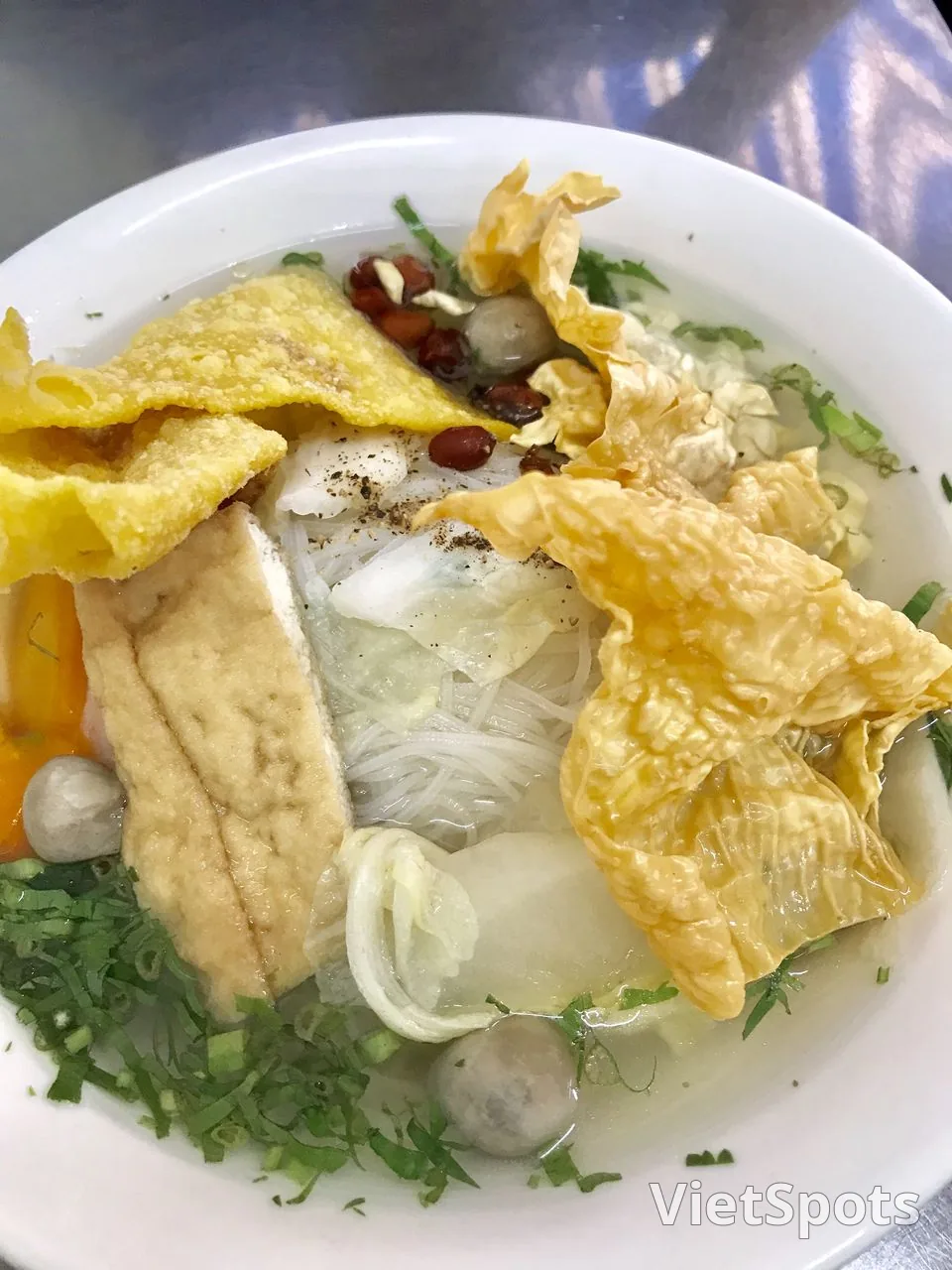
This is a simple Hu Tieu I ordered near Ho Chi Minh City. It's a thin, white dried noodle — the type with more chewy texture among Vietnamese noodles. I wanted to know the secret behind that texture. So, here it is: a Hu Tieu factory in Can Tho. Such a wonderful atmosphere. It's a family-run cottage industry, where family members and relatives each take on their own role and share the work.
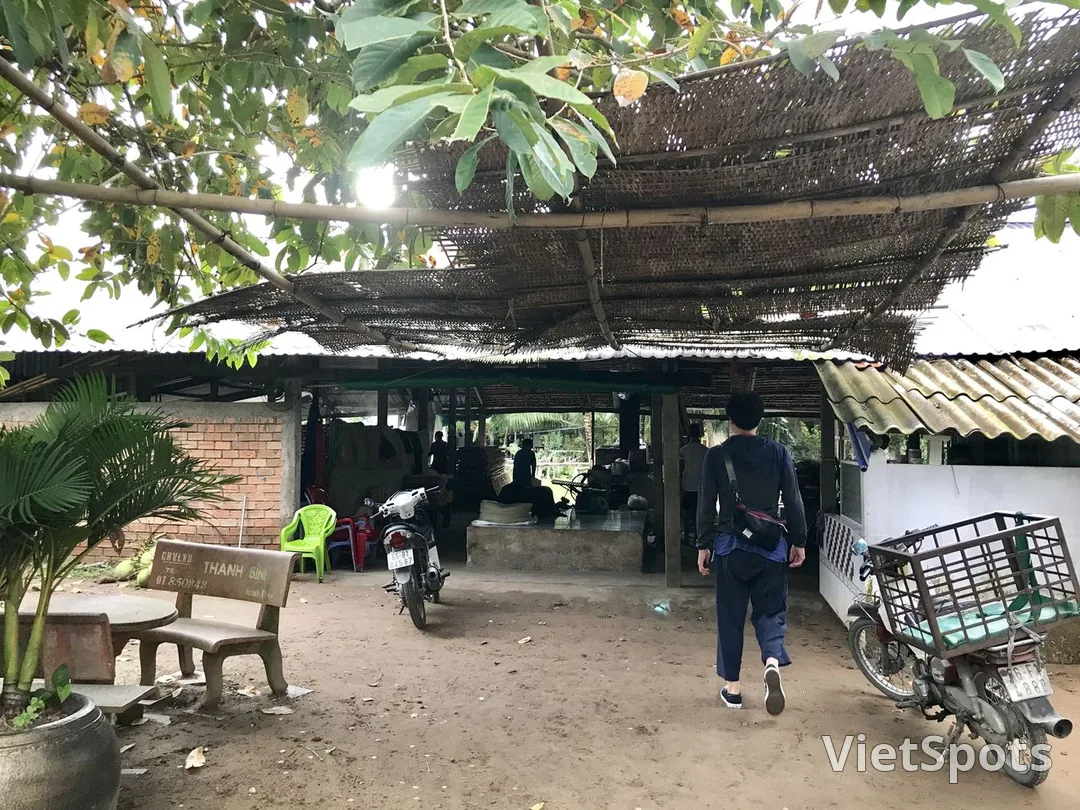
There's a single-story building next to a private house, where you can see several processes happening at once. First is the liquid made by mixing the noodle ingredients. Two kinds of flour and water are mixed and stirred together in a large plastic tank. With such a huge quantity, there's no way to do it by hand alone. The mixing rod really earns its keep!
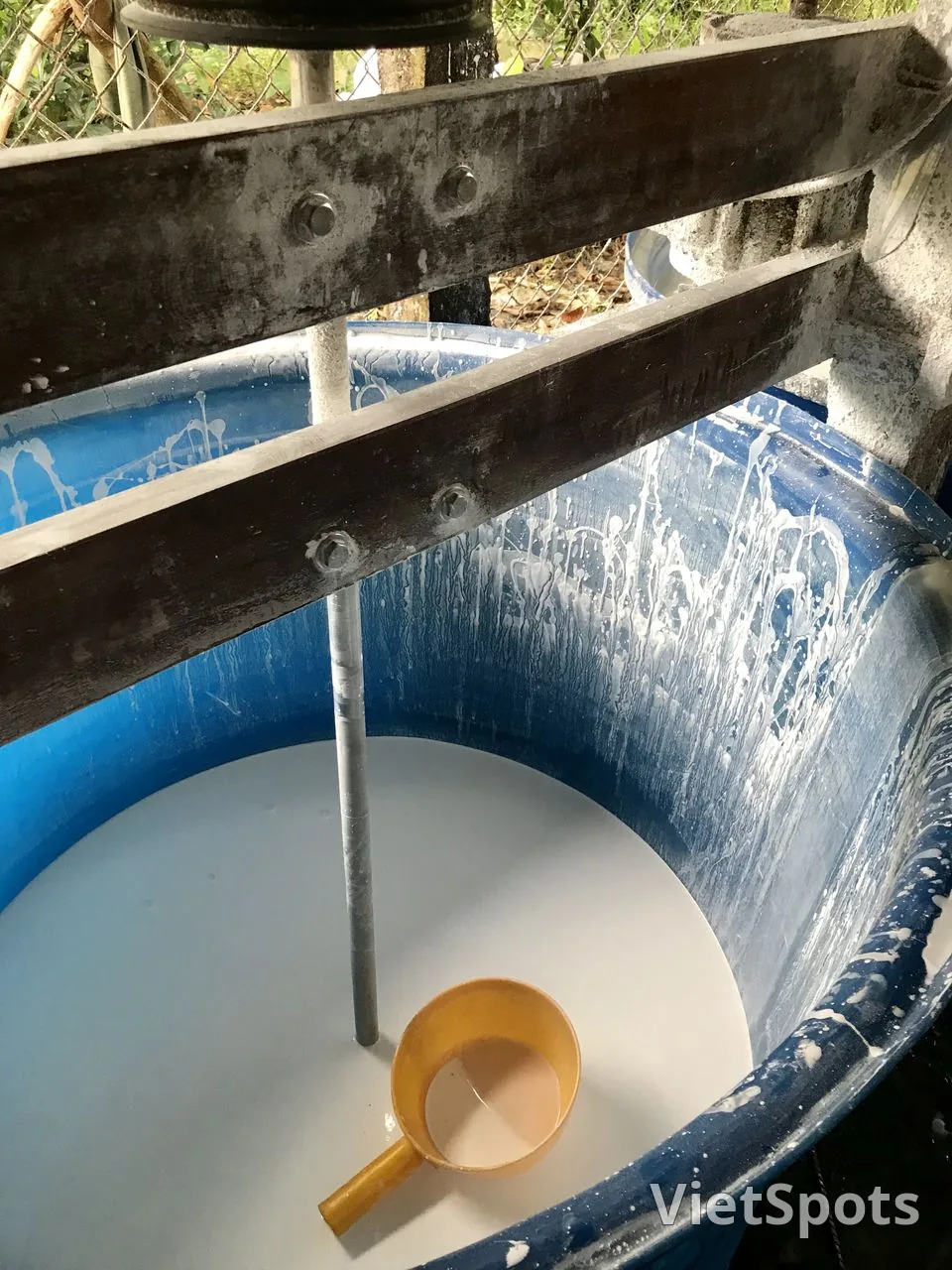
There are two types of flour, one is rice flour. While bún and phở are made only with rice flour, hủ tiếu is made with rice flour and... This is what gets mixed in~
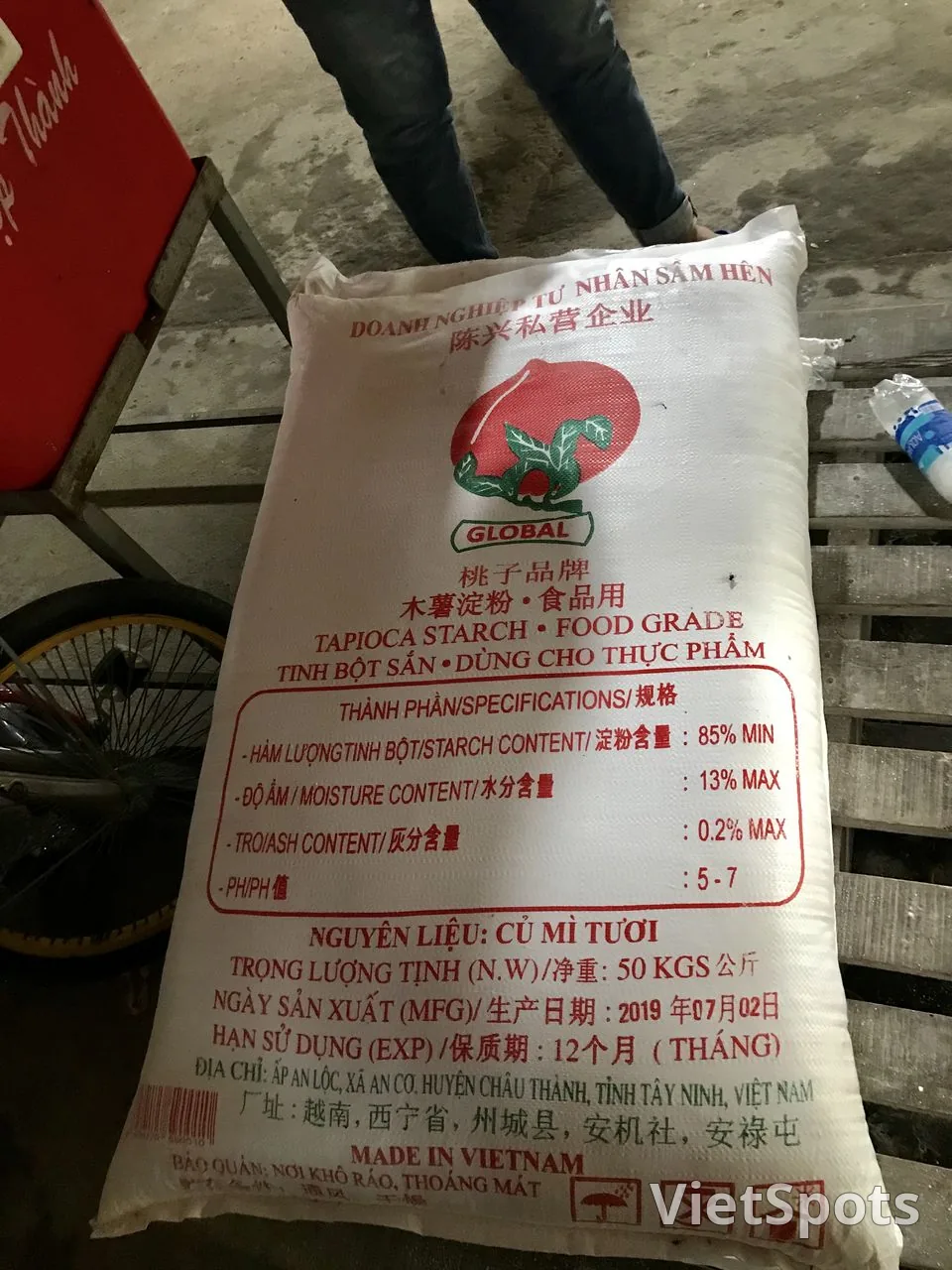
This is tapioca flour. In Japan, tapioca drinks are popular, and this is the tapioca flour that's said to be in short supply because of it. Vietnam has plenty of it, since it's a treasure trove of coconuts. The ratio of rice flour to tapioca flour is a company secret, lol. So adding this tapioca is what gives it that chewy, springy texture, huh. The next step is to use this liquid mixture to make rice paper.
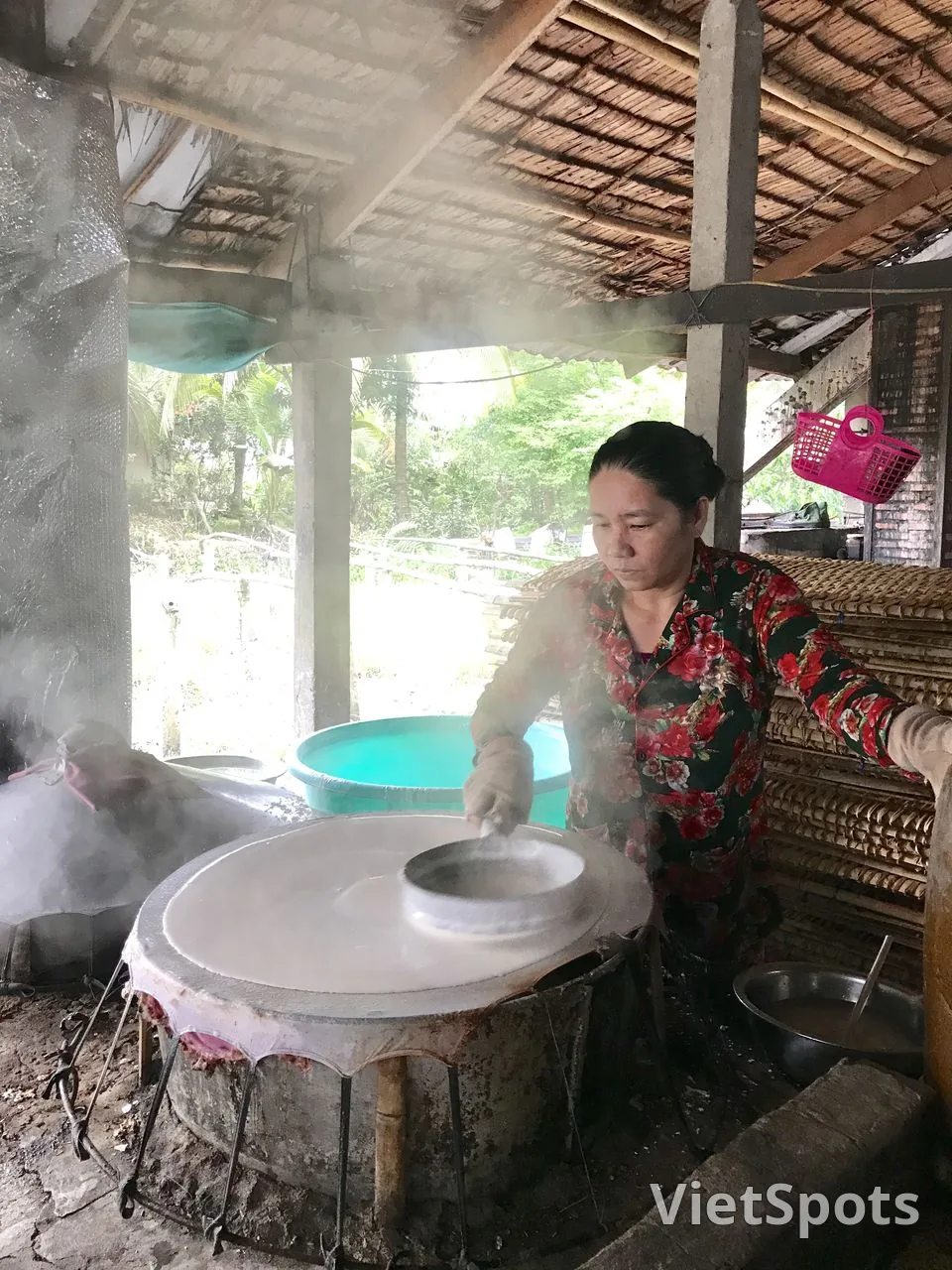
The auntie scoops up the raw liquid with a pot, pours it over a large steamer covered with gauze, and uses the bottom of the pot she scooped it with to shape it into a flat, round form. It's just like a giant crepe! It has quite a bit of thickness. In less than a minute, the dough cooks through just the right amount, turning into a half-cooked state. Once the shape is set...
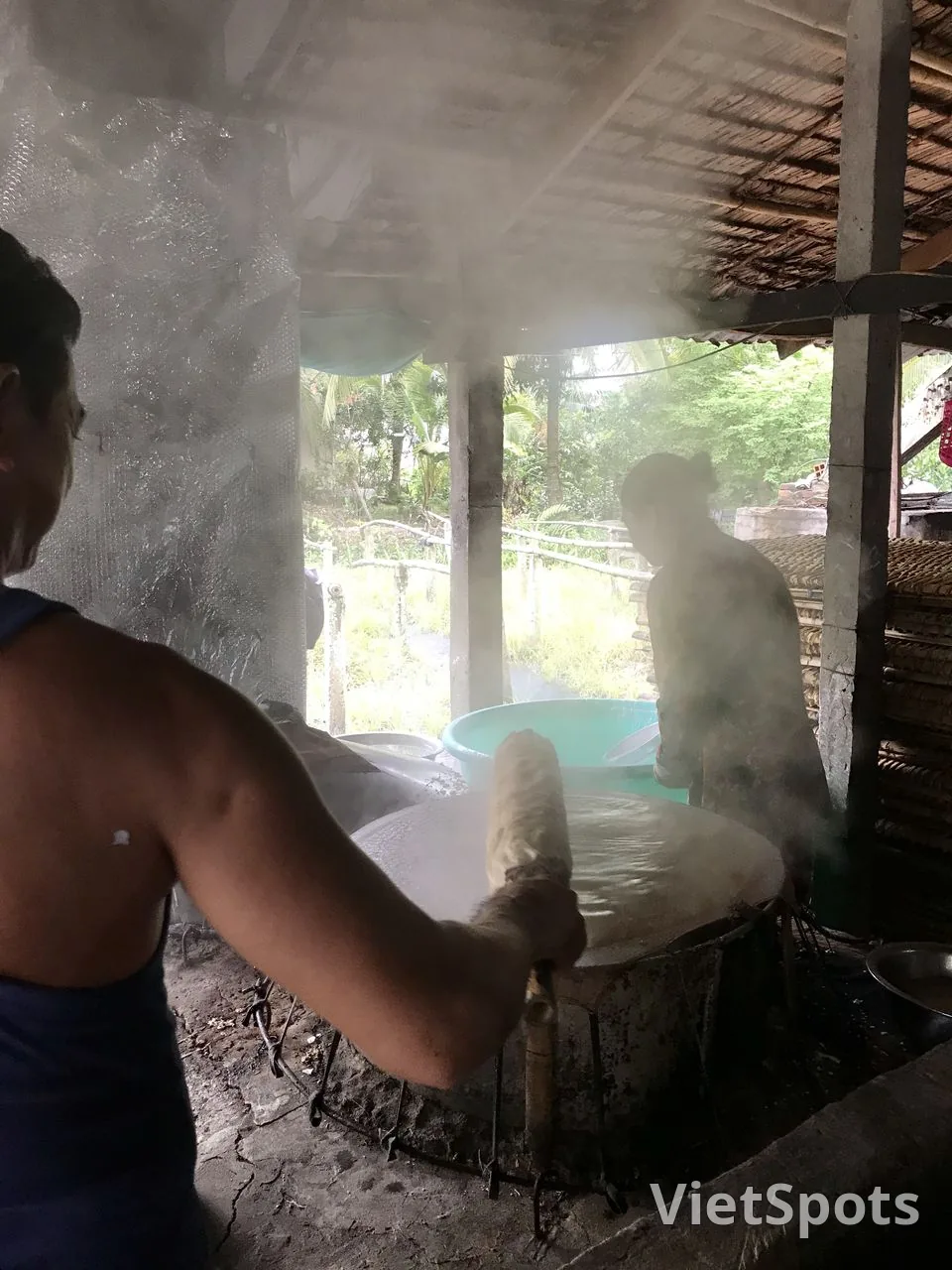
Time for the mister across the street! He rolls and winds the half-raw rice paper from its edge using a bamboo tool woven a bit thicker than a bat. It's a little cut off in the shot, but that's the bamboo bat.
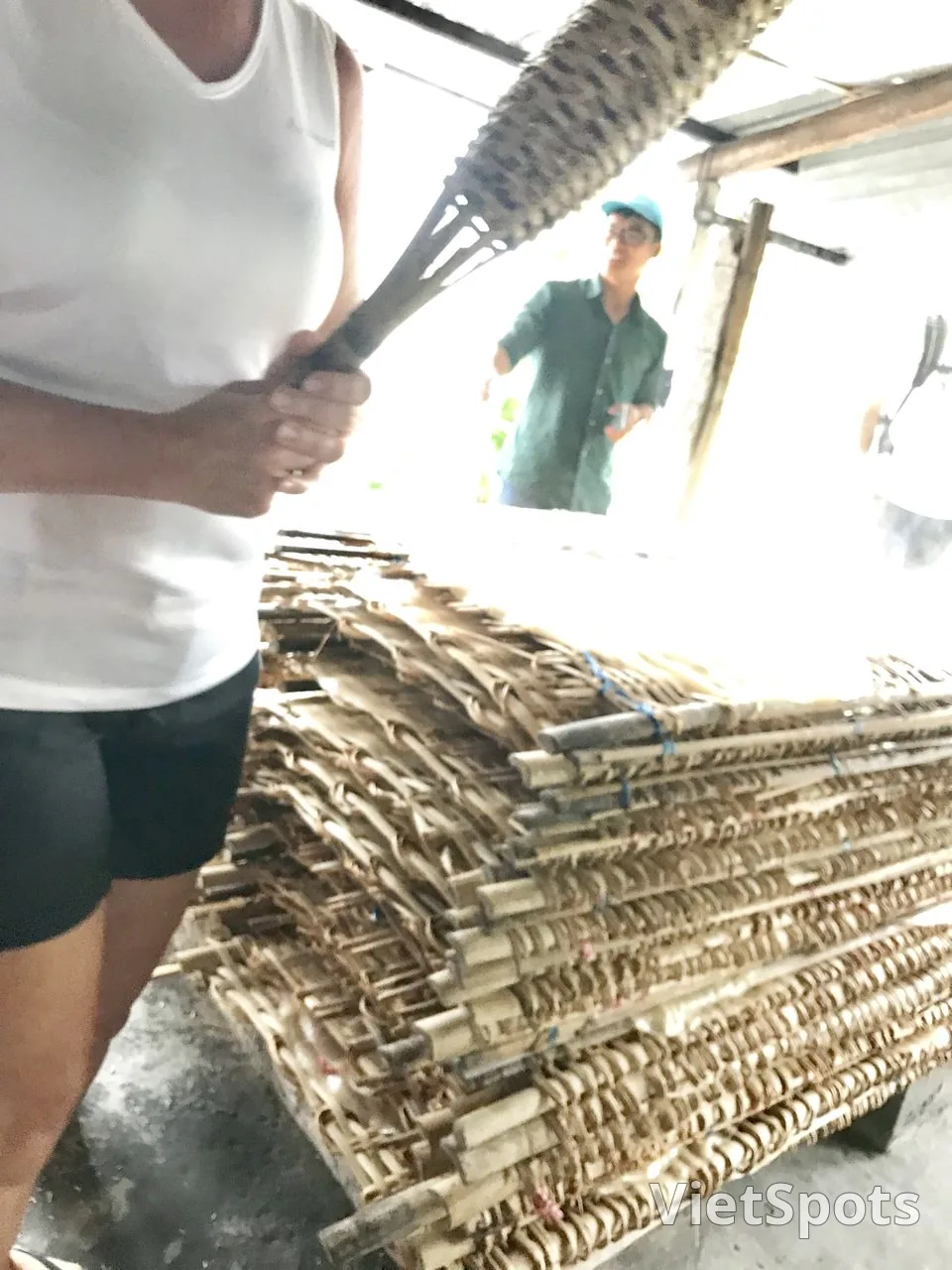
It's light, but handling it with one hand really takes some practice. You take the rolled-up rice paper on the bamboo paddle and spread it out onto the rice paper rack right next to it, which is also woven from bamboo. You give it a spin, turning it a half rotation~
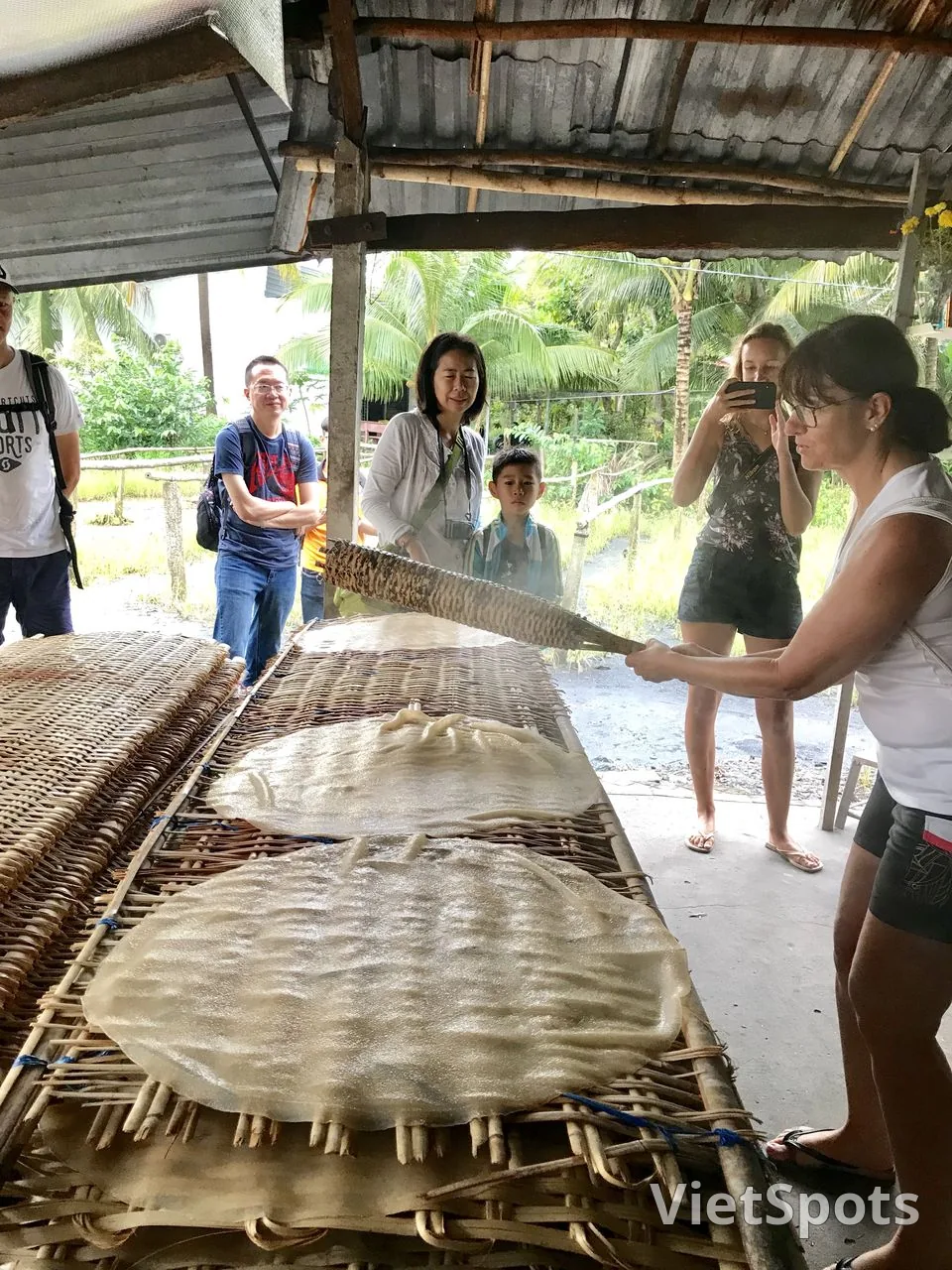
On the tour, you get to try scooping up and spreading out rice paper using this bamboo tray. It's such a valuable experience to feel the weight of this surprisingly thick rice paper, and to try the process of making it sheet by sheet while getting wrapped in the steam rising up from the steamer. It's not as light as it looks, and there's a rhythm you have to match with the auntie, so I really felt this is true craftsmanship. Once this half-raw rice paper is made, it seems to be left to dry for about half a day.
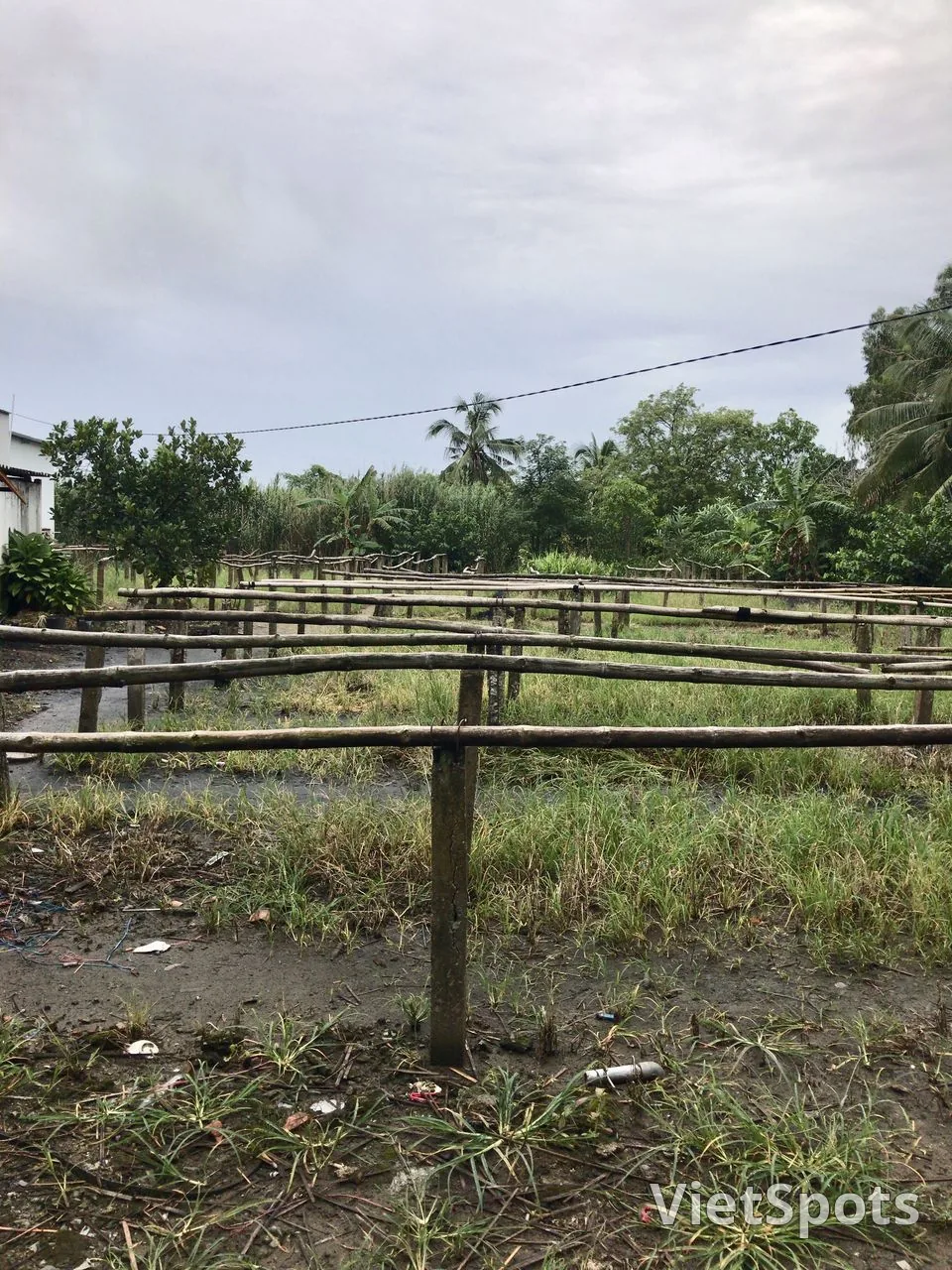
This is the rice paper drying area. In the early morning, rice paper is made, and from the afternoon onward, the rice paper is spread out and lined up across the drying area. Rather than using fresh noodles, drying it for half a day is what gives hu tieu its springy texture. So what do we do with the rice paper once it's dried until it's almost transparent? The next step is... cutting!
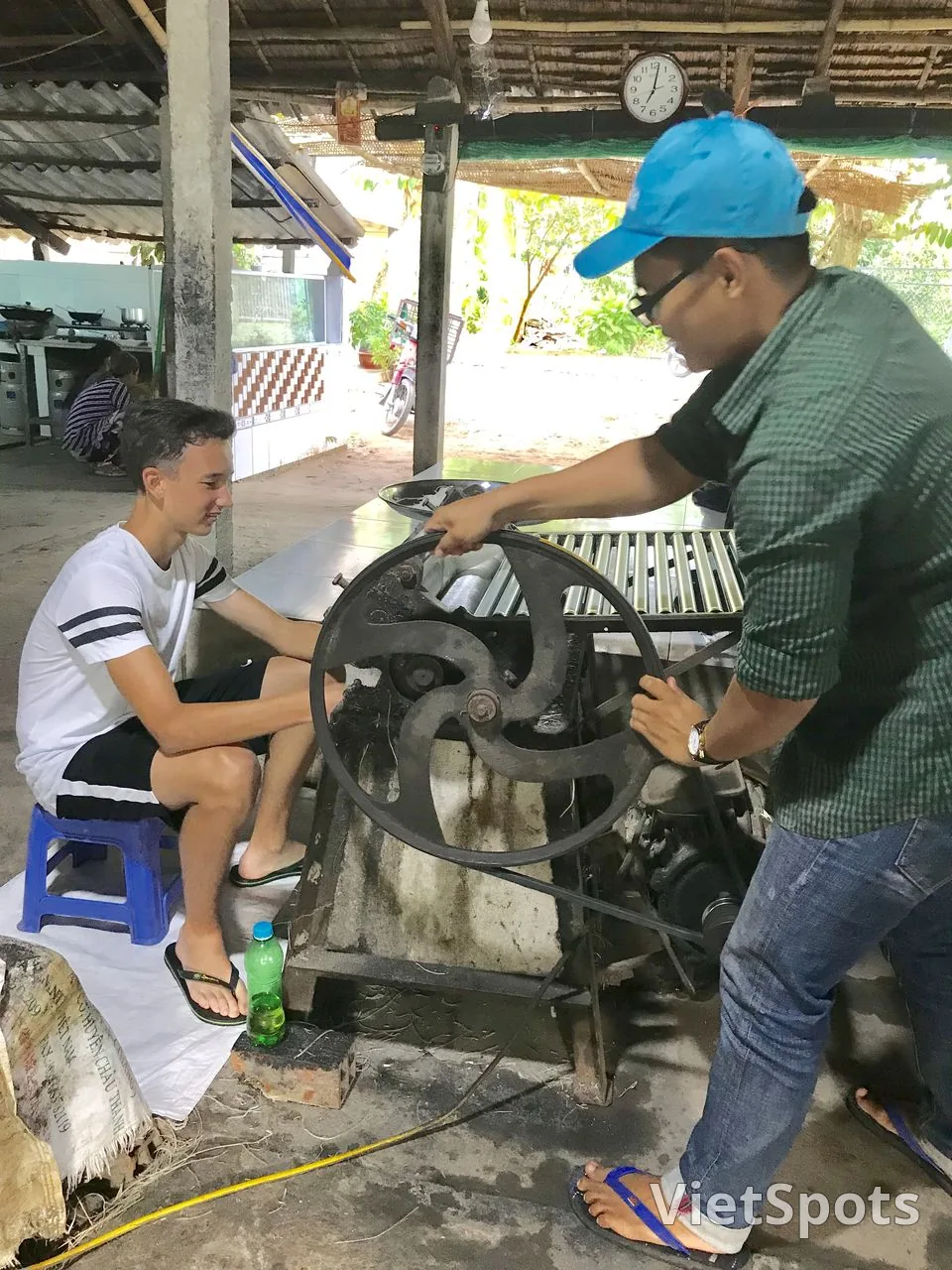
At the factory, cutting is done all at once by machine, but on the tour you can experience an old-fashioned machine. Sheets of rice paper are spread one at a time on the roller. By turning the handle on the side, the rice paper feeds into the cutting machine and gets cut, you see. (It feels a bit like a manual shredder.)
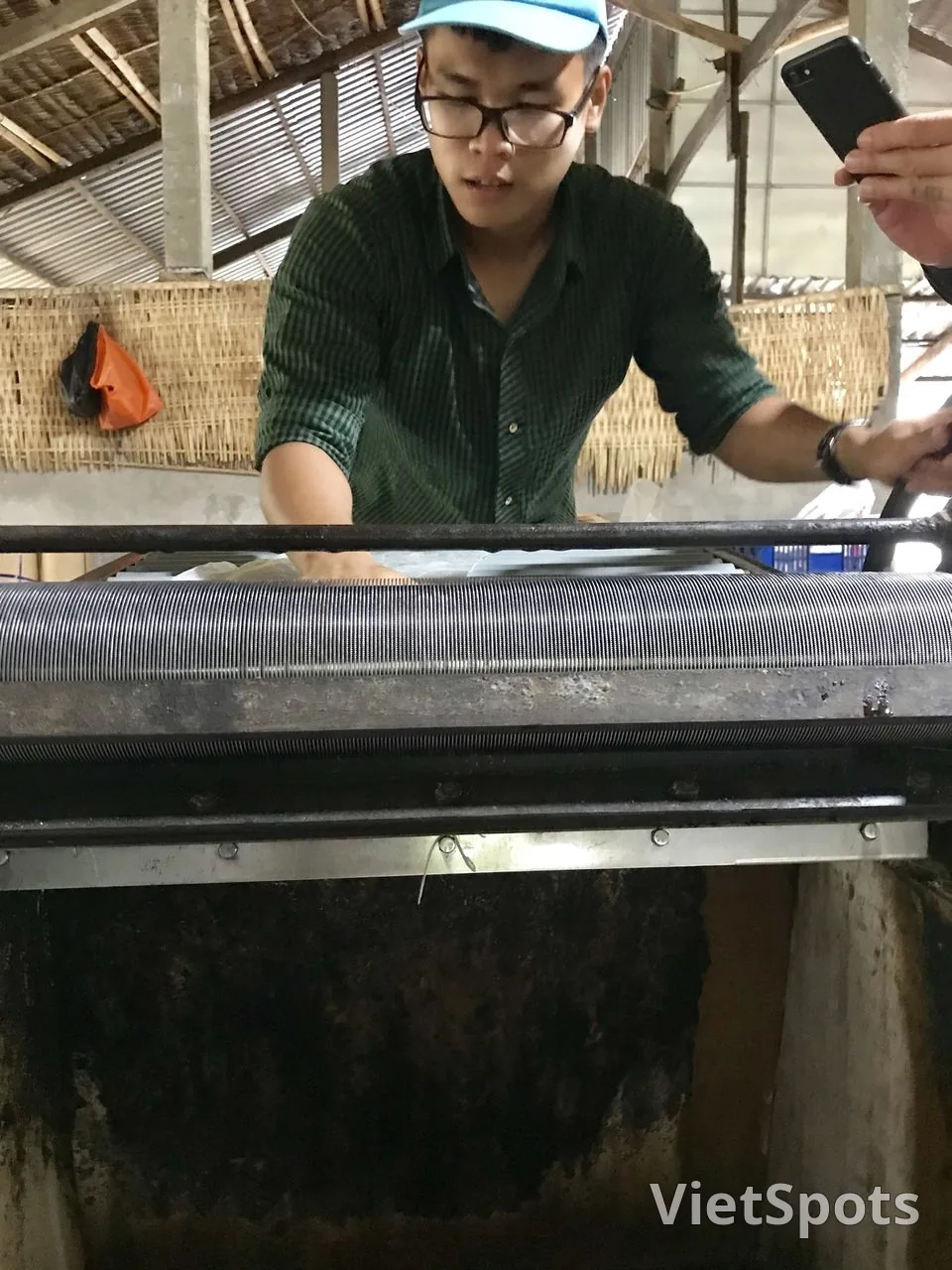
If you look closely at the cut noodles, you can see this fine steel-like pattern. That's also why the broth clings to them so well — it's because they pass through this machine.
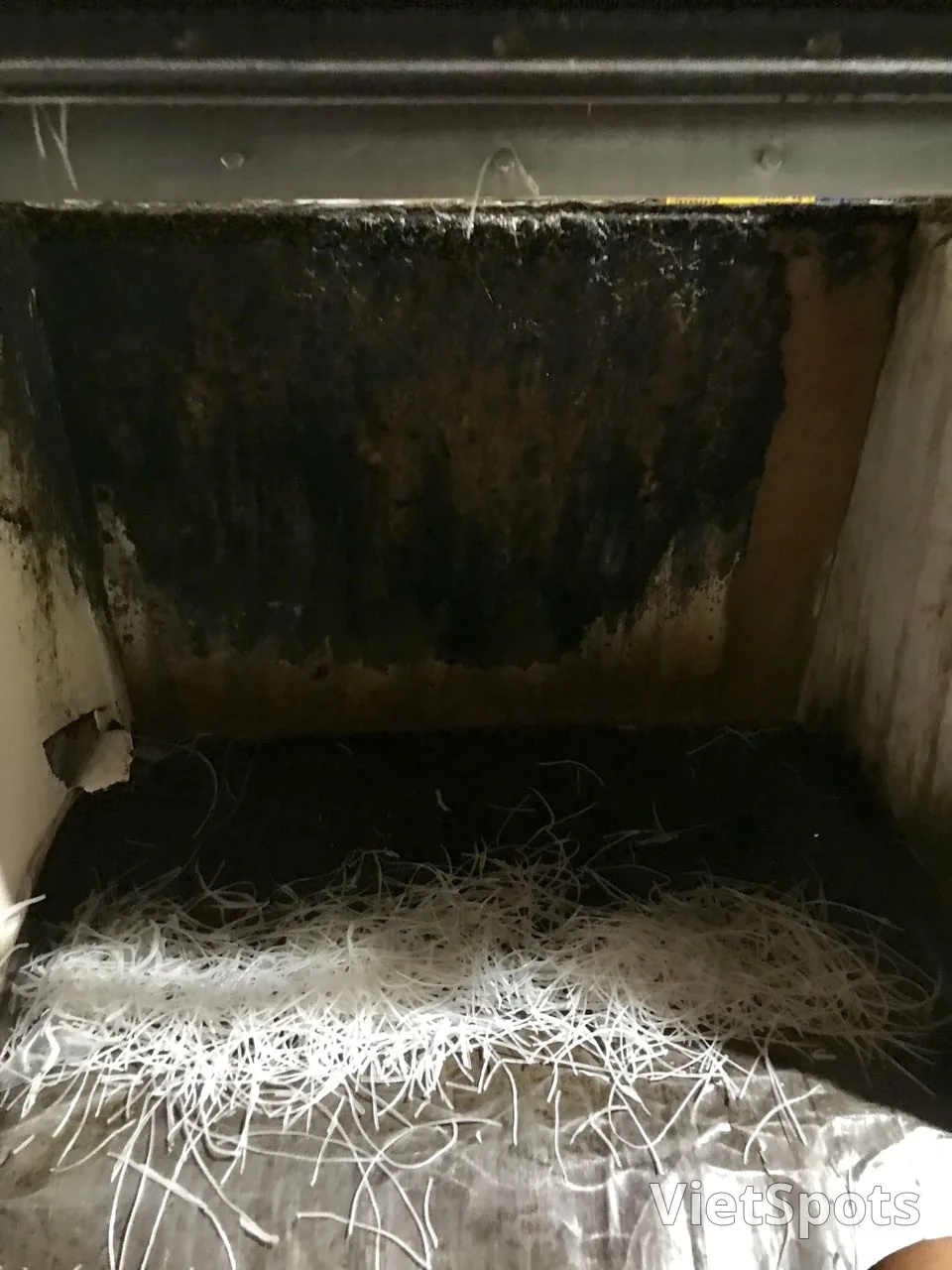
We also need someone to scoop up the cut noodles, so it takes two people — one turning the handle and one picking up the noodles.
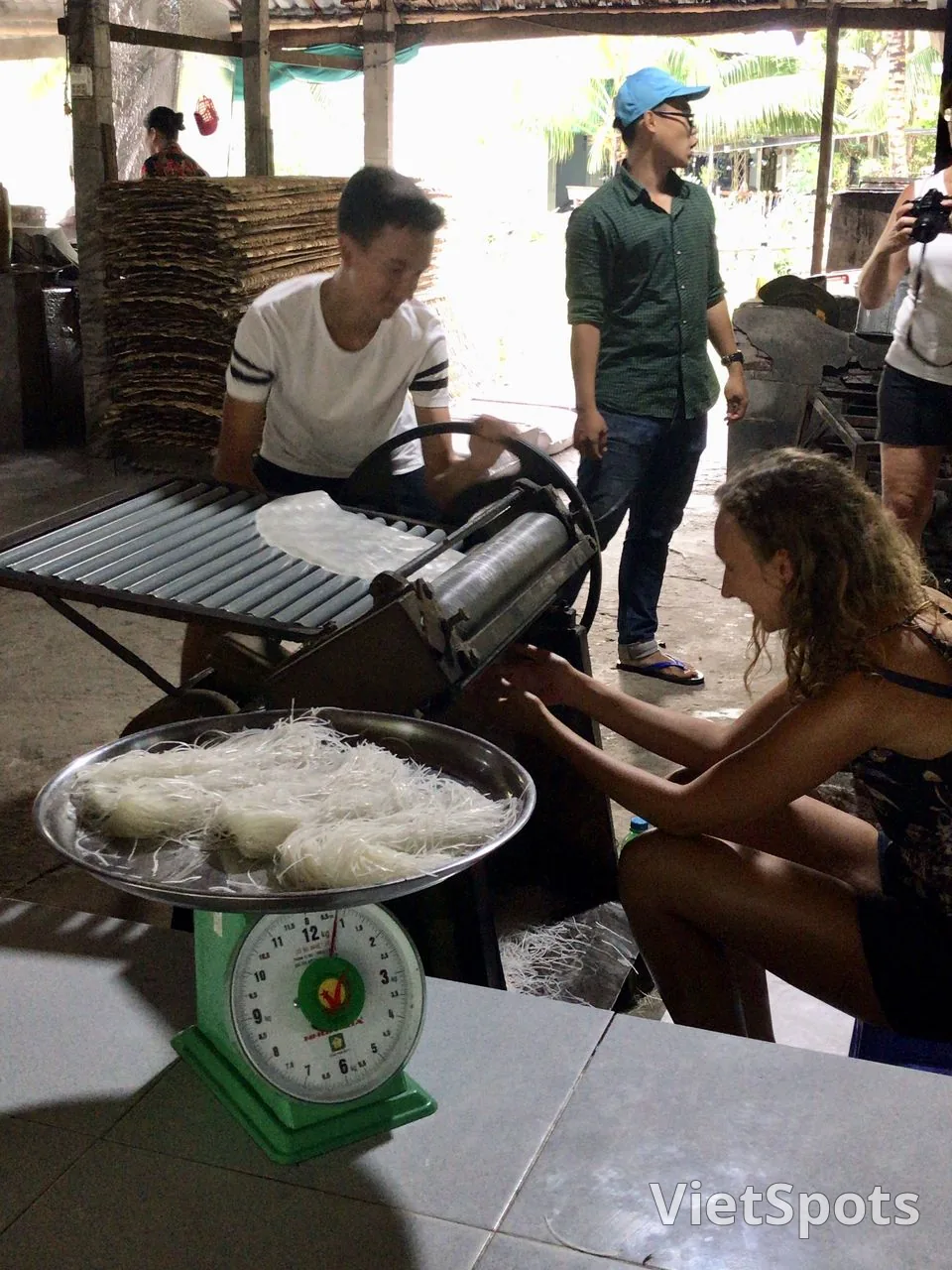
You can experience this too. The noodles are carefully divided into exact portions and packaged.
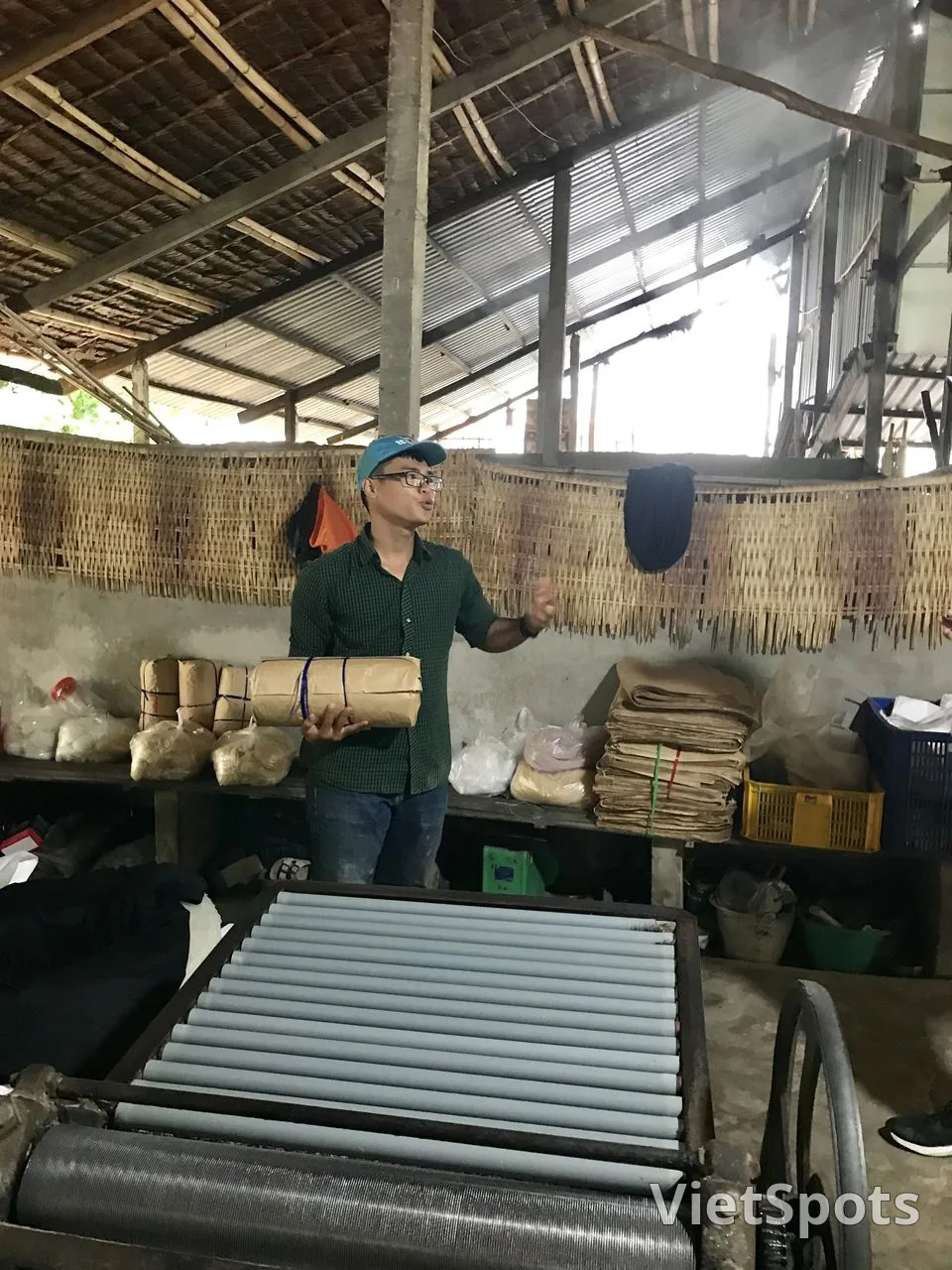
This factory makes the noodles using only flour and water, with absolutely no preservatives. You can even sample-taste the freshly cut noodles. The shelf life is a short one week, but I bet they're delicious~~~ I really wish there were a Hu Tieu shop that used these noodles. I'd love for someone to make one~~~ A thoroughly satisfying Hu Tieu factory! Relocation Life Ranking
Travel Vietnam with vietSpots, in English
- 🎁 Sign up and get 14 Welcome Pack coupons — e.g. Motorbike Rental 45%
- 👑 Member tier discount up to 15% on site (Silver 5% · Gold 15%)
- 🛂 Auto-fill arrival card📶 Compare lowest eSIM prices🚻 Find toilets
Comments