

Which tomb to visit in Huế: choose one out of three, depending on what you want to see



Huế has dozens of Nguyễn Dynasty royal tombs, but almost no one visits them all. People on a two-day trip usually only have time for one or two, and then have to choose. Here's how to choose.
Let's keep it short first: the three tombs most worth visiting are Khai Dinh, Tu Duc, and Minh Mang. If you can only visit one, choose Khai Dinh — because it's unlike any other tomb. If you love trees and open space, choose Tu Duc. If you love strictness and symmetry, choose Minh Mang.
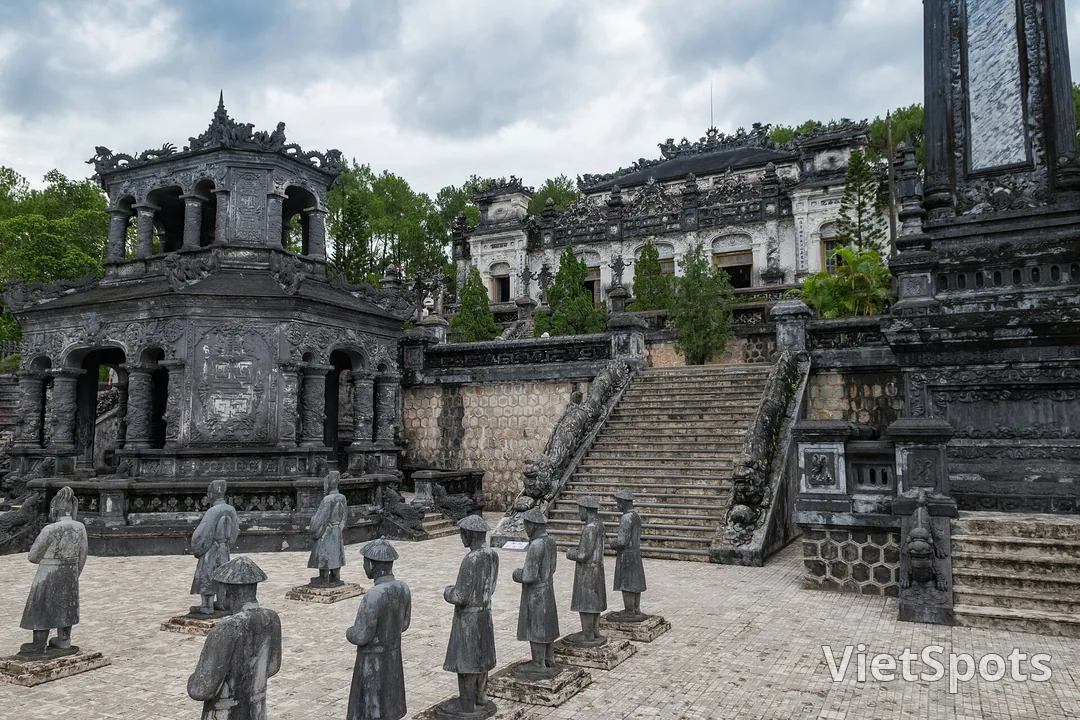
1. Khai Dinh Tomb — the strangest, and the smallest
Seen from afar, it already looks different: an entirely grey-black mass, built of reinforced concrete rather than wood and brick like the previous tombs. The Asian–European blended architecture is so hard to name that some praise it as unique, while others criticize it as a hybrid mishmash. Construction started in 1920 and was only completed in 1931, meaning it took eleven years to build and was finished six years after the king had passed away.
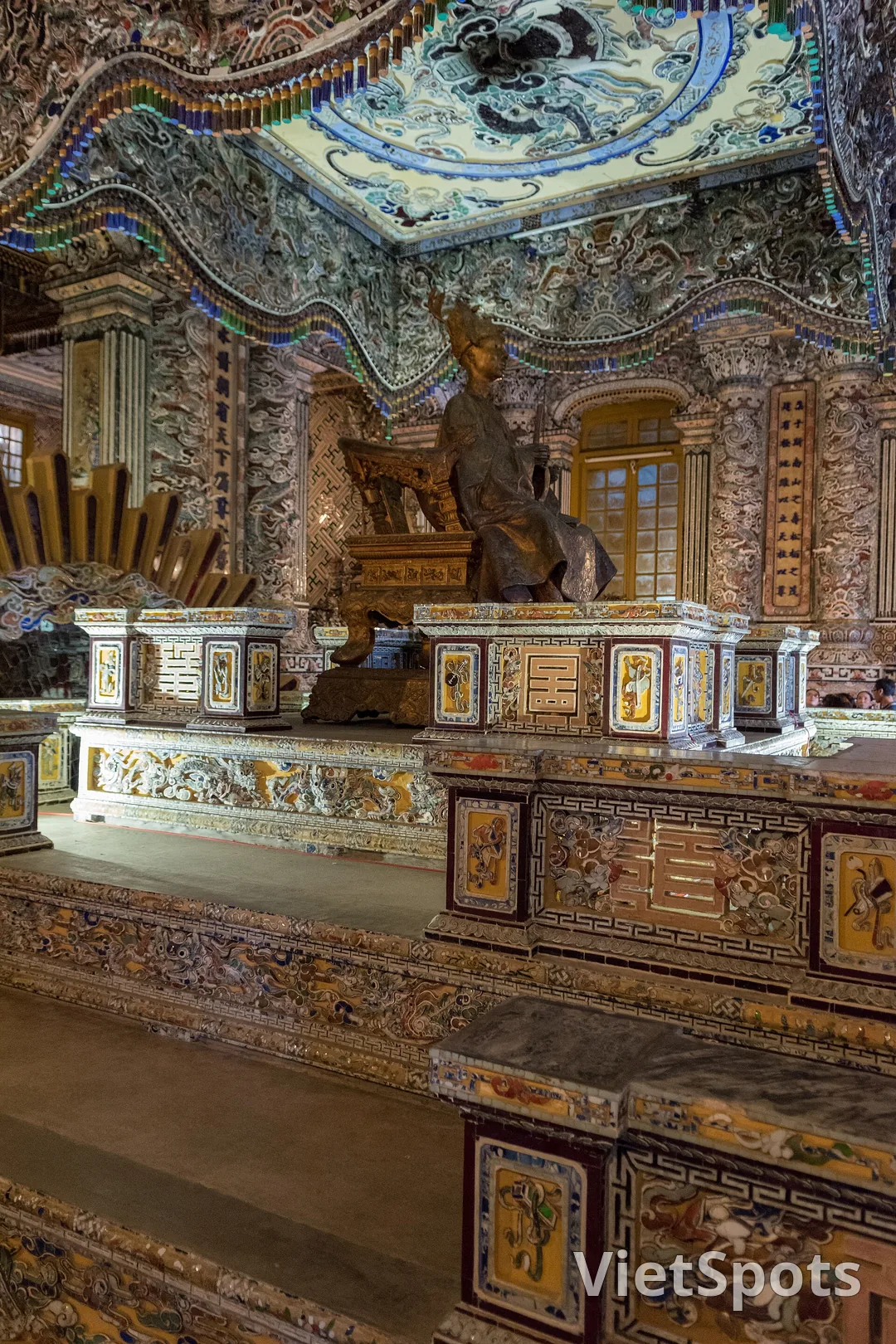
But what makes people freeze in their tracks lies inside, in the Thien Dinh Palace: the entire walls and ceiling are densely inlaid with fragments of ceramic and glass, pieced together into dragons, phoenixes, flowers, and clouds. Not painted — it's tens of thousands of fragments assembled piece by piece. Only after standing in the middle of that room did I understand why this mausoleum took so long to build.
There is also a dark side you should know about: to fund its construction, the royal court raised the land tax, and that is one of the reasons Khải Định has been remembered by later generations with not much sympathy. The work is beautiful, but the price was borne by the people.
Fact: this is the smallest of the three tombs, the quickest to visit — but the steepest, requiring you to climb many steps in a row. Those who dislike climbing should plan ahead.
2. Tu Duc Tomb — spacious, green, and melancholic
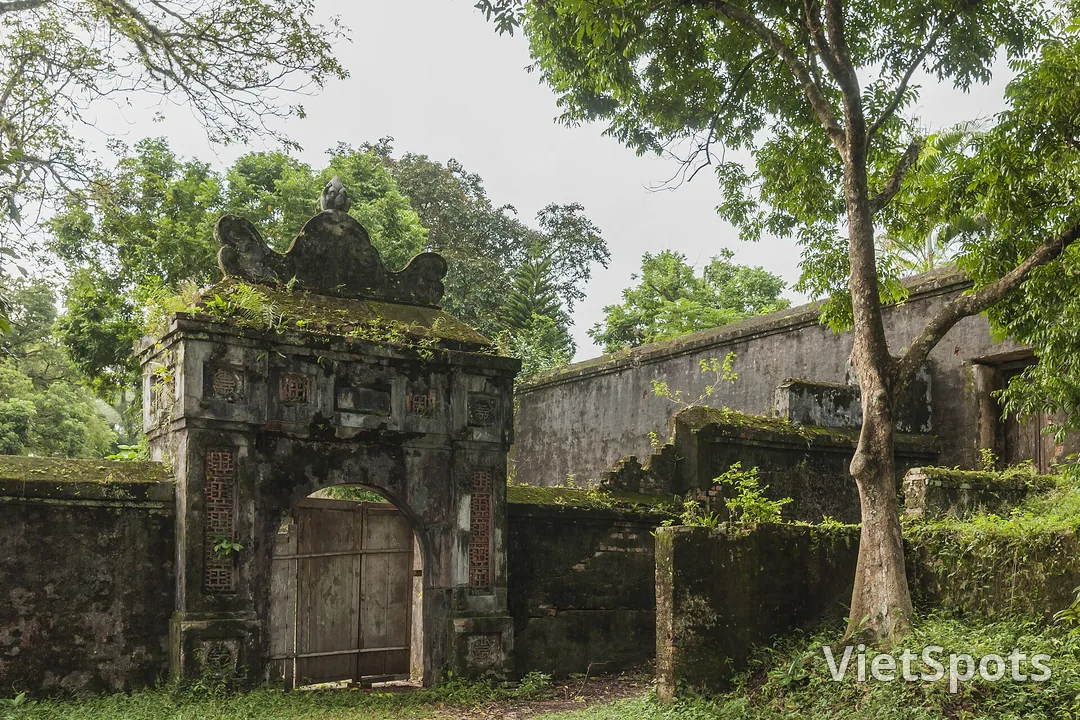
The complete opposite of Khai Dinh. This doesn't resemble a mausoleum but rather a garden with a lake: pine trees, Luu Khiem Lake, a water pavilion, a stone-paved path winding among the trees. The reason is very simple — King Tự Đức used this place while he was alive, to rest, fish, and compose poetry. It was built in the 1860s, when the king still had more than fifteen years left on the throne.
There is one detail that makes many people stop and linger for a long time at the large stone stele in the middle of the tomb. According to custom, a stele praising a king must be written by his successor. Tự Đức had no children, so he wrote his own stele inscription — and in it, he admitted his own faults, blaming himself for the things that happened during his reign. It is rare for a king to compose his own epitaph and then criticize himself in it.
In reality: it's the widest, requires the most walking, but is flat and has plenty of shade. Suitable for slow walkers, great for taking photos. This is also a mausoleum that often has sections under restoration — so check the information before you go so you won't be disappointed.
3. Minh Mạng Mausoleum — Majesty and Balance
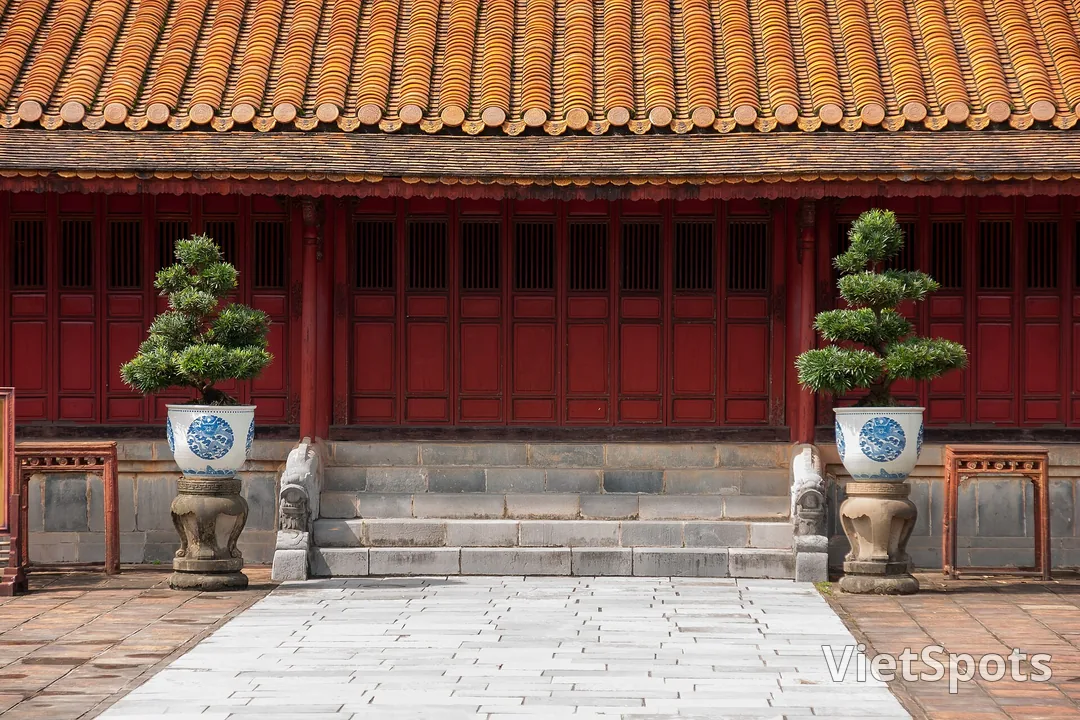
If Khải Định was unconventional and Tự Đức was romantic, then Minh Mạng was disciplined and orderly. The entire mausoleum lies on a single axis, with the structures arranged in absolute symmetry on both sides; from the gate, you follow just one path through one courtyard after another, all the way to one lake after another. Built in the early 1840s, and the feeling it leaves behind is exactly like the character of the king famous for being strict and valuing discipline.
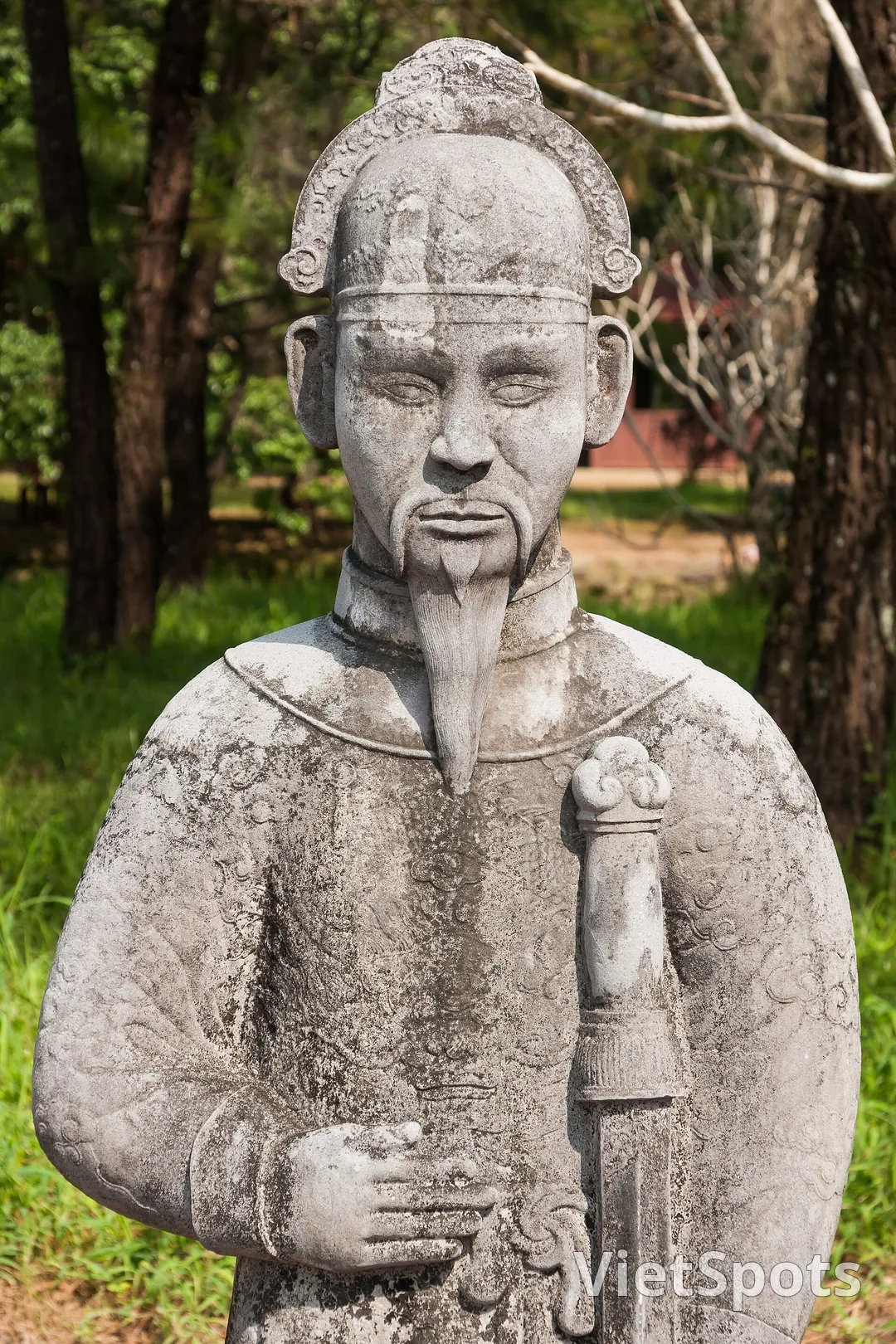
In fact: it's the farthest from the center among the three mausoleums. In return, it's usually less crowded, and the space feels open and airy.
A few things you should know before you go
The three tombs are scattered around and you cannot walk between them. They are located south and southwest of the city, a few kilometers apart from each other. You must have a vehicle. Taking a chauffeured car or renting a motorbike both work, but if the three of you are going out for the whole day, a four-wheeled car will be much less tiring.
Go there early in the morning. All three royal tombs have a lot of open brick courtyards with no shade, and the sun in Huế is very harsh. After ten o'clock it starts to get unbearable.
Dress modestly a bit. This is a royal tomb, not just a photo spot — many areas within the mausoleum still have incense smoke and people coming to pay respects. Shirts with sleeves, pants or skirts past the knee are appropriate. The áo dài fits the setting very well, but remember that you have to climb stairs.
Closed-toe, grippy shoes. There are many stone steps, and they are often damp and mossy, especially with the rainy season coming. Flip-flops are the most common mistake here.
Order of visits to keep it tidy: Khải Định first to avoid the heat since it involves climbing, then Tự Đức at a leisurely walking pace, then Minh Mạng if you still have energy left. If you only have half a day, skip Minh Mạng.
Finally: don't try to cram both the mausoleum and the Imperial Citadel into a single day. The Citadel alone is enough to get lost for the whole day — that's mentioned in an article about the Citadel and a photo of Huế taken from an airplane in 1932.
Photo: dronepicr (CC BY 2.0), CEphoto / Uwe Aranas (CC BY-SA 3.0) — Wikimedia Commons
Book Travel in Hue — in English on vietSpots
- 🎁 Sign up and get 14 Welcome Pack coupons — e.g. Motorbike Rental 45%
- 👑 Member tier discount up to 15% on site (Silver 5% · Gold 15%)
- 🛂 Auto-fill arrival card📶 Compare lowest eSIM prices🚻 Find toilets



Comments