

Visiting Son Tra to see red-shanked douc langurs: what time to go, where to stand, and several things you absolutely must not do


Everyone heading up to Son Tra also takes photos of Linh Ung Pagoda before coming back down. But what actually makes this peninsula special on the world map is not the Buddha statue — it's the brown-shanked douc, a primate species known as the "queen of primates" because of its five-colored coat.
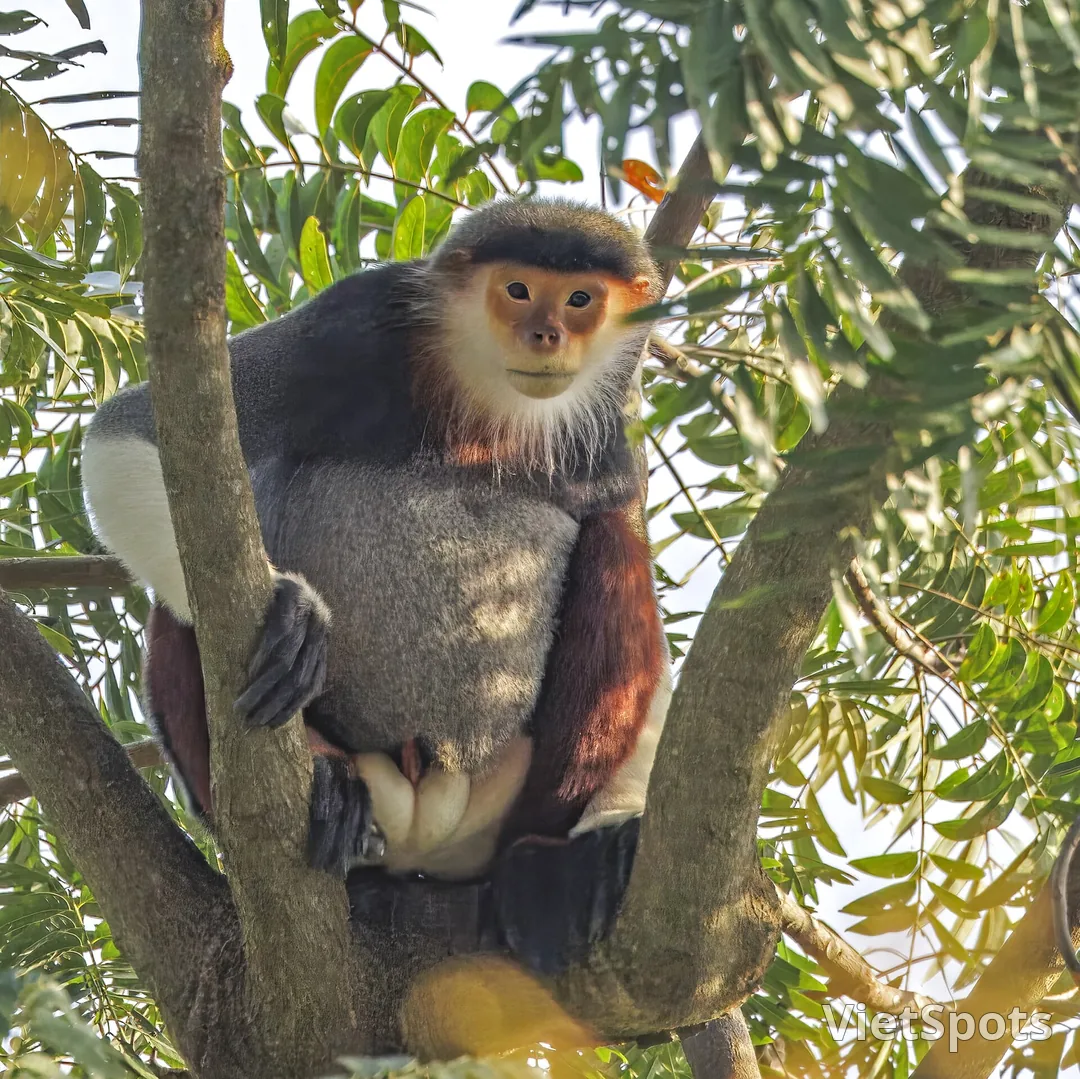
GreenViet's survey recorded about 1,335 individuals in 237 groups in Son Tra — the largest population and highest density of this species in the world. This species is in the Critically Endangered (CR) category of the IUCN Red List. And what's rare: Sơn Trà is almost the only place where you can see them in nature from a paved road, just 20 minutes' drive from the city center.
What time to go Langurs eat young leaves, so they are most active during the cool hours: • 6:00 – 9:00 AM — the best time slot. The road is quiet, the weather is cool, and the langurs come down to the lower canopy to eat leaves. • 4:00 PM – 5:30 PM afternoon — second time slot, less well-known. • Around midday, almost nowhere to be found: they go up high and rest still in the shade.
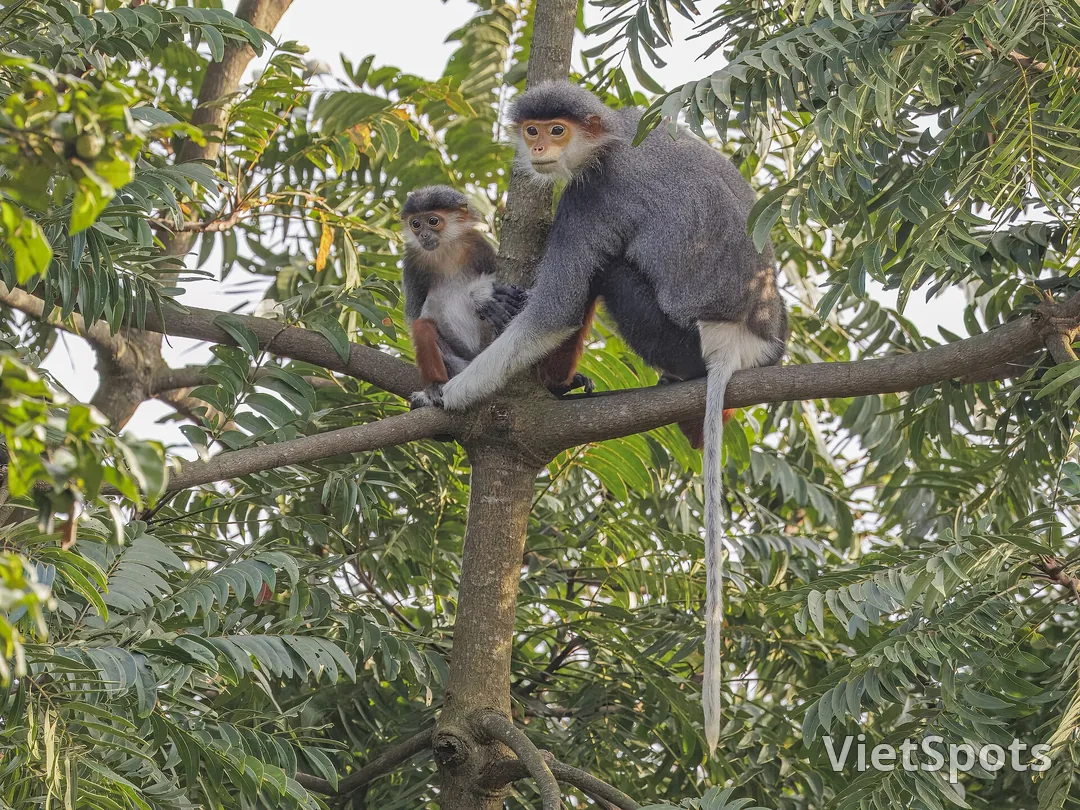
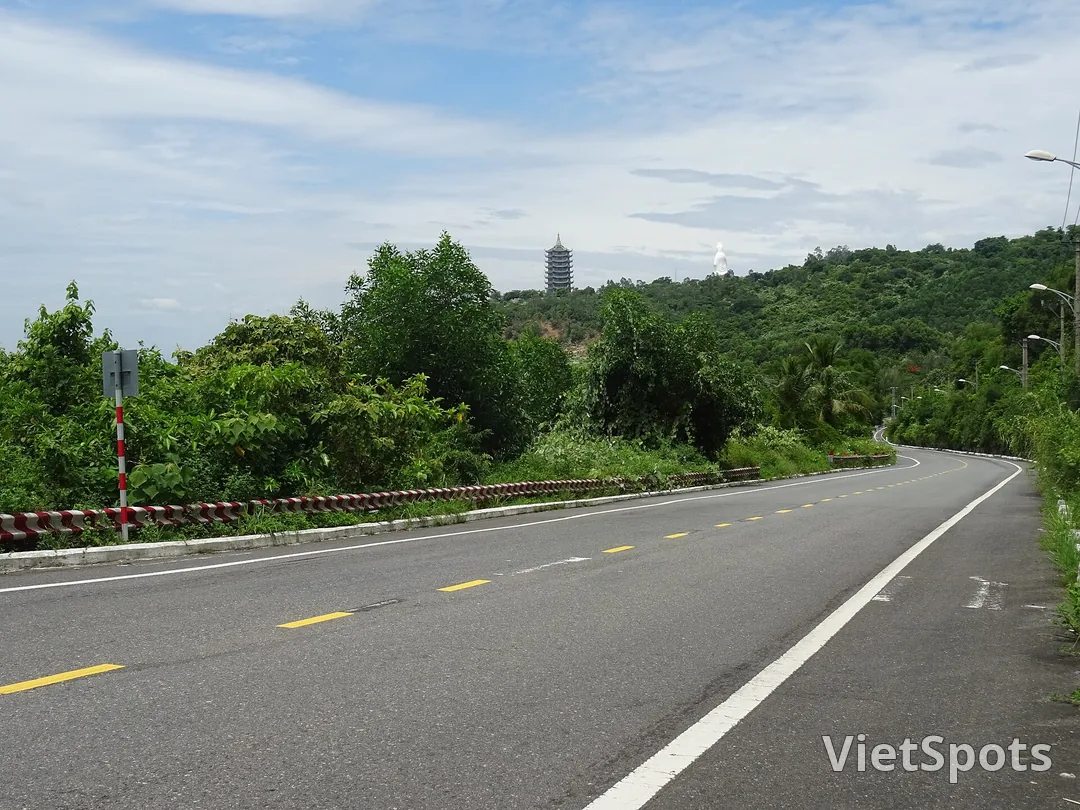
Where to stand No need to go deep into the forest. The three easiest spots to encounter are all on the paved road: • The stretch of Hoang Sa Road from the foot of the pass up to Linh Ung Pagoda — many leafy trees on both sides. • From Linh Ung continuing up to the thousand-year-old banyan tree — this stretch has a closed forest canopy, and whole herds/flocks are often spotted here. • The area where the path branches off to Bai Bac / the road up to Ban Co Peak — long-distance visibility, easy to observe with binoculars.
Search tip: don't look, listen first. An unusual crackling sound of falling leaves or branches shaking strongly during a lull in the wind is almost certainly a flock feeding up above.
What to bring • Binoculars (8x42 is sufficient) or a camera with a lens of 300mm or more. Langurs are usually 20–40m from the road and up high — a phone camera will only capture a blurry dot, which is the #1 reason people end up disappointed. • Water, a hat, closed-toe shoes. • Dark-colored clothing. Red or bright yellow clothes make them alert and leave early.
Several Things You Absolutely Should Not Do • Don't feed them. Gibbons eat leaves and forest fruits — bananas and candy damage their digestive system and teach them the habit of lingering on roads, making them vulnerable to vehicles. • Don't use flash, don't honk, don't whistle to call them. • Keep a minimum distance of 20m. Don't climb, don't throw anything up into the trees to make them turn and look at the camera. • Drive slowly under 30km/h in the forest section. Gibbons and monkeys cross the road very suddenly.
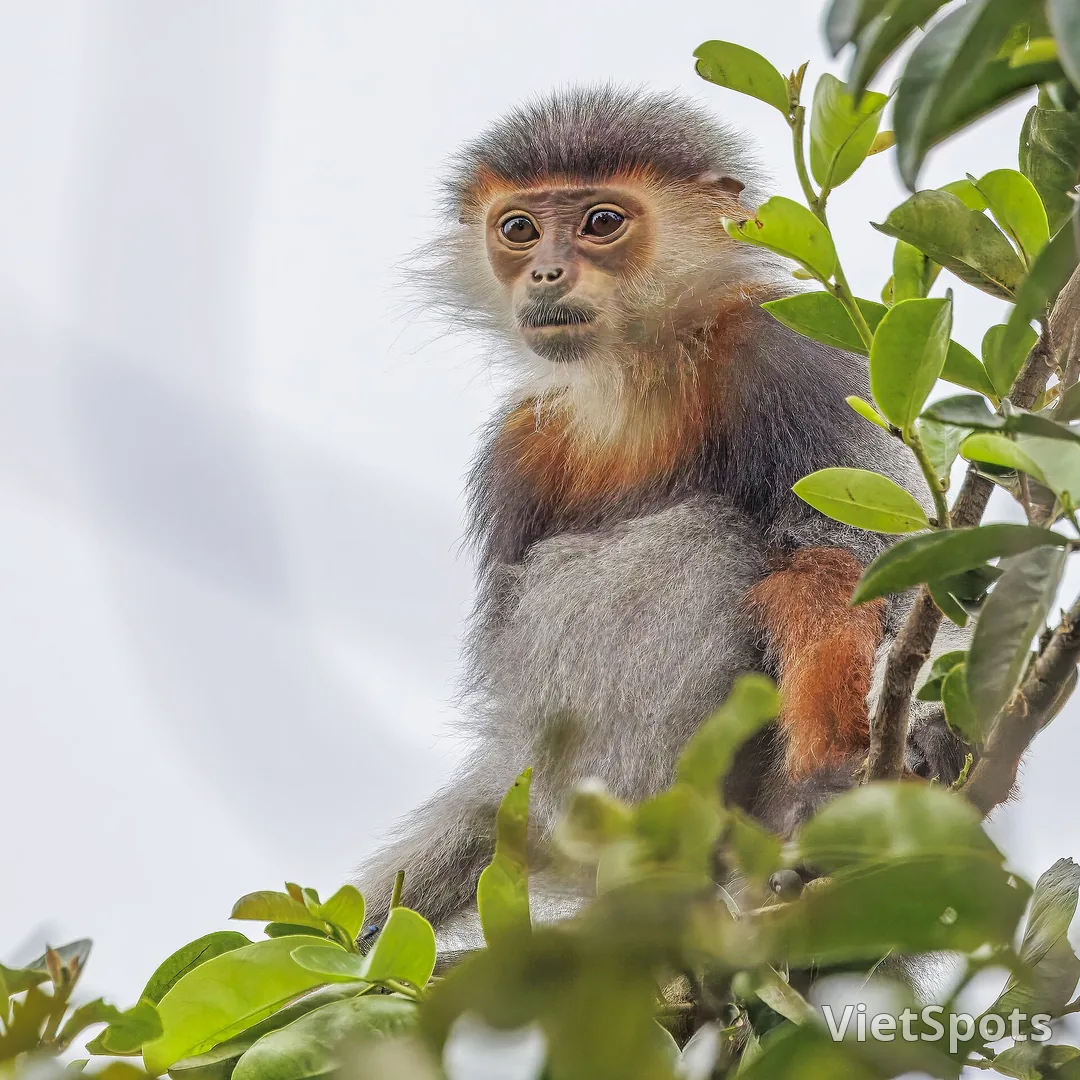
How to tell apart langurs and rhesus macaques Many people think the animal that comes right up to the roadside to beg for food is a langur — it's not. It's a rhesus macaque: smaller, with plain grayish-brown fur, and used to humans. Voọc chà vá, by contrast, are timid and shy, living almost constantly in the treetops. Their feet have distinct reddish-brown patches, and their yellow-orange faces are framed with white-bearded edges. If the animal proactively approaches to ask for food, it's definitely not a douc langur. And please don't feed the monkeys either: monkey troops accustomed to people in Son Tra have been involved in many incidents of snatching belongings and scratching visitors.
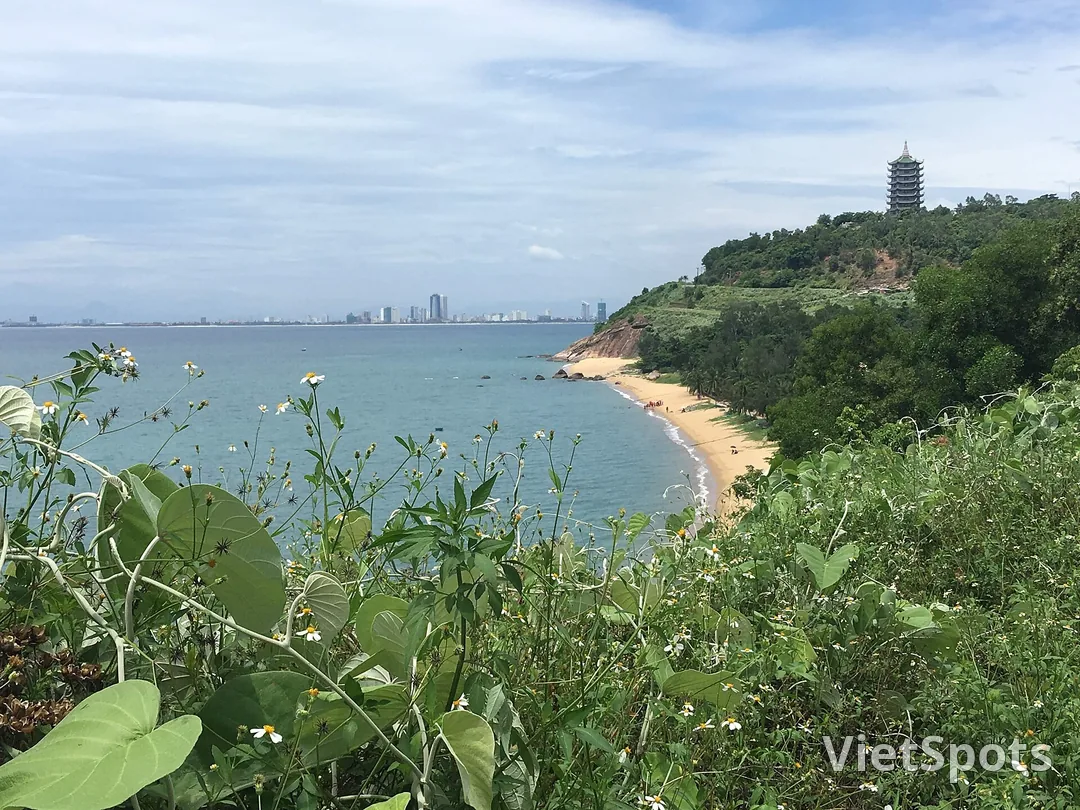
A few practical tips • Entrance to the peninsula and Linh Ung Pagoda is free; motorcycle parking is around 10,000đ. • There are no gas stations on the peninsula — fill up your tank before going up. • Steep slopes and many sharp curves: you should use a manual or semi-automatic motorbike of 110–125cc or more, with brakes in good condition. Weak automatic scooters and electric bicycles should not attempt to go up. • When entering the pagoda, please cover your shoulders and knees.
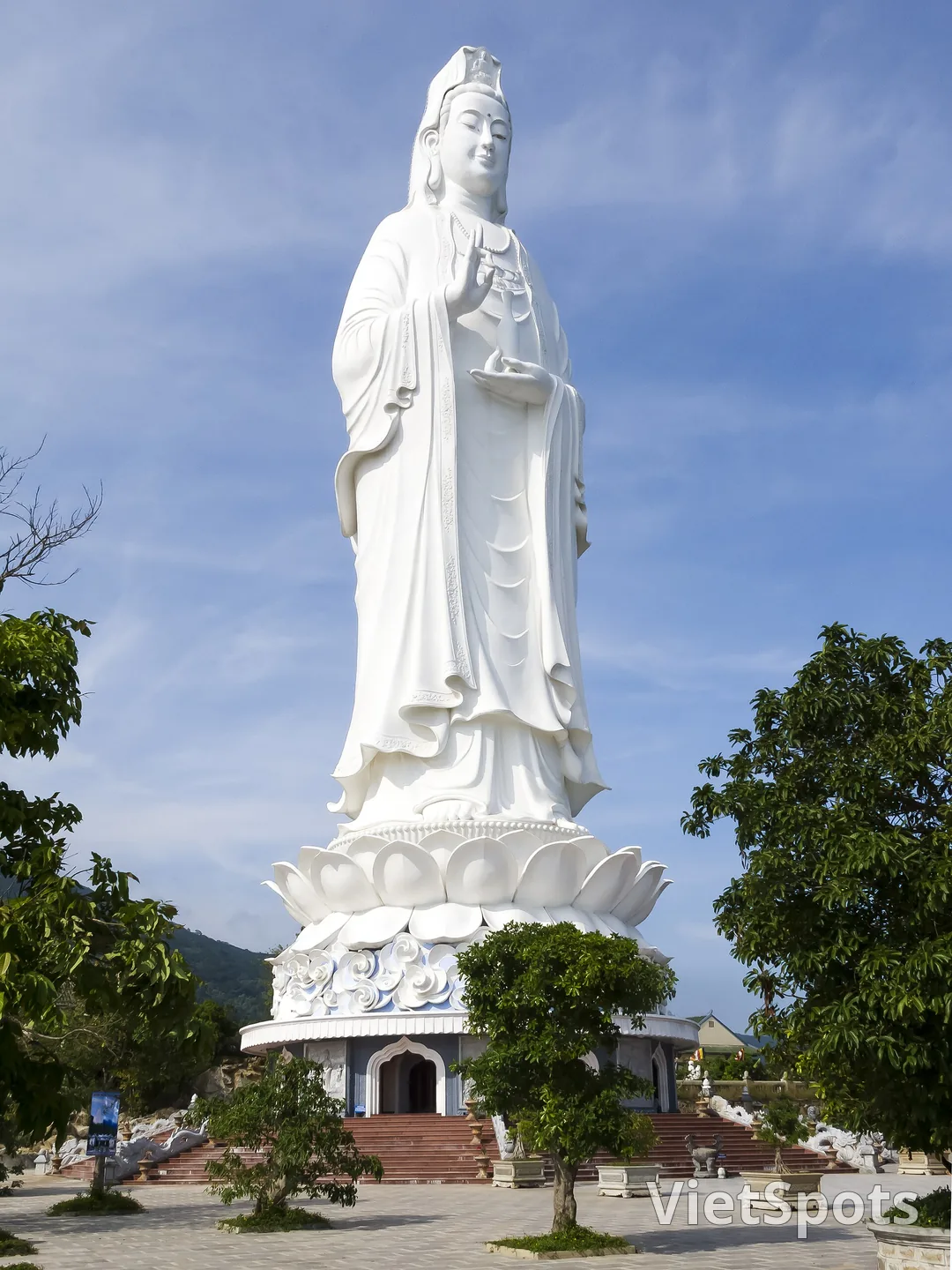
Spotting gibbons is a matter of luck — some days you walk around and don't see any at all, other days right at the foot of the pass you see an entire group swinging through the branches. But if you go at the right time, the odds are much higher. And even if we don't meet, a morning on Son Tra is already worth it. ⏰ Time: 3–4 hours · 🎒 Binoculars · water · closed-toe shoes · neutral-colored shirt · 🏍️ Fill up gas before heading up
Photo: Charles J. Sharp (gibbon), Christophe95 (Hoang Sa Road, peninsula panorama), CEphoto / Uwe Aranas (Guan Yin statue) — Wikimedia Commons, CC BY-SA license.
Book Travel in Da Nang — in English on vietSpots
- 🎁 Sign up and get 14 Welcome Pack coupons — e.g. Motorbike Rental 45%
- 👑 Member tier discount up to 15% on site (Silver 5% · Gold 15%)
- 🛂 Auto-fill arrival card📶 Compare lowest eSIM prices🚻 Find toilets
Comments