

Morning Mì Quảng — eating it the proper Đà Nẵng way



In Da Nang, Quang noodles are everywhere — every corner has them, every alley sells them, and each place makes them their own way. Newcomers often ask me 'which restaurant is the best?' — honestly, that's a really hard question to answer, because most locals here eat at restaurants close to home, and once they get used to a particular taste, they stick with it.
Here's what you should know first: Quảng noodles aren't eaten the same way as phở or bún. The broth is poured very sparingly — many restaurants only pour just enough to barely cover the bottom of the bowl, enough for the noodles to soak up but not be fully submerged. First-time customers often mistakenly think the restaurant forgot to add broth and ask the server for more water.
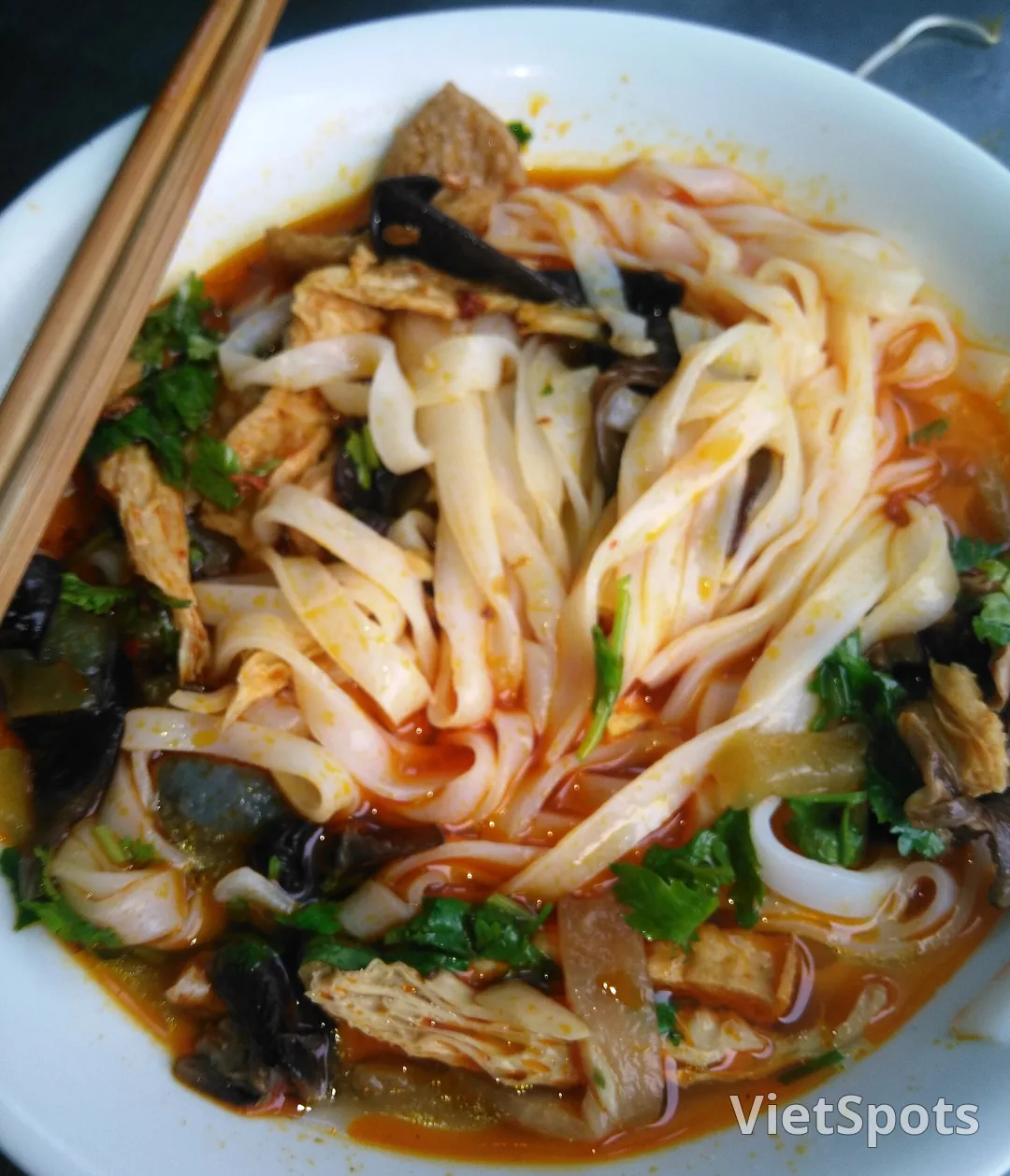
The noodles are wide and slightly chewy, usually made by pouring rice flour batter and cutting by hand. Besides the familiar Quảng noodles with shrimp and meat or chicken, the vegetarian version is equally popular — featuring cat ear mushrooms, tofu, and vegetarian rolls. On full moon or the first day of the lunar month, you'll find these options at any restaurant.
The grilled sesame rice cracker that comes with it isn't for decoration. Break off small pieces and drop them into the bowl gradually, breaking off more as you eat — if you drop it all in at once, it'll go soggy within just a few minutes and lose the crispiness that's its best quality.
Fresh vegetables are what I see people waste the most. A full basket: lettuce, basil, thinly sliced banana flower, and bean sprouts. Eat all you want and just ask for more—the restaurant doesn't charge and nobody really notices.
The going price is usually 30,000–45,000 VND, depending on the type and the shop — chicken noodle soup is generally easier on the wallet than shrimp-and-pork instant noodles. Many places only sell in the morning, closing up shop around 9–10 AM, so if you go too late you might miss out.
A little tip: squeeze lime in and mix well from the bottom up, don't mix from top down. The broth settles at the bottom, and if you don't mix thoroughly, the first half of your bowl will be too salty and tangy, while the second half will be too bland and watery.
Every eatery has its own knack: some places make a broth that's a deep turmeric color with the fragrance of fresh turmeric coming through strongly, while others keep it clearer and sweeter from the bones. There's no universal standard, so don't put absolute faith in any single ranking list.
If you're new to the area, just pick a street food stall where lots of local people are sitting, order a bowl, and give it a try. That's still the most reliable way to choose.
Book Food in Da Nang — in English on VietSpots
- 🎁 Sign up and get 15 Welcome Pack coupons — e.g. Motorbike Rental 45%
- 👑 Member tier discount up to 15% on site (Silver 5% · Gold 15%)
- 🛂 Auto-fill arrival card📶 Compare lowest eSIM prices🚻 Find toilets
Comments