

My Son: brick walls whose mortar seams cannot be found



Mỹ Sơn is located in a valley in Duy Xuyên, Quảng Nam, about 70 km from Đà Nẵng. From the 4th century to around the 13th–14th century, the Cham people built dozens of temple-towers here dedicated to the worship of the god Shiva. It's nearly a thousand years of continuous construction on the same piece of land — something not many places in the world can claim.
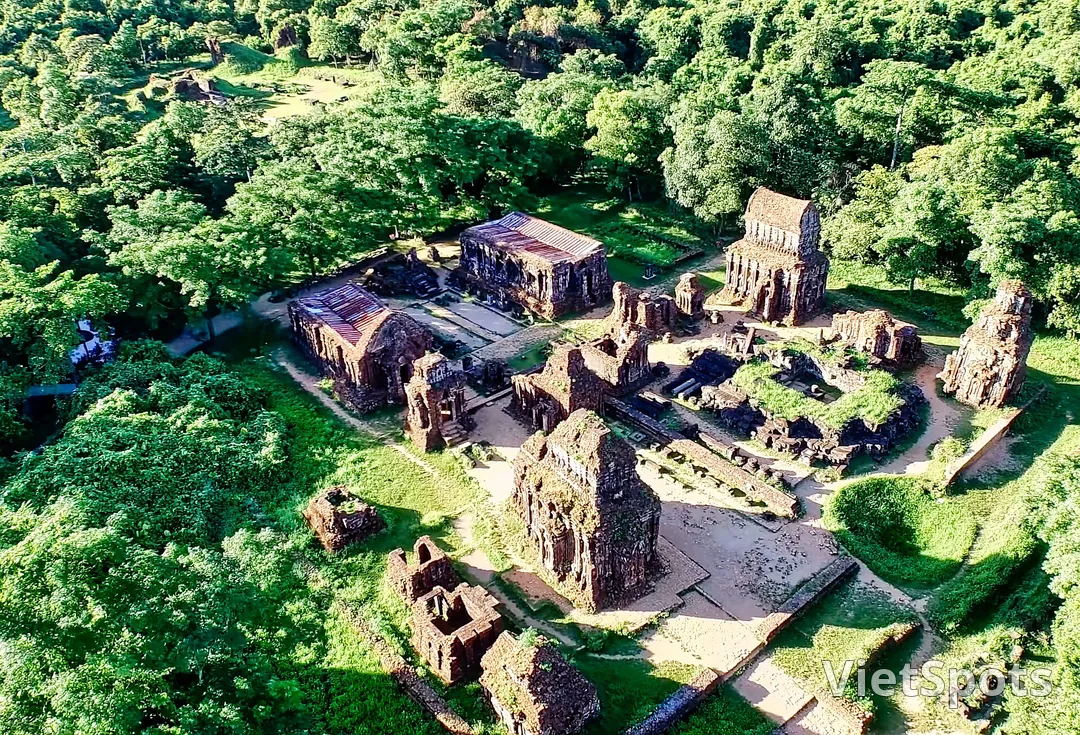
What has drawn researchers back to Mỹ Sơn for more than a century is not its scale, since the Cham towers are nowhere near as massive as Angkor. What keeps them coming back is the construction technique.
Standing close to the tower's wall to look, you can hardly see any mortar joints at all. The bricks fit together so tightly that in many places it seems as though the whole wall had been carved from a single block. And yet the bricks are light and porous, and have withstood the sun and rain of central Vietnam for hundreds of years without growing moss the way modern bricks do.
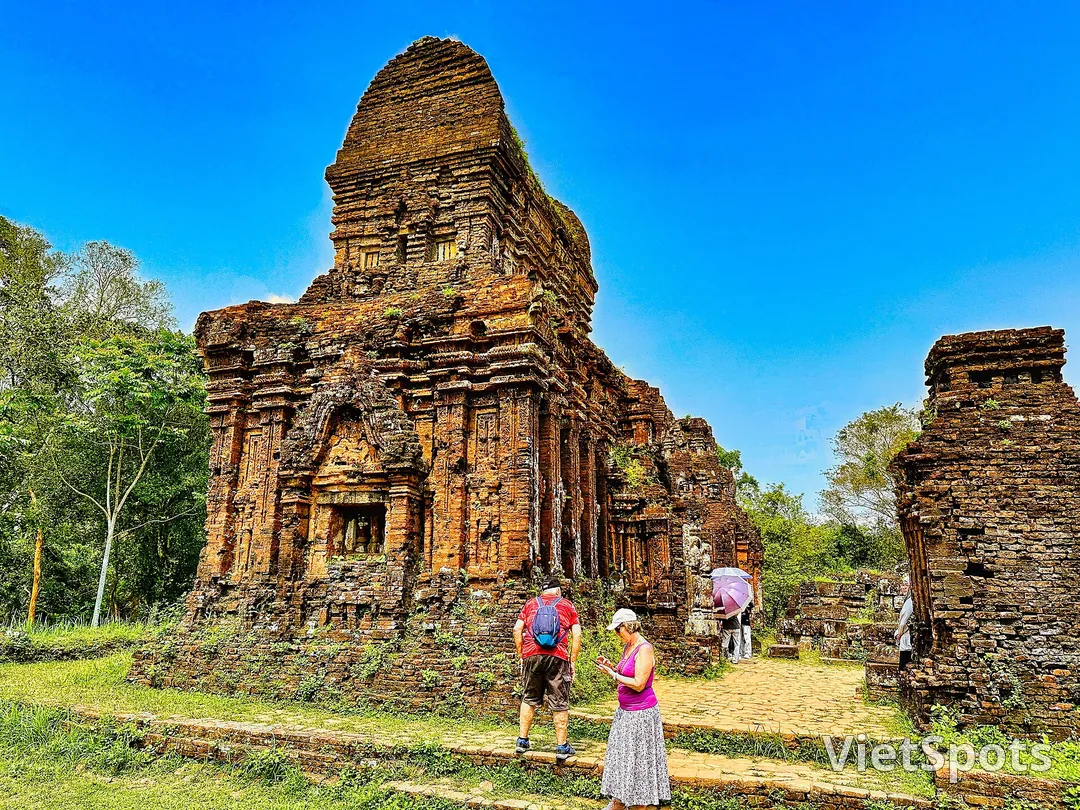
They have tried explaining it in many ways: using dipterocarp resin as a binder; grinding the brick surfaces and joining them while still damp; or building the whole tower first and then firing it as a single mass. So far there is still no final conclusion — each hypothesis explains a few phenomena but remains stumped by a few others.
What's even more notable: during restoration work, the newly inserted bricks are usually distinguishable at a glance. They differ in color, and over time they deteriorate faster than the old bricks. That means after so many years with all sorts of analytical equipment, we still haven't managed to recreate exactly what the craftsmen here already did more than a thousand years ago.
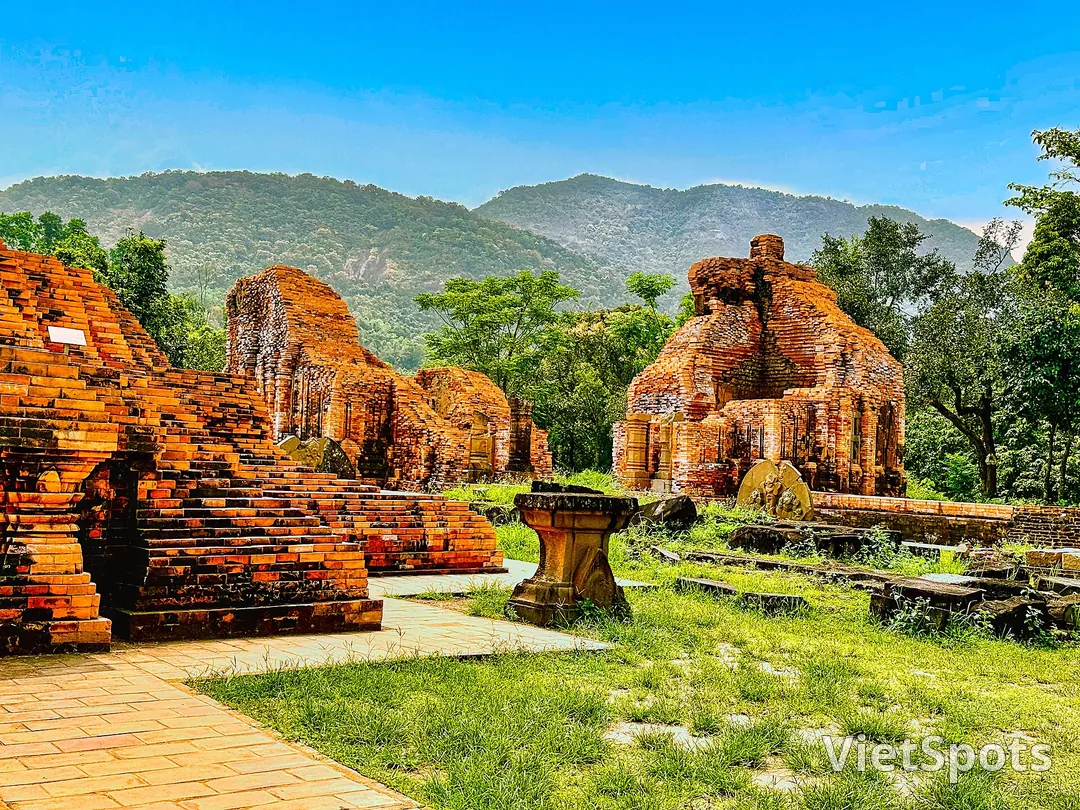
Mỹ Sơn also bears the scars of the 20th century. In 1969, a bombing raid destroyed most of Group A, including Tower A1, which was once considered the most beautiful structure in the entire relic site. What remains today is only a fragment of what once stood there.
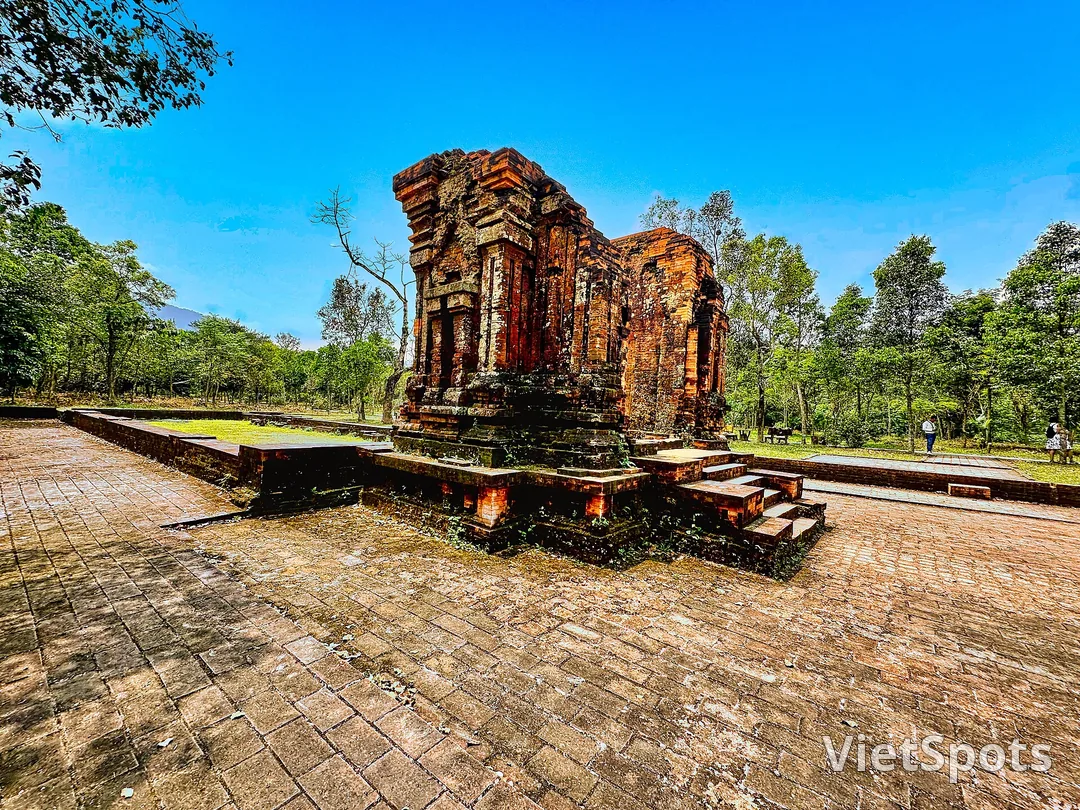
The temple complex was recognized by UNESCO as a World Cultural Heritage Site in 1999.
If you go: you should take the earliest trip of the day — the valley is sheltered from wind, so it gets very hot by noon, and mornings are quiet with few people. Wear closed-toe shoes, since the roads in the area are dirt and rocky. There's an electric cart that takes you in from the gate, but the stretches between the tower clusters still have to be walked.
And if you can, take a few minutes to stand really close to a wall. Run your hand over the joint between two bricks. That feeling of not being able to find the mortar line is worth more than any photo taken from a distance.
Book Activity in Da Nang — in English on VietSpots
- 🎁 Sign up and get 15 Welcome Pack coupons — e.g. Motorbike Rental 45%
- 👑 Member tier discount up to 15% on site (Silver 5% · Gold 15%)
- 🛂 Auto-fill arrival card📶 Compare lowest eSIM prices🚻 Find toilets





Comments