

A story about vegetables that get stuck in your teeth


The other day, I made chicken rice. On the side, I served a dressed dish of leafy greens. It was nothing more than boiled greens tossed with sesame oil, salt, and ground sesame. And yet this "nothing more" dish leaves a strangely lasting impression. Because every time I take a bite, I think the same thing. —Ah, it gets caught in my teeth again.
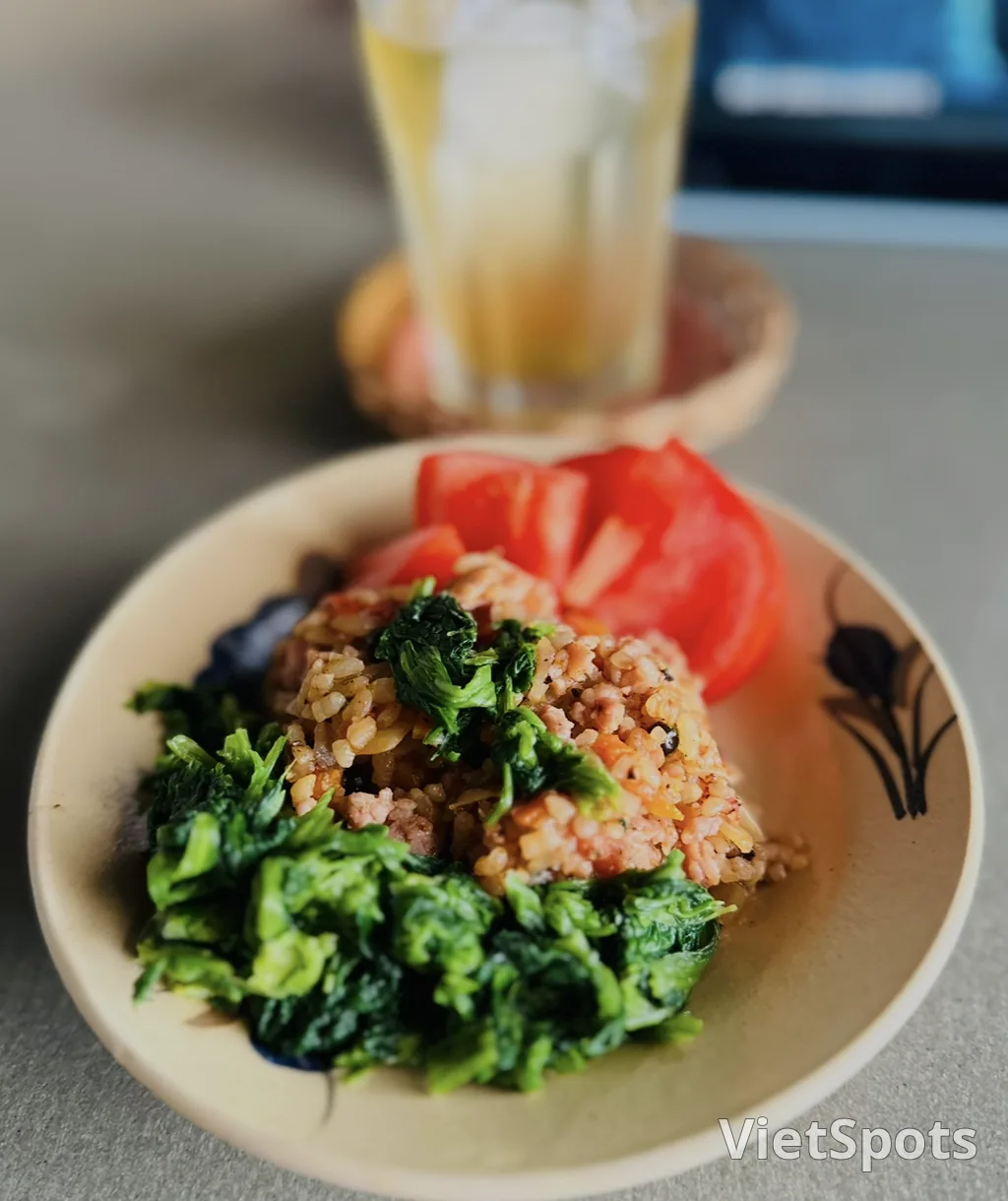
Japanese greens can sometimes be tough, but the leafy ones are tender, and when you bite into them a gentle, savory richness slowly spreads through your mouth. Vietnamese greens, however, are different. You have to chew, and chew, and then chew some more. The flavor comes gushing out, but above all, the fibers are strong. To put it dramatically — the vegetable fibers really assert themselves! When you go to the market, there are several kinds of greens alone. Some are like spinach, some resemble garland chrysanthemum, and some are like rapeseed greens. I'm not really sure of their names, but these leafy greens grow nice and tall and look wonderfully healthy. Every one of them tastes delicious with just a quick blanch. But they aren't gentle. Why is that... Is it because the sunlight here is so strong? Because the ultraviolet rays, too, are of a strength that can't even be compared to Japan? When I looked into it, it turns out that the more intense the light a plant is bathed in, the more of certain compounds it produces to protect itself. That leads to bitterness and aroma — in other words, to a "depth of flavor." What's more, to withstand the heat, the plant strengthens its fibers. So that's why they end up with that firm, chewy bite. In addition, plants grow very quickly in the tropics. In a short amount of time, they bask in strong sunlight and vigorously draw up minerals from the soil. As a result, it's said that their nutrients and flavors also tend to come out richer. Reports from the United Nations Food and Agriculture Organization (FAO) and international vegetable research institutes also note that vegetables from Southeast Asia contain high amounts of minerals and pigment components, and many of them have a strong, distinct taste and aroma. One more thing—in Vietnam, it's completely normal for vegetables that are close to wild to appear on the dinner table. All sorts of leaves that make you think, "Isn't this just grass?" line the table. Japanese vegetables have been improved over a long period of time to be soft, less bitter, and easy to eat, but the vegetables and leaves here are different. The bitterness, the aroma, and the fibers all remain just as they are. There's a wildness to them that hasn't been over-tamed. So perhaps the reason they "catch on your teeth" every time you eat them is that they have a presence as living things. The richness of their flavor makes my whole body feel joy, no matter what. One more bite, and one more bite, my chopsticks keep reaching out... And yet, a flicker of hesitation still crosses my mind — "hmm, they do catch on my teeth a little, don't they. Relocation Life Ranking
Travel Vietnam with vietSpots, in English
- 🎁 Sign up and get 14 Welcome Pack coupons — e.g. Motorbike Rental 45%
- 👑 Member tier discount up to 15% on site (Silver 5% · Gold 15%)
- 🛂 Auto-fill arrival card📶 Compare lowest eSIM prices🚻 Find toilets
Comments