

🧧 Jeonju Gyeonggijeon (Eojin Museum) Hanok Village.



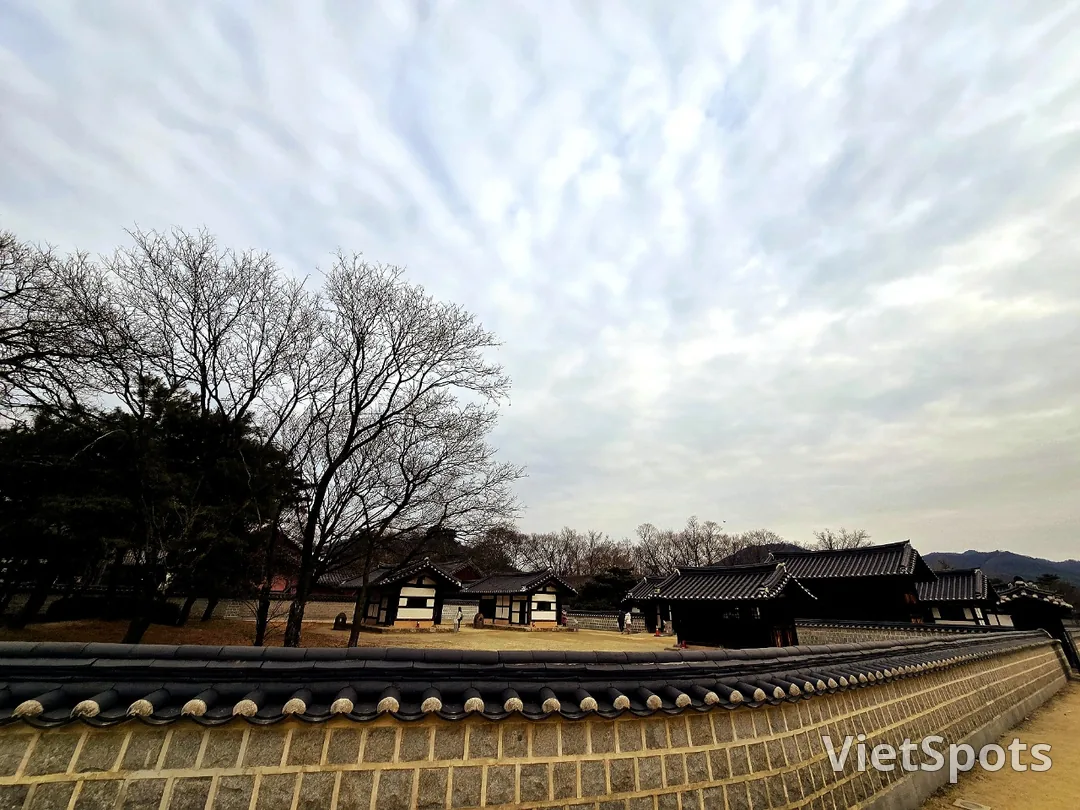
Gyeonggijeon Shrine in Jeonju The description below is lightly borrowed from the museum's official website. The photos were taken by myself. (A space enshrining the royal portrait (eojin) of King Taejo Yi Seong-gye, founder of the Joseon Dynasty)
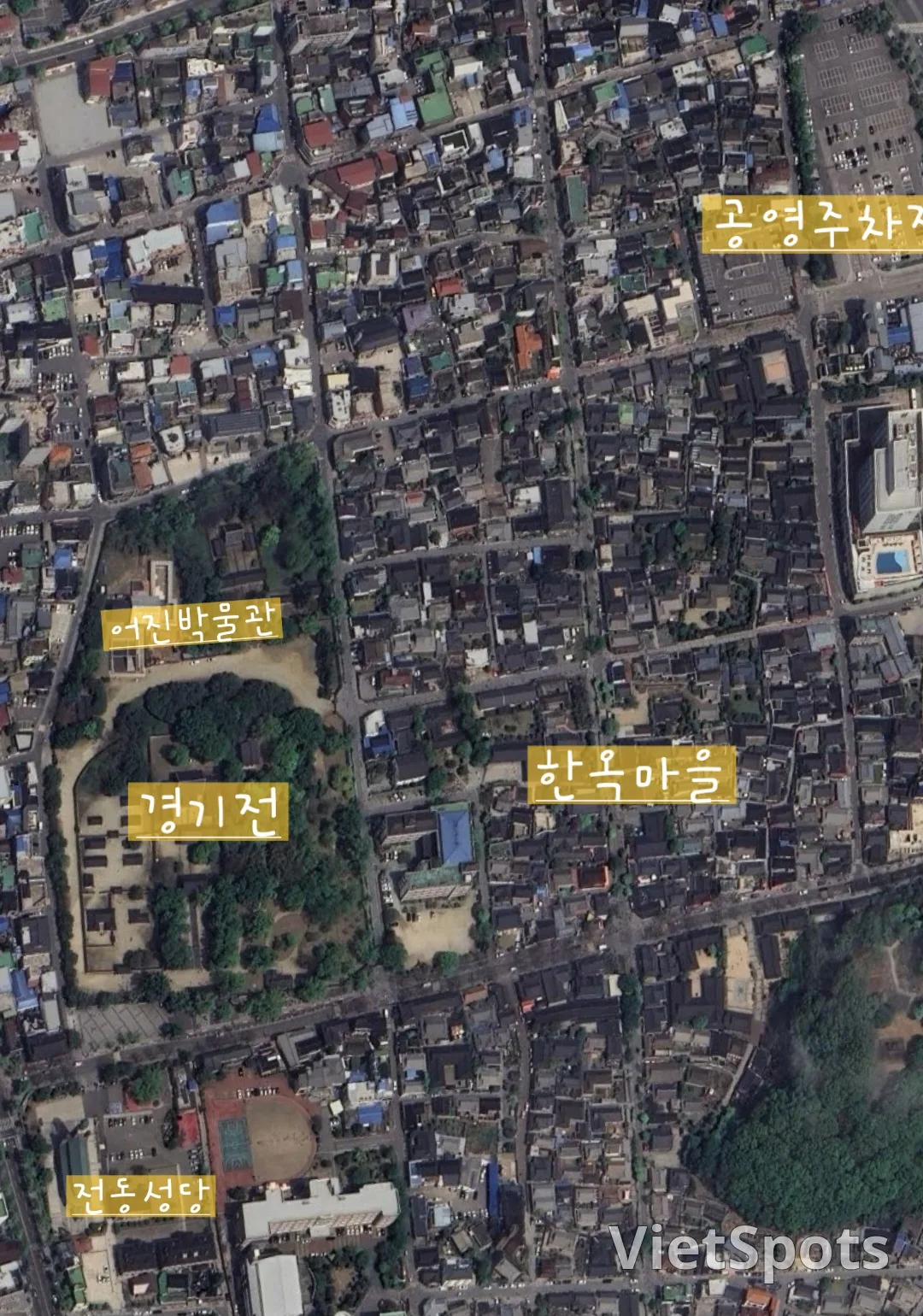
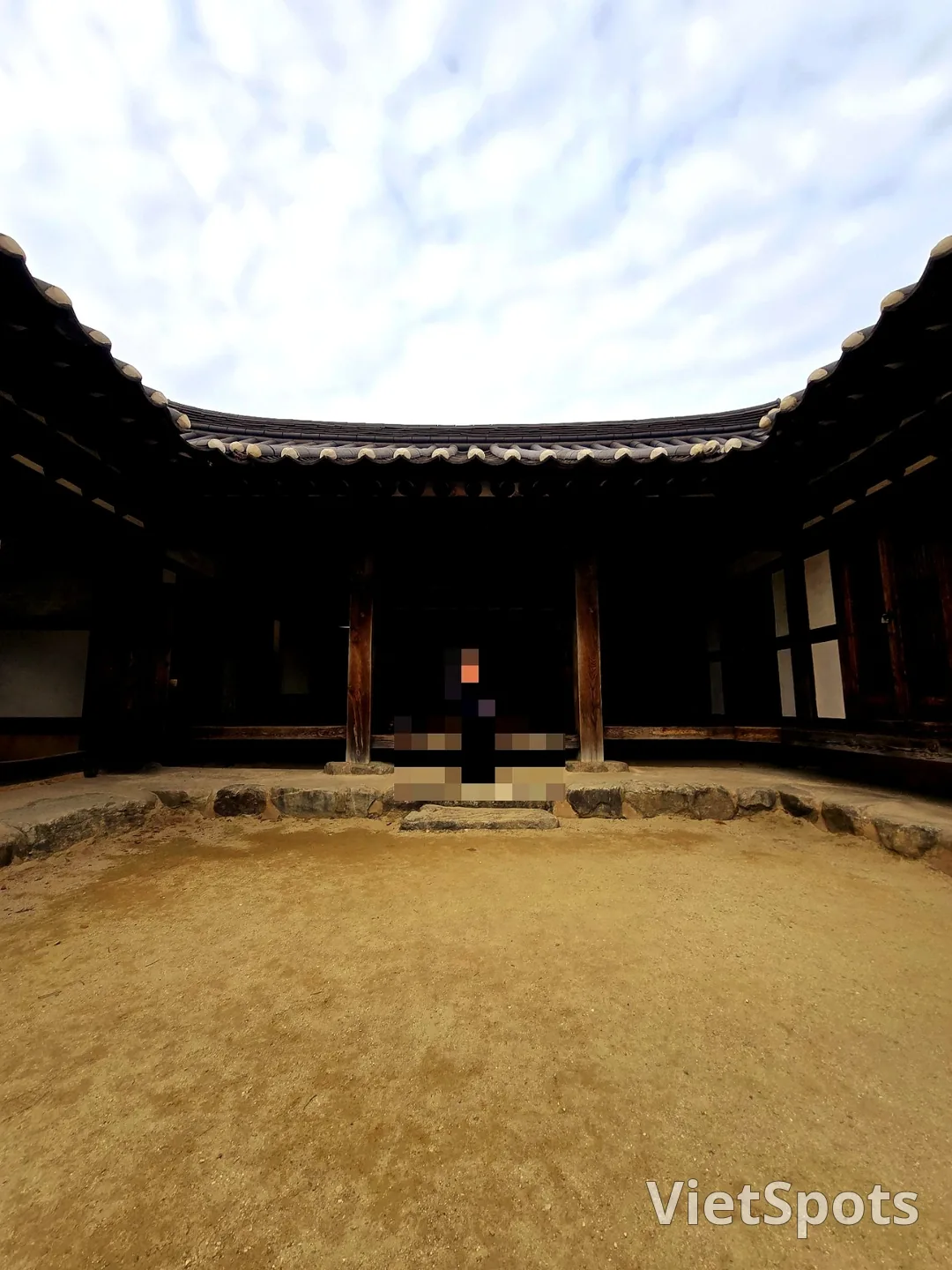
Admission fee is 3,000 won. This is a place that enshrines the royal portrait of King Taejo of Joseon. There's a Royal Portrait Museum here. I was able to look around at a leisurely pace. There were traditional noble (yangban) houses too, and I got to go inside and see the wooden-floored hall and the kitchen. (Haha, all my photos are on my friend's phone, so I don't have them.)
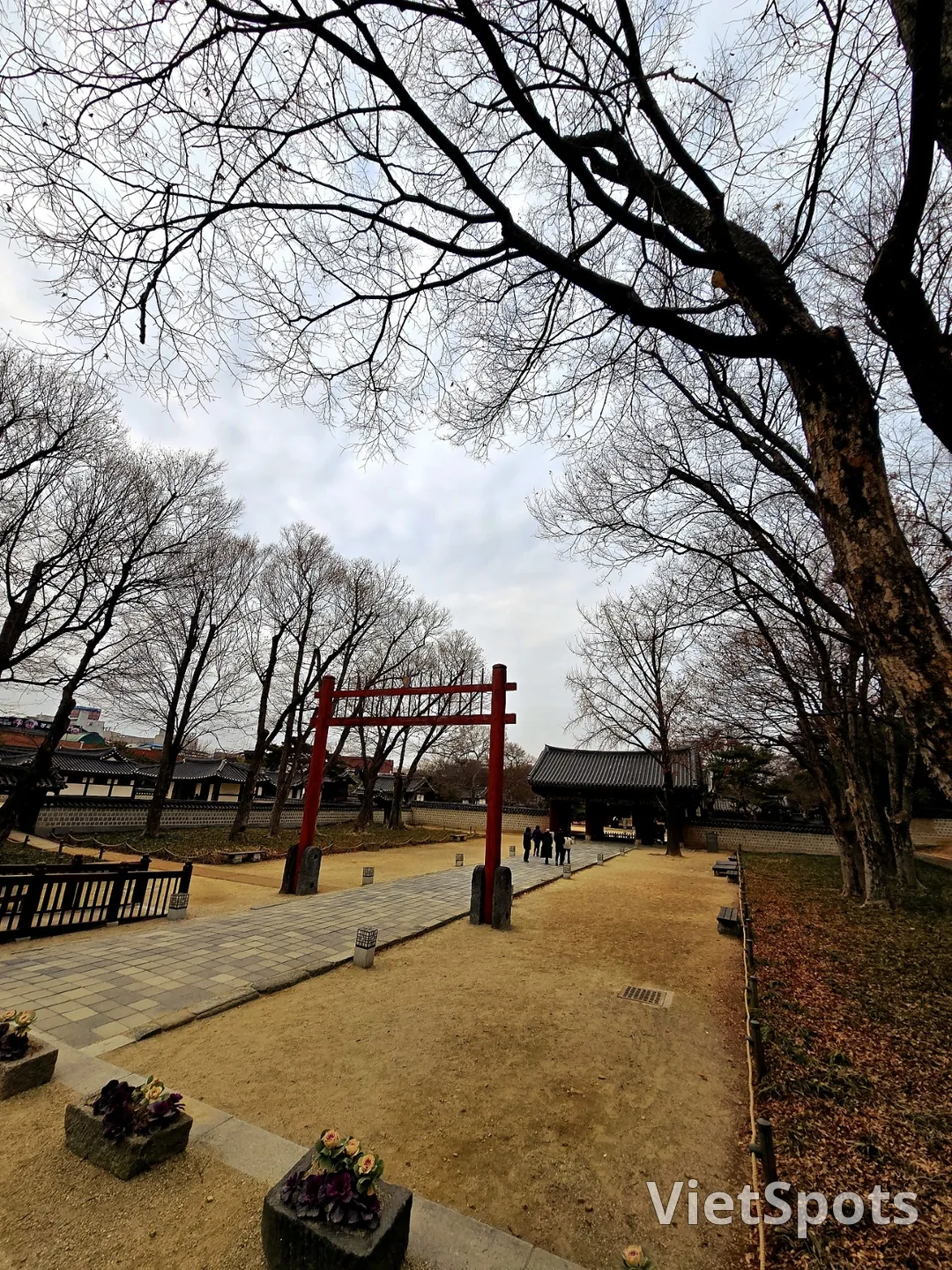
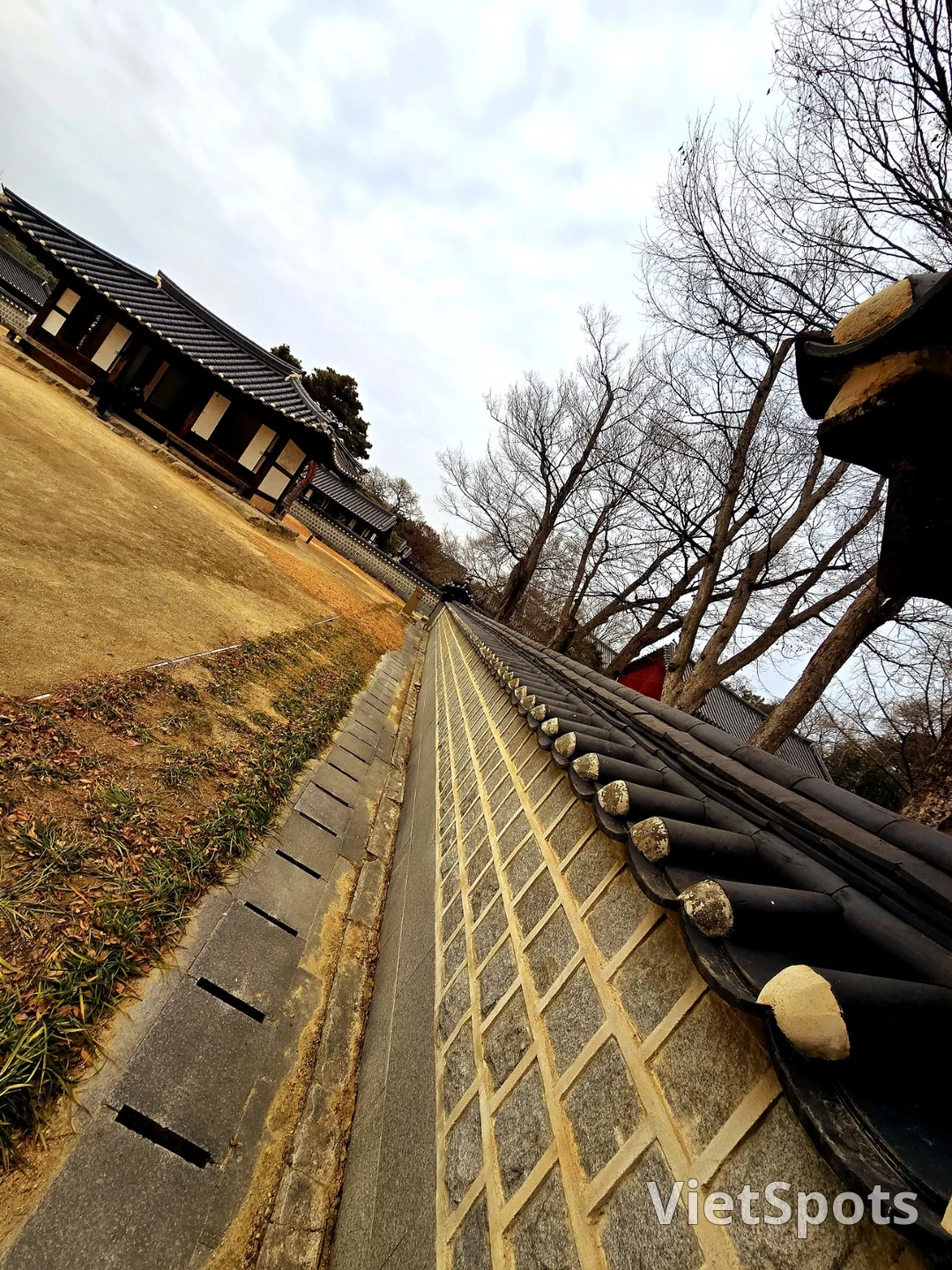
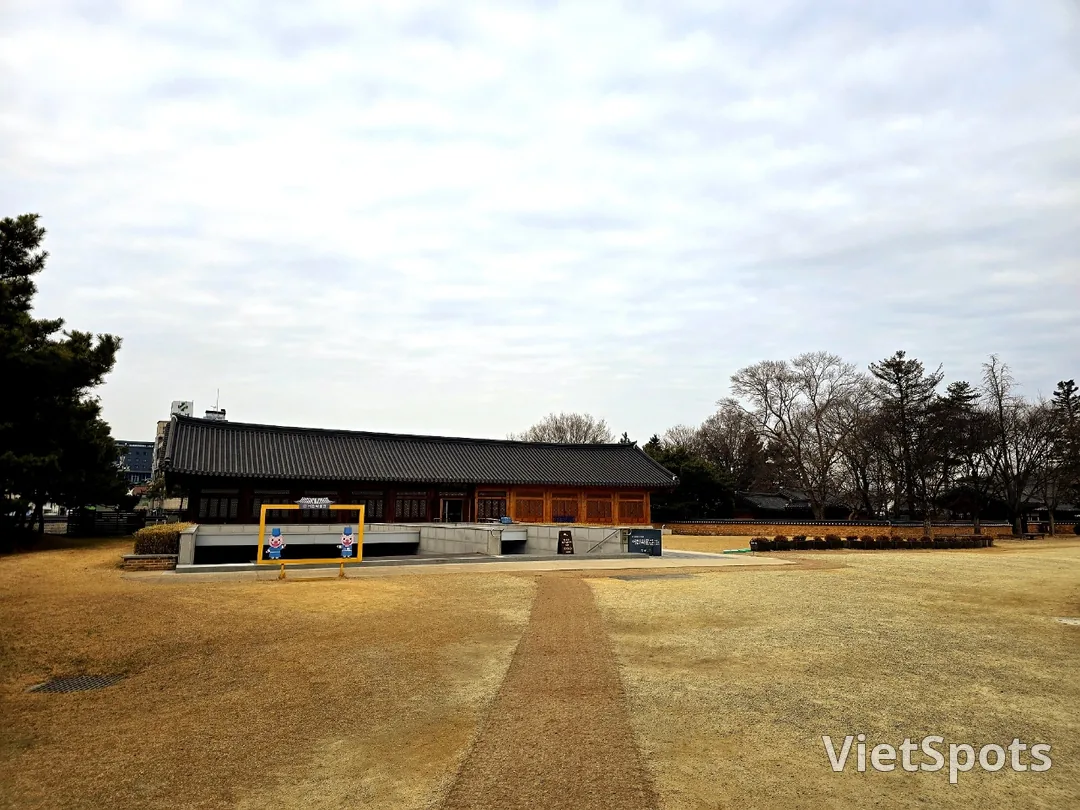
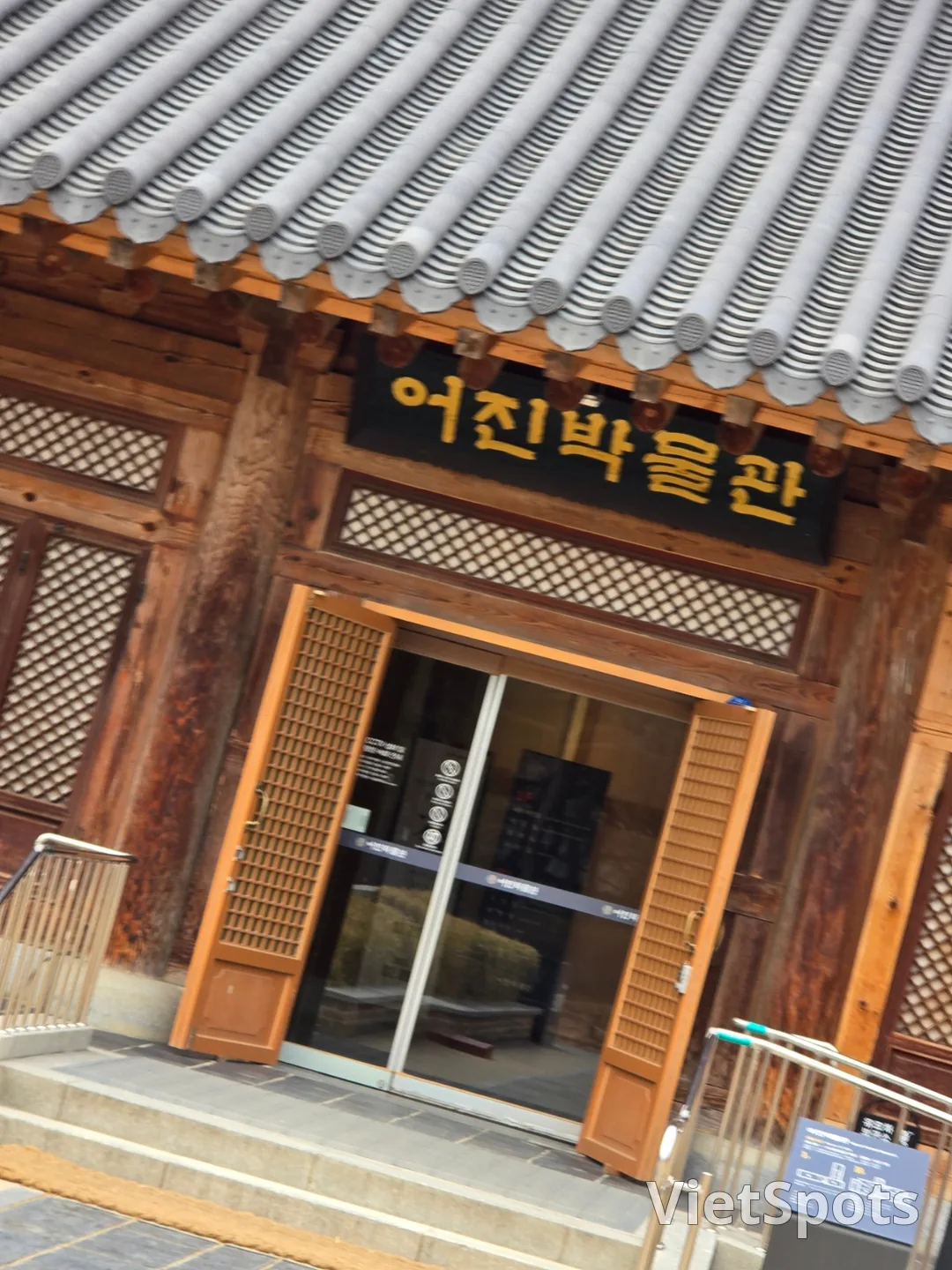
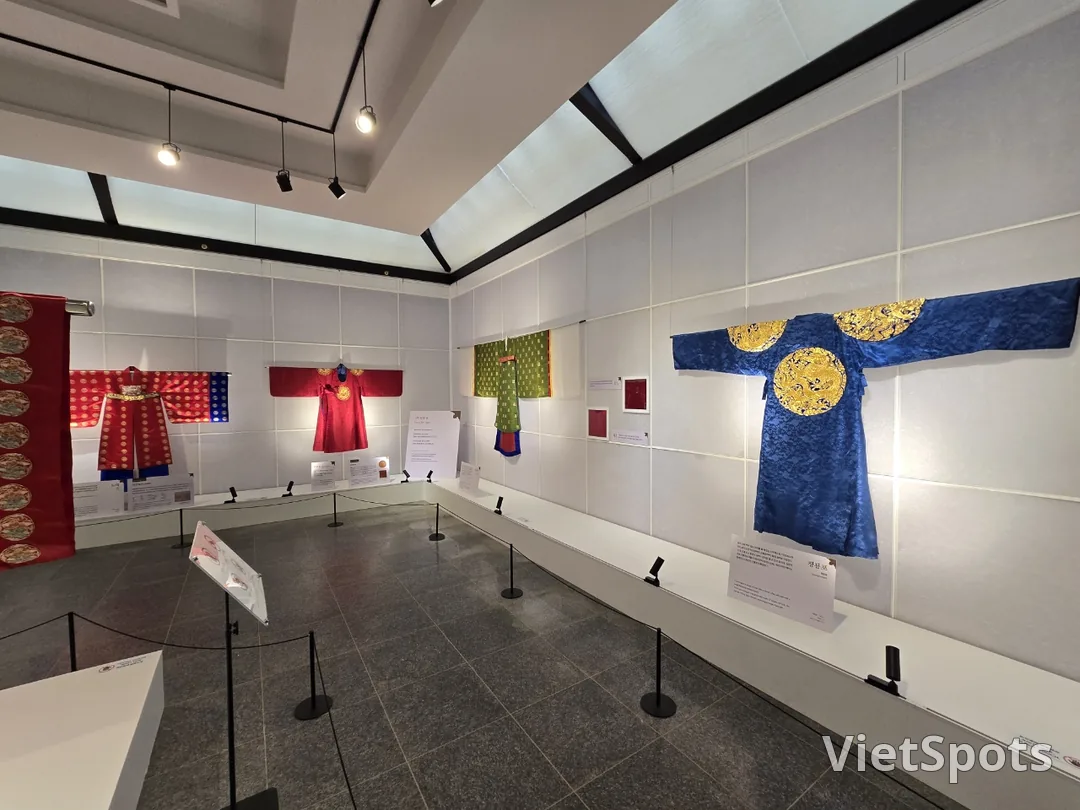
If you keep going straight inside, you'll come to the Eojin Museum. This is the place where portraits of the kings of the Joseon Dynasty are kept. Eojin Museum: Six portraits of Joseon Dynasty kings [Sejong, Yeongjo, Jeongjo, Cheoljong, Gojong, Sunjong] are on display. There are three main methods of production. Dosa (圖寫): a method of painting the king's face by looking directly at him while he was alive. Chusa (追寫): A method of drawing based on memory or existing appearance after the king has passed away. Mosa (模寫): A method of newly copying an existing royal portrait when it has been damaged or has become old. Currently, among the existing royal portraits, only those of King Yeongjo, King Gojong, and King Sunjong are said to be authentic originals. The rest are said to be reproductions. They have not been passed down to us. What is Eojin? It refers to a portrait of the king.
Sejong
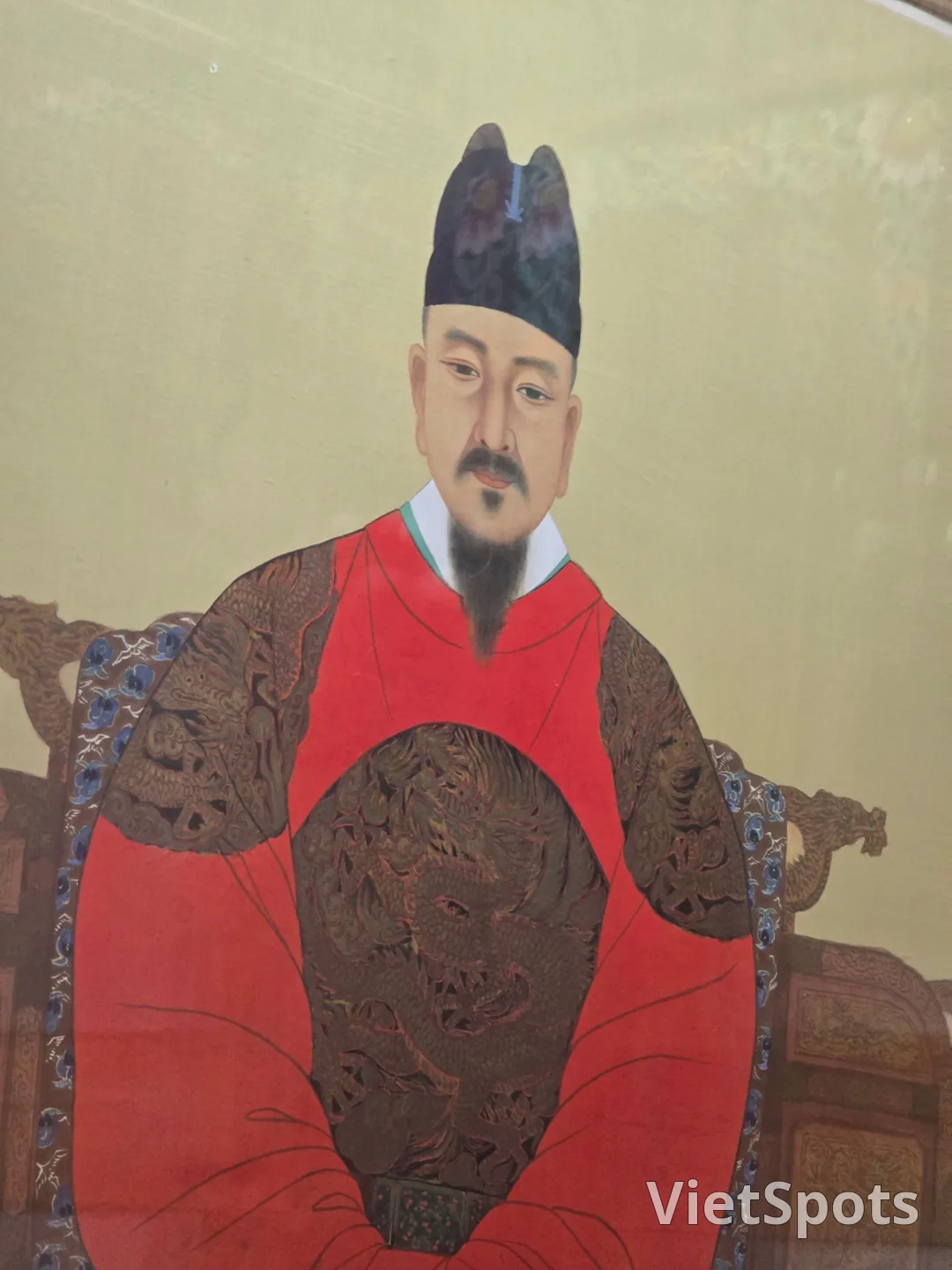
Portrait of King Sejong (Sejong Eojin) Modern era, color on silk, 114×164cm, standard portrait copy The original portrait of King Sejong has not survived. The current portrait of King Sejong was painted based on estimation by artist Kim Ki-chang, and was officially designated as the national standard portrait in 1973. The portrait of King Sejong held by the Eojin Museum (Museum of Royal Portraits) is a copy of the standard portrait made by artist Kim Young-chul. Sejong is the great monarch who created Hangul. Praised as a sage king, Sejong established the foundations of Confucian politics, reformed various systems including the implementation of the tribute law (Gongbeop), and greatly advanced culture and science and technology. Sejong also expanded the nation's territory by developing the Four Garrisons and Six Forts.
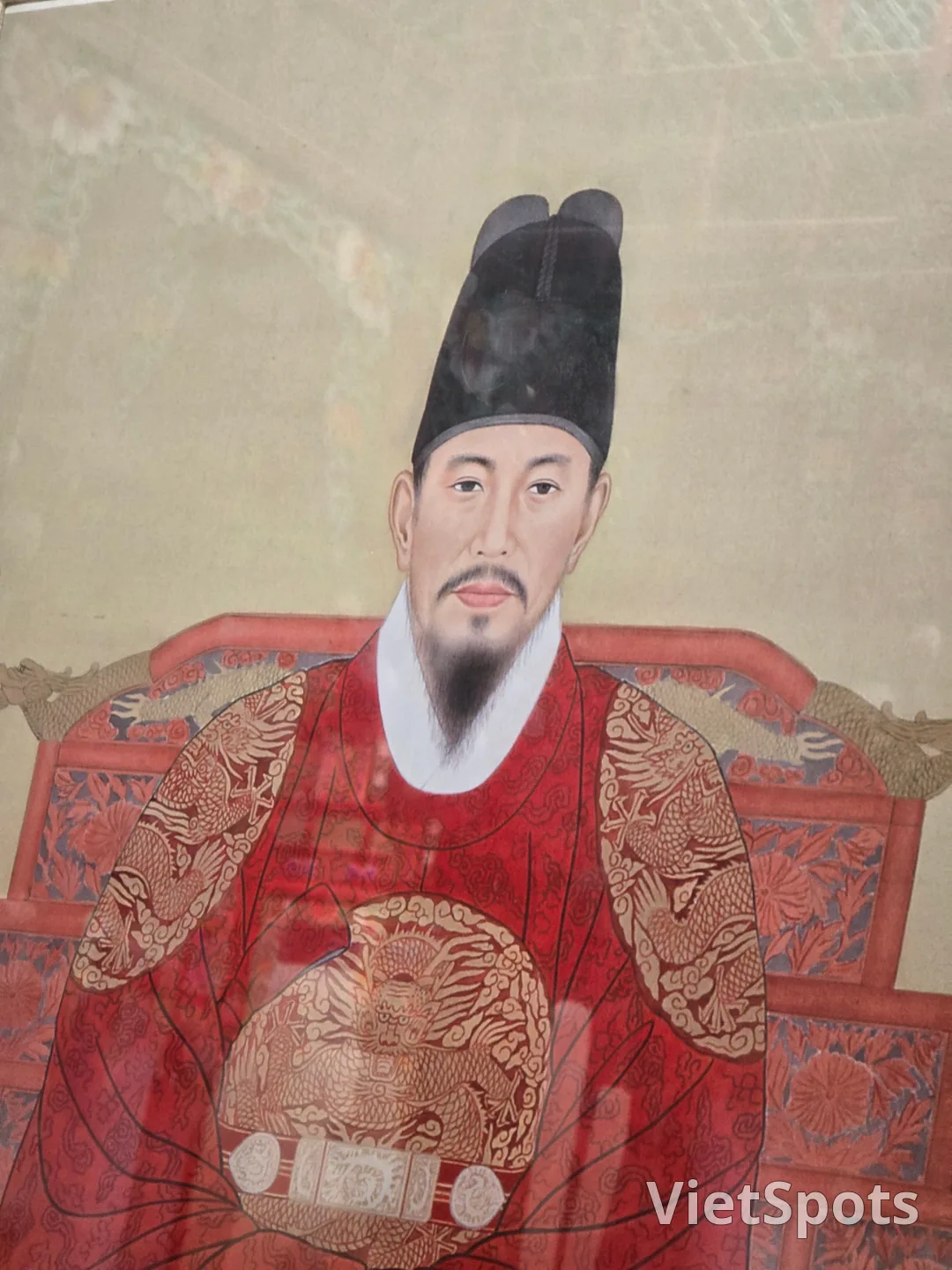
Portrait of King Jeongjo 正祖御眞 Modern era, color on silk, 114×164cm, reproduction of the standard portrait The original portrait of King Jeongjo has not survived. The current portrait of King Jeongjo was painted based on estimation by the painter Lee Gil-beom, and was officially certified as the national standard portrait in 1989. The portrait of King Jeongjo displayed here in the portrait hall is a photograph taken of that standard portrait. Jeongjo was the son of Crown Prince Sado and a monarch who sought to revive the prosperity of the Joseon Dynasty. Jeongjo established the Gyujanggak to advance scholarship, carried out Tangpyeong politics to eliminate the harmful effects of factional strife, and even built the Hwaseong Fortress and attempted to move the capital there, driven by his great ambition to strengthen royal authority and build a new nation.
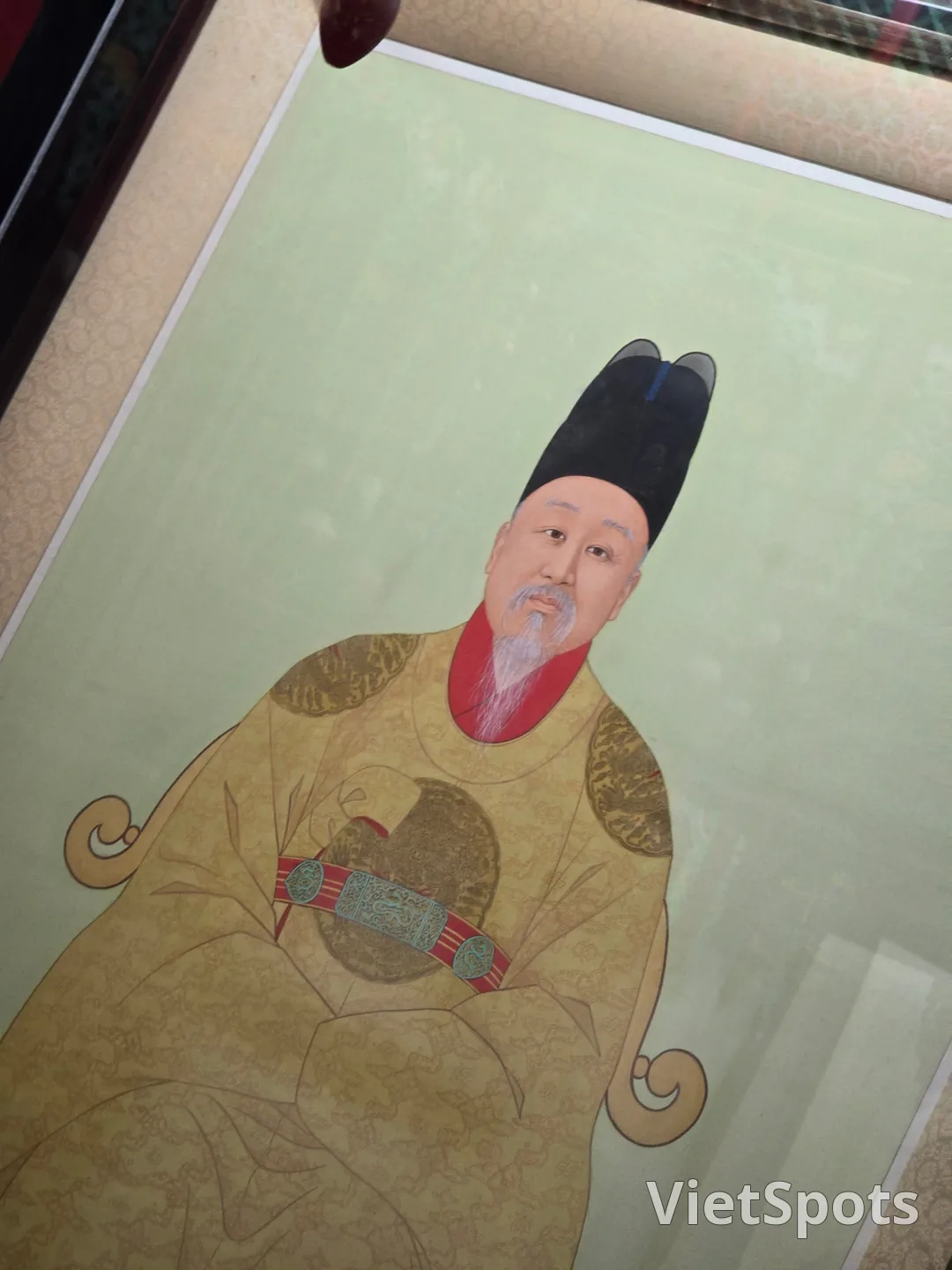
Portrait of Emperor Gojong. Modern era / color on silk / 114×164cm. This is a portrait of Emperor Gojong copied from a photograph in 2001 by the painter Kwon Oh-chang. Since Gojong proclaimed the Korean Empire and ascended to the position of emperor, unlike the earlier kings of Joseon, he is depicted wearing the imperial yellow dragon robe. In order to check the power of the Andong Kim clan, Queen Sinjeong (Grand Queen Dowager Jo) joined hands with Heungseon Daewongun and had his second son succeed to the throne. That man became Emperor Gojong. In 1897, Gojong changed the name of the country to the Korean Empire, declared himself emperor, and adopted the era name Gwangmu. Gojong was deposed after Japan stripped him of diplomatic authority and it became a problem when he secretly sent envoys to the Hague Peace Conference; Gojong was deposed after Japan stripped him of diplomatic authority and it became a problem when he secretly sent envoys to the Hague Peace Conference. He passed away in 1919, and the theory that Gojong was poisoned became one of the triggers of the March 1st Movement.
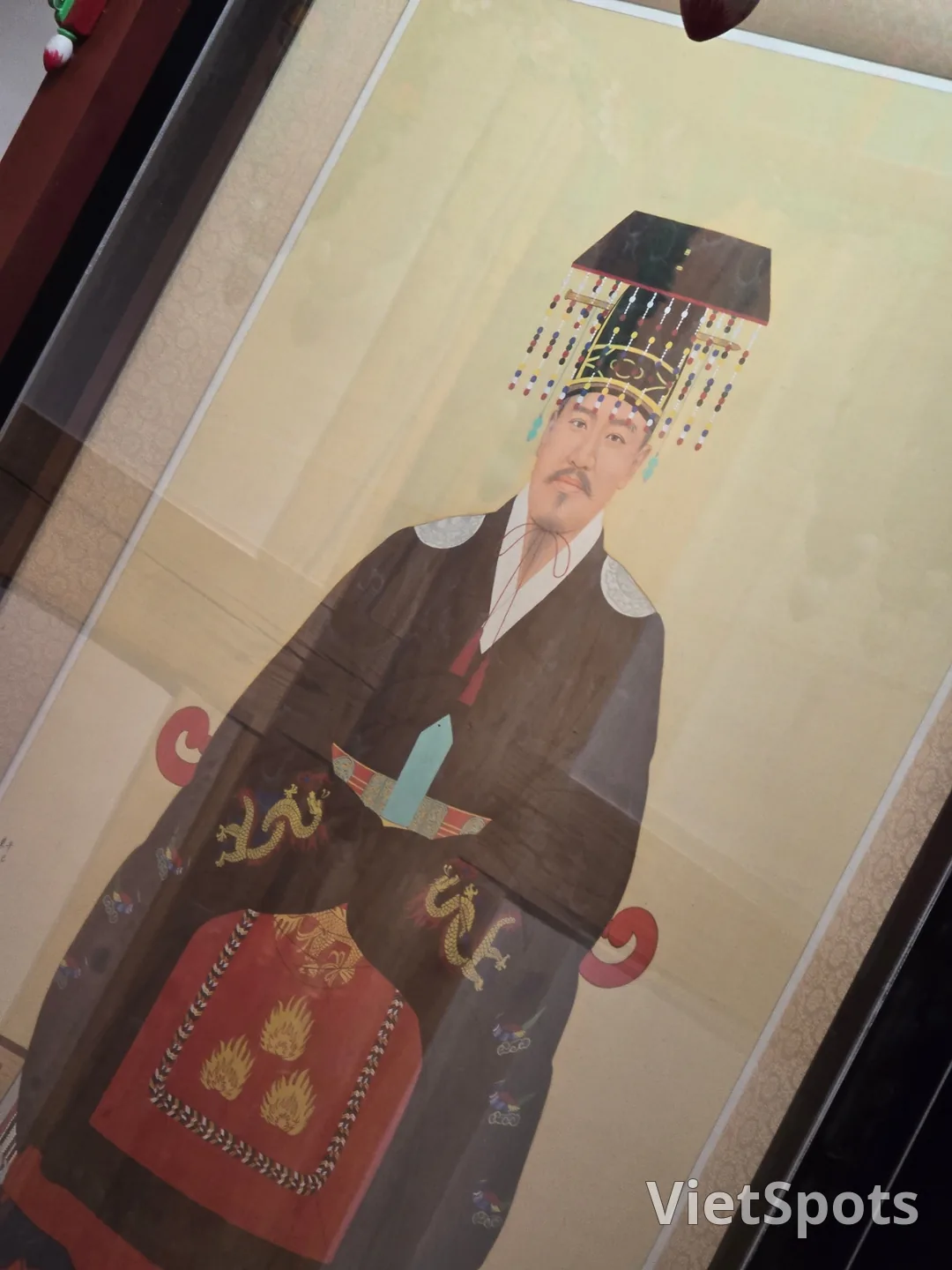
Portrait of Emperor Sunjong (Sunjong-eojin, 純宗御眞) Modern era / Color on silk / 114×164cm This is a portrait of Emperor Sunjong, copied from a photograph in 2001 by the painter Kwon Oh-chang. He is shown wearing the grand ceremonial attire, consisting of the myeollyugwan (a crown with hanging beaded strings) and the sibijangbok (a robe bearing the twelve royal emblems). The jangbok (also called gonbok) was worn when performing formal rites — emperors wore the twelve-emblem robe (sibijangbok), while kings wore the nine-emblem robe (gujangbok). The name 'Sipijangbok' means that there are 12 kinds of patterns woven into the garment. Emperor Sunjong was the second son of Emperor Gojong and Empress Myeongseong, and ascended the throne as emperor in 1907, succeeding Gojong. In 1910, as the Joseon dynasty collapsed, he suffered the humiliation of being demoted to 'Yi Wang (李王)' by the Japanese Empire, and passed away in 1926. On June 10, the funeral day of King Sunjong, a Manse Movement crying out for independence broke out. Cheoljong
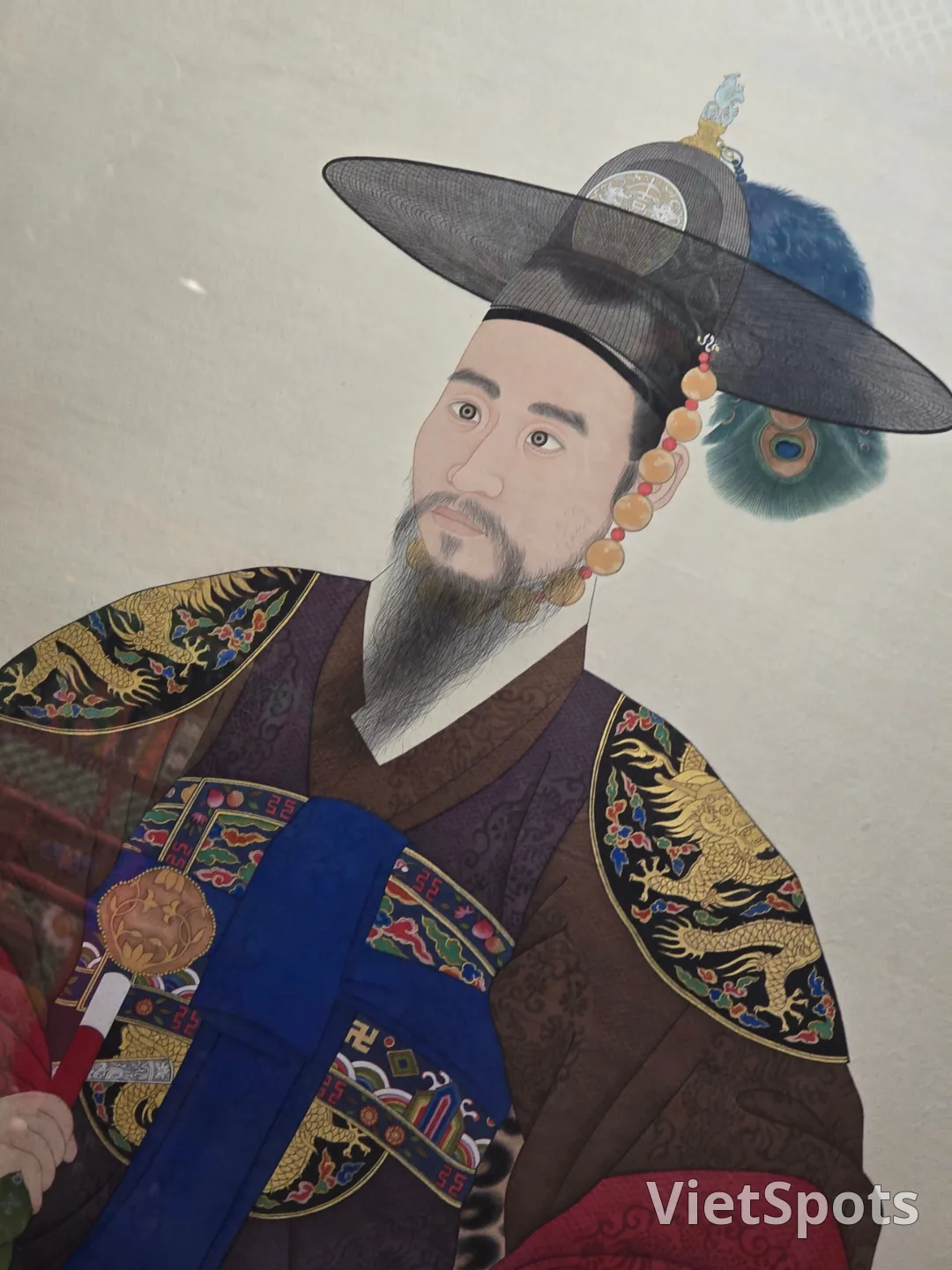
Portrait of King Cheoljong (哲宗御眞) 2016 / Color on silk / 202x107cm / Copied by Lee Cheol-gyu The Portrait of King Cheoljong (Treasure No. 1492) was painted in 1861 (the 12th year of King Cheoljong's reign), when the king was 31 years old. It was moved to Busan during the Korean War, and about one-third of the right side was lost in a fire in 1954; this is a restoration of the original. He is dressed in yungbok (military attire), and the portrait shows a rare depiction of the hands. In his right hand he holds a deungchae, a baton symbolizing a military official's authority, while on the thumb of his left hand he wears a gakji, a thumb ring used for drawing the bowstring. His features reflect a pure, virtuous character — he has thick eyebrows and round, double-eyelid eyes with pupils gathered inward. King Cheoljong, the great-grandson of Crown Prince Sado, was living as a farmer on Ganghwa Island when he ascended the throne in 1849 at the age of 19. Known as the "Ganghwa Prince," he was unable to set politics right amid the Andong Kim clan's dominance of power, and he died of illness in 1863 (the 14th year of his reign) at the age of 33.
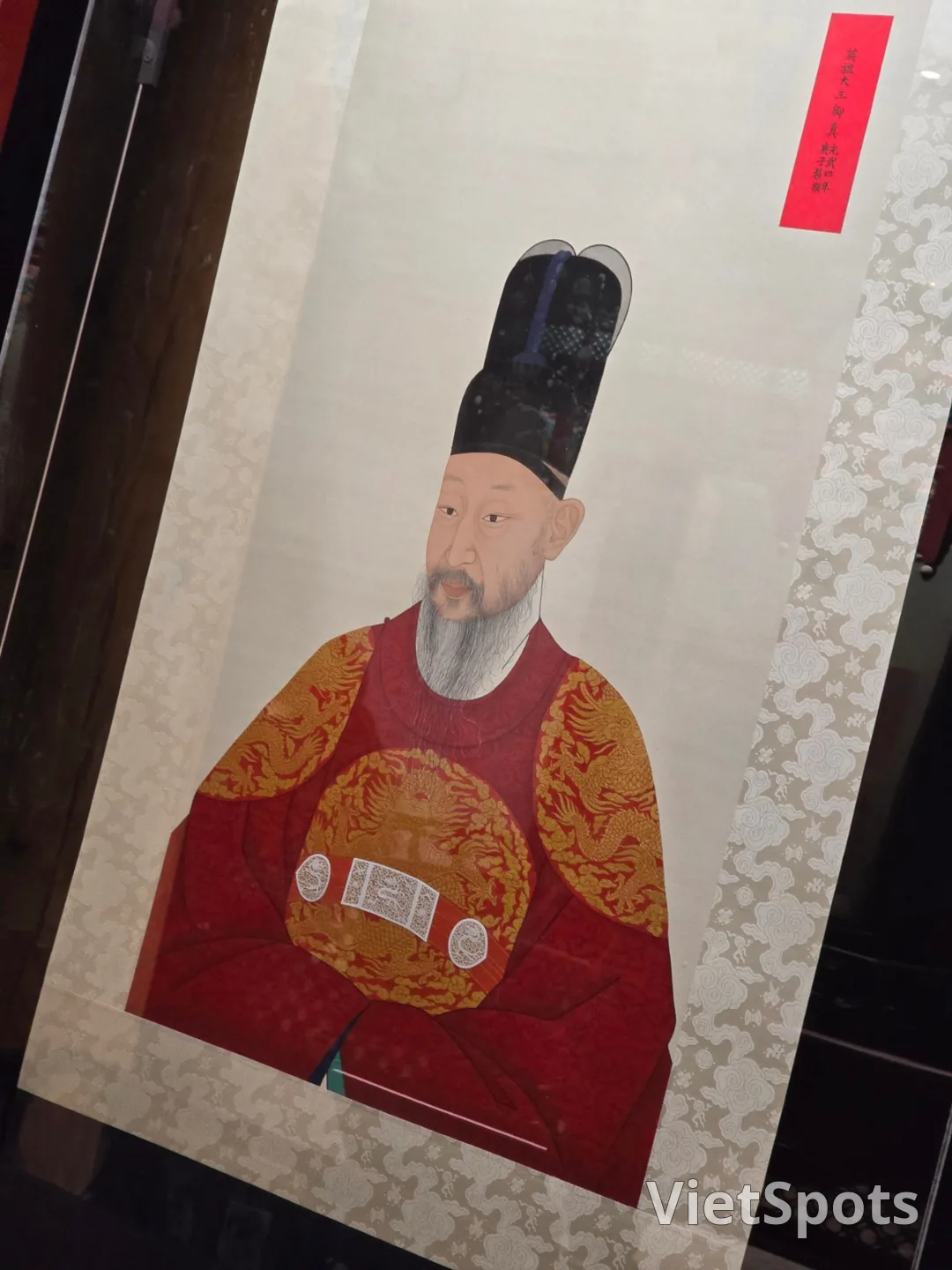
Portrait of King Yeongjo (英祖御眞) 1900 / Color on silk / 83x203cm / Treasure No. 932 This is a half-length portrait of King Yeongjo. In 1744, when King Yeongjo was 51 years old, court painters including Jo Yeong-seok created the original portrait, and in 1900 (the 4th year of the Gwangmu era), Jo Seok-jin, Chae Yong-sin, and others copied it. The current portrait of King Yeongjo housed in the Portrait Hall is a full-body copy made based on the 1900 half-body portrait. King Yeongjo ascended to the throne at the age of 31 and lived to be 83, making him the longest-lived king, and he also had the longest reign (52 years) of any king. King Yeongjo carried out the policy of Tangpyeong (impartiality among factions), implemented the Equal Service Law (Gyunyeokbeop), and dredged the Cheonggyecheon stream. King Yeongjo was also a heartless father who locked Crown Prince Sado in a rice chest and let him die. Located behind Gyeonggijeon Shrine, Gyeonggyomyo Shrine was founded in the 47th year of King Yeongjo's reign (1771).
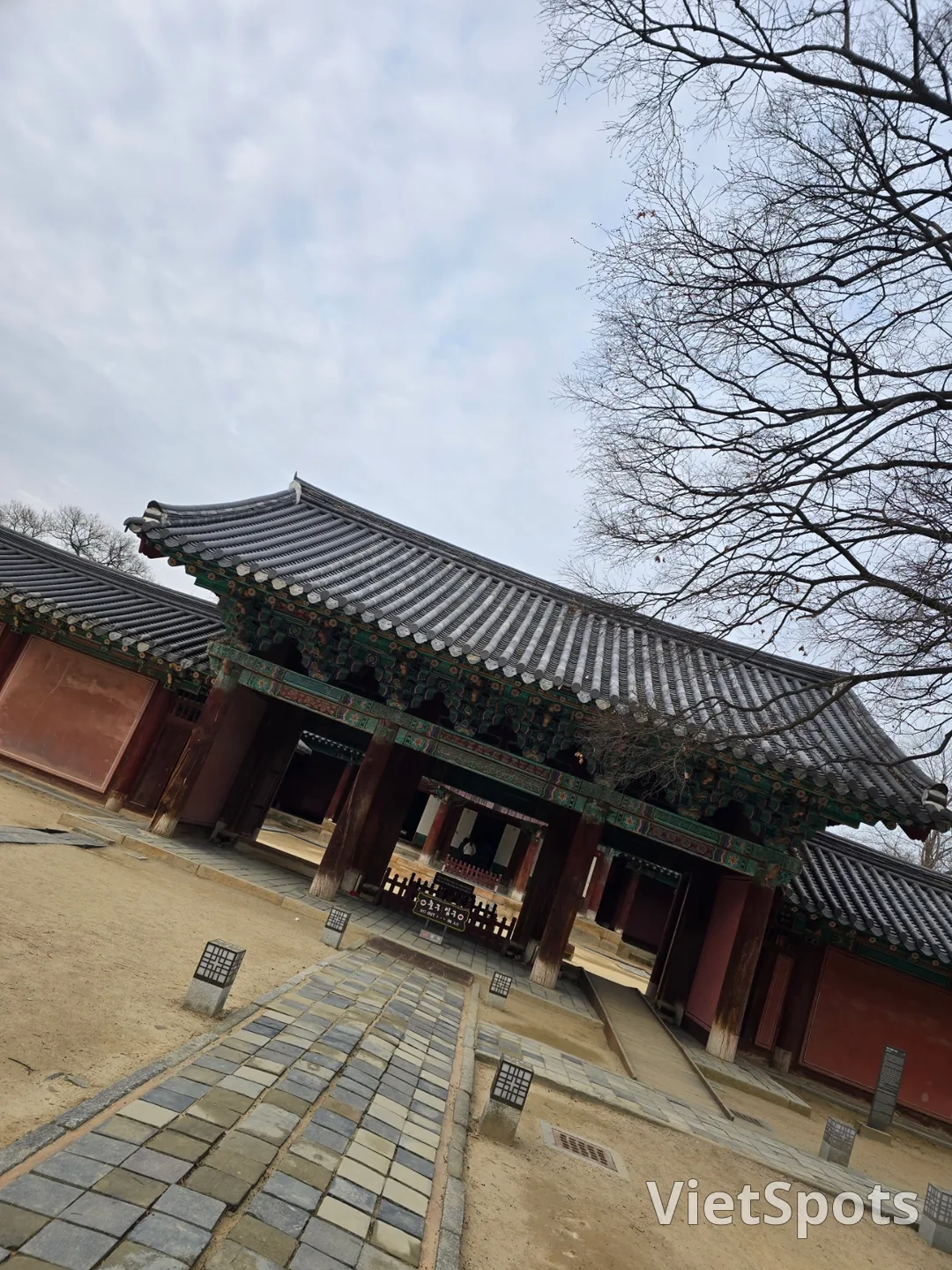
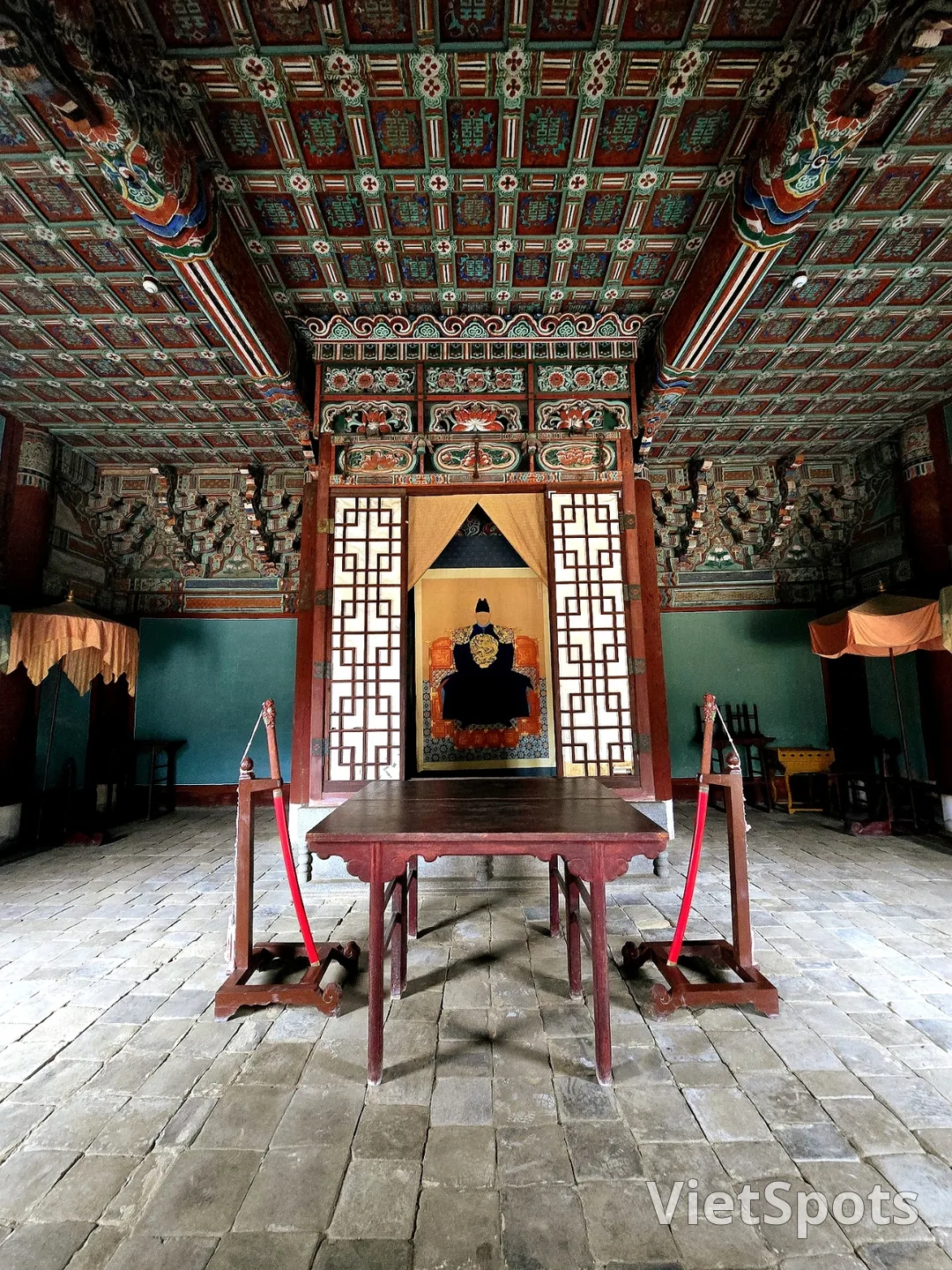
And there is a place where the royal portrait of Taejo Yi Seong-gye, the founder of the Joseon Dynasty, is kept. The Main Hall (Jeongjeon). I viewed it last, but if you follow the visiting route, it is actually the very first portrait you see. It dates from 1872 (a copy meticulously repainted by court painters in the 19th century based on the original from 1410, but it is recognized as the only authentic version that preserves the appearance of the original).
Taejo
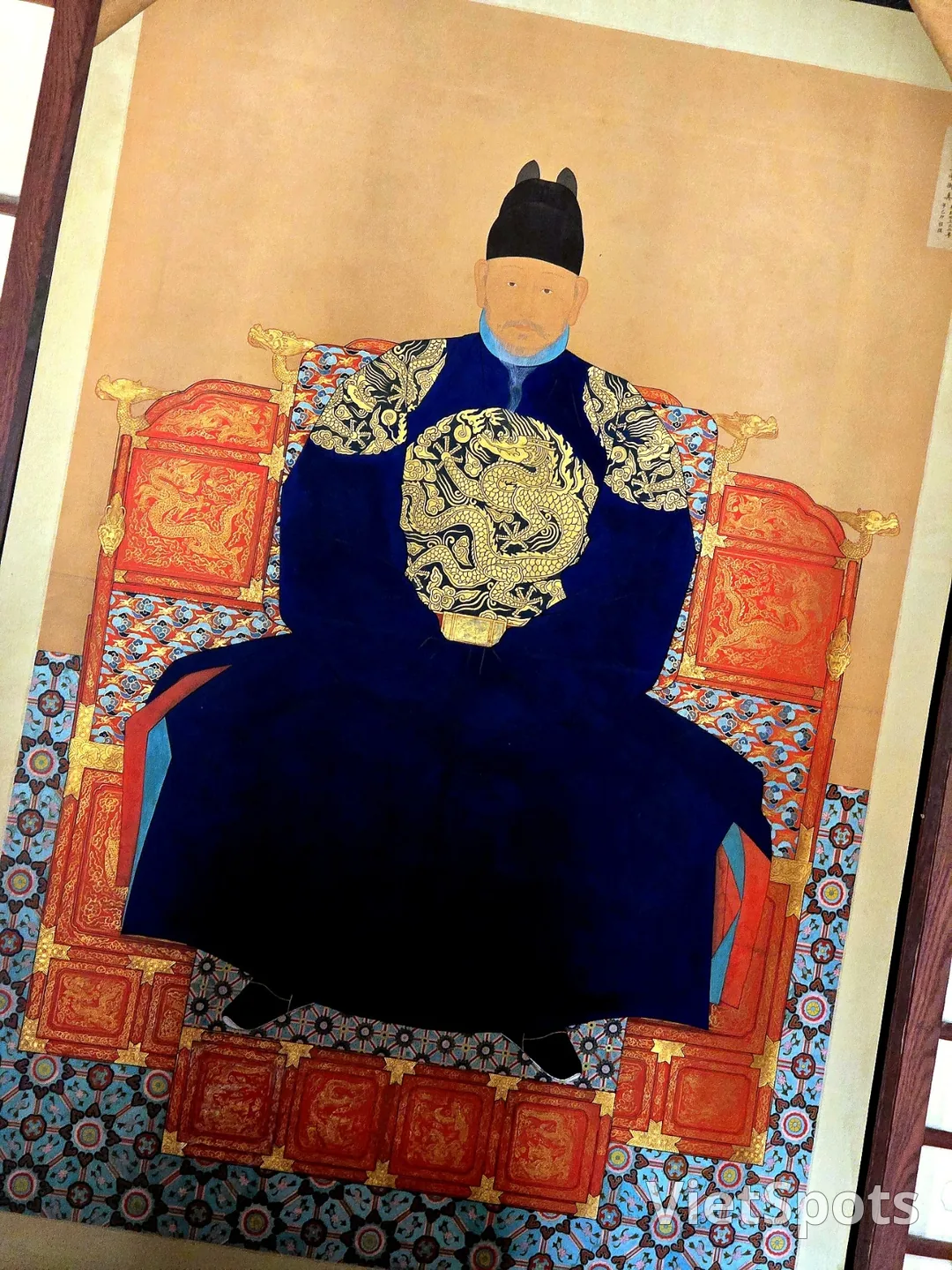
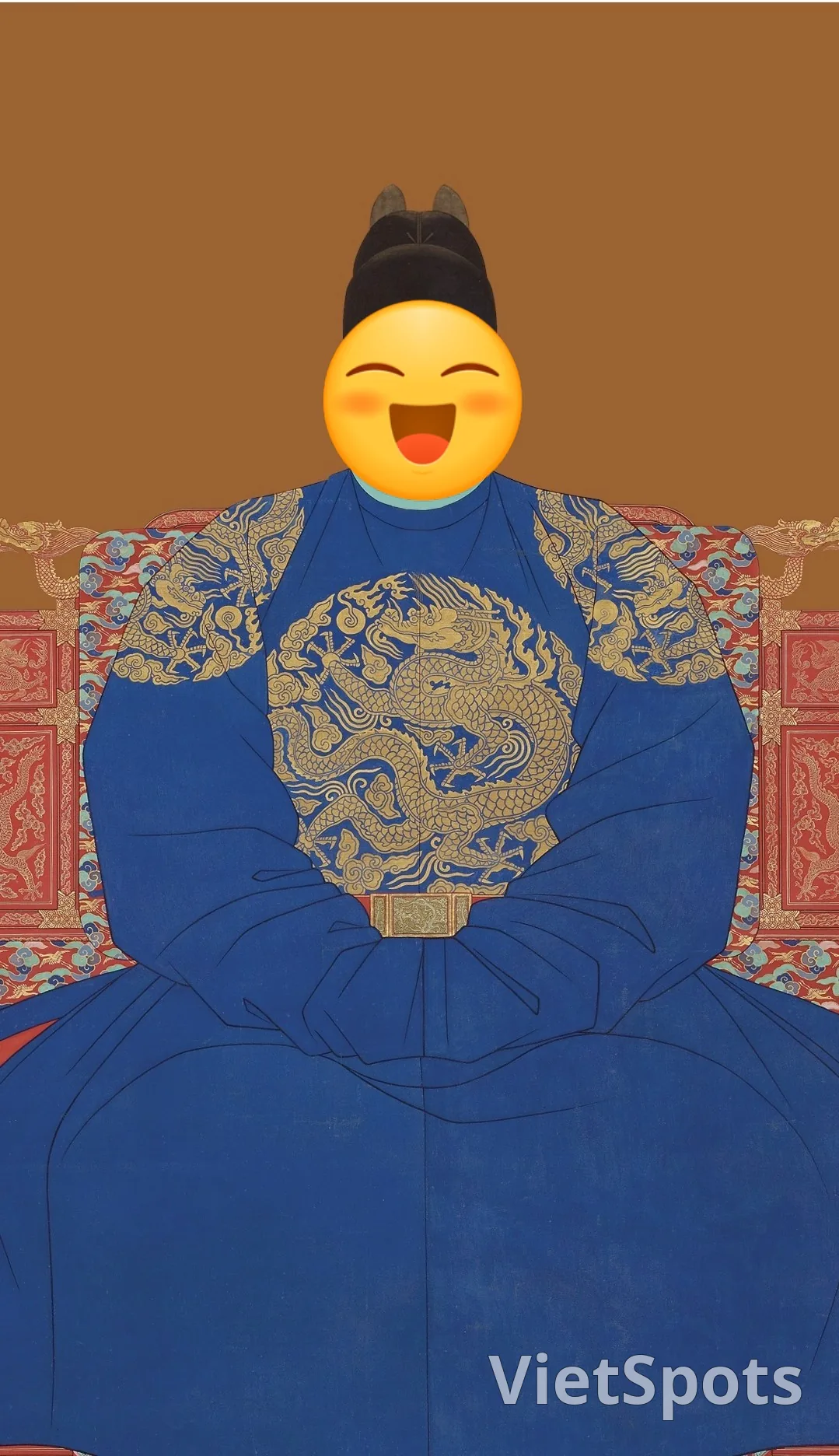
Portrait of King Taejo (太祖御眞) 1872 / Color on silk / 220×151cm / National Treasure This is the only surviving portrait of King Taejo, a faithful copy painted in 1872 (the 9th year of King Gojong's reign). It is a full-length portrait depicting him in his everyday official attire — the Ikseongwan cap and the blue dragon robe — along with a white jade belt and black shoes. King Taejo is said to have been tall, upright in posture, and to have had very large ears. Taejo Yi Seong-gye rose to prominence through his great military achievements during the chaotic final years of Goryeo, becoming a hero and founding the Joseon dynasty. Jeonju was Taejo's ancestral hometown, the place where his forebears had lived. To commemorate this, in 1410 (the 10th year of King Taejong's reign), a royal portrait of Taejo was enshrined in Jeonju. In 1872, when the old portrait had become worn, eight court painters, including Bak Gi-jun, Jo Jung-muk, and Baek Eun-bae, newly copied it and it was enshrined at Gyeonggijeon Shrine.
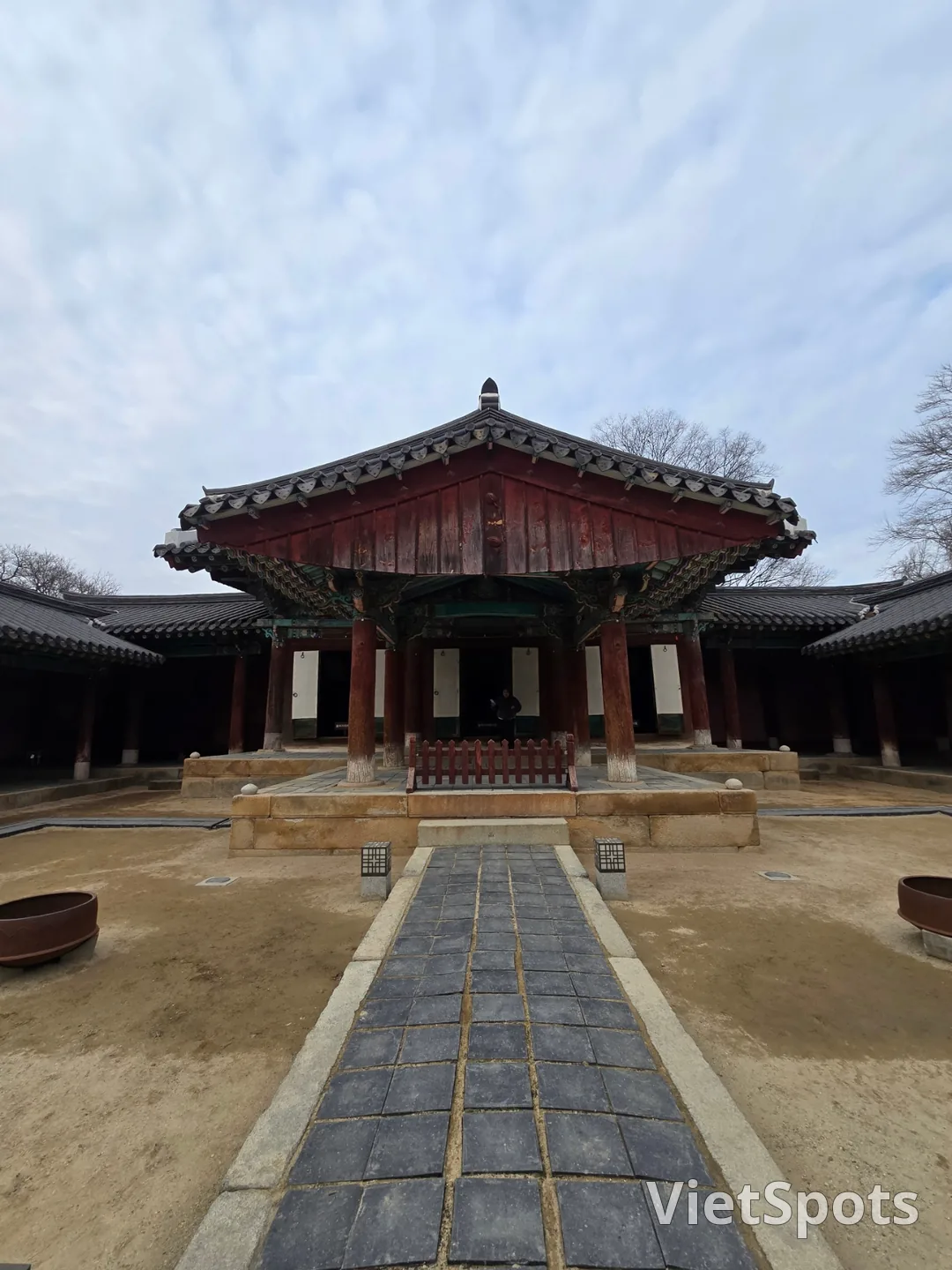
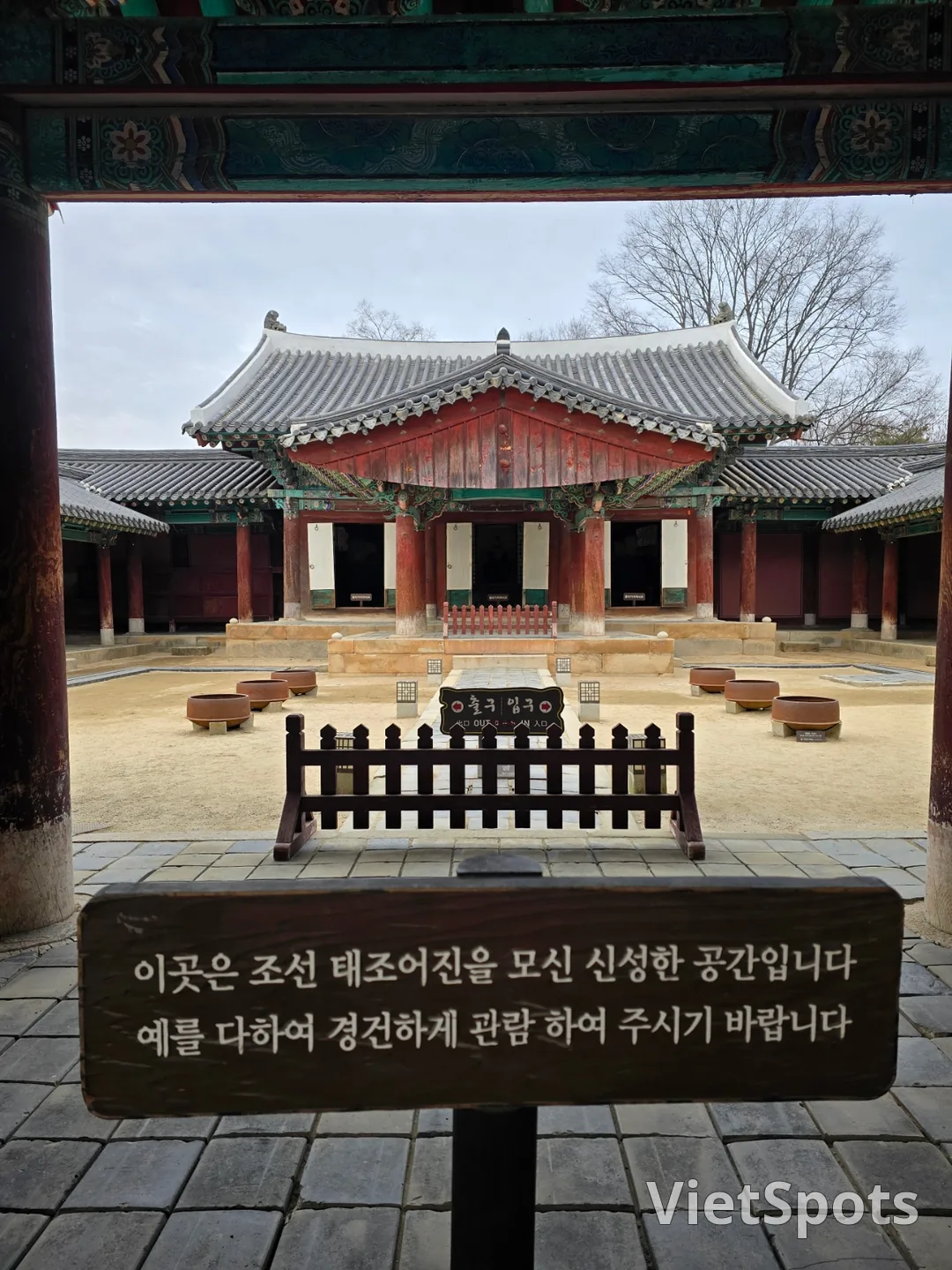
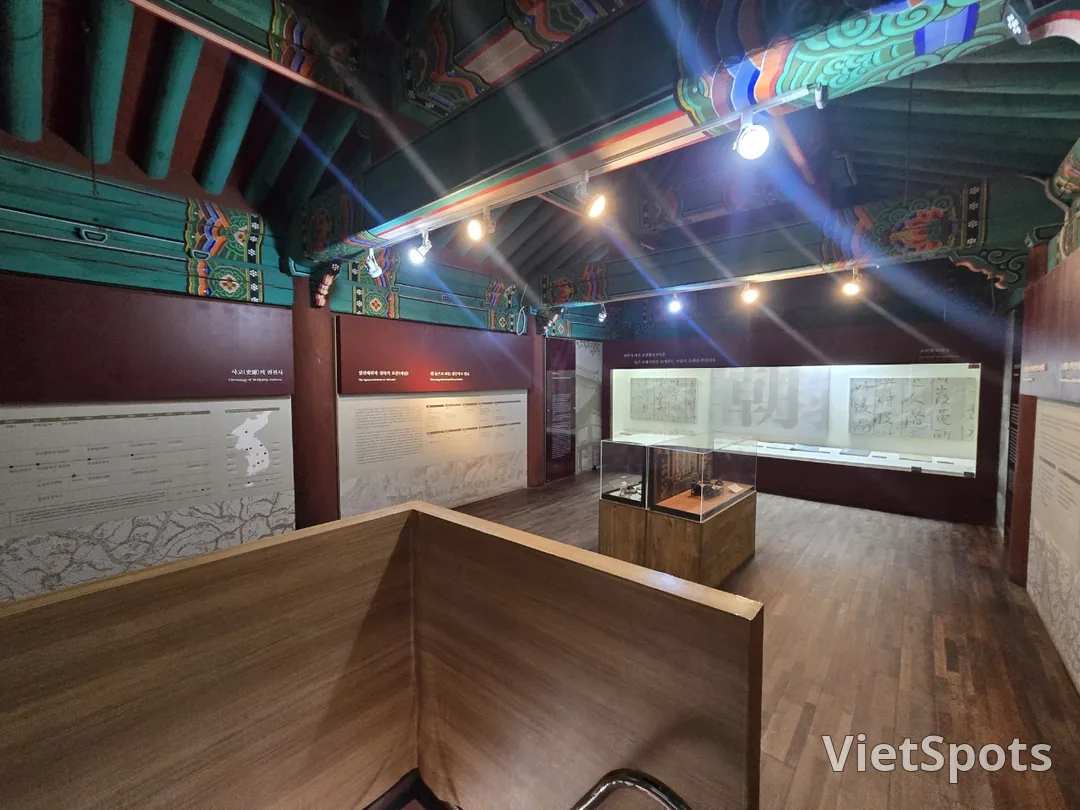
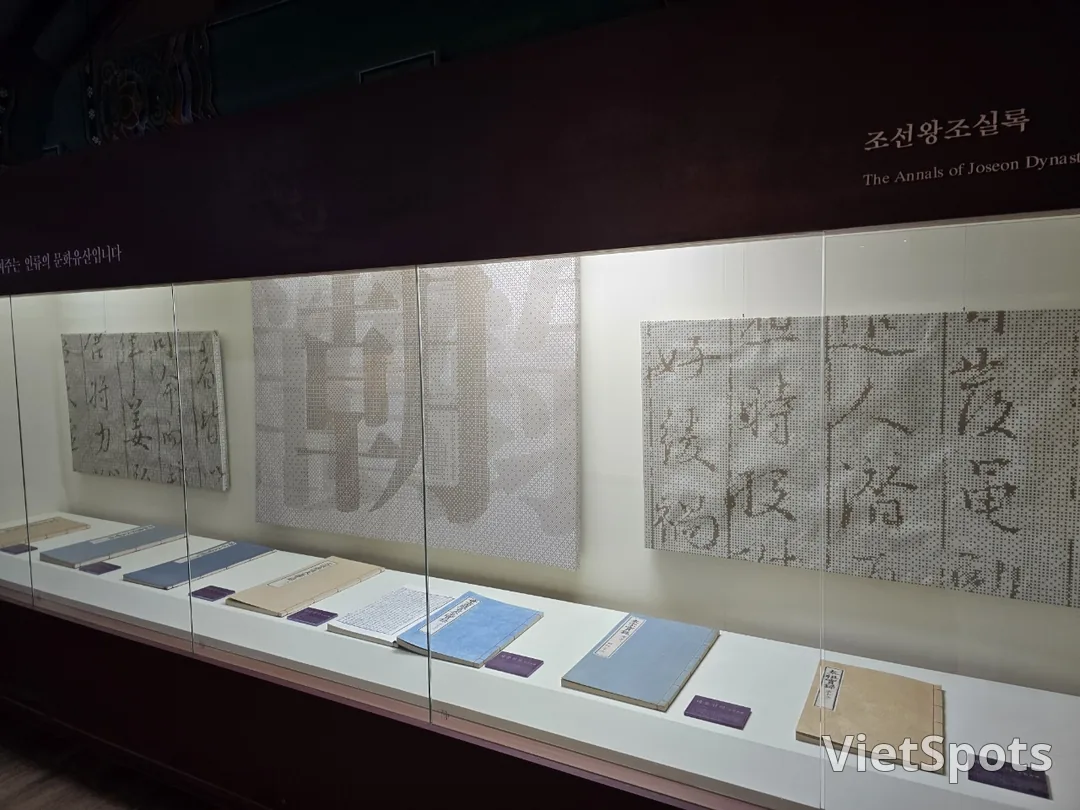
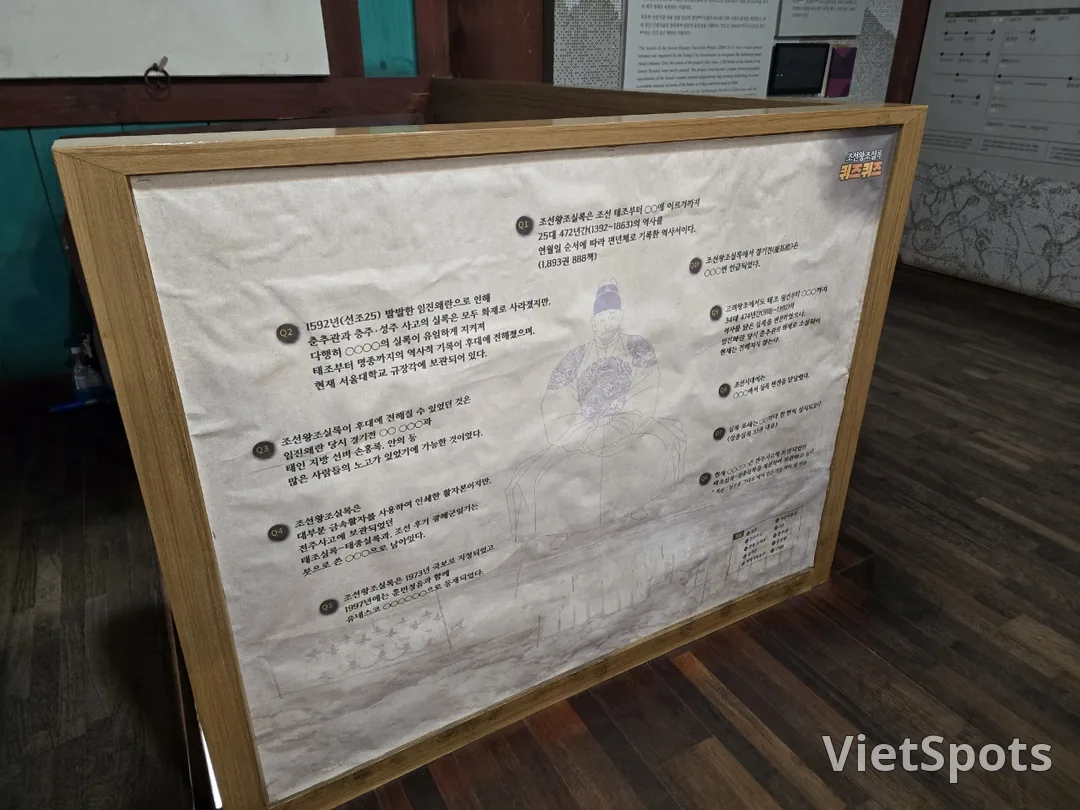
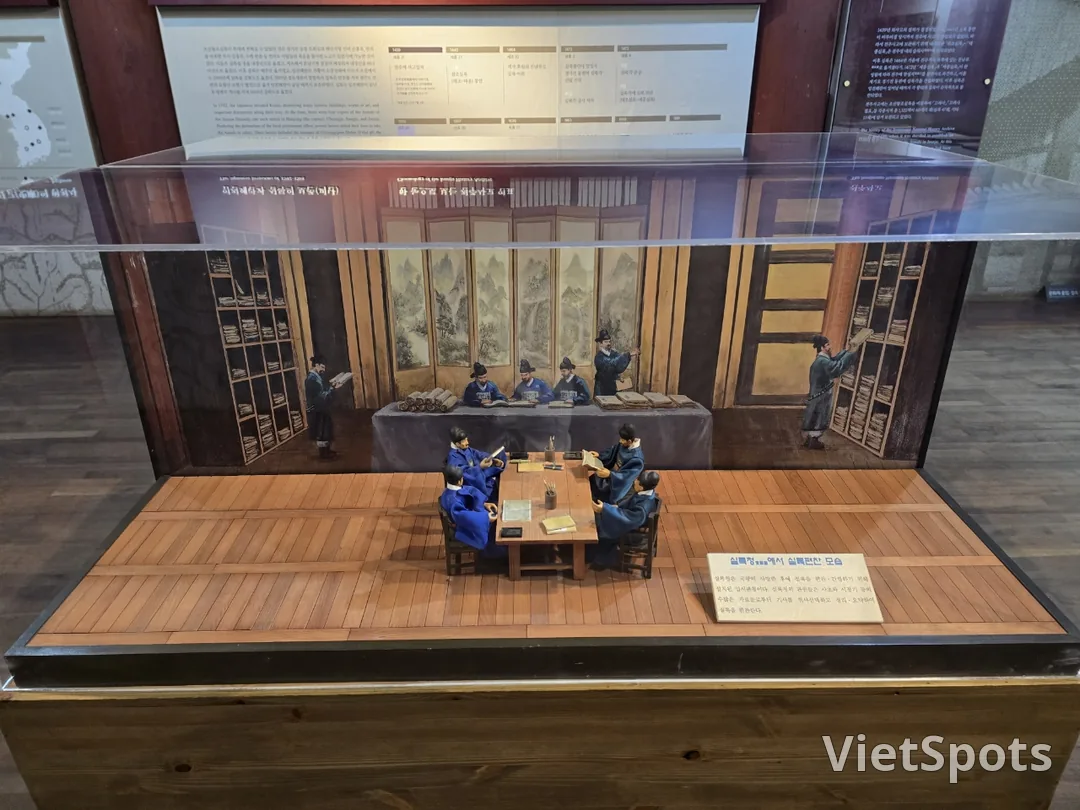
If you're visiting Jeonju Hanok Village, be sure to check out Gyeonggijeon Shrine as well. And you can also see the Annals of the Joseon Dynasty there.
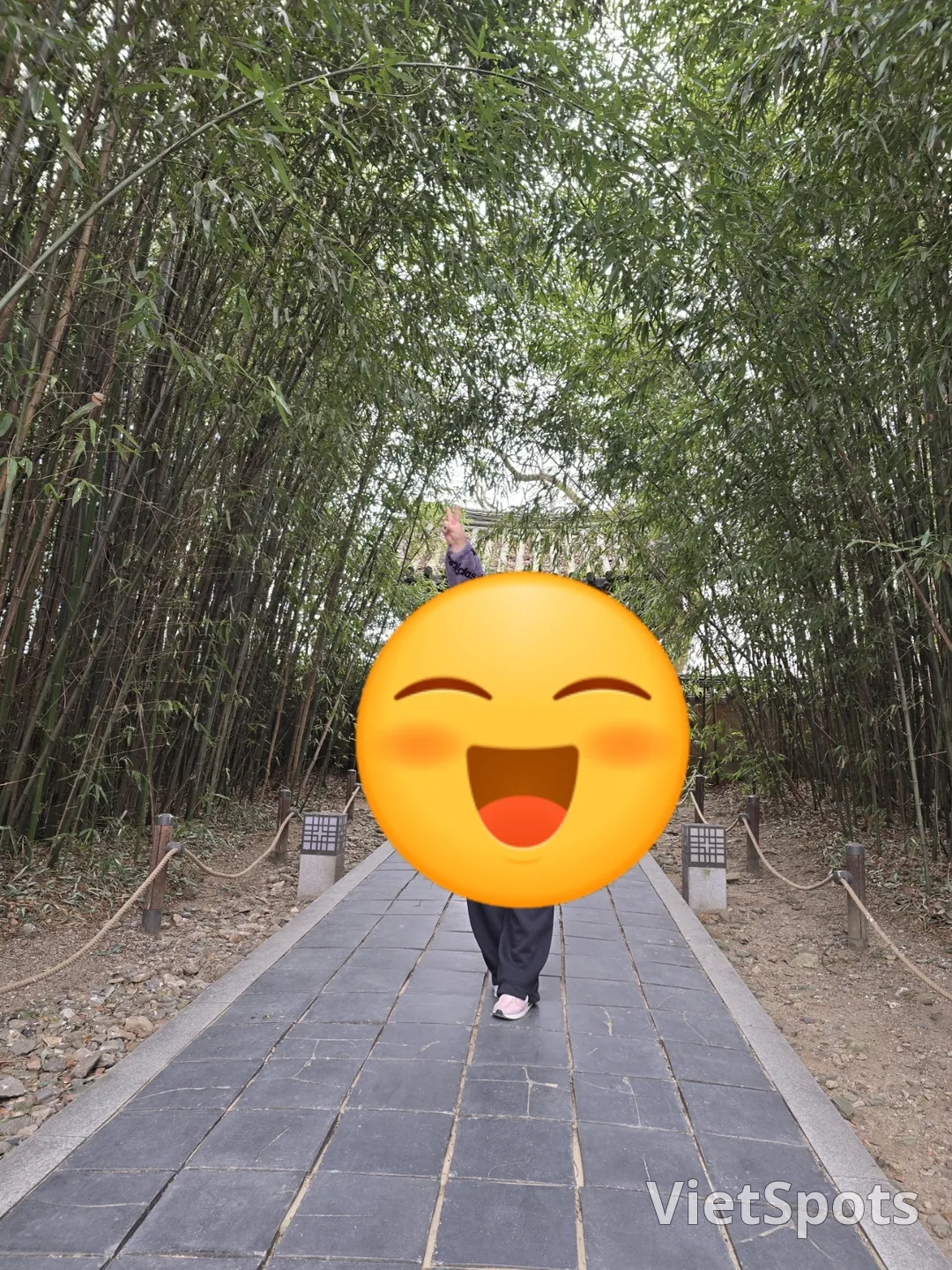
It's like a bamboo forest, haha
You can also try on the Eojin (traditional royal portrait) experience directly with your own camera^^ hehe
Book Travel in English on VietSpots
- 🎁 Sign up and get 16 Welcome Pack coupons — e.g. Motorbike Rental 45%
- 👑 Member tier discount up to 15% on site (Silver 5% · Gold 15%)
- 🛂 Auto-fill arrival card📶 Compare lowest eSIM prices🚻 Find toilets
Comments