

【Shigatse, Tibet】Everest Sunrise, Ancient Monasteries of Tsang, and a Leisurely Journey Through Shigatse — A Day of Returning from the Roof of the World to the Human World


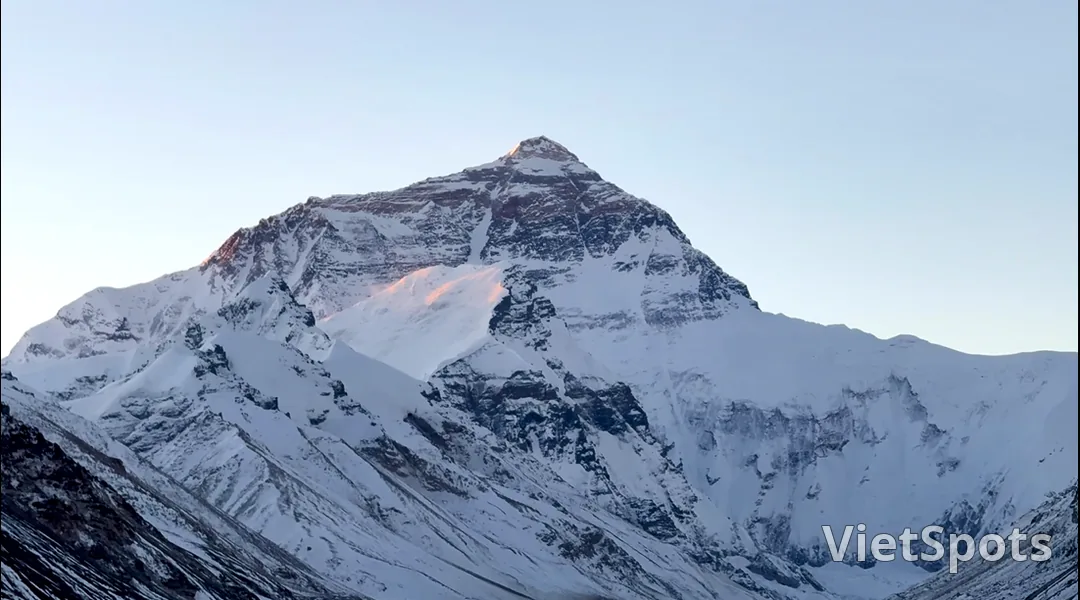
The route plan for this Tibet journey is — go the way you came, return the way you went. So today's itinerary follows the same mountain road we took on the way here, heading back from Everest Base Camp to Shigatse. In the morning, we waited for the Everest sunrise in a bitter wind of minus 10°C; In the afternoon, we stepped into Tashilhunpo Monastery — the most important religious center of Tsang (Back Tibet). After yesterday's awe-inspiring natural scenery, today's pace is much calmer, letting us turn our attention back to Tibetan culture and faith. 🗓 Today's Itinerary Everest Base Camp Sunrise → Heading down from the transfer station → Lunch in Lhatse County → Tashilhunpo Monastery (the largest monastery in Ü-Tsang) → Stroll around Shigatse city & Tibetan dinner Sunrise at Everest: An imperfect but memorable light At 7:50 in the morning, we agreed to go watch the sunrise. Strangely enough — in Taiwan, watching the sunrise means getting up at three or four in the morning, but at the foot of Everest, at seven o'clock the sky is still almost completely dark. I got up first and walked to the restroom, and looking up, the sky was still full of stars. When I went back to the room to finish gearing up and stepped out again, Even though it still looks like the middle of the night to the naked eye, once the camera's shutter opens, the sky has already quietly begun to brighten.
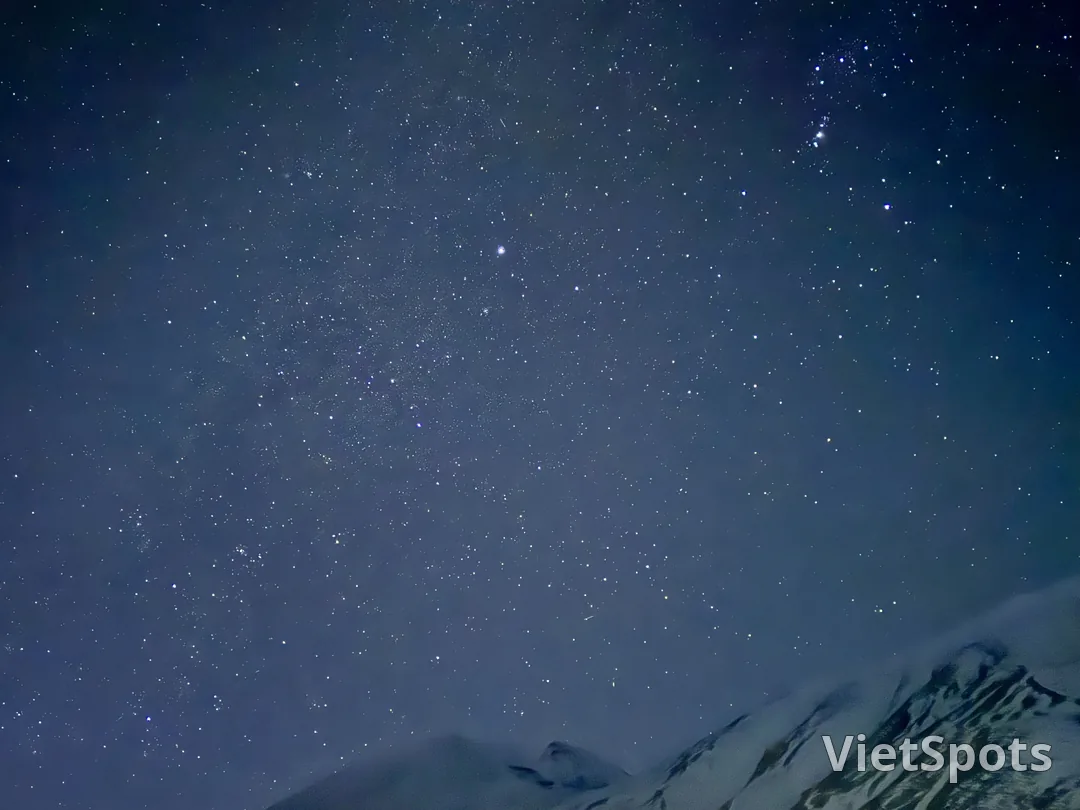
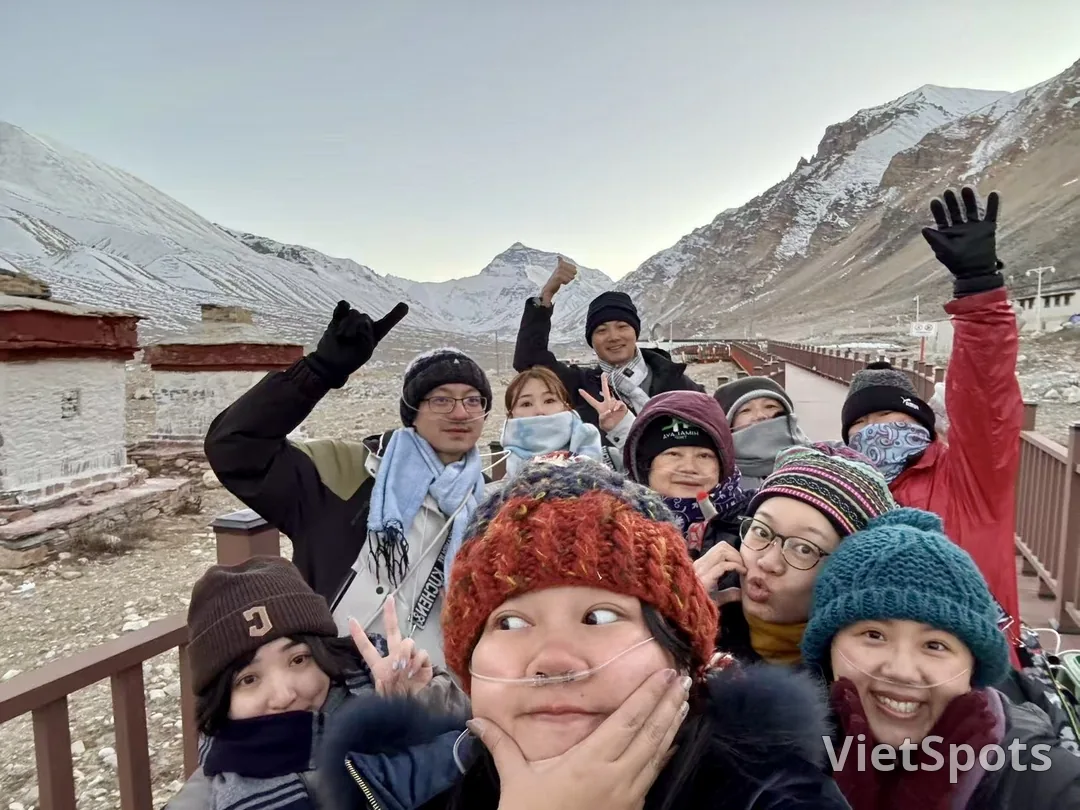
It's a bone-chilling -10°C outside. Everest stands quietly in the distance, as if waiting for the first ray of light.
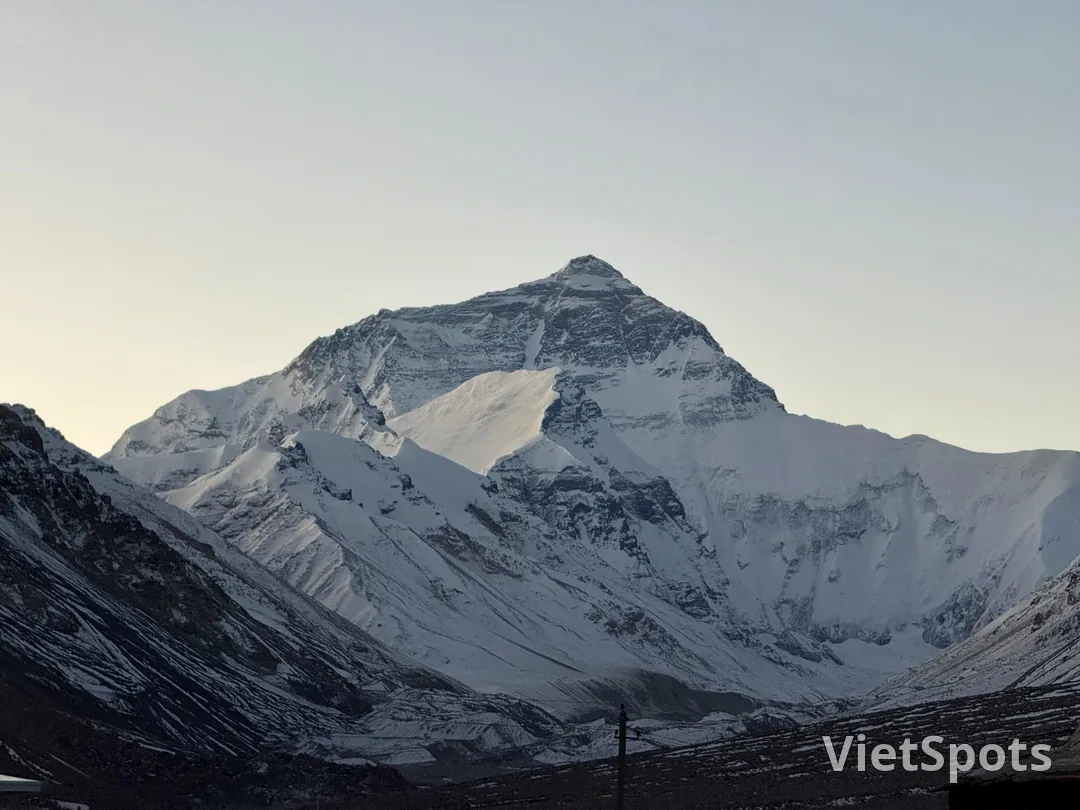
I set up my tripod on the viewing platform boardwalk, ready to shoot a time-lapse. Today's sunrise is at 8:19. Yesterday, the sunset's golden glow on the mountain was on the right side of Everest, but today the sunlight will shine in from the left. After eight o'clock, the sharp ridge and flank on the left side of Everest were the first to be dyed golden. I thought the golden light would keep spreading, but ten minutes, twenty minutes…… it was still only that one small patch that stayed lit. I glanced to the side, and the surrounding mountains were already covered in golden light. I felt a bit of regret—— it's probably just the angle — today, that's simply how Everest shines.
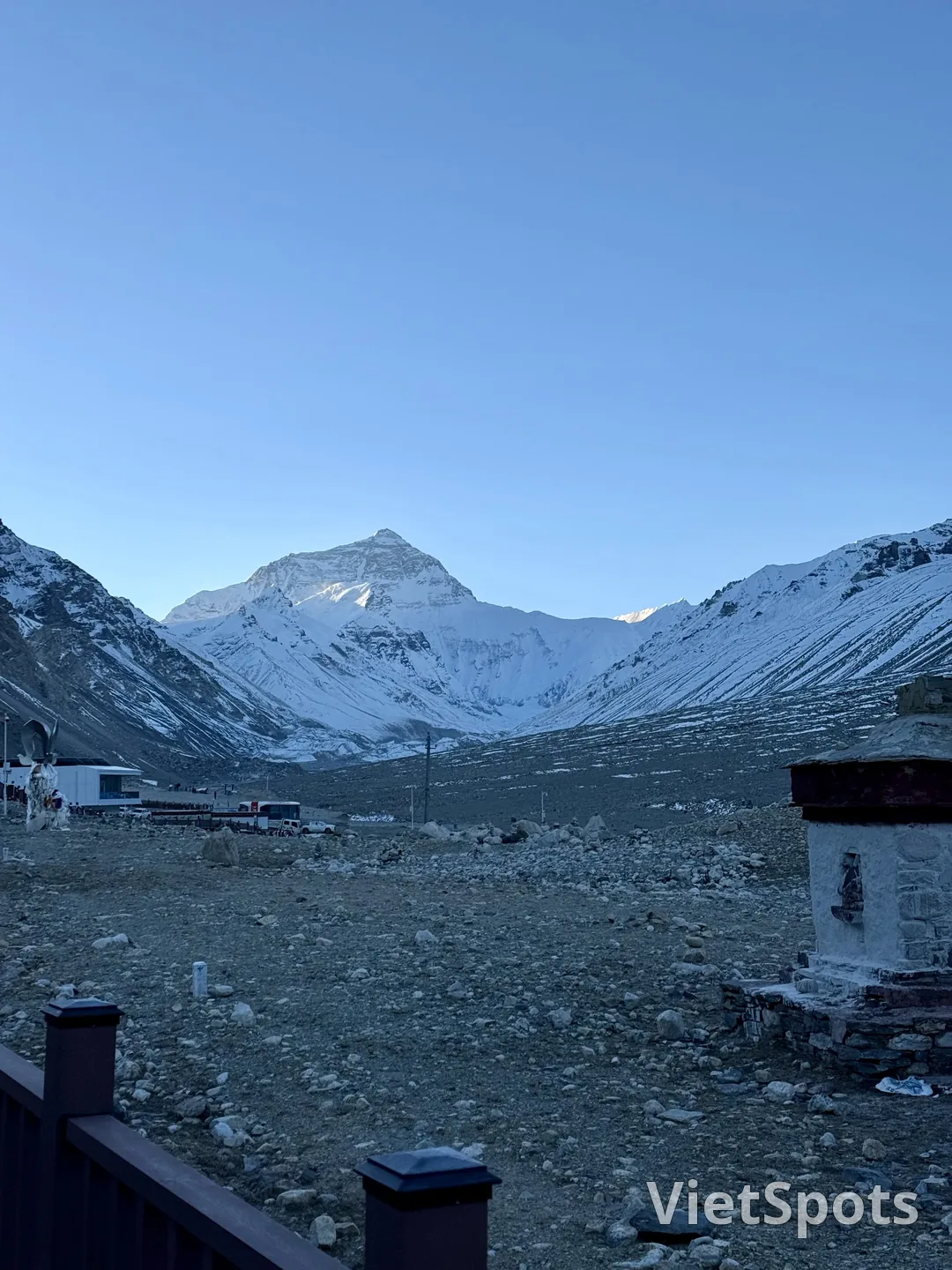
But being able to stand beneath the roof of the world waiting for the sunrise is already a rare piece of luck.
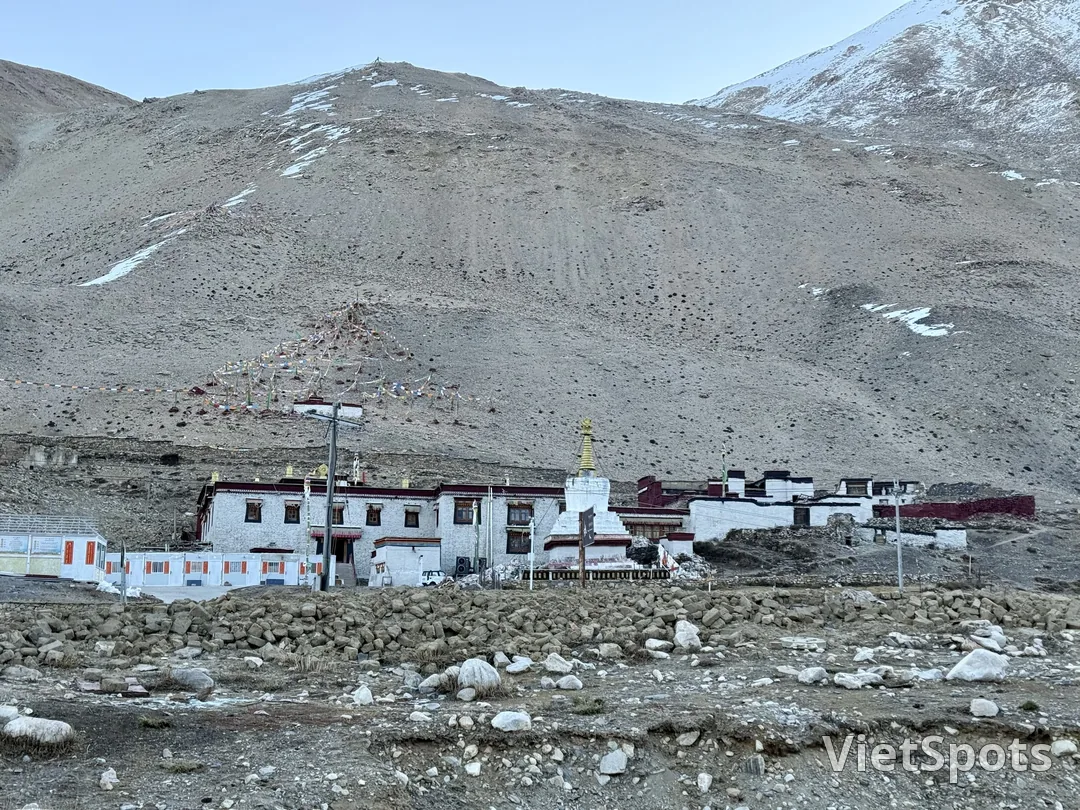
On the way back, we will pass by Rongbuk Monastery, the highest-altitude monastery in the world. We only took photos outside and did not go in.
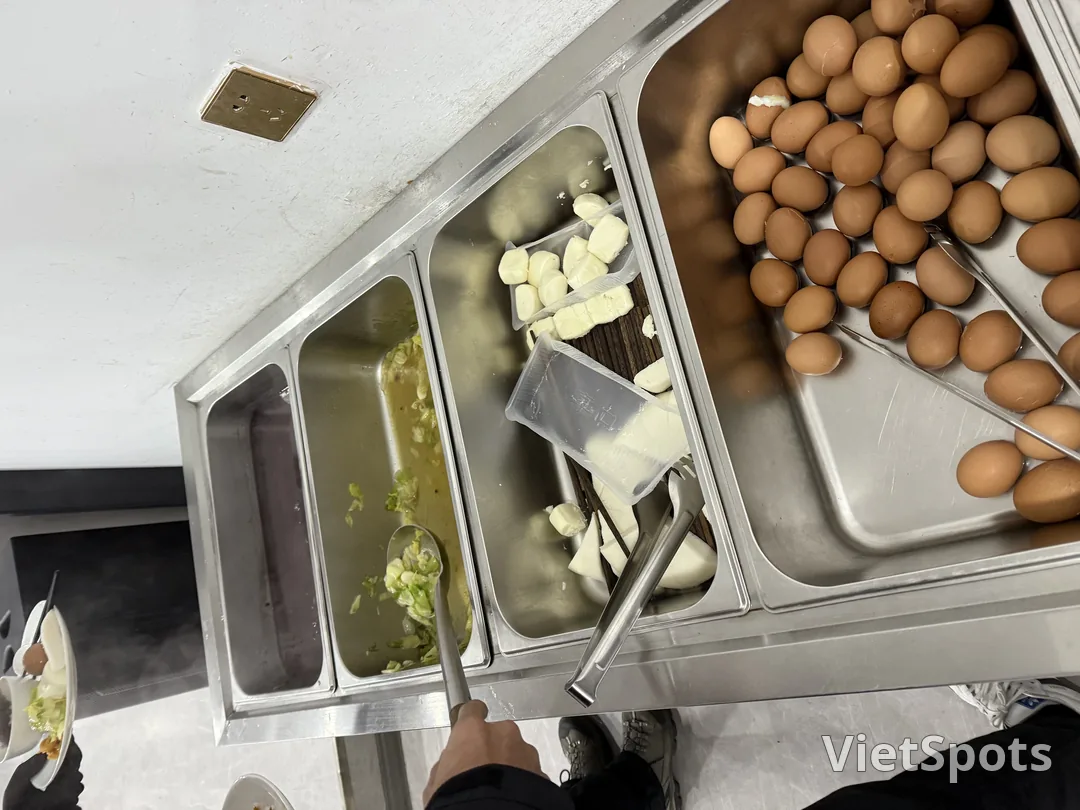
Basecamp breakfast: not many choices, but surprisingly delicious Since we had to set off at nine, we rushed back to camp to eat breakfast. The dishes were very simple: Pickled radish, fried egg, fa gao (steamed rice cake), cabbage, congee. I thought "as long as it fills my stomach, that's fine," but to my surprise, every single dish was more delicious than expected — especially the high-mountain cabbage, so sweet and crisp.
Farewell to Mount Everest Base Camp: Heading Back to Shigatse Along Winding Mountain Roads At 9 o'clock sharp, we boarded the shuttle bus again and headed down the mountain. After returning to the transfer station, we switched to the travel agency's coach bus. We spent most of the day today traveling back to Shigatse by car. Since we had already taken photos at both mountain passes yesterday, today we drove straight back without stopping. At noon, we dined at the same restaurant as yesterday, but the menu had been completely changed, showing great care. At 4:30 PM we arrived back in Shigatse, ready to visit the most important religious landmark of Shigatse—Tashilhunpo Monastery (Tashilhunpo Monastery).
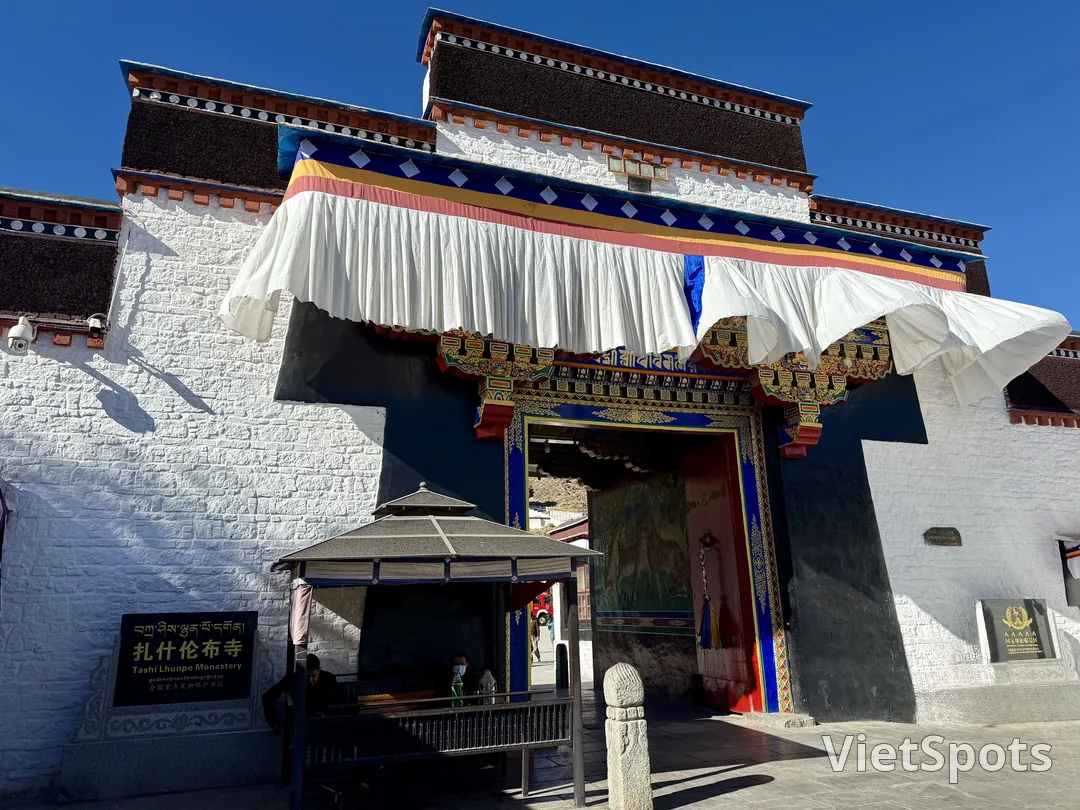
Tashilhunpo Monastery: The Seat of the Panchen Lama × The Largest Monastery in Ü-Tsang (Back Tibet) Tashilhunpo Monastery is the largest monastery in Ü-Tsang (Back Tibet), and it is also the seat of the successive Panchen Lamas. If the Potala Palace symbolizes Front Tibet, then this place is the spiritual center of Back Tibet. At the entrance, our guide Brother Yong first gave us an overview of the overall layout:
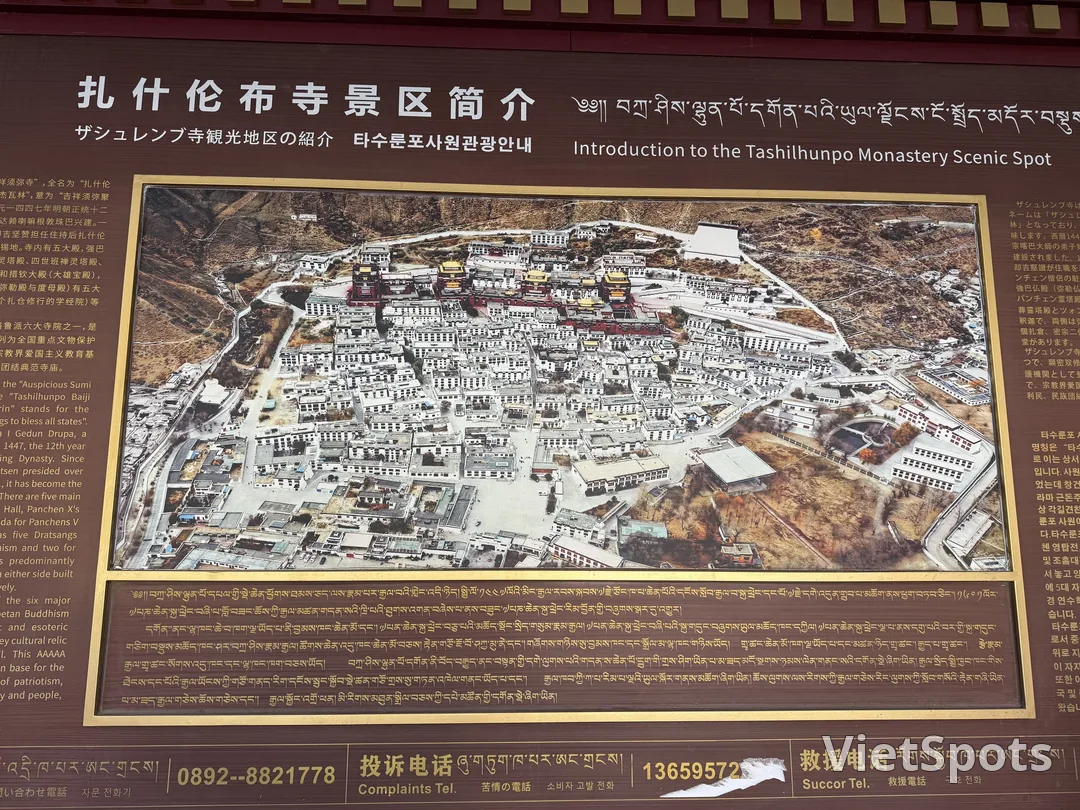
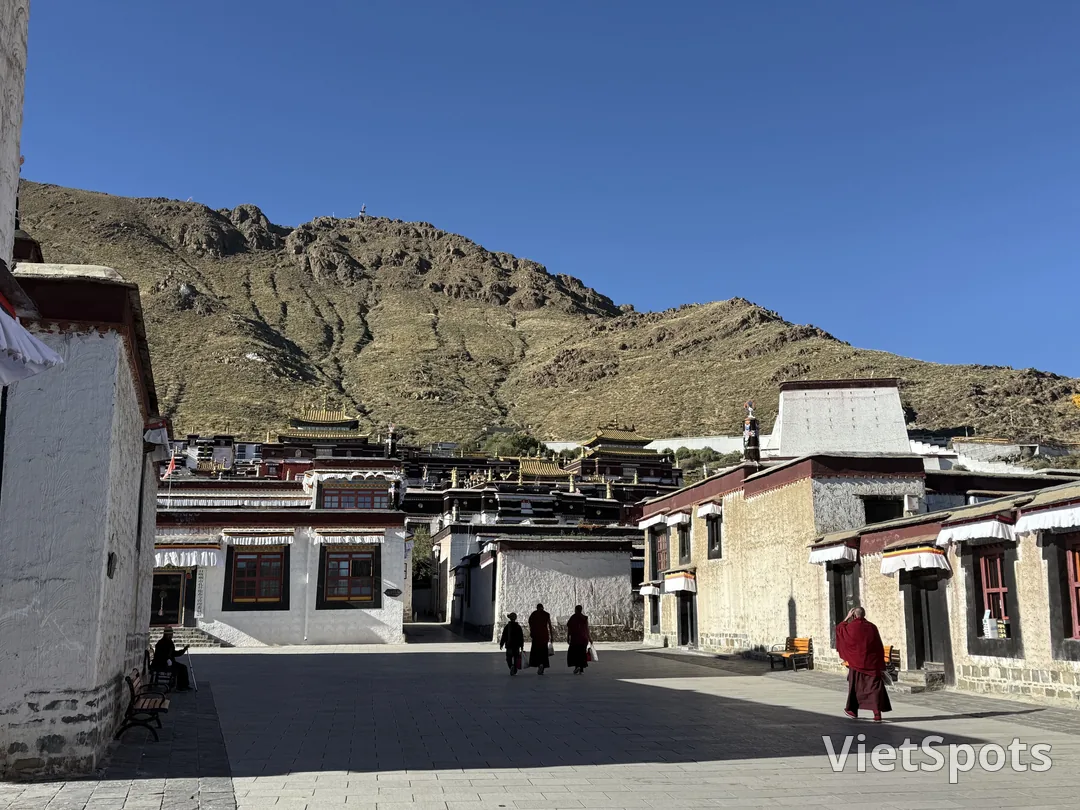
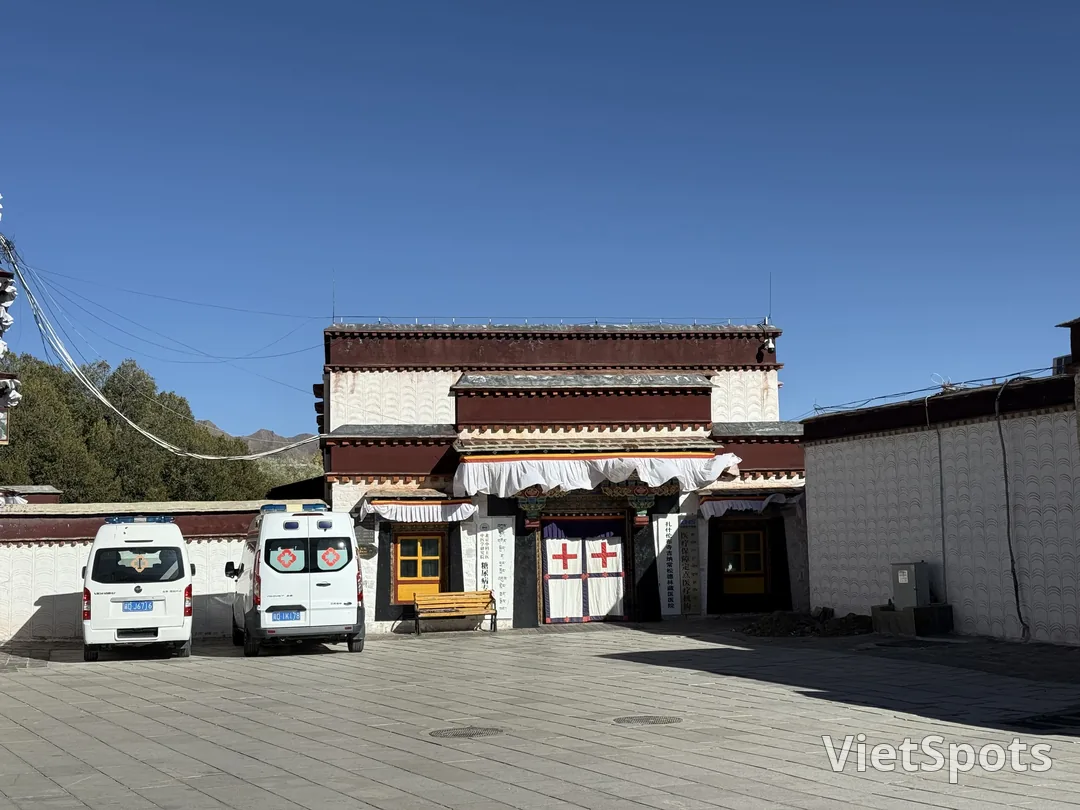
📌 Tashilhunpo Monastery's Five Major Architectural Highlights • Jamkhang: Enshrines a 26-meter-tall statue of Jampa Buddha (Maitreya Buddha) • Three Golden-Roofed Stupas: The joint burial stupas of the 10th, 4th, and 5th–9th Panchen Lamas • Labrang: The residence of the Panchen Lama when he returns to Tibet • Tsokchen Hall: Enshrines a statue of Shakyamuni Buddha made of pure gold • Zhacang (Monastic Quarters): The residential area for monks, a vast expanse of white buildings In addition, this place is also home to the largest Tibetan medicine hospital in the Back Tsang (Ü-Tsang) region.
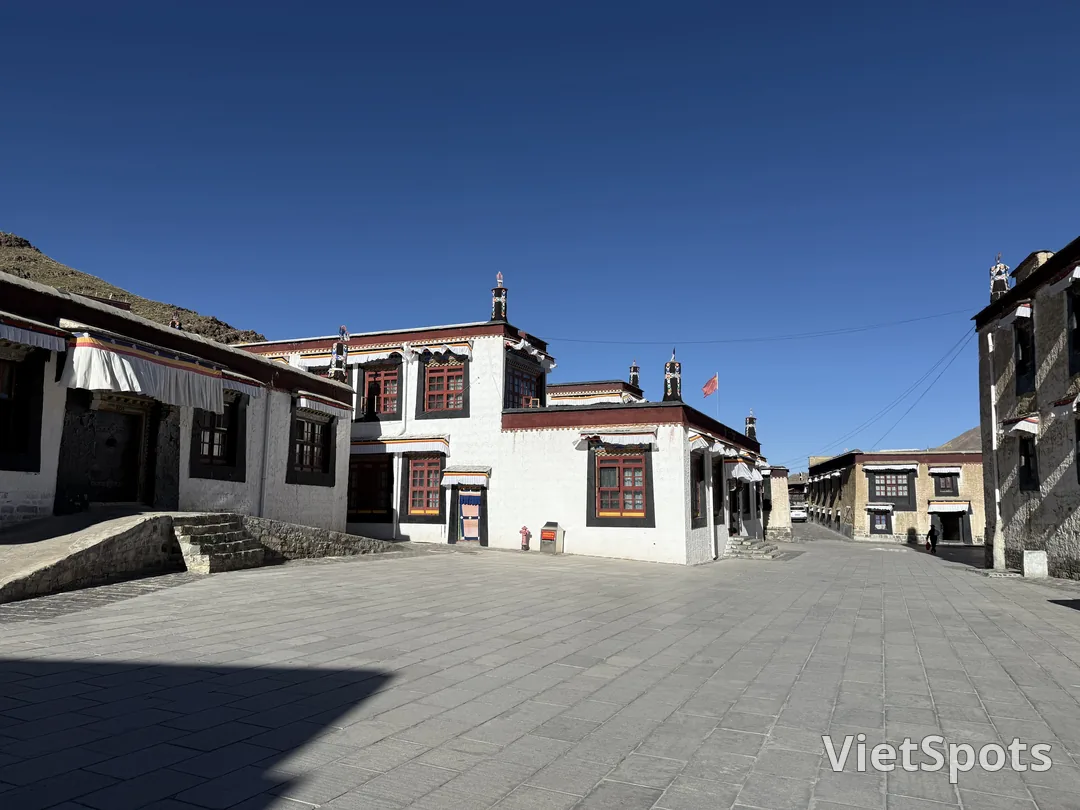
We entered through the monks' quarters area, and along the way there were typical Tibetan-style buildings. On the way, we came across the traditional "lamp-wick tree," the ancient Tibetans would crush its branches and use them as wicks for butter lamps.
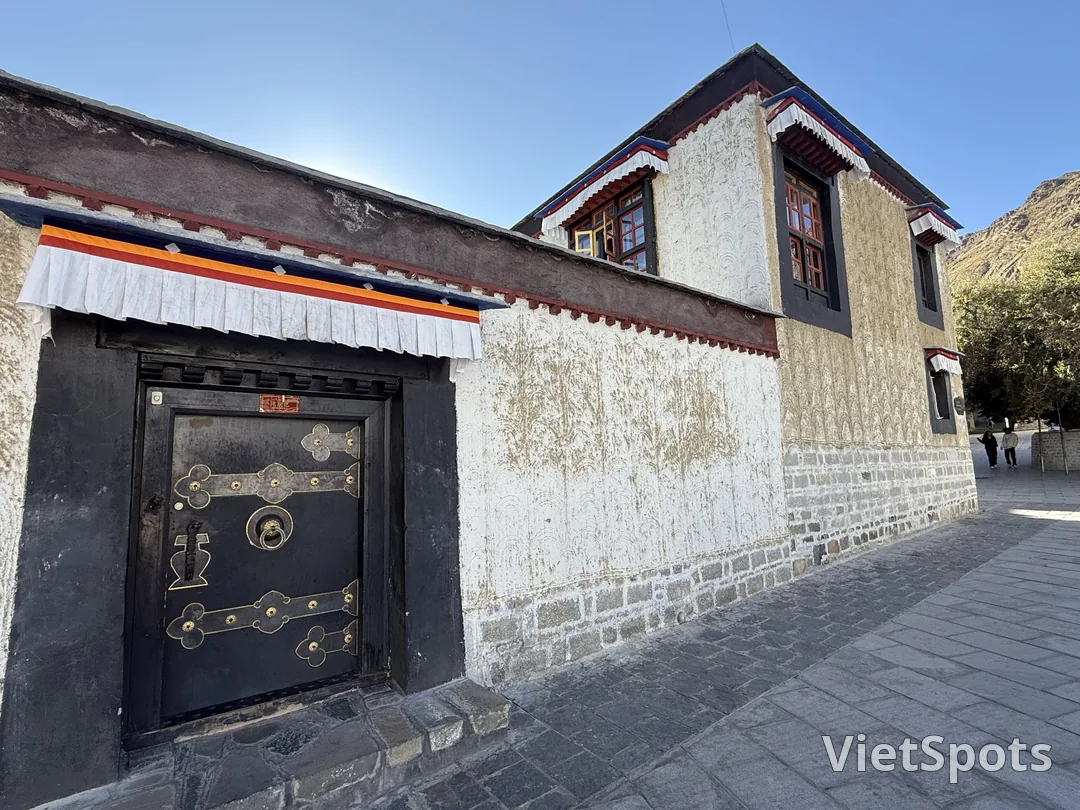
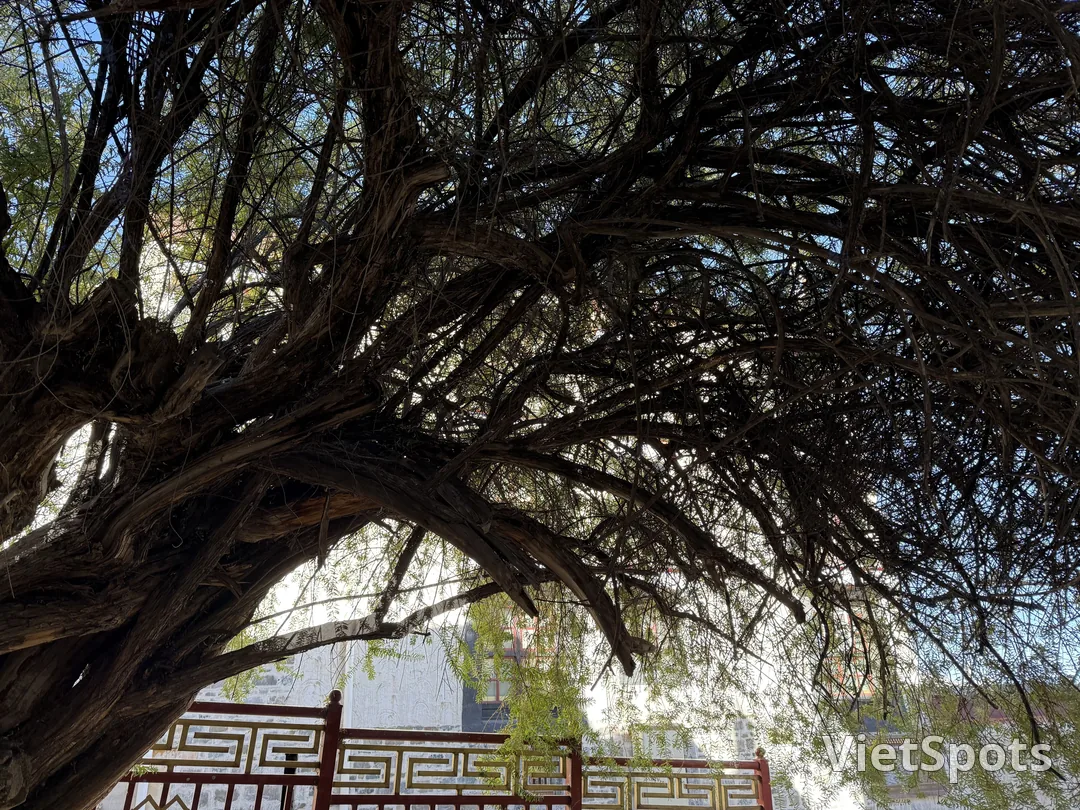
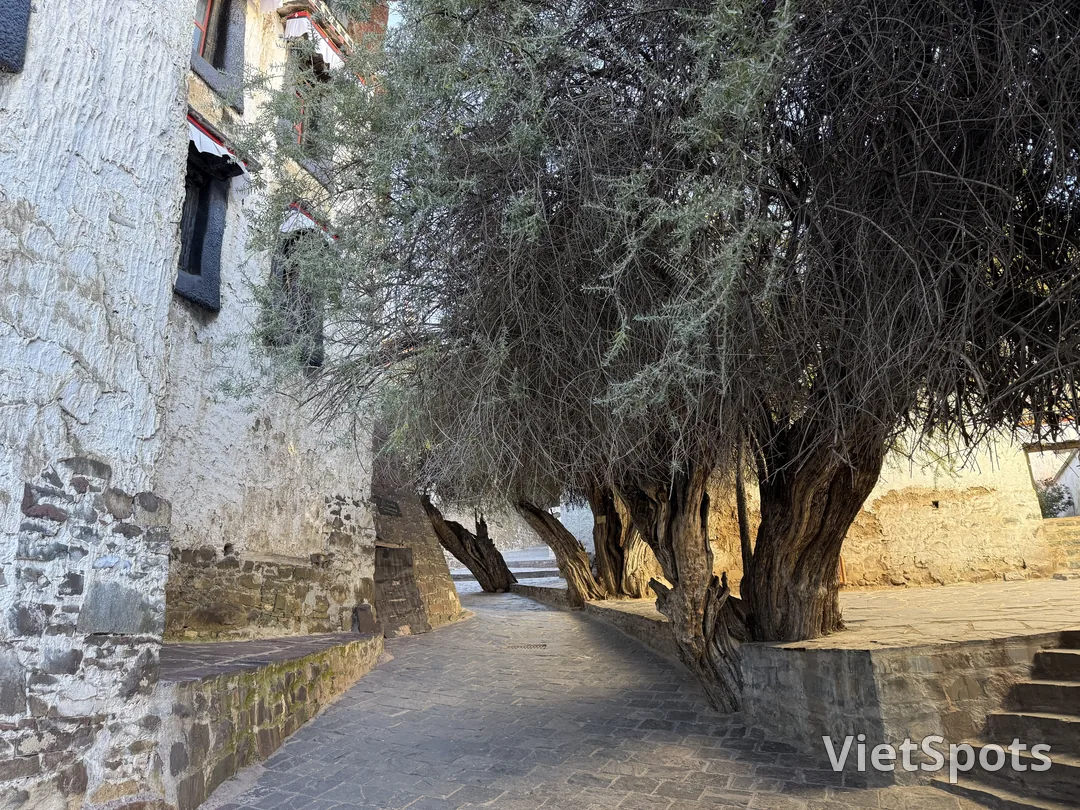
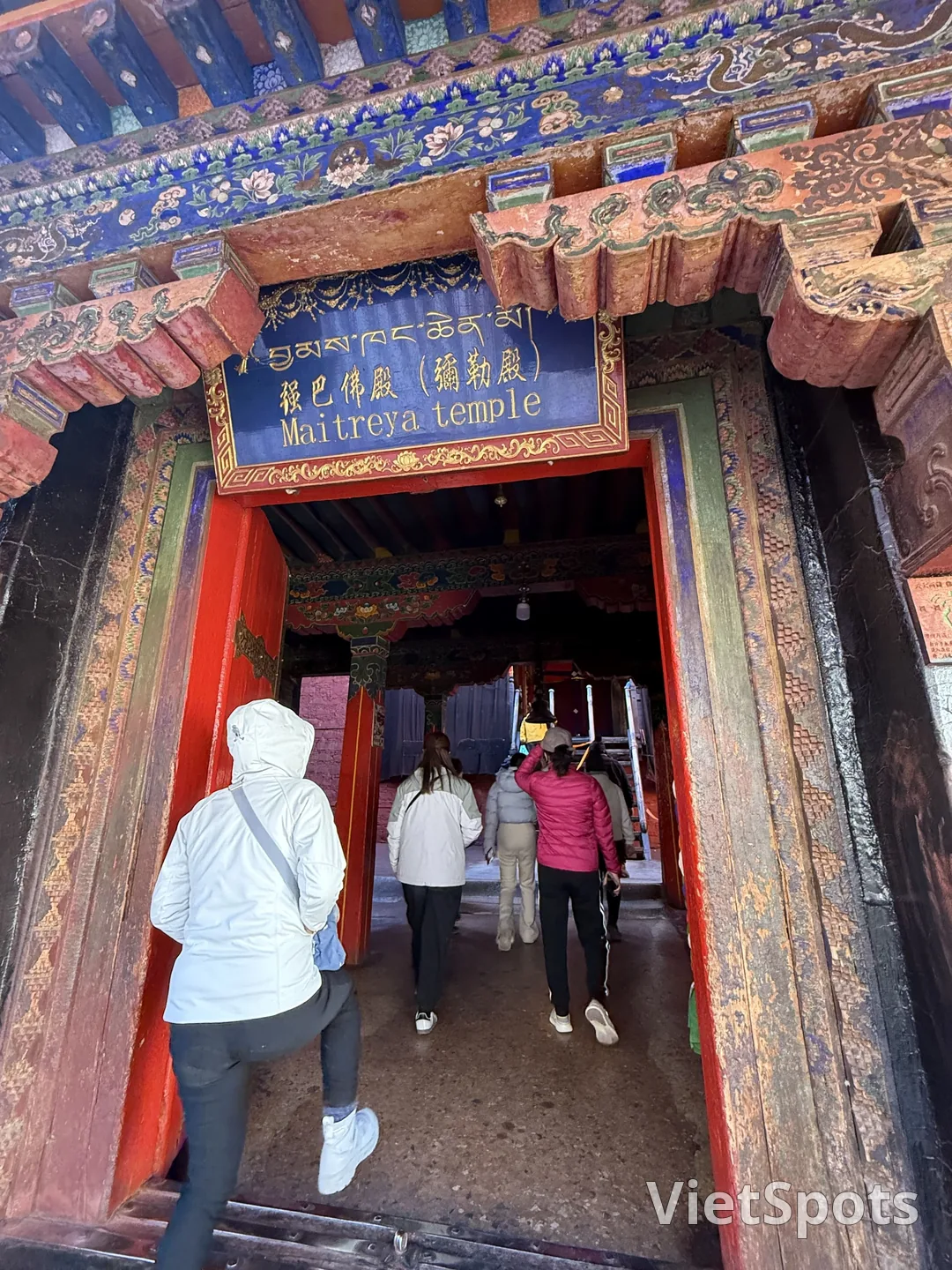
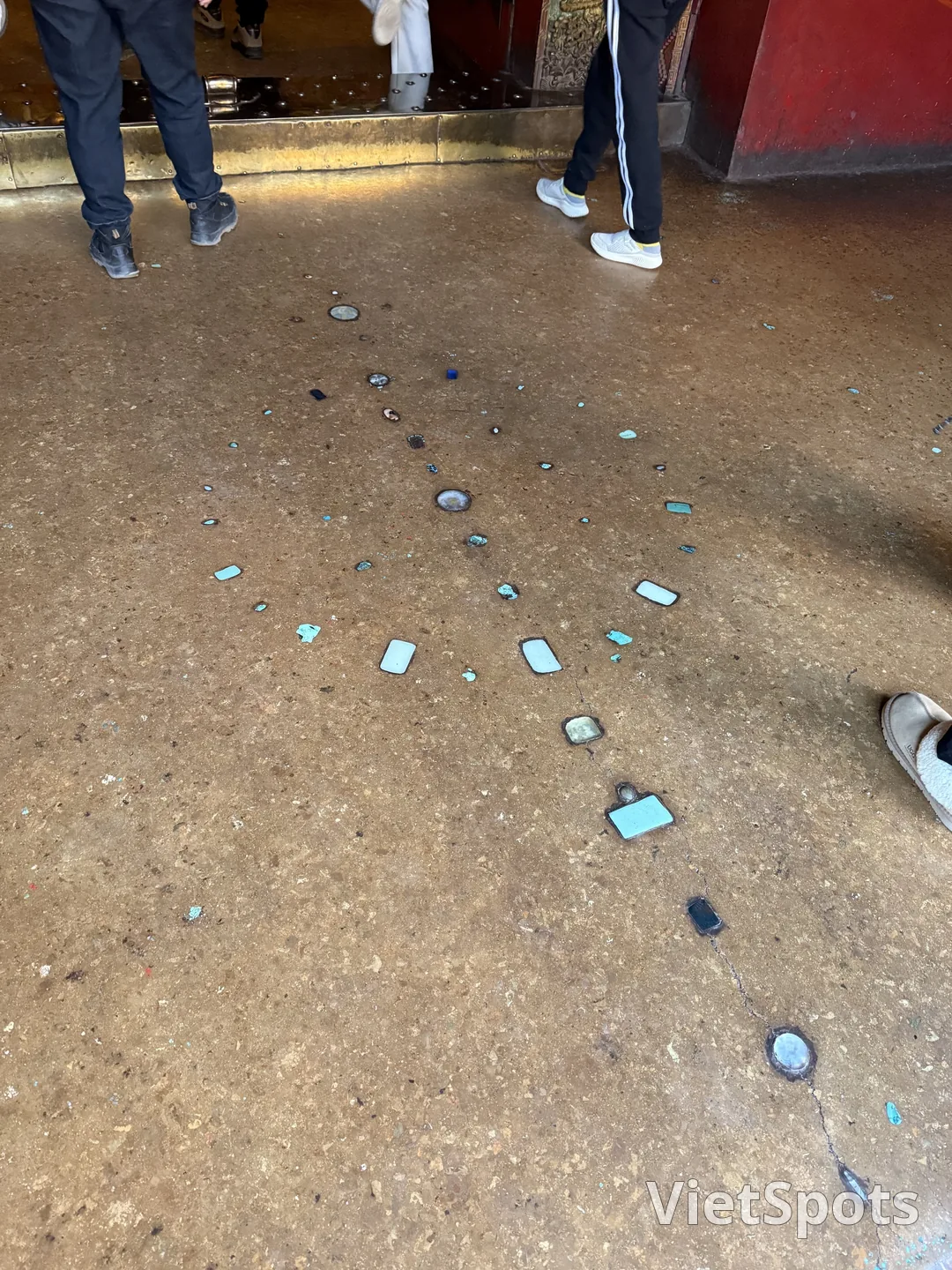
Jamba Buddha Hall, the 10th Buddha Stupa, the 4th Buddha Stupa The first stop is the Jamba Buddha Hall (photography not allowed). Outside the hall, the ground is laid with turquoise arranged into a Buddha's seal, which is very special.
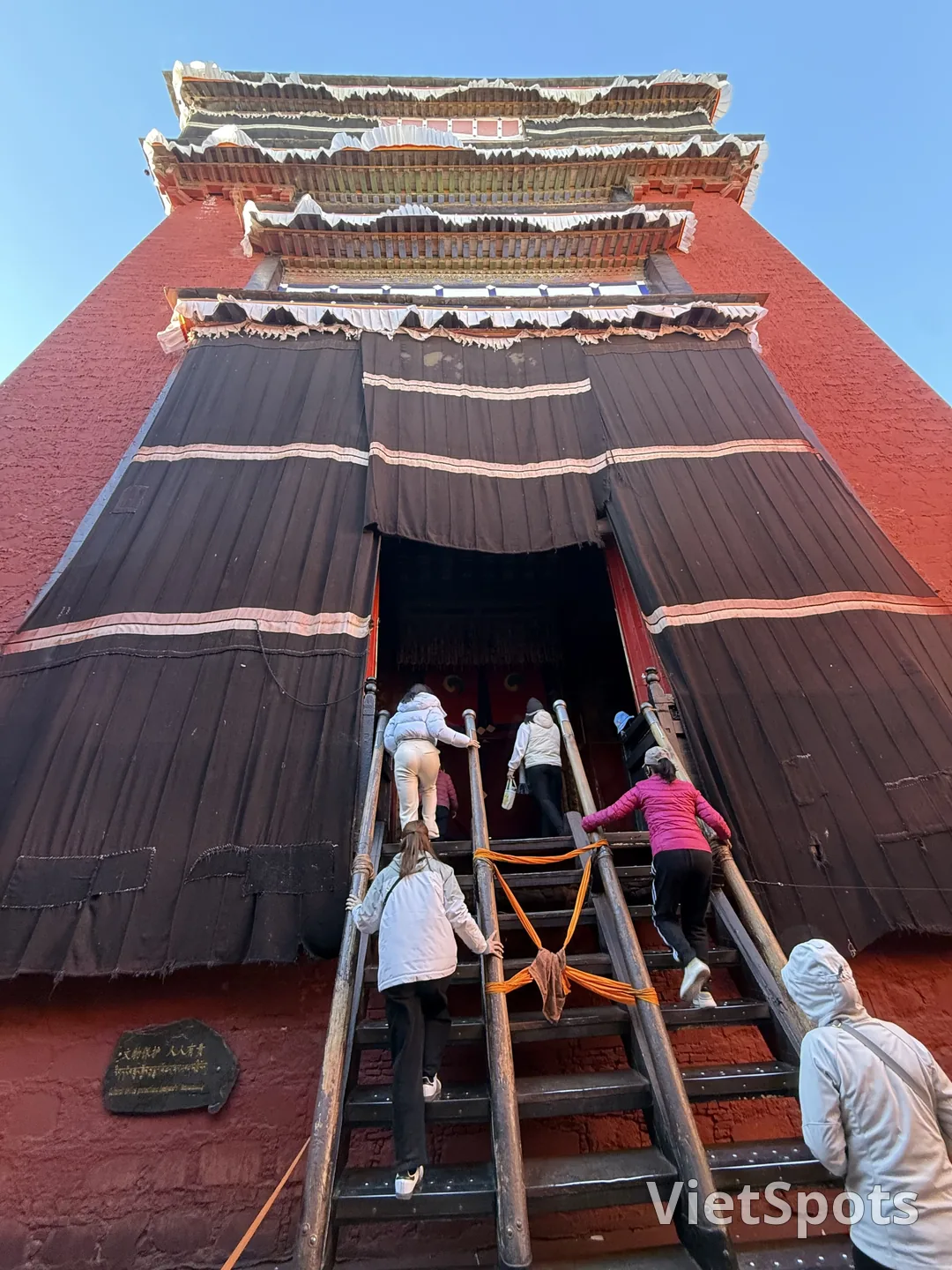
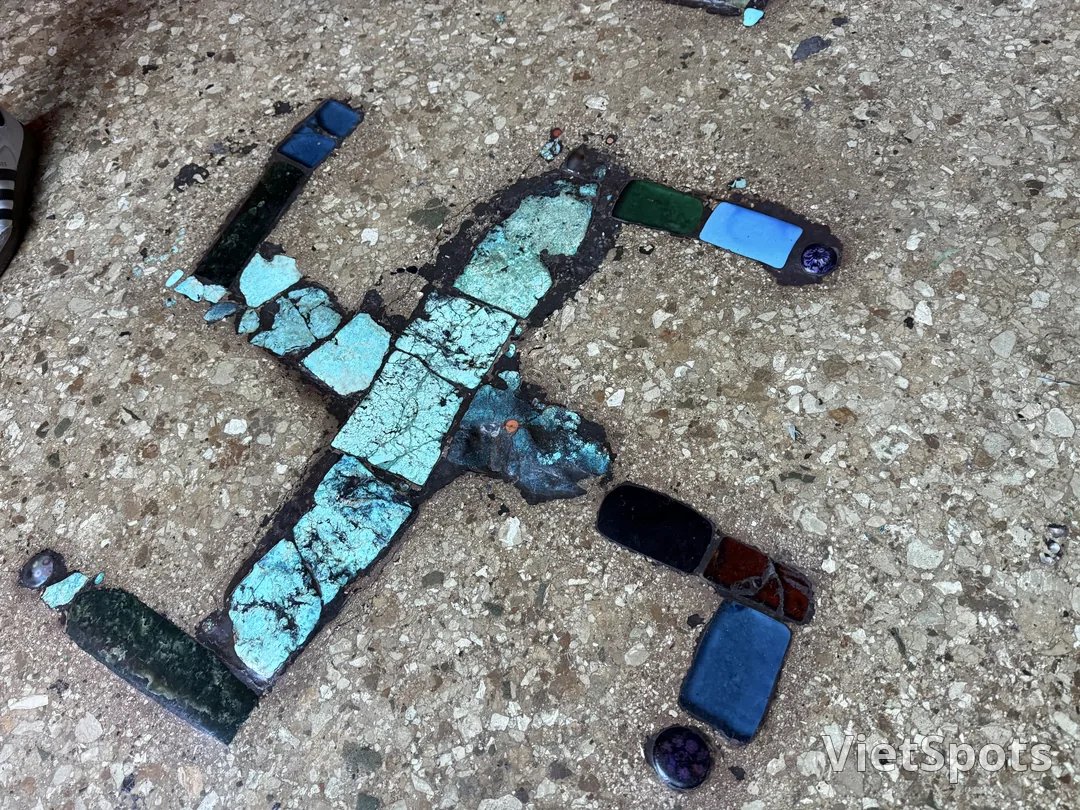
Next we'll head to the 10th Panchen Lama's Stupa, where you can take photos, becoming the first stupa photo of this trip.
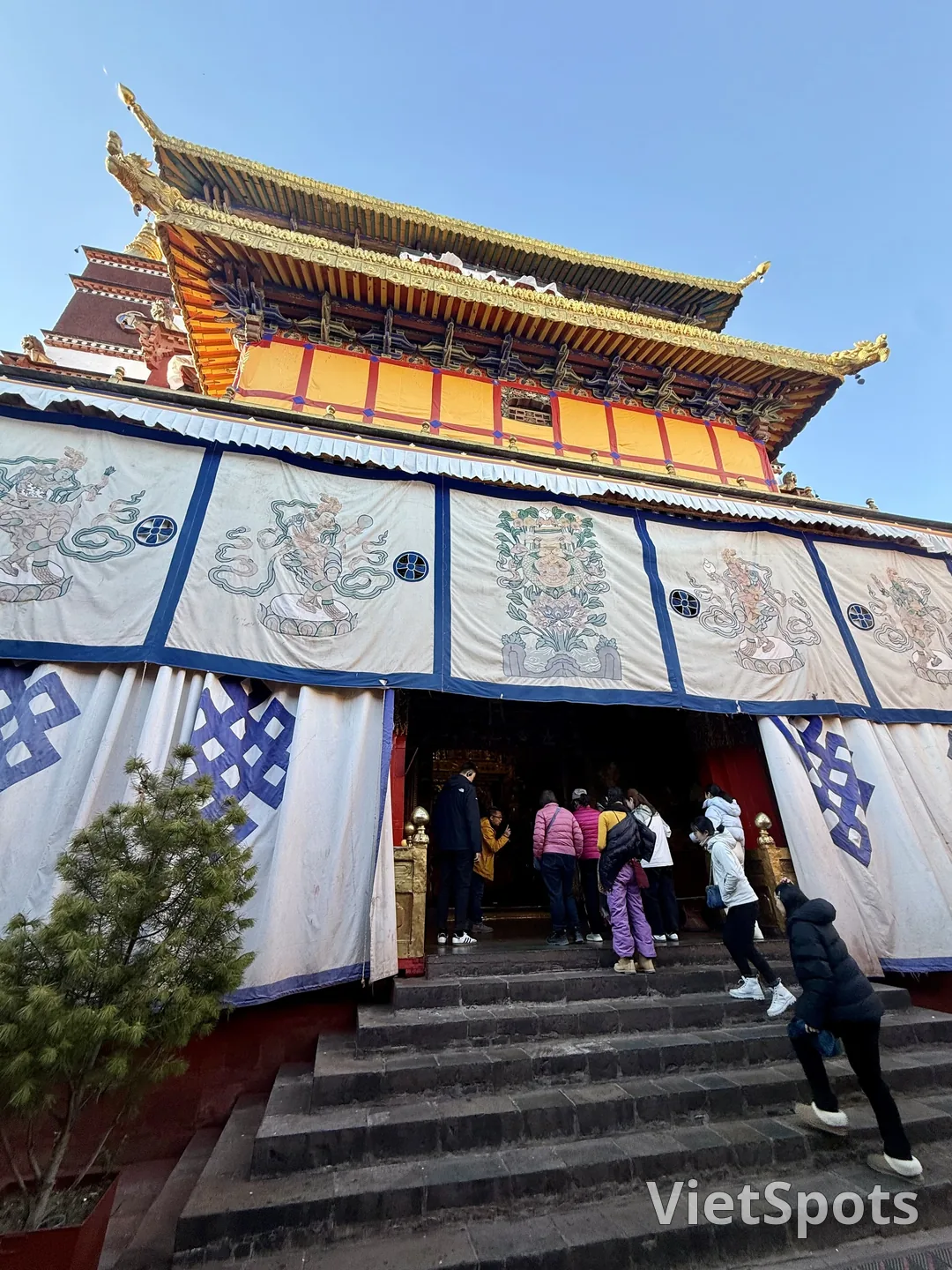
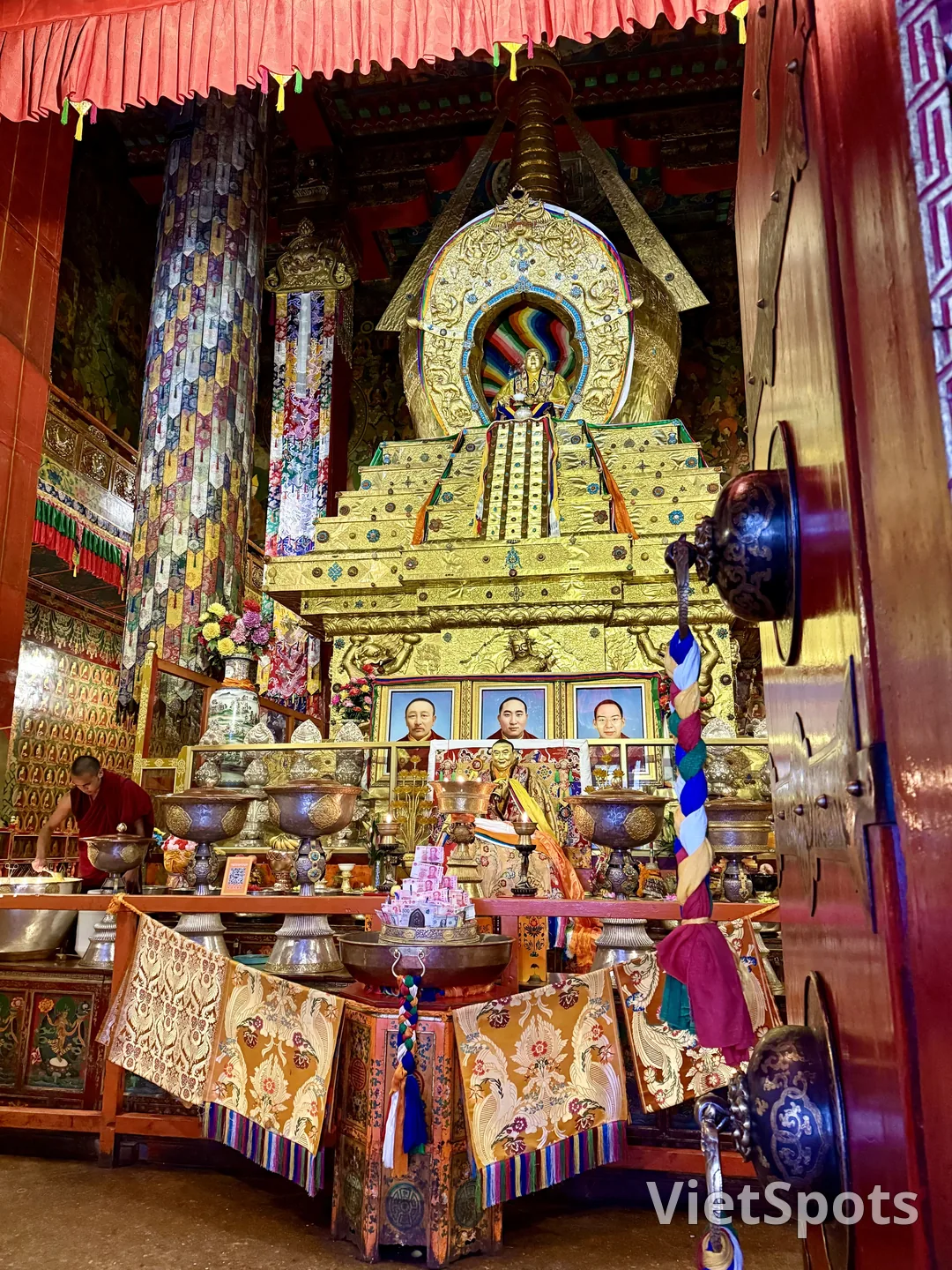
The ground in front of the hall is paved with turquoise, forming a pattern of full-body prostration.
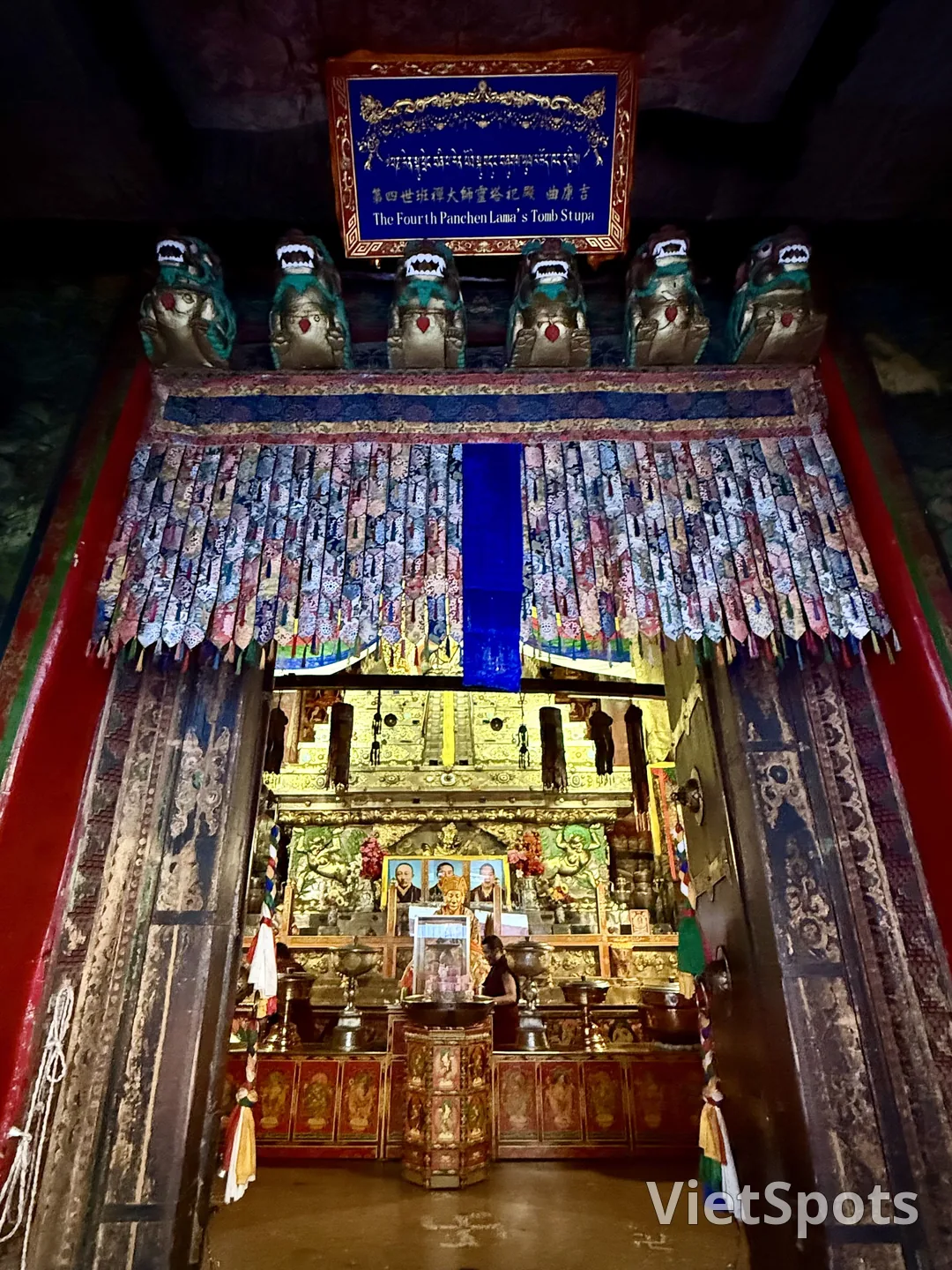
Because the temple closes at six o'clock, it was already getting dark by the time we visited, but the monks still thoughtfully let us see the whole thing. The Fourth Reincarnation's Stupa - Chökhang Gyi
5th-9th Century Stupas × Cultural Revolution Stories × Golden-Roofed Labrang Before reaching the joint burial stupa, you will pass by a golden-exteriored Labrang, symbolizing power, and also reminiscent of the Potala Palace.
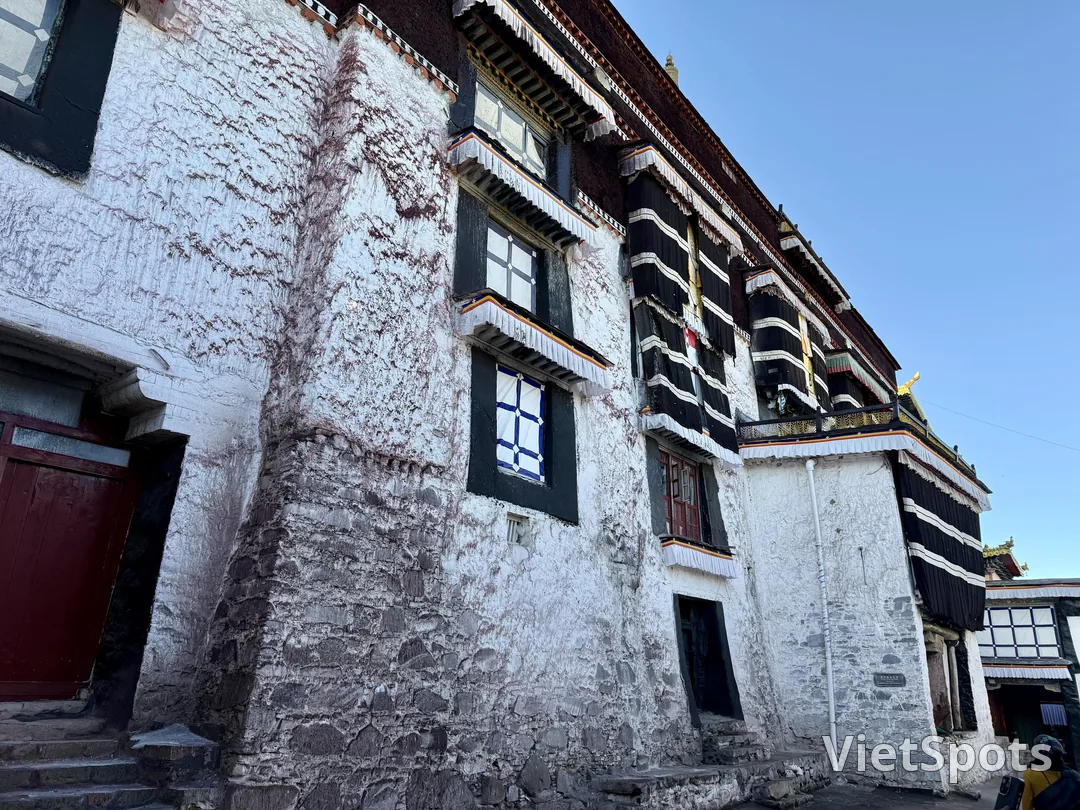
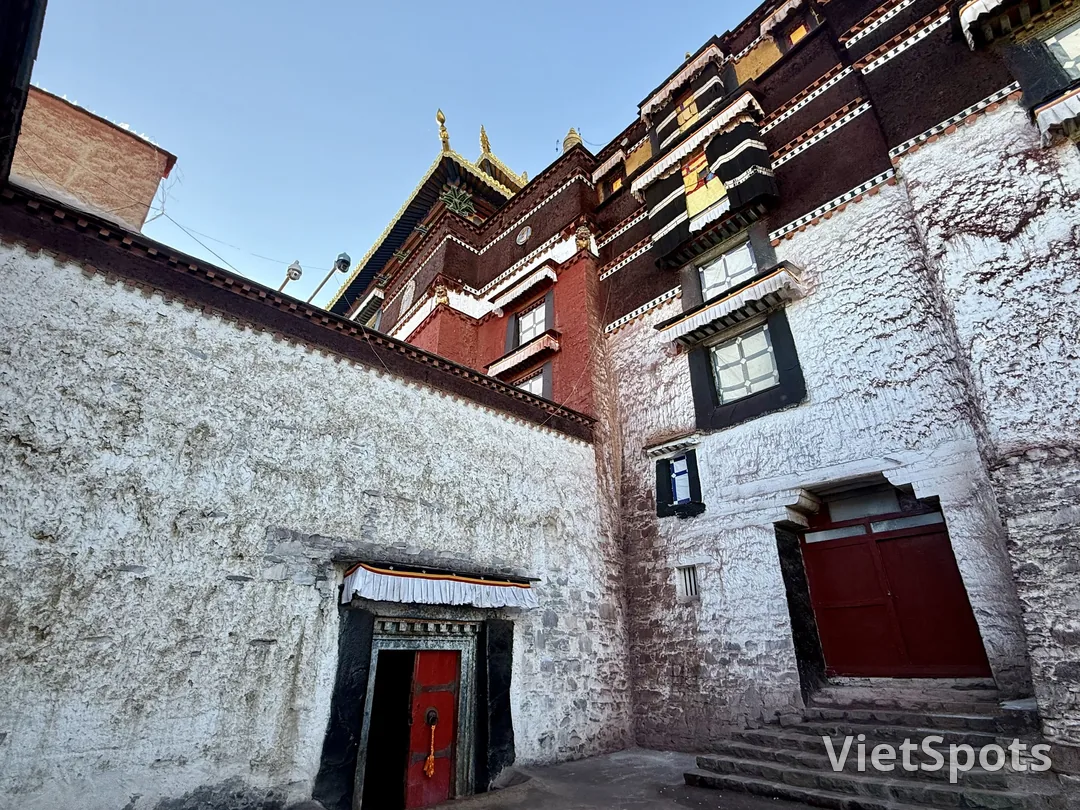
The tour guide shared a story from the Cultural Revolution era: Most of the Buddhist pagodas suffered destruction, but because the 4th Panchen Lama's pagoda held too important a status, it was disguised by monks as a grain storehouse and thus preserved. After the 10th Panchen Lama returned to Tibet, he collected the remains and had them rebuilt into a joint pagoda for the 5th through 9th Panchen Lamas, but he too, from overwork, passed away not long after. Exterior of the 5th-to-9th pagoda
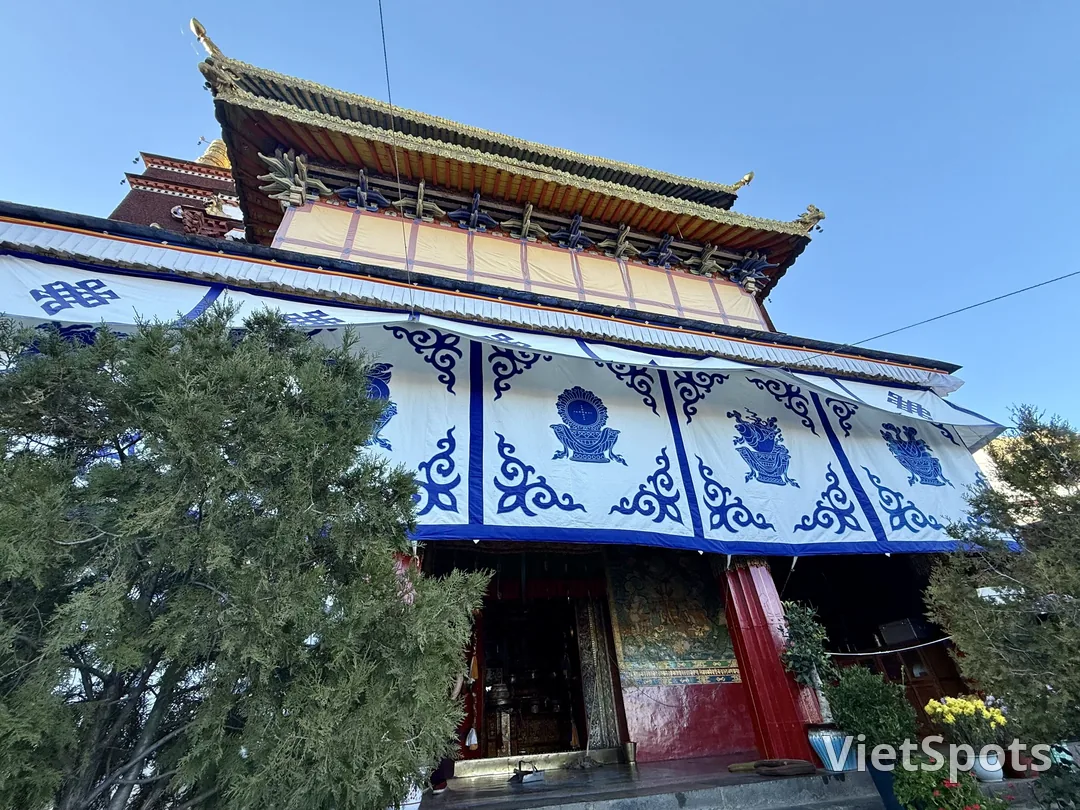
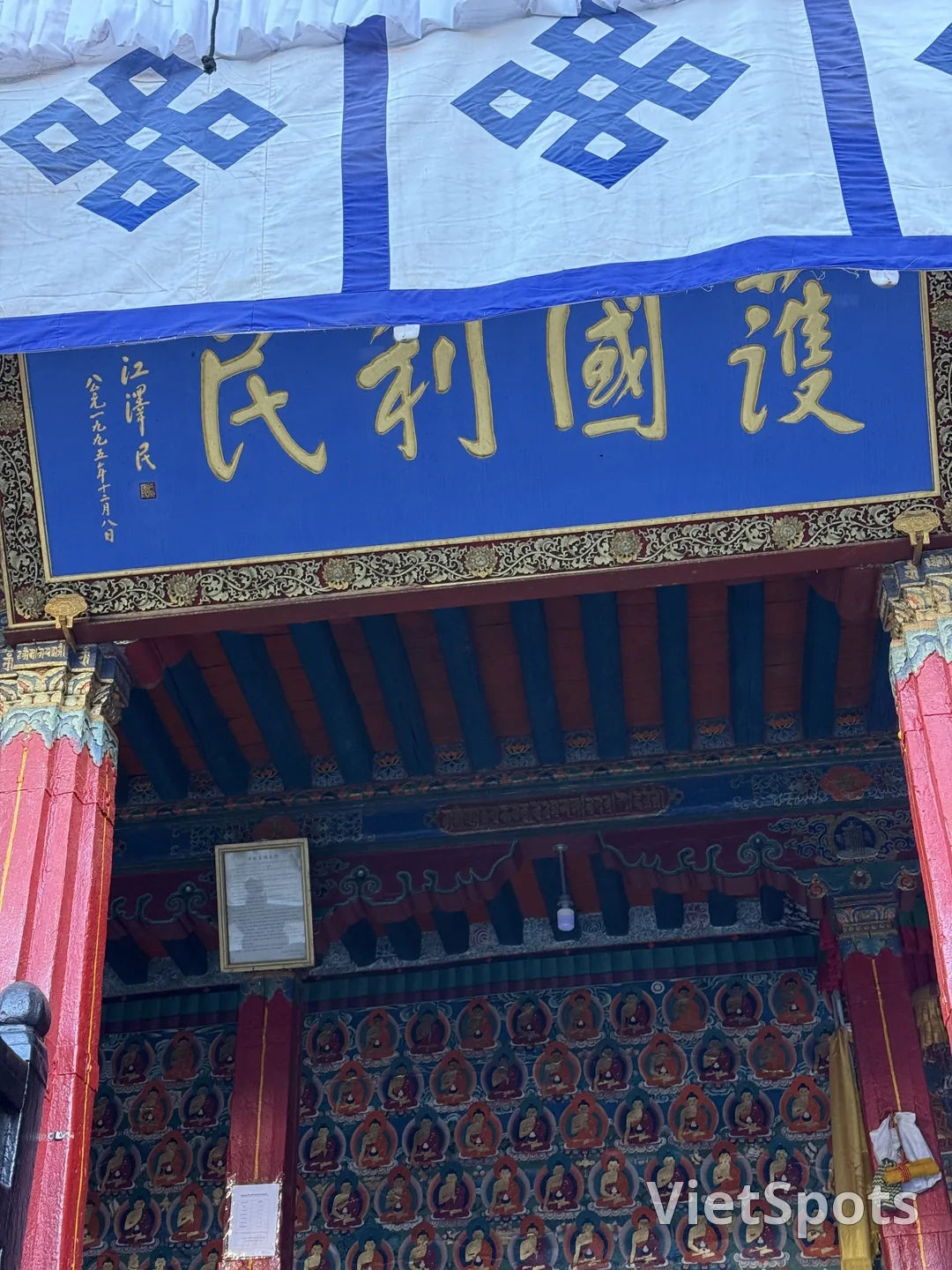
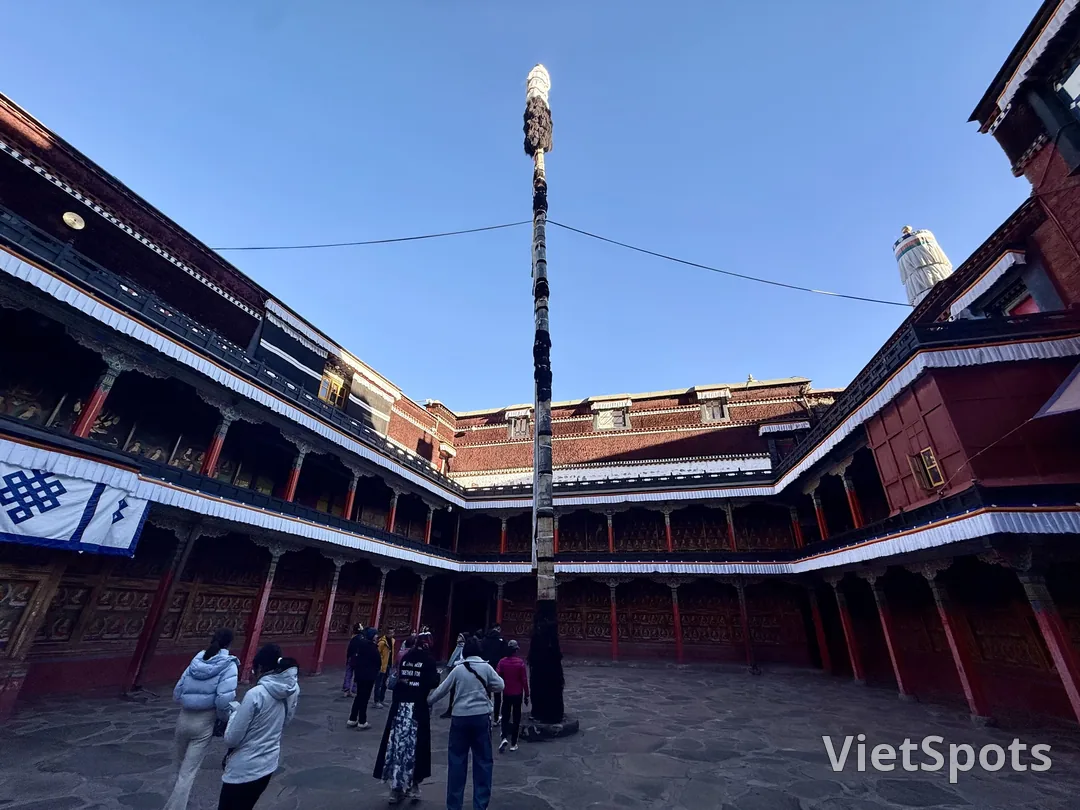
Tsuglagkhang: Site of the Sky Burial Platform × Victory Banner × Monks' Evening Chanting We finally arrived at Tsuglagkhang. The monks were chanting sutras, so we first listened outside as the guide explained. When entering the hall, the guide reminded us to pay attention to the black stone beneath our feet in the hall, which is the site of the sky burial platform from back then. Outside the main hall, at the sutra debate courtyard, there are two highlights: Jiang Zemin's inscription "Protect the Nation, Benefit the People" The Victory Banner: symbolizing the early victory of Buddhism over Bon in religious debate, and it still bears the hair from monks' tonsure ceremonies
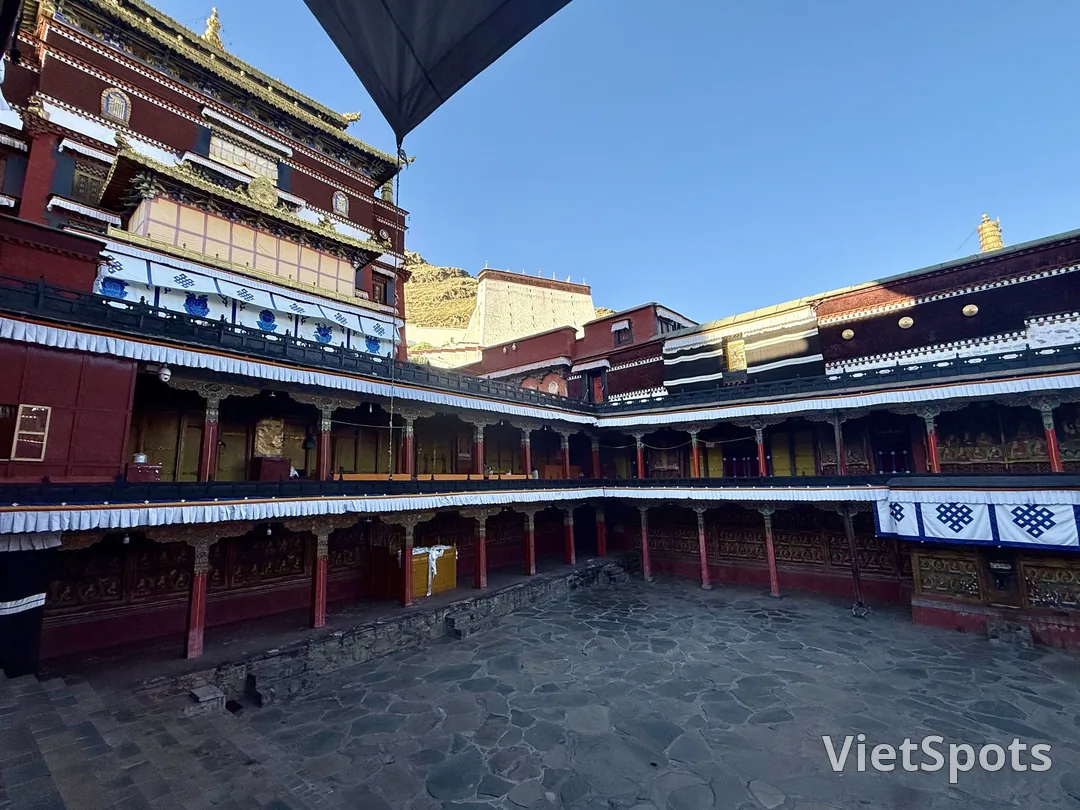
The whole visit takes about 2.5 hours.
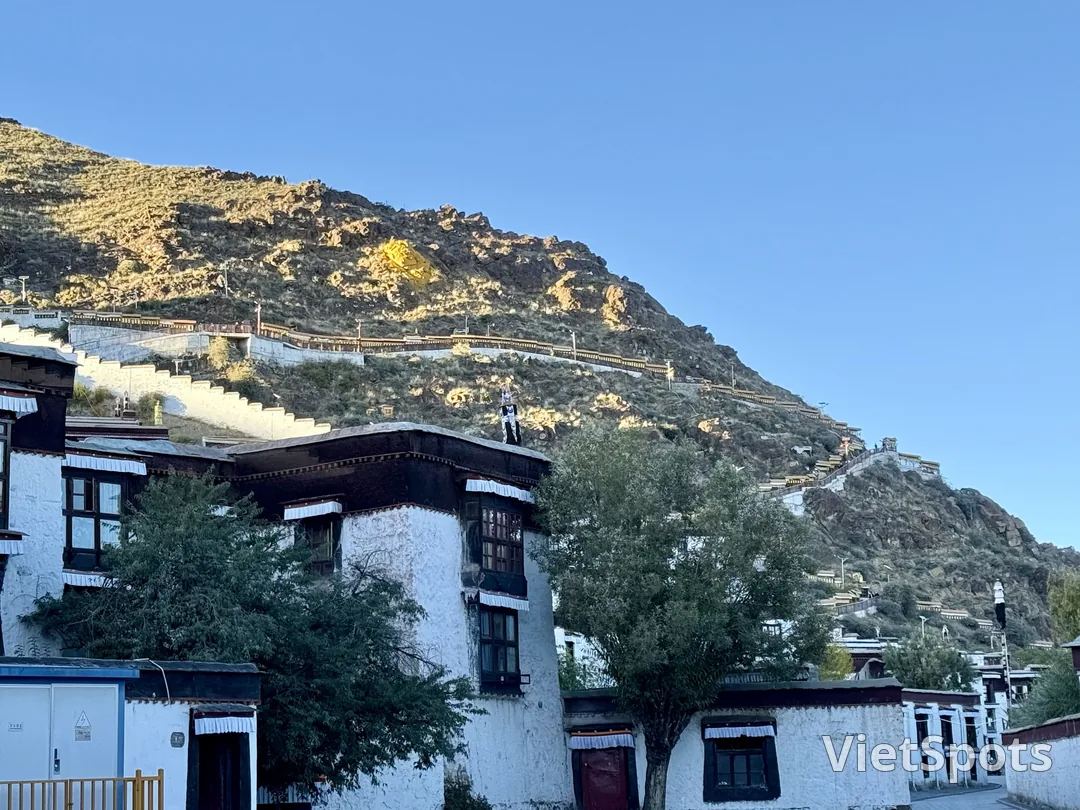
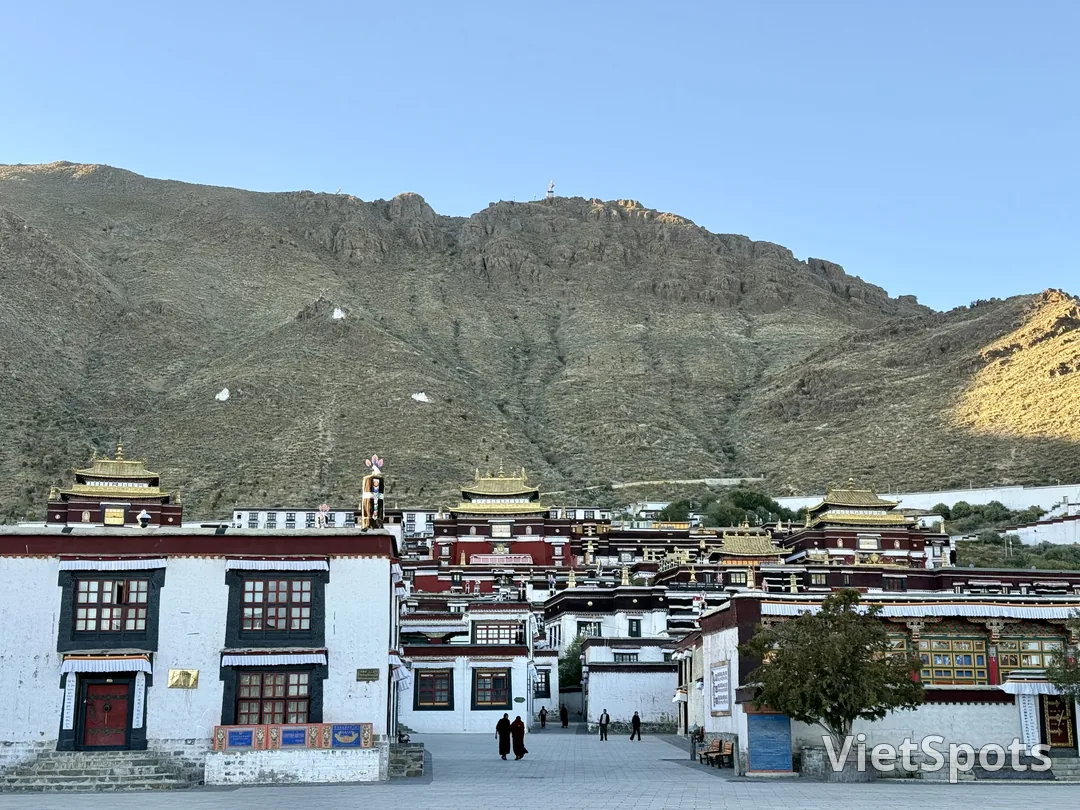
Nighttime in Shigatse: Tibetan cuisine, warm tea, and the warmth of the city After returning to the hotel to drop off our luggage, we went for a walk around the city. Mom bought some souvenirs at "Snack Have Ming.
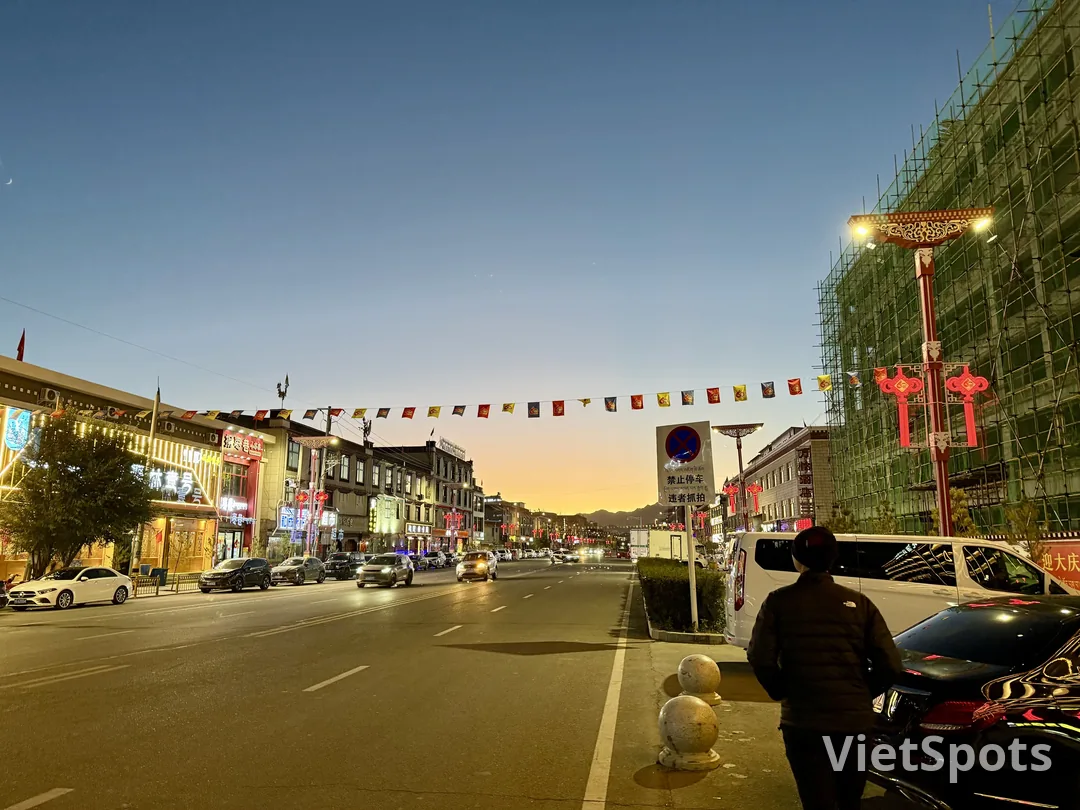
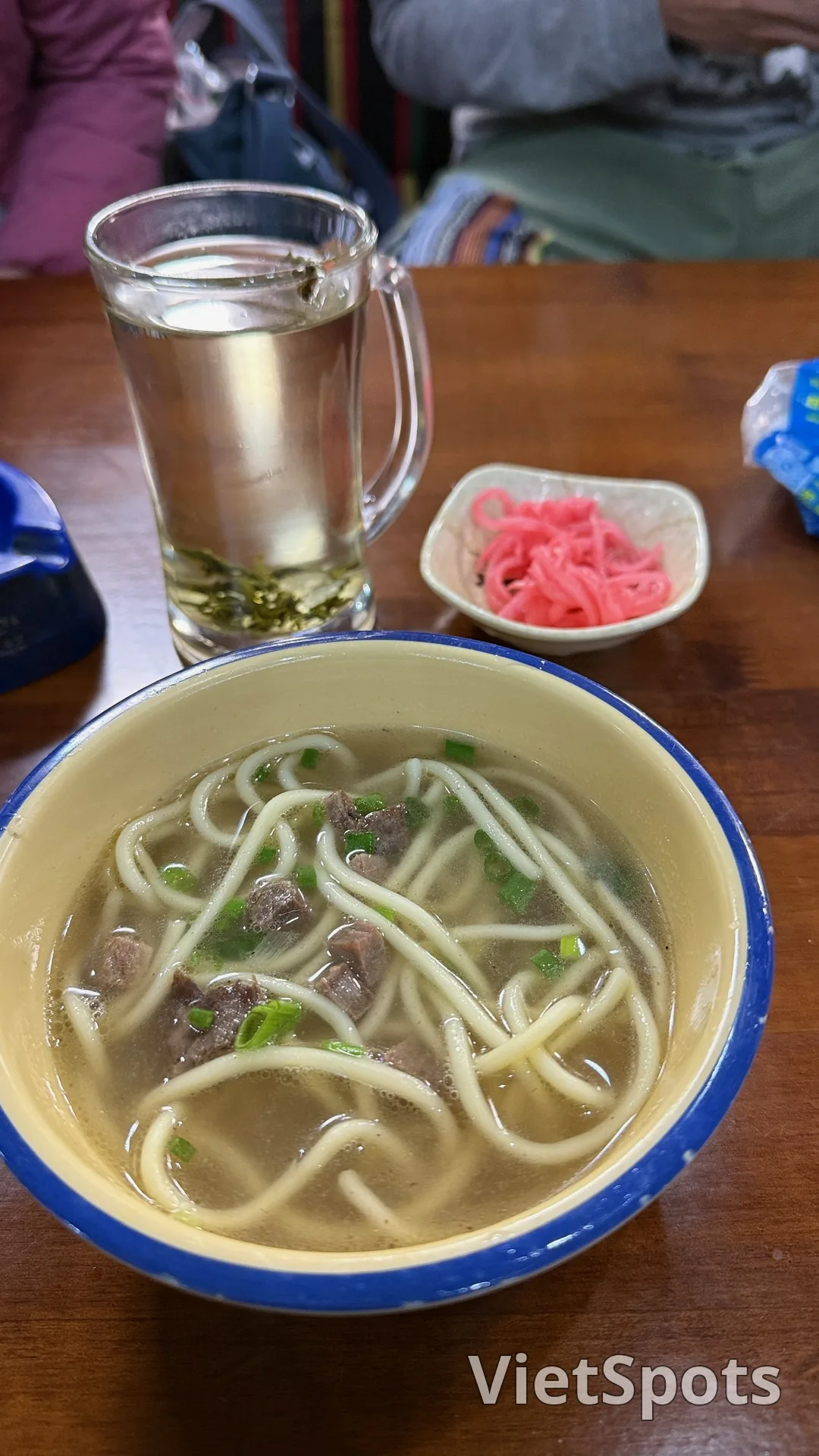
Dinner was at a Tibetan restaurant, with heavy curtains blocking out the cold wind, while the interior was warm and full of atmosphere. We ordered four main dishes, and the restaurant even treated us to jasmine tea, and the total for four people was only 65 RMB — both the price and the taste were a wonderful surprise.
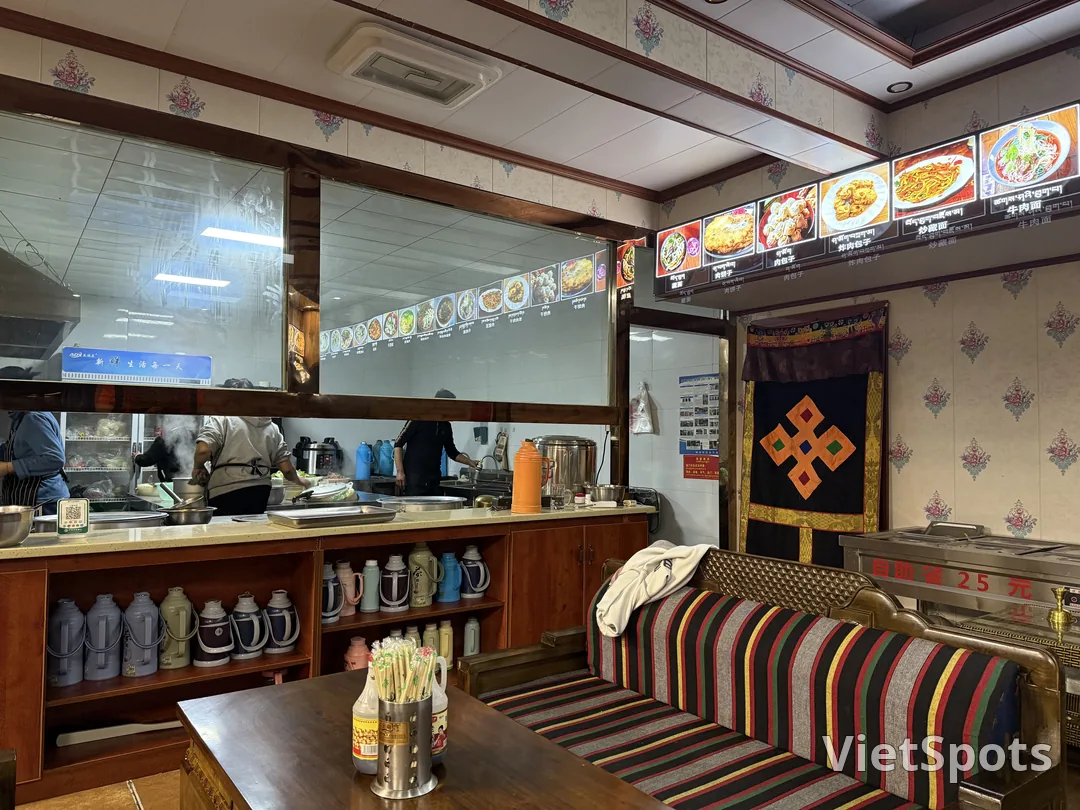
I returned to the hotel a little after nine in the evening to pack and get ready to rest. Tomorrow is the journey back to Lhasa. Summary: Descending from the roof of the world, returning to the rhythm of everyday life Although today wasn't as shocking as yesterday, it added an even more complete layer to the journey. The grandeur of nature inspires awe, the tranquility of religion brings understanding, and the warmth of daily life brings us closer to this land. Tomorrow, we will continue toward Lhasa, writing the final chapter of this Tibet journey.
Book Travel in English on VietSpots
- 🎁 Sign up and get 16 Welcome Pack coupons — e.g. Motorbike Rental 45%
- 👑 Member tier discount up to 15% on site (Silver 5% · Gold 15%)
- 🛂 Auto-fill arrival card📶 Compare lowest eSIM prices🚻 Find toilets
Comments