

[Lhasa, Tibet] Potala Palace × Jokhang Temple: A Day Walking into the Heart of Faith


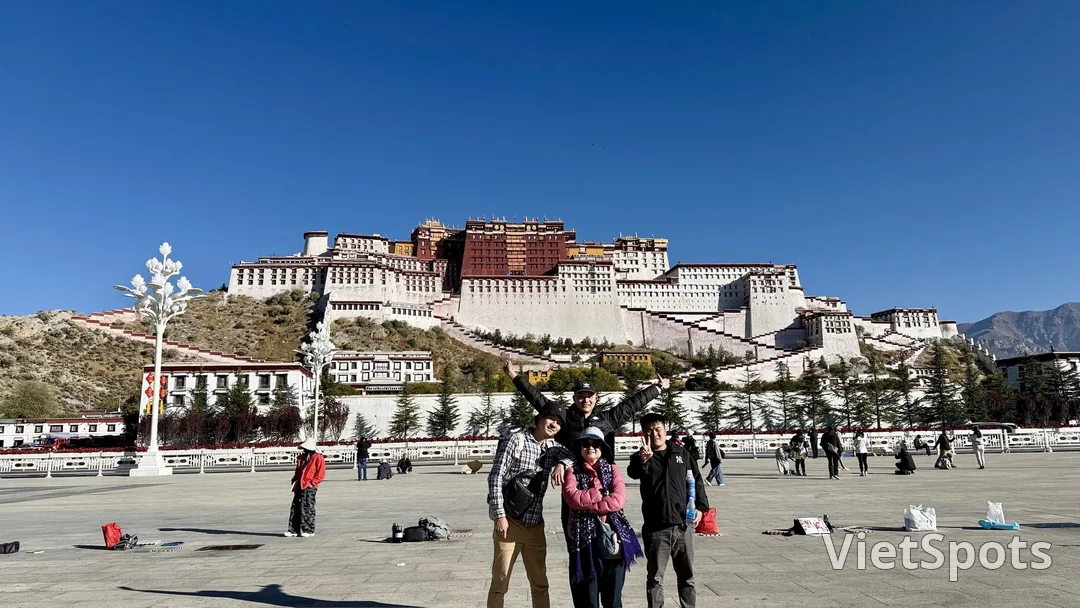
I didn't sleep too soundly last night — my watch even recorded my sleep blood oxygen at only 81%. But waking up this morning, I didn't feel particularly tired, so after a quick wash-up I headed to the restaurant for breakfast. Although the options weren't very abundant, there were enough vegetables, fruit, and protein — quite satisfying for a body adjusting to the plateau on its first day. Today's meeting time is 9 a.m., and we're about to set off for Lhasa's two most classic sights: the Potala Palace × Jokhang Temple. Visiting the Potala Palace requires a reservation in advance, and today we're scheduled to enter at 11 a.m. 🗓 Today's Itinerary Potala Palace outdoor photography (Yaowang Hill, Potala Palace Square) → Potala Palace visit (enter from the front hill, exit from the back hill) → Jokhang Temple → Free time at Barkhor Street → Night photography of the Potala Palace's reflection Yaowang Hill × Potala Palace Square: the most classic spot for Potala Palace photos Before officially entering the Potala Palace, we will first go to the nearby Yaowang Hill and Potala Palace Square to take photos.
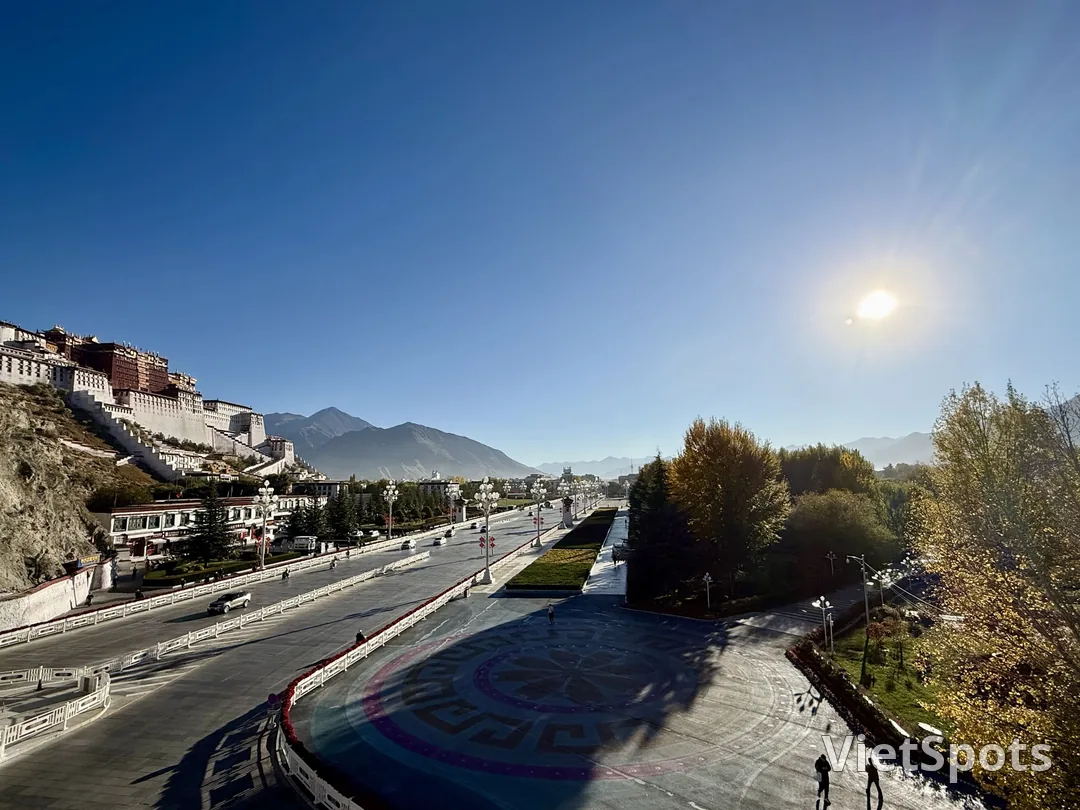
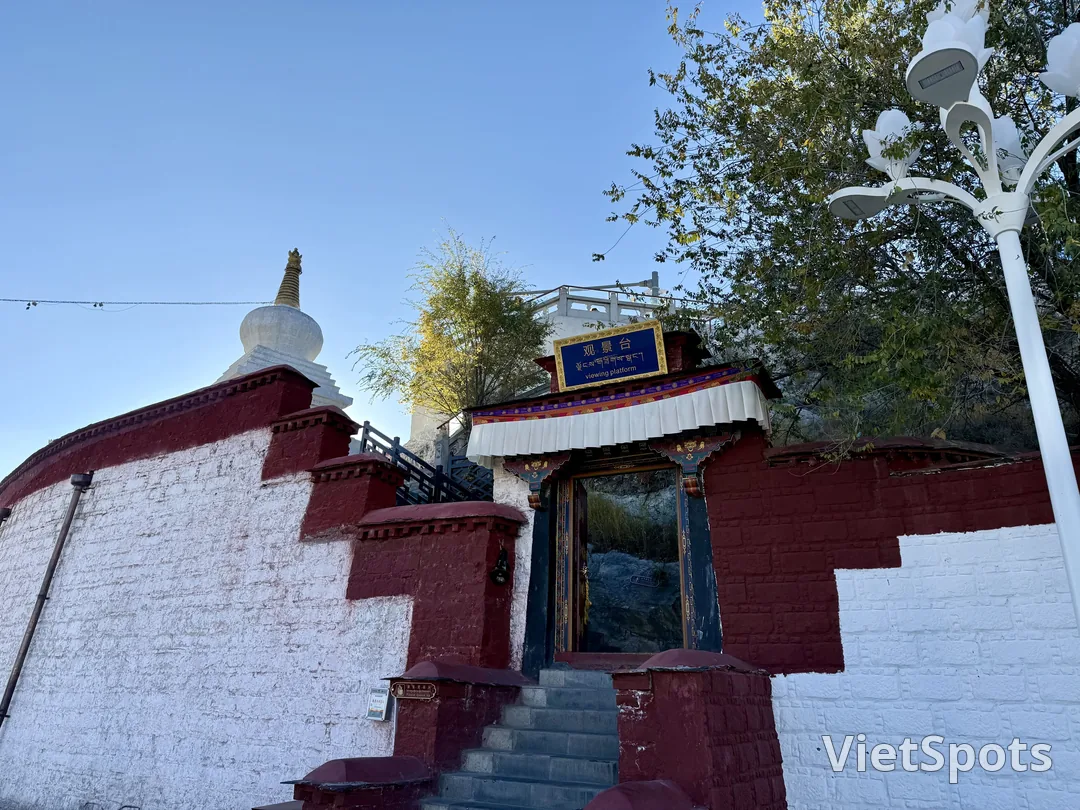
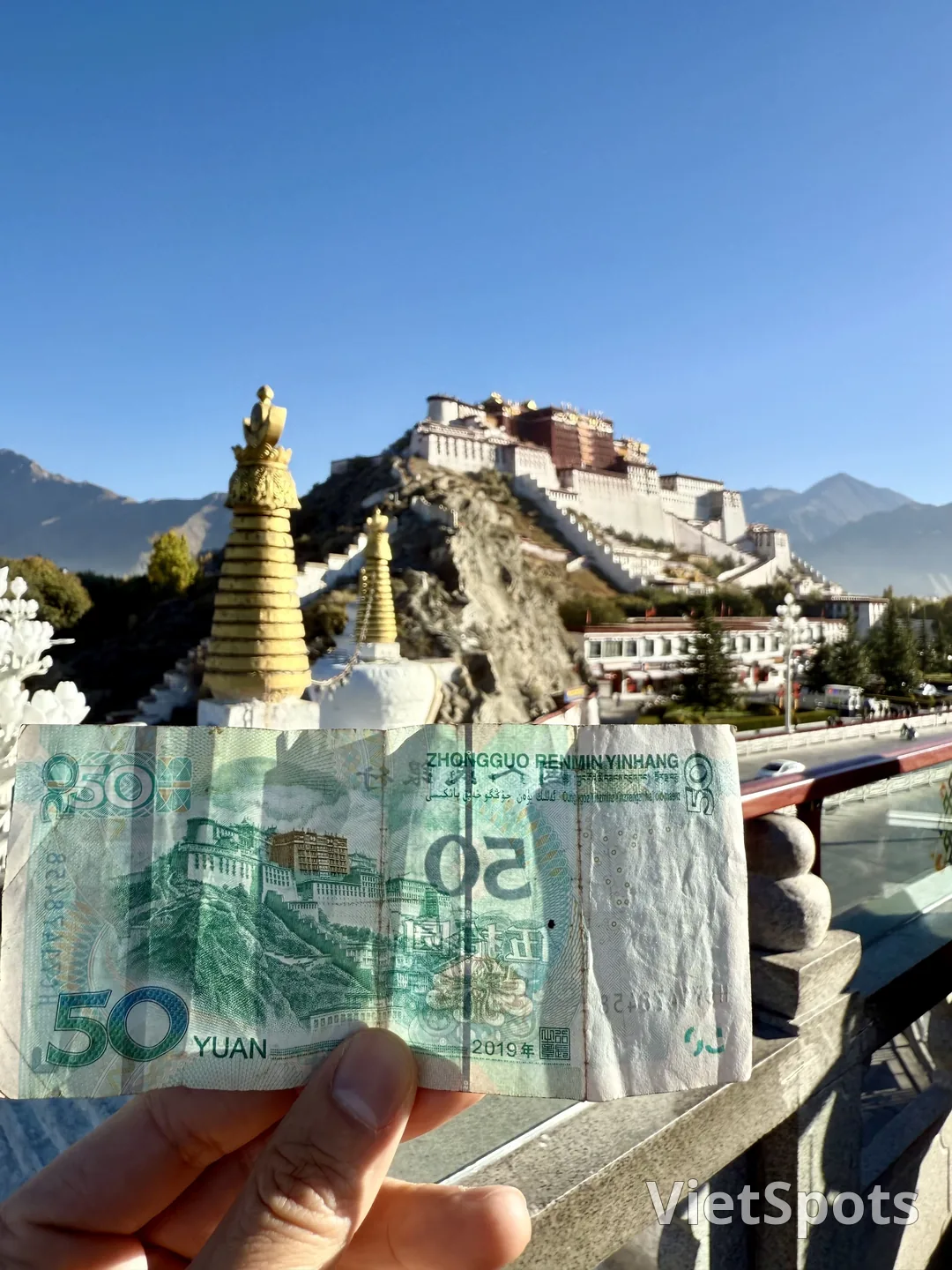
▸ Two Main Highlights of Medicine King Mountain The Story of Princess Wencheng and the White Pagoda Legend has it that after Princess Wencheng built the city gate, Tibetans believed it severed the dragon vein, so she built a white pagoda on top of the city gate to symbolize maintaining the integrity of the dragon vein. 50 Yuan RMB Photography Spot Many visitors take out a 50 yuan RMB note, find the perfect angle where the banknote and the Potala Palace frame together in one shot, and take their photo—it's a must-do little ritual for Lhasa tourism.
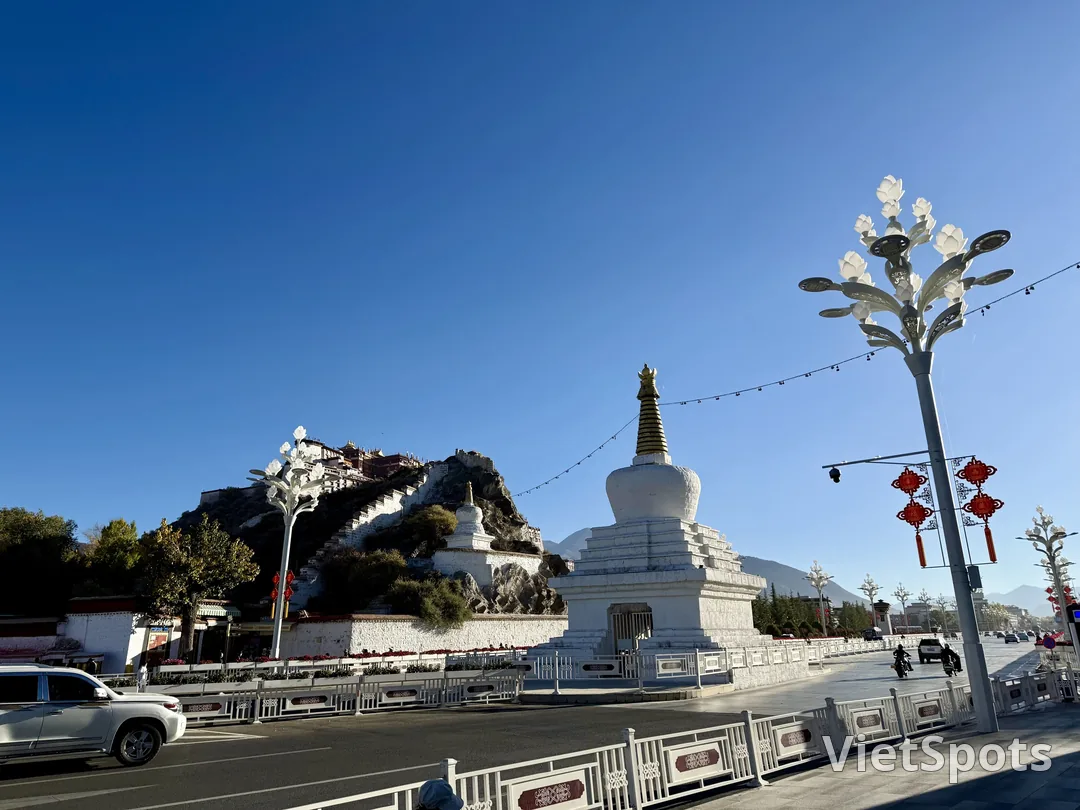
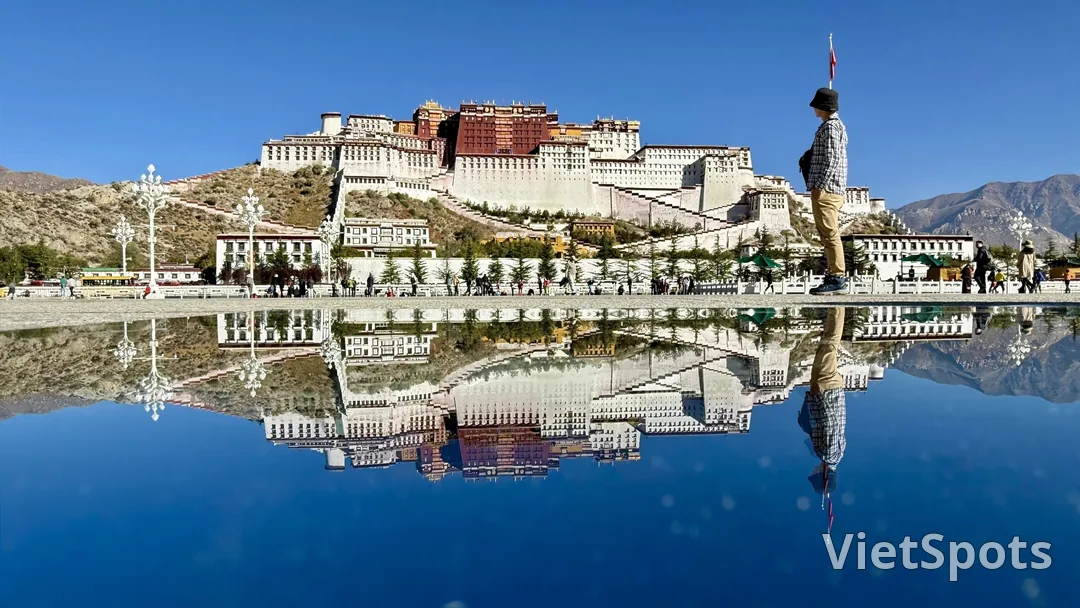
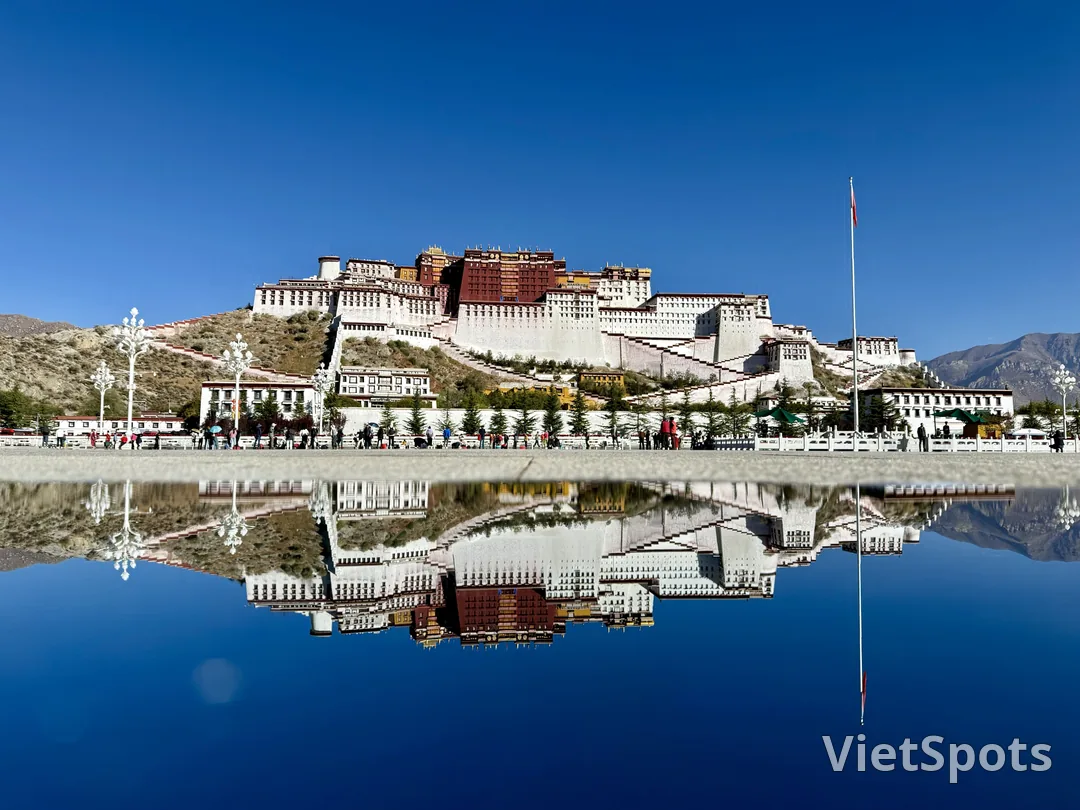
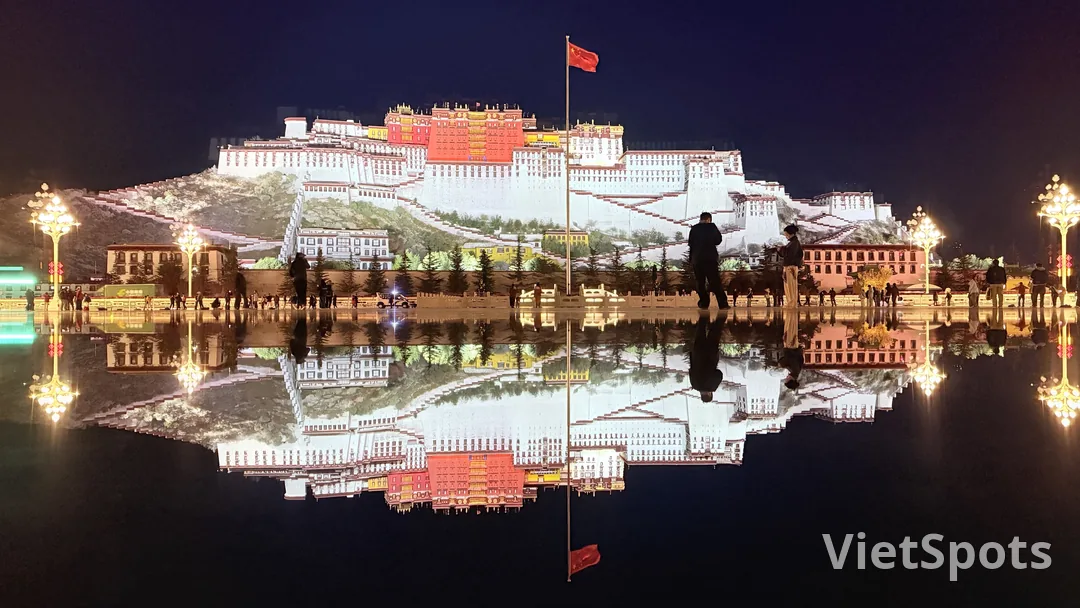
▸ Potala Palace Square Reflection The square allows you to photograph the front facade of the Potala Palace, and you can also use the mirror on the ground to capture reflection photos. The mirrors provided by vendors and the reflective surface of the floor itself don't differ much; the difference lies in how much cement road surface is at the junction areas.
Today Potala Palace happened to be undergoing wall repairs, so the 200 RMB entrance fee was waived—an unexpected bit of good fortune during our trip. Potala Palace: Step into the Red Palace and White Palace, Experience the Core Memory of Tibet Our tour guide Yong Ge used to be a teacher, and he explained things with exceptional clarity, making the history and stories of Potala Palace incredibly engaging. ▸ The Past and Present of Potala Palace Originally built by Tibetan King Songtsen Gampo, it was called the "Red Mountain Palace." After the reconstruction by the Fifth Dalai Lama, it became the political and religious center of Tibet. The architecture combines 'palaces, Buddhist temples, and stupas' in one, forming the palace-fortress architectural complex as it stands today. ▸ The Symbolism of White Palace × Red Palace White Palace: The administrative and living space of the Dalai Lama Red Palace: The stupas of successive Dalai Lamas and religious ceremony venues From the foot of the mountain looking up, you can see many volunteers busy painting the exterior walls.
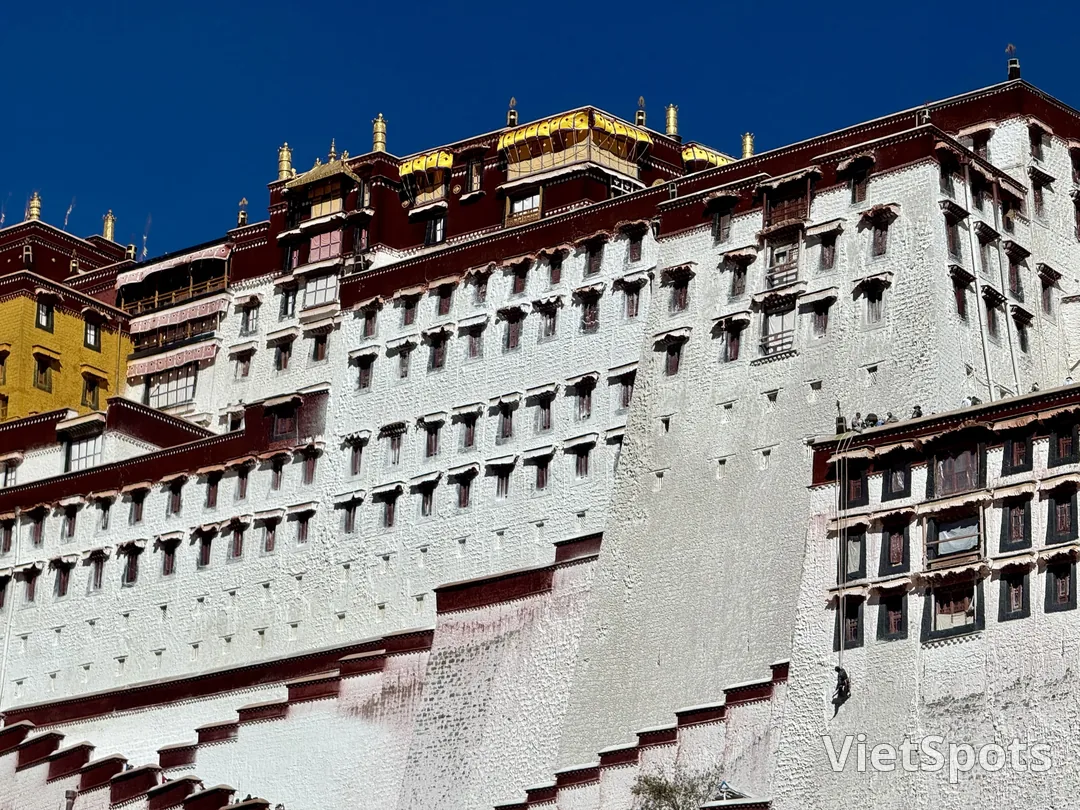
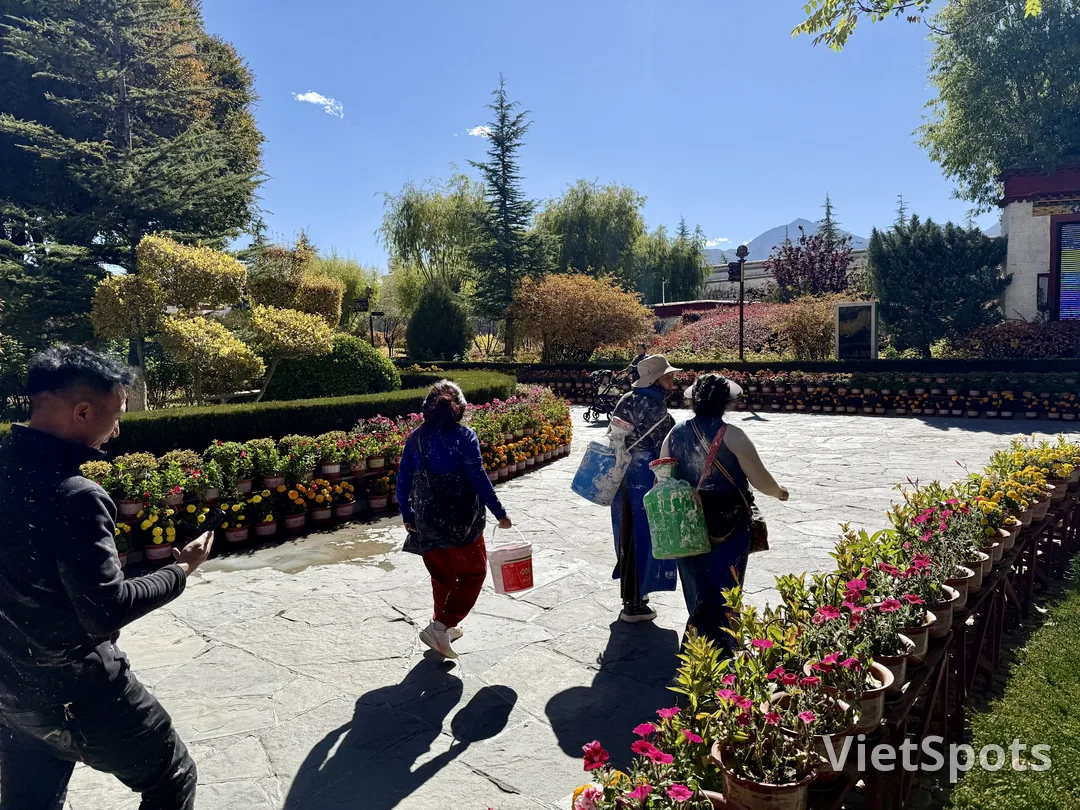
Brother Yong said that for Tibetans, being able to volunteer at the Potala Palace once in a lifetime is a supreme honor, but it is also full of danger, and every year people die in the line of duty because of it. ▸ The climb from 3650 → 3800 We walked all the way from an altitude of 3650 meters to 3800 meters.
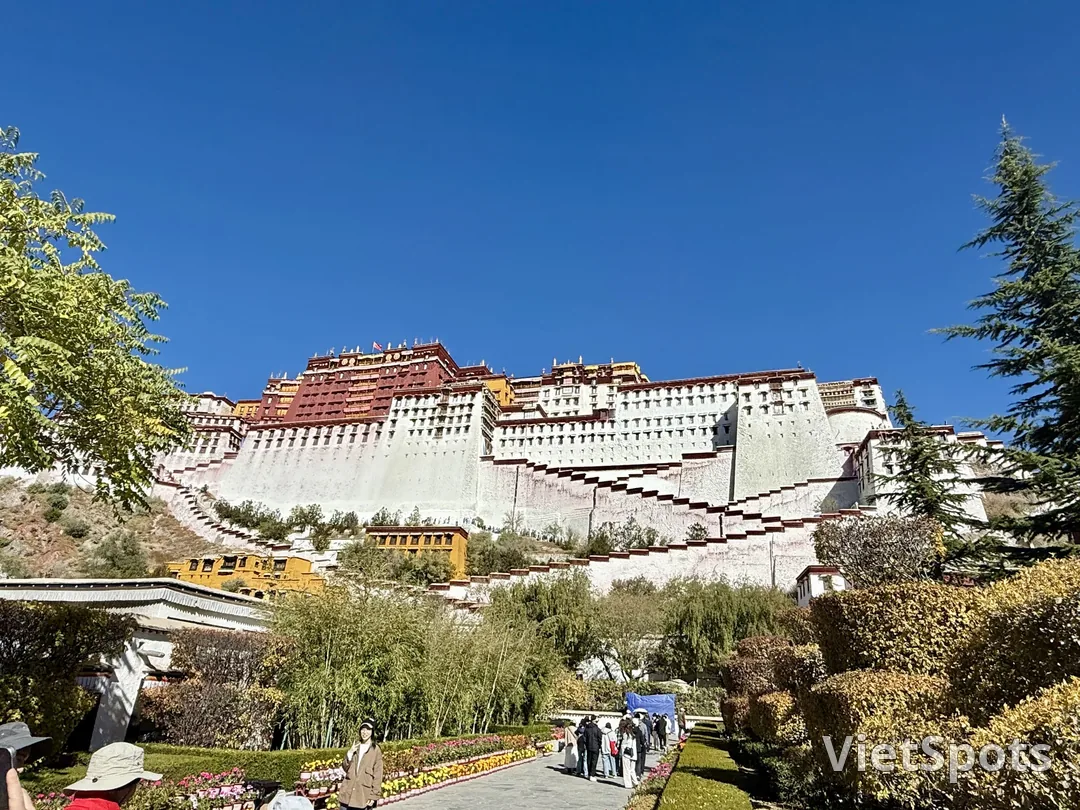
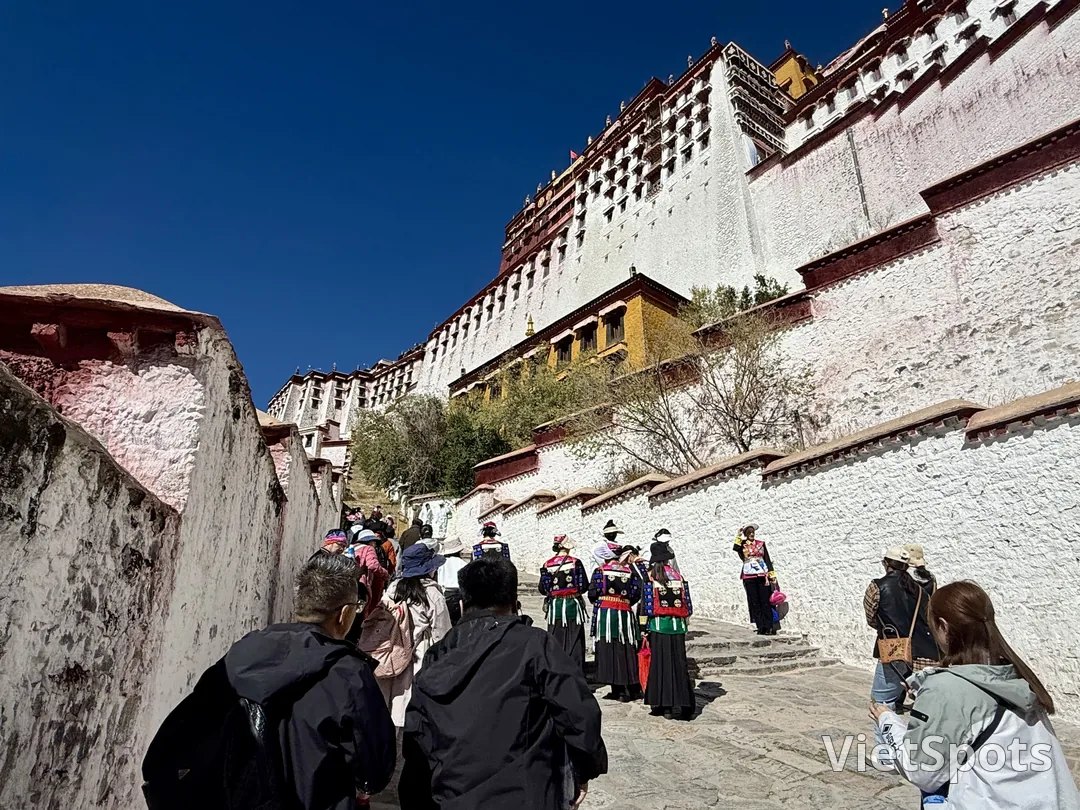
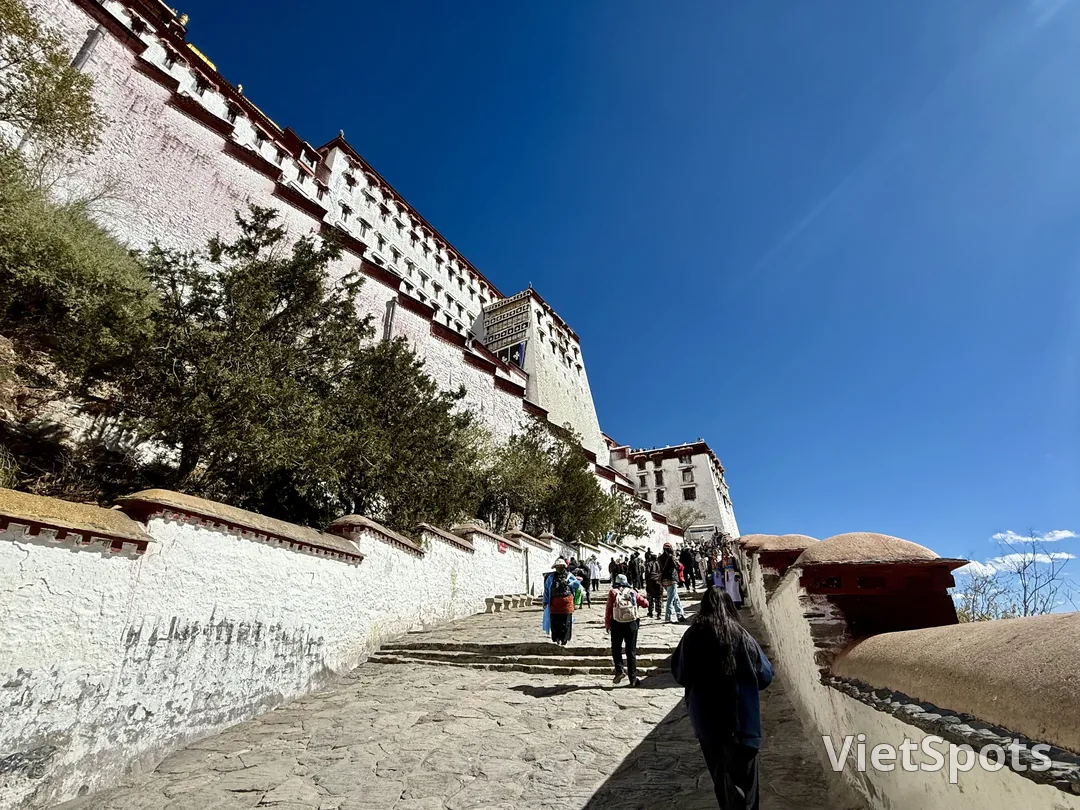
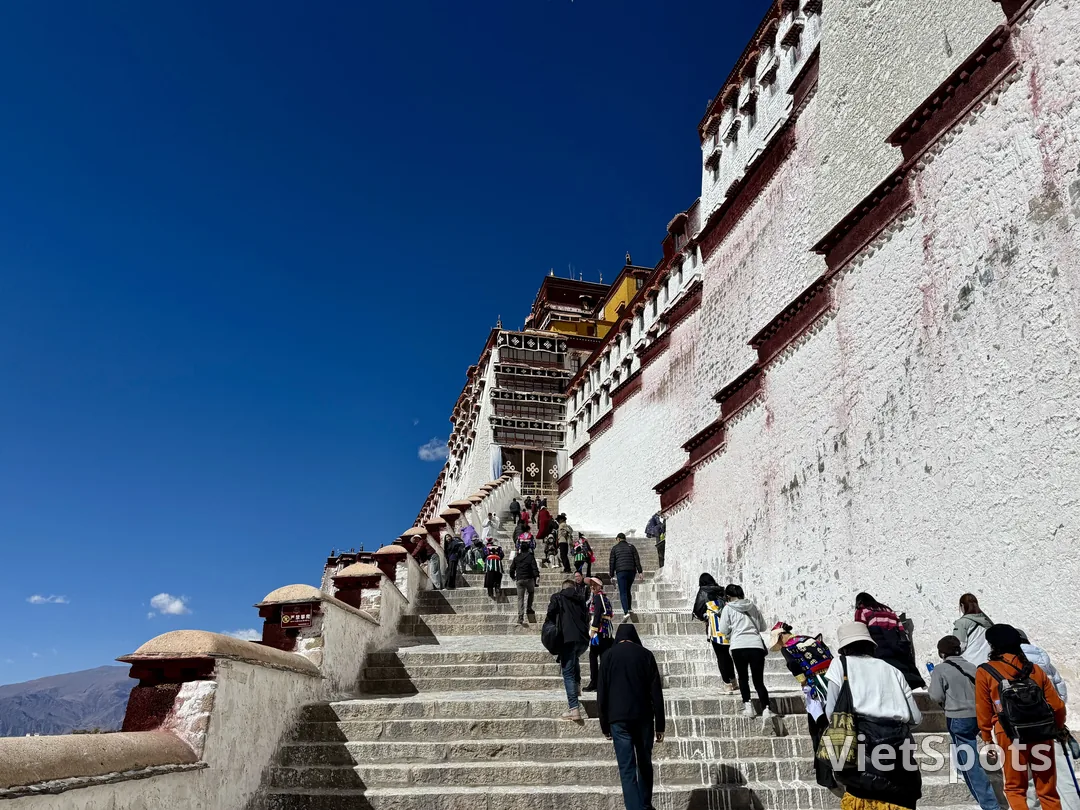
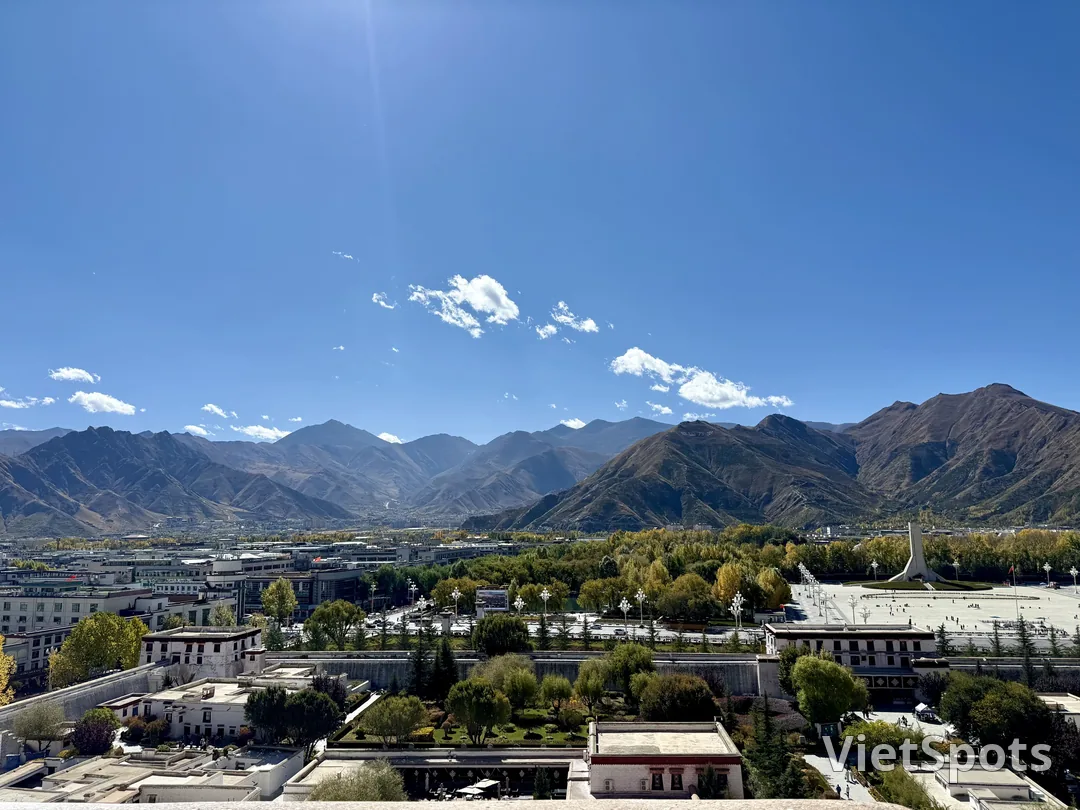
The first stop is the wordless stele erected to commemorate the completion of the Red Palace, and further up is the "Horse-Mounting Stairway," where in ancient times officials of the fourth rank and above could ride their horses into the palace.
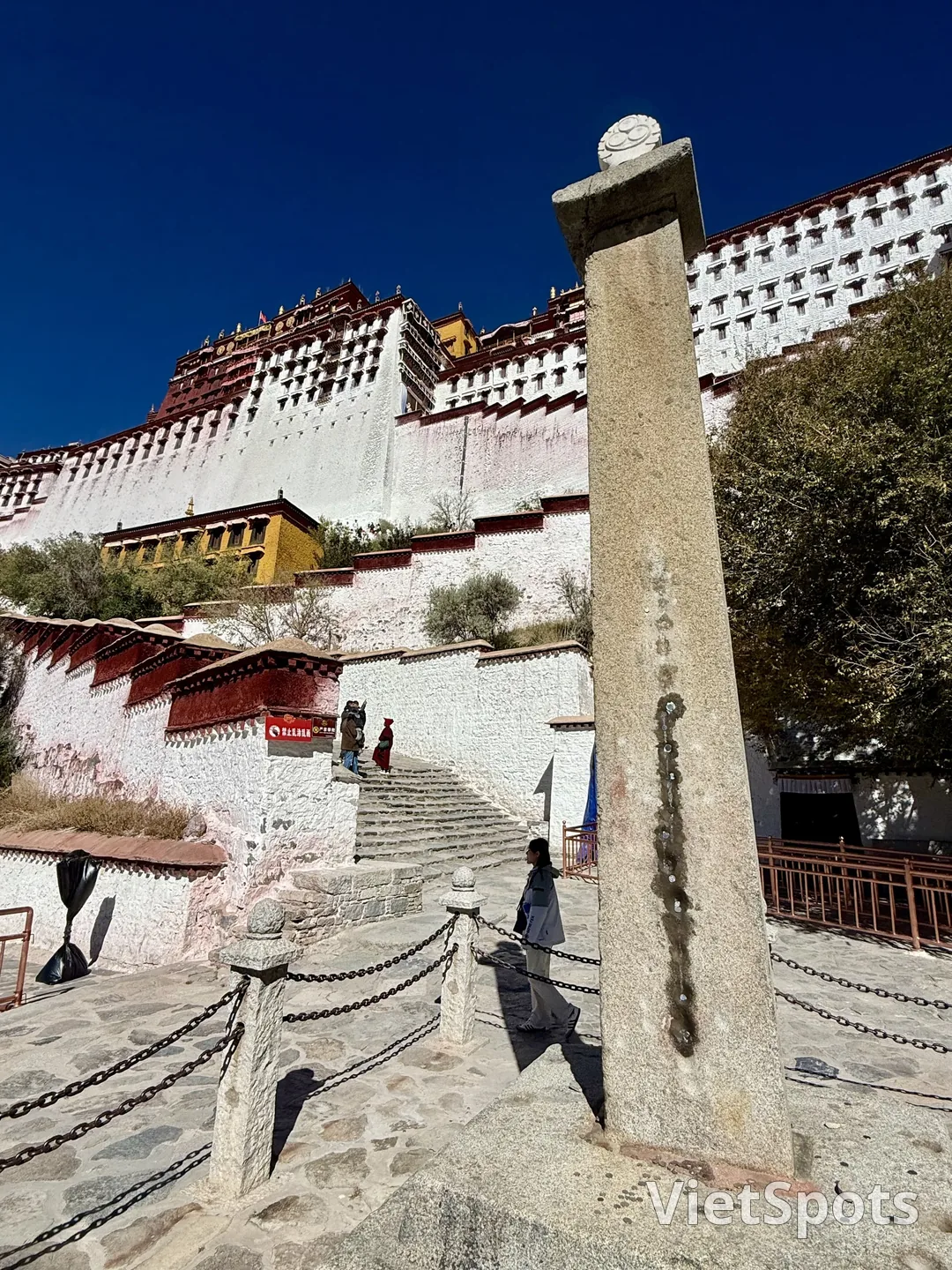
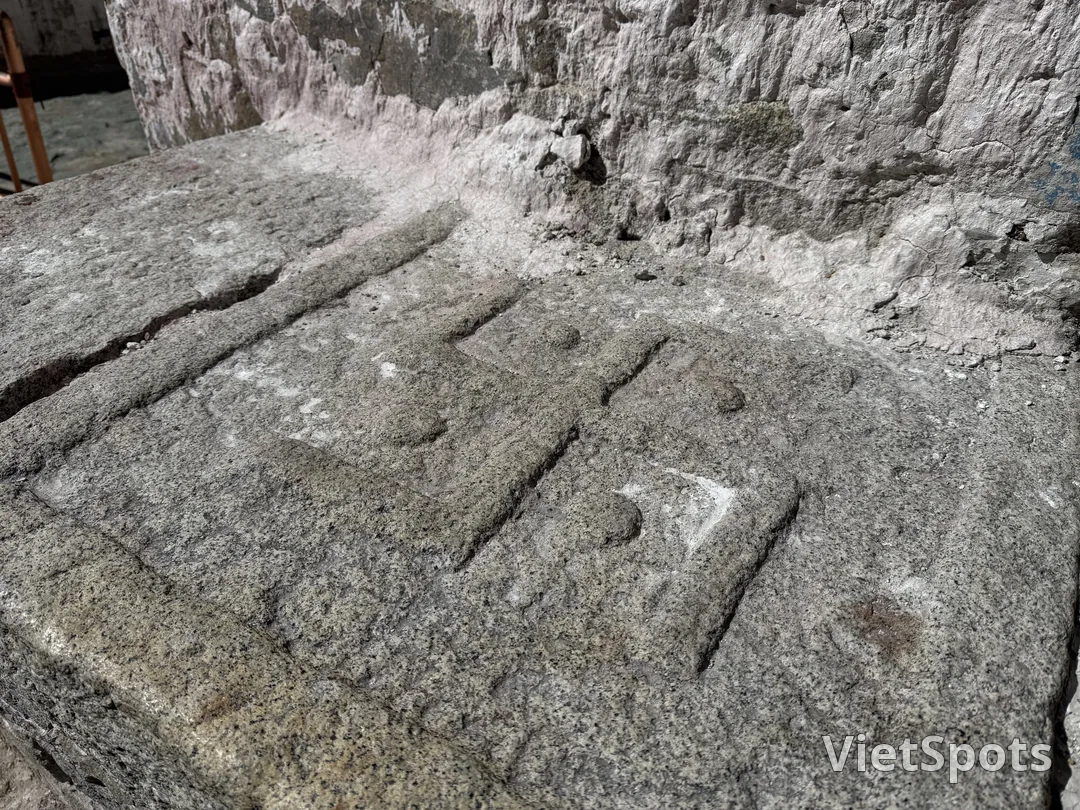
Along the way, many people were seen wearing ethnic costumes as they climbed the mountain on pilgrimage, becoming a unique sight on the steps of the Potala Palace.
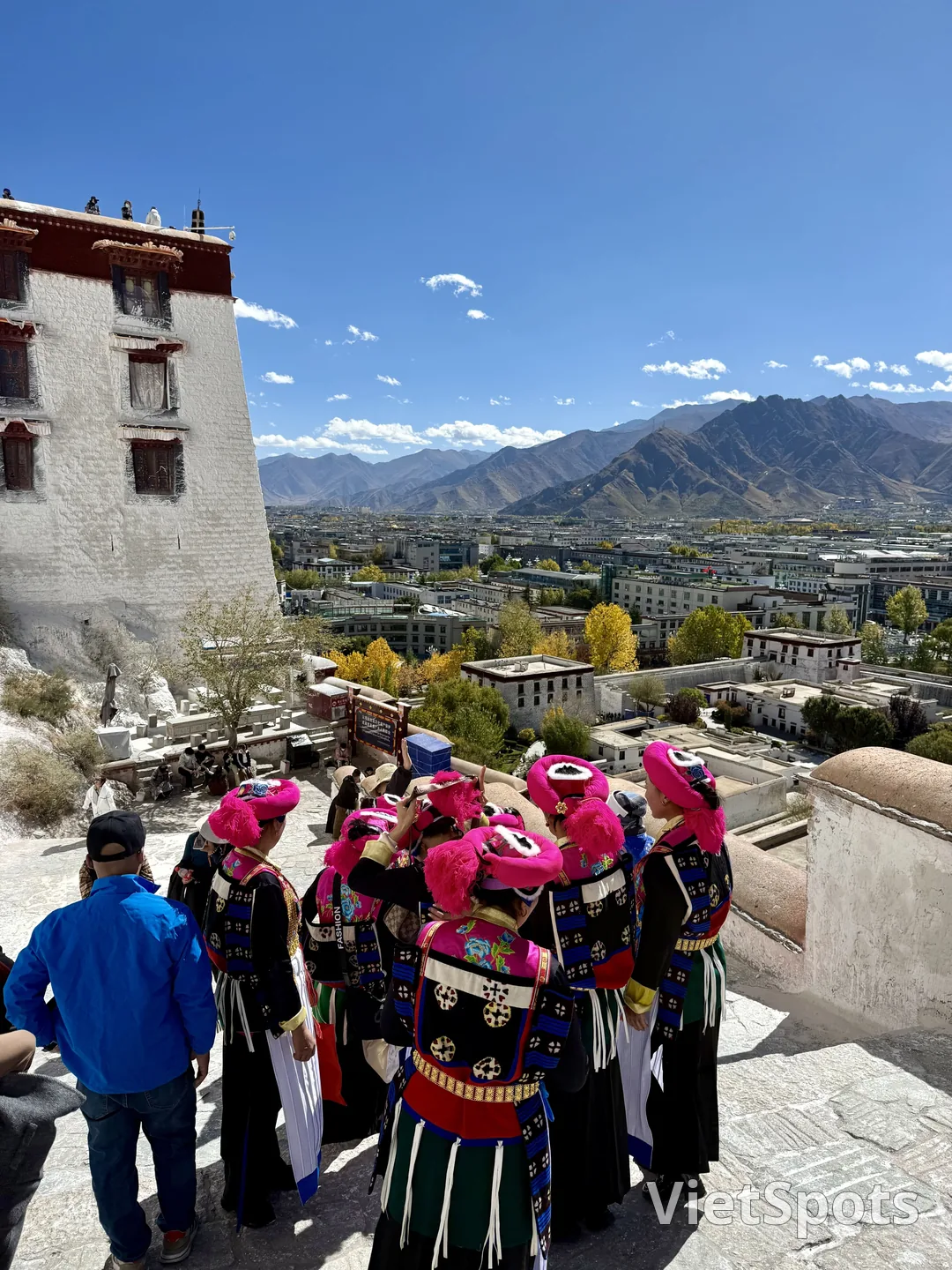
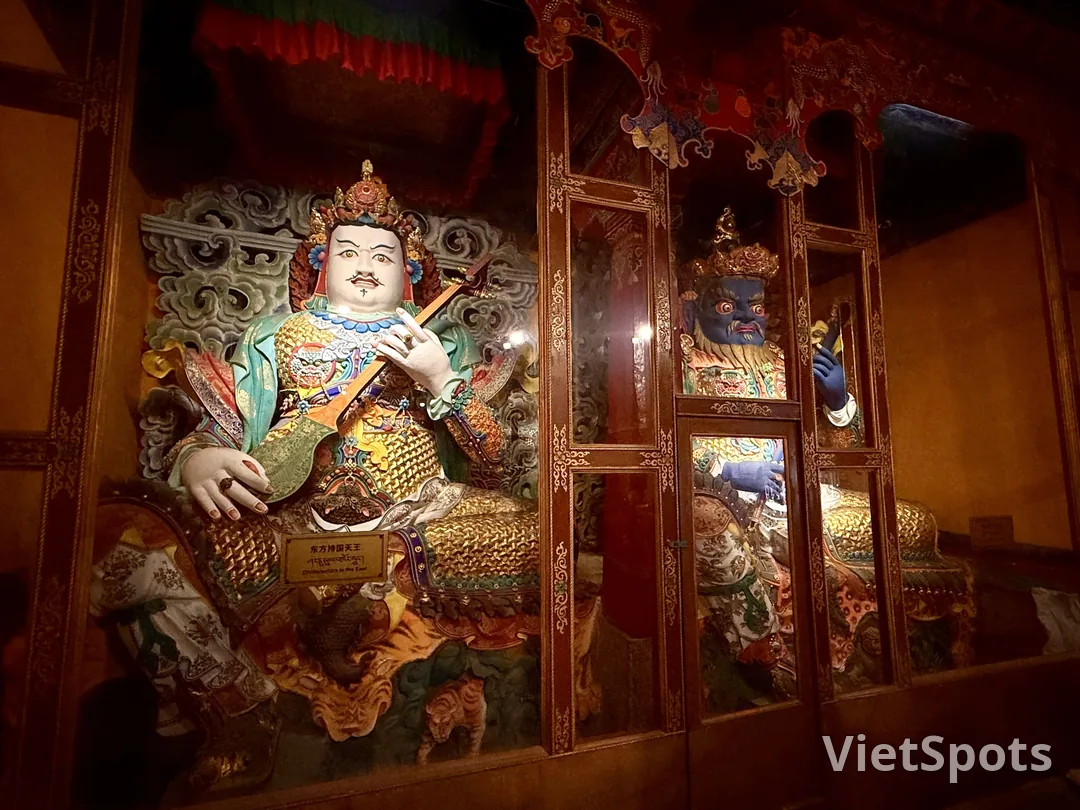
▸ No Photography After Entering the Palace Once you pass through the front hall and the Four Heavenly Kings, you'll enter the Red Palace area. Photography is not permitted inside. Your tour guide's explanation will be the main focus.
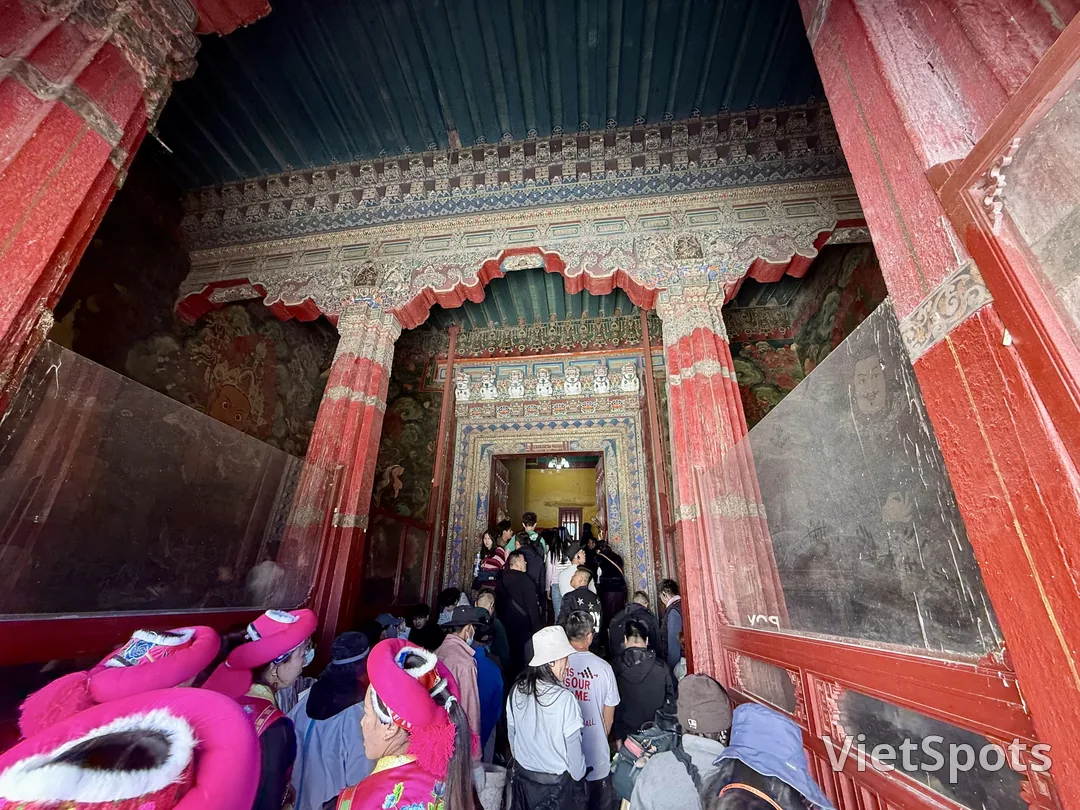
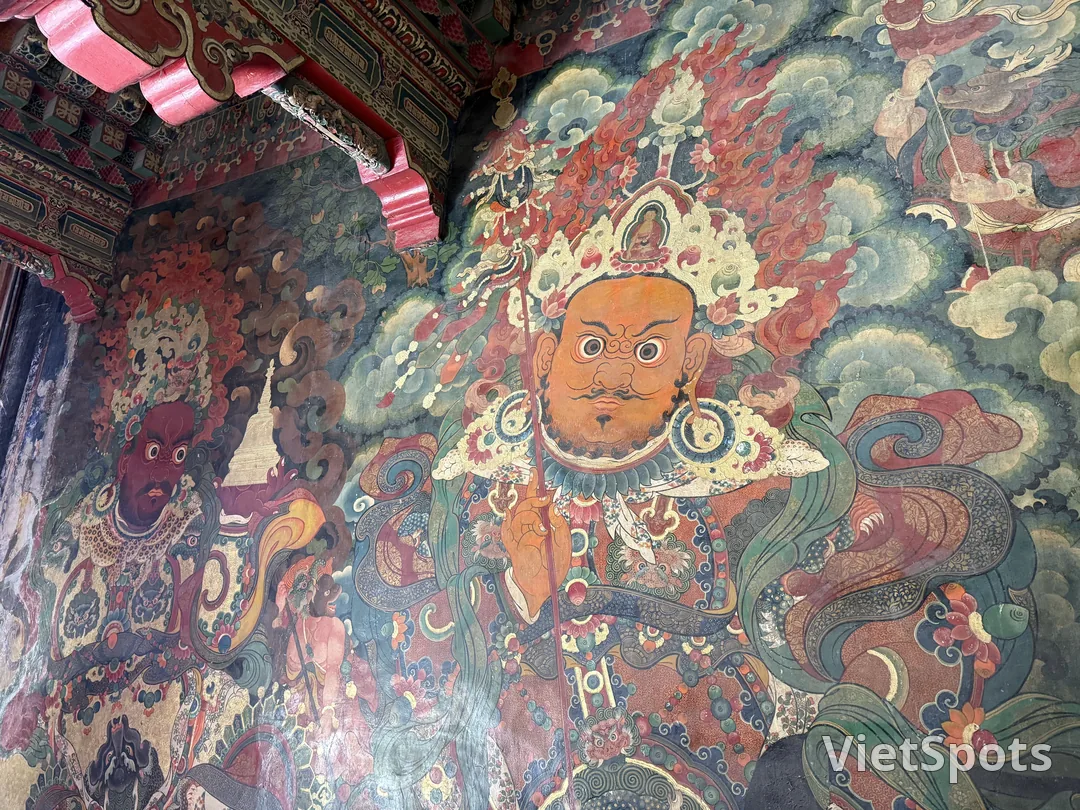
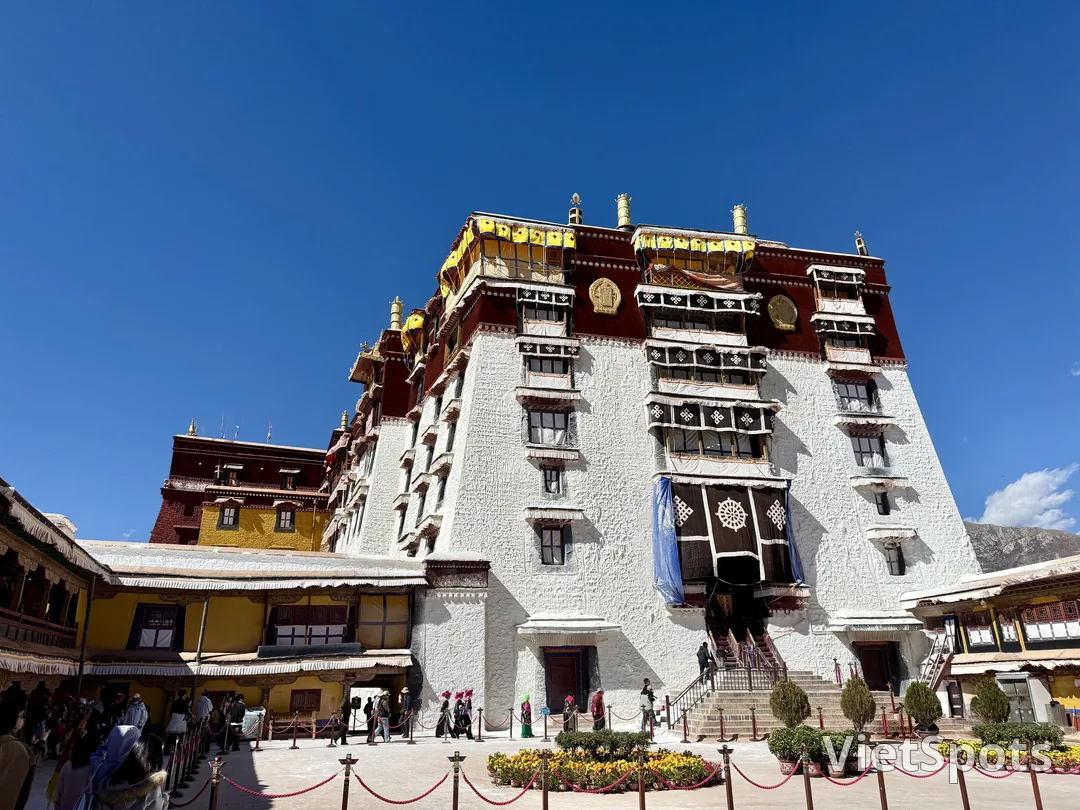
Red Palace Three Colors Symbolism: Red: Religious Power White: Political Power Yellow: Supreme Power The Potala Palace is truly worth visiting in person to listen to the guided tour to understand the essence of Tibetan Buddhism. We enter from the front mountain and exit from the back mountain, and after descending we can see the cityscape on the other side of Lhasa.
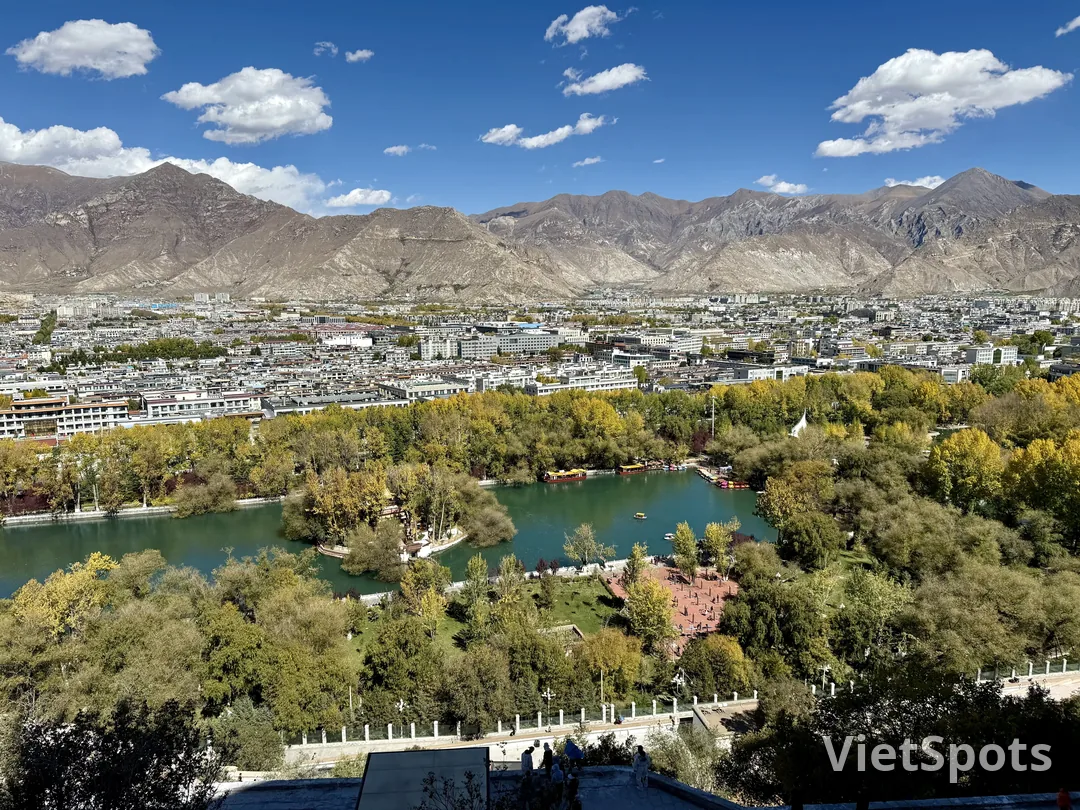
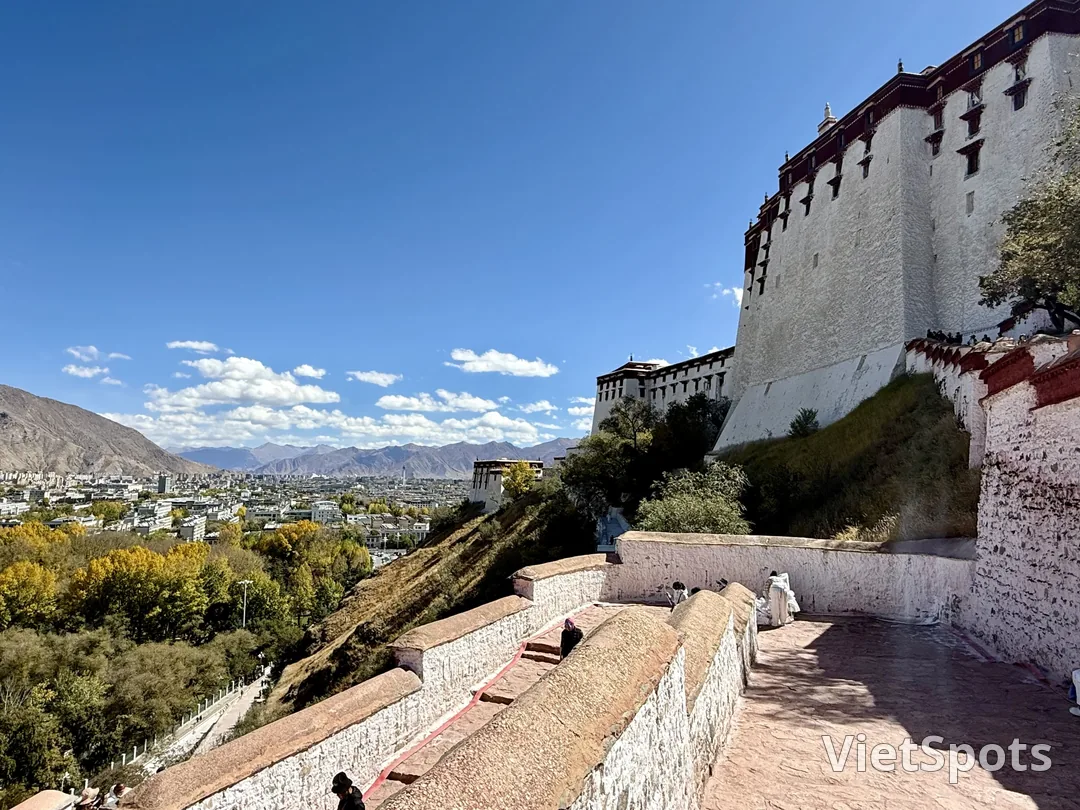
Because the explanation was so detailed, we didn't come down the mountain until nearly 14:20, so we had a simple bowl of noodles near the Jokhang Temple for lunch. Jokhang Temple: The Heartbeat of Tibetan Faith Gather at 15:10 to head to the Jokhang Temple.
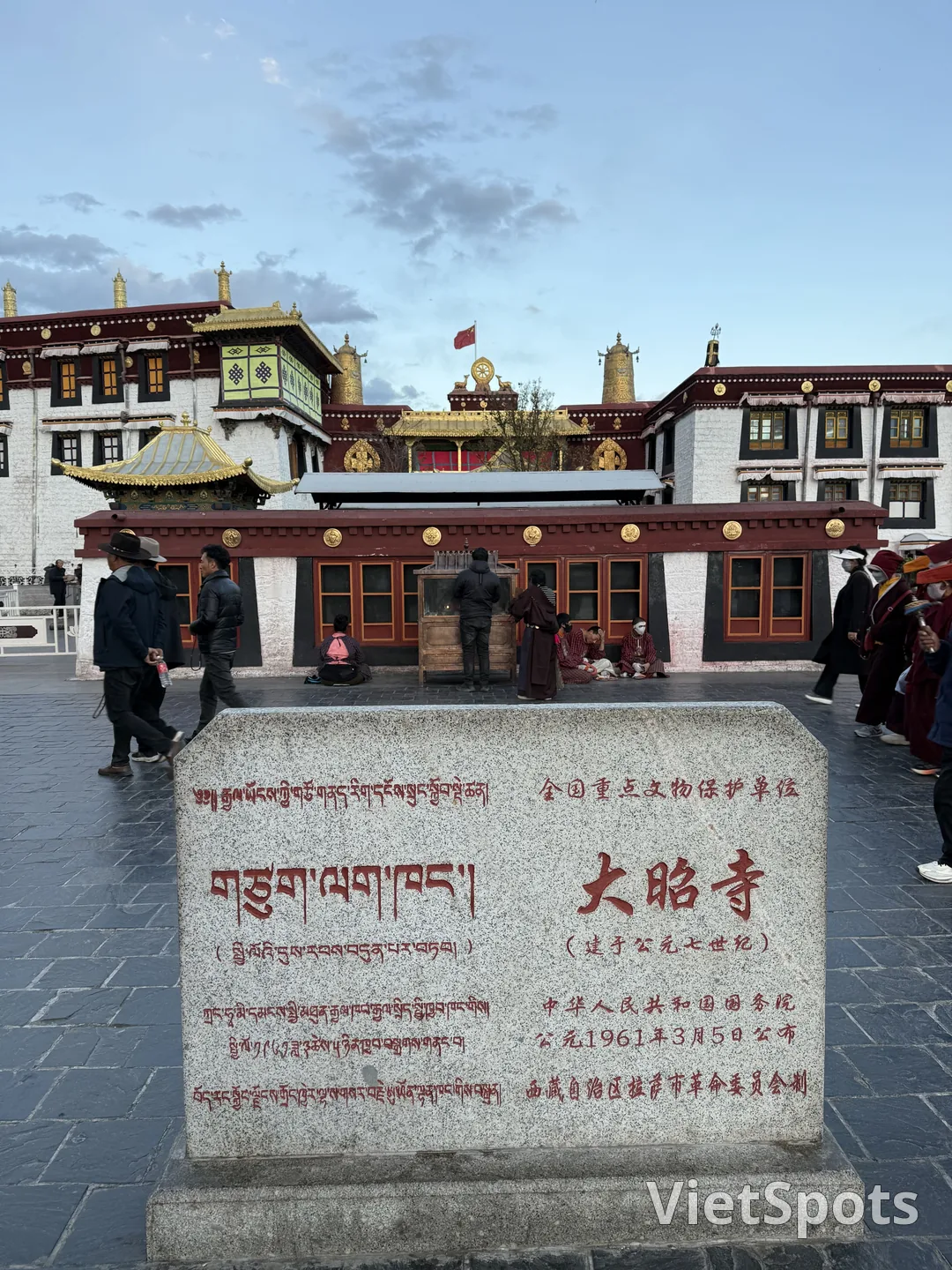
The Jokhang Temple was originally built to enshrine the "Statue of Śākyamuni at Age Eight" brought by Nepal's Princess Bhrikuti, and the process of building the temple is also closely tied to the legend of Princess Wencheng's divination and construction using the Five Elements method. ▸ The History of the Swapped Statues Originally: Jokhang Temple: enshrined the age-eight statue Ramoche Temple: enshrined the age-twelve statue brought by Princess Wencheng When the Tang Dynasty invaded, the Tibetans swapped the two statues to protect them, which is why the statue now enshrined in the Jokhang Temple is the age-twelve statue. The age-eight statue, meanwhile, was already destroyed during the Cultural Revolution. ▸ Pilgrims Outside the Jokhang Temple At the temple gate, you can see many devotees prostrating themselves fully on the ground in worship — one of the most striking scenes in Lhasa. Before entering the main hall, four great guardian deities stand watch, and the outer walls are covered in murals of various Buddha images; photography is likewise forbidden inside.
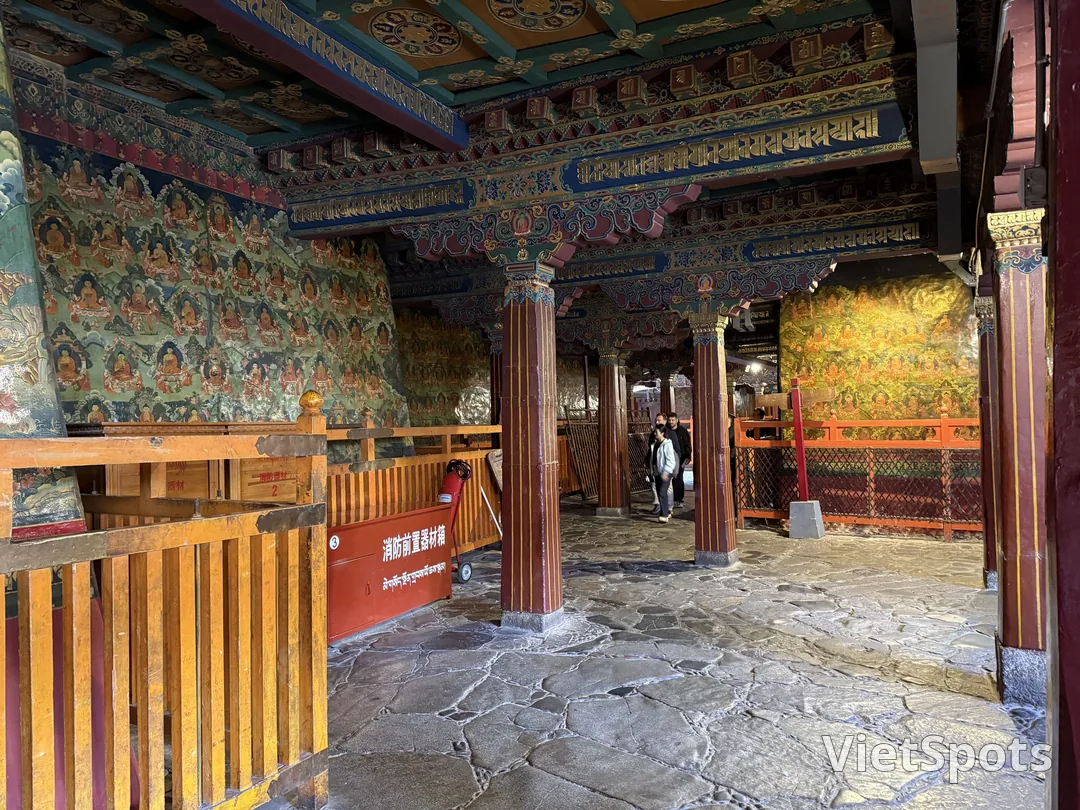
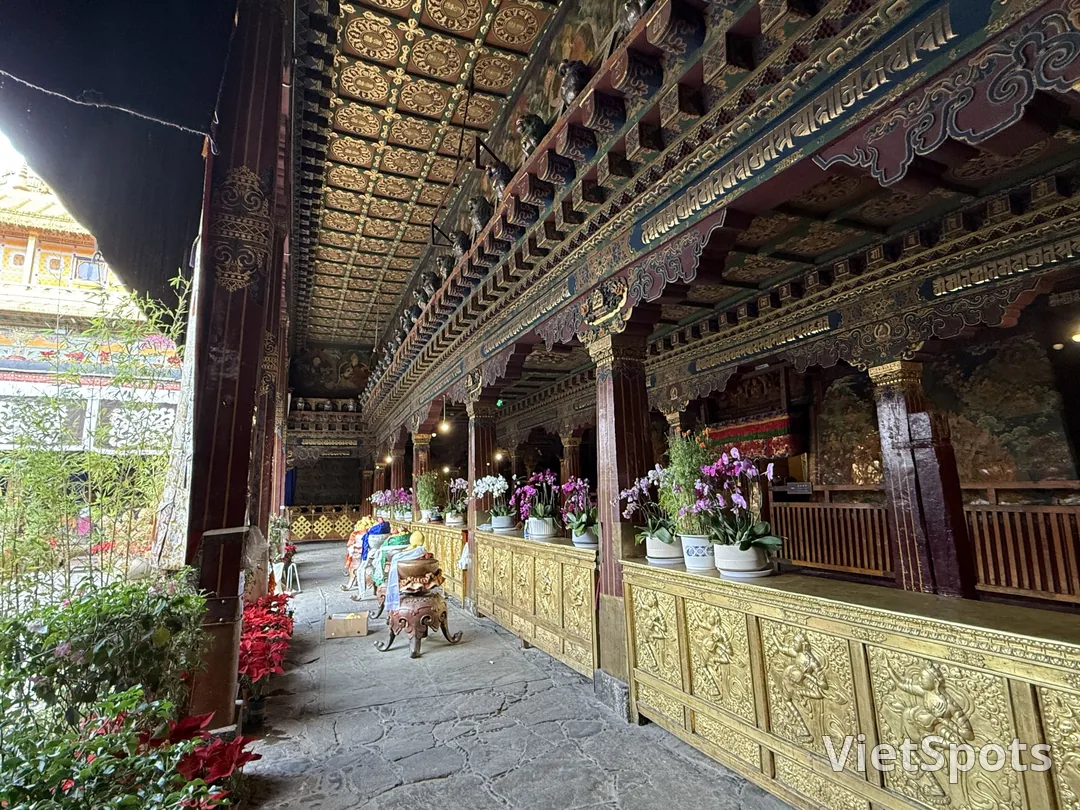
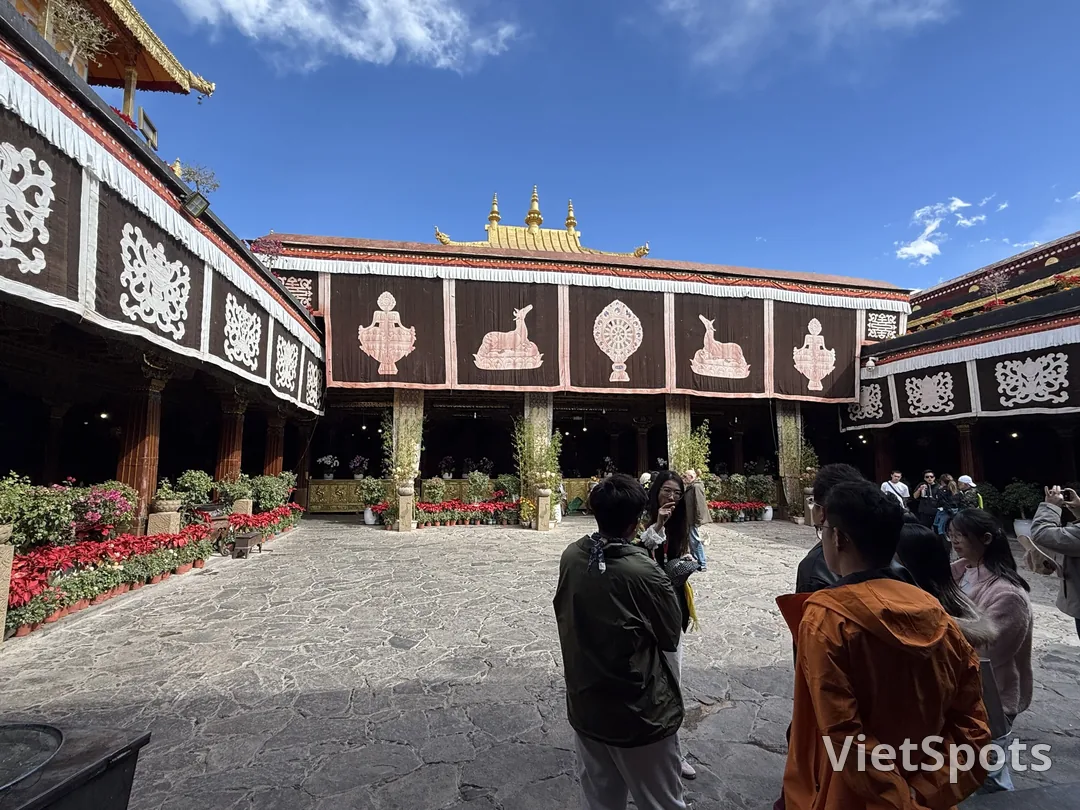
On the curtains outside the main hall on the first floor, you can see patterns such as the Dharma wheel, treasure vase, and pairs of deer, which symbolize the Buddhist teachings. These are all auspicious symbols commonly found in Tibetan Buddhism, and they also represent the transmission of the teachings, merit and virtue, and compassion.
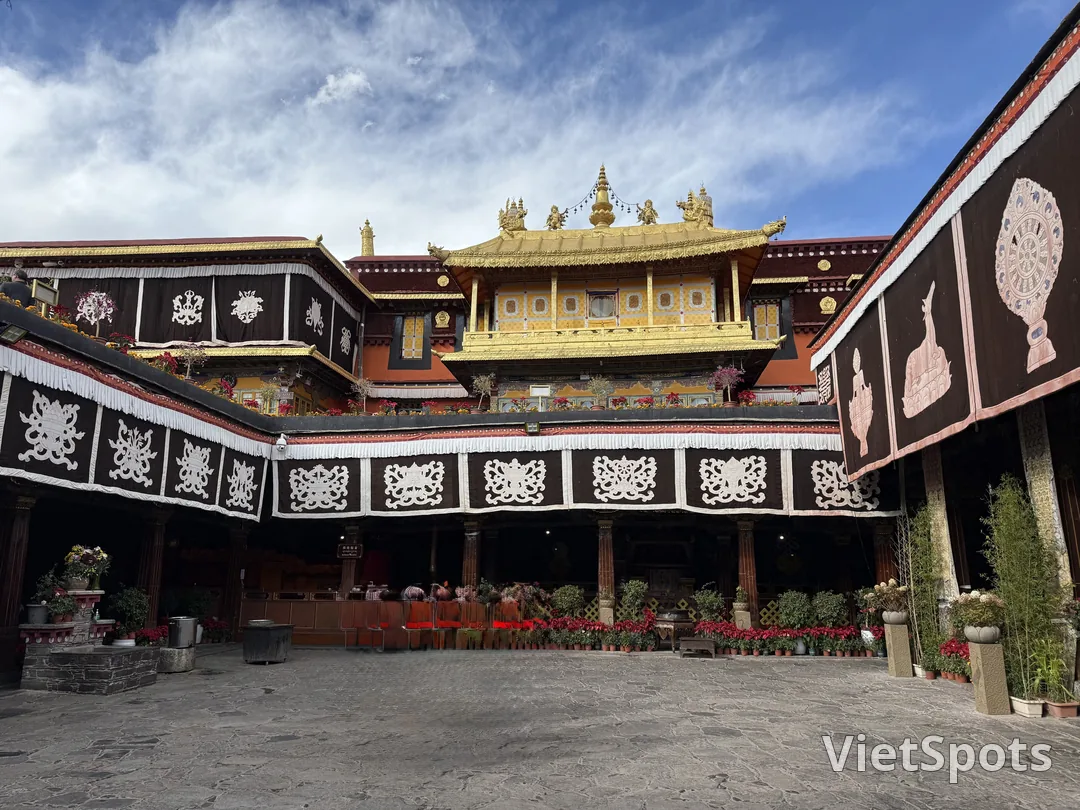
After visiting the main hall, we highly recommend that you definitely go up to the second floor. From here, you can appreciate the details of the Jokhang Temple's golden roof from a closer angle. The golden glaze is especially striking in the sunlight, and it is also one of the most favorite angles for many tourists when taking photographs.
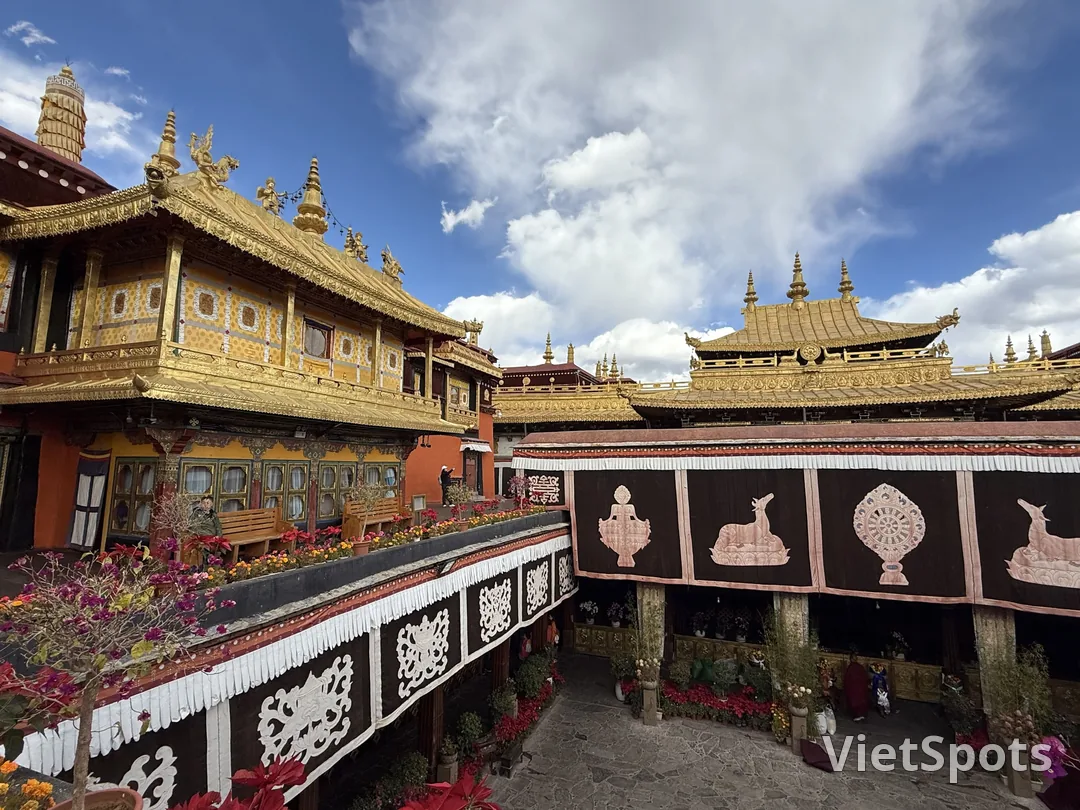
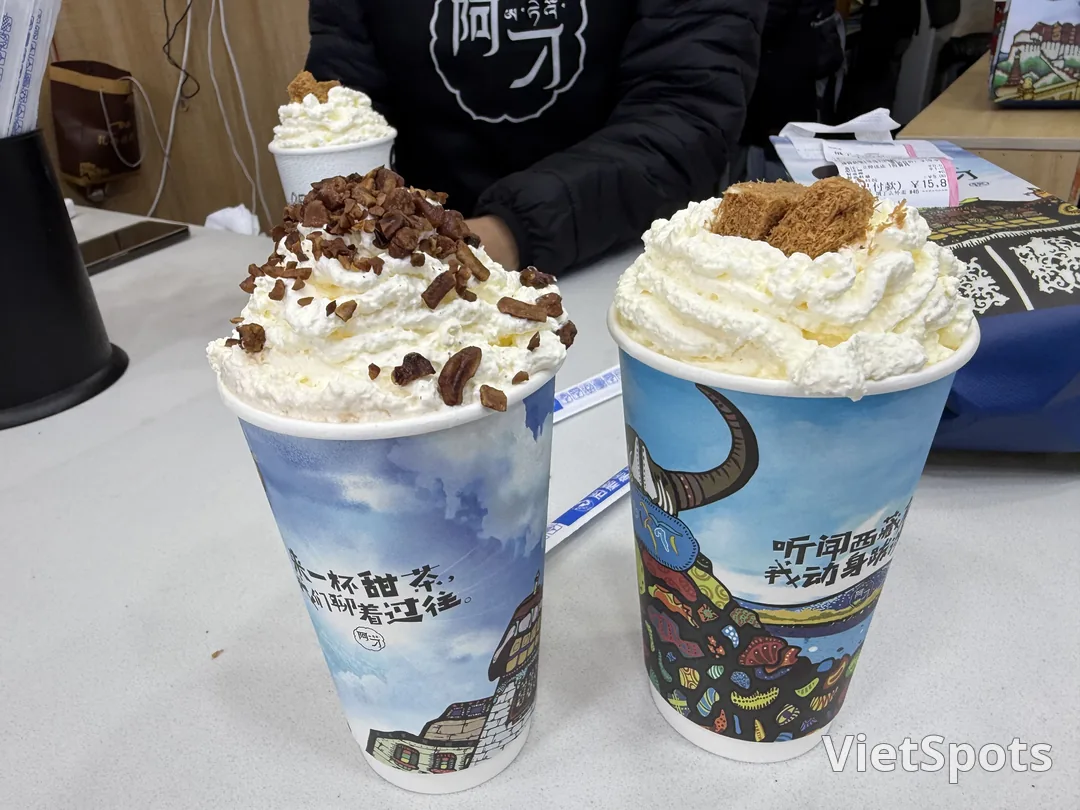
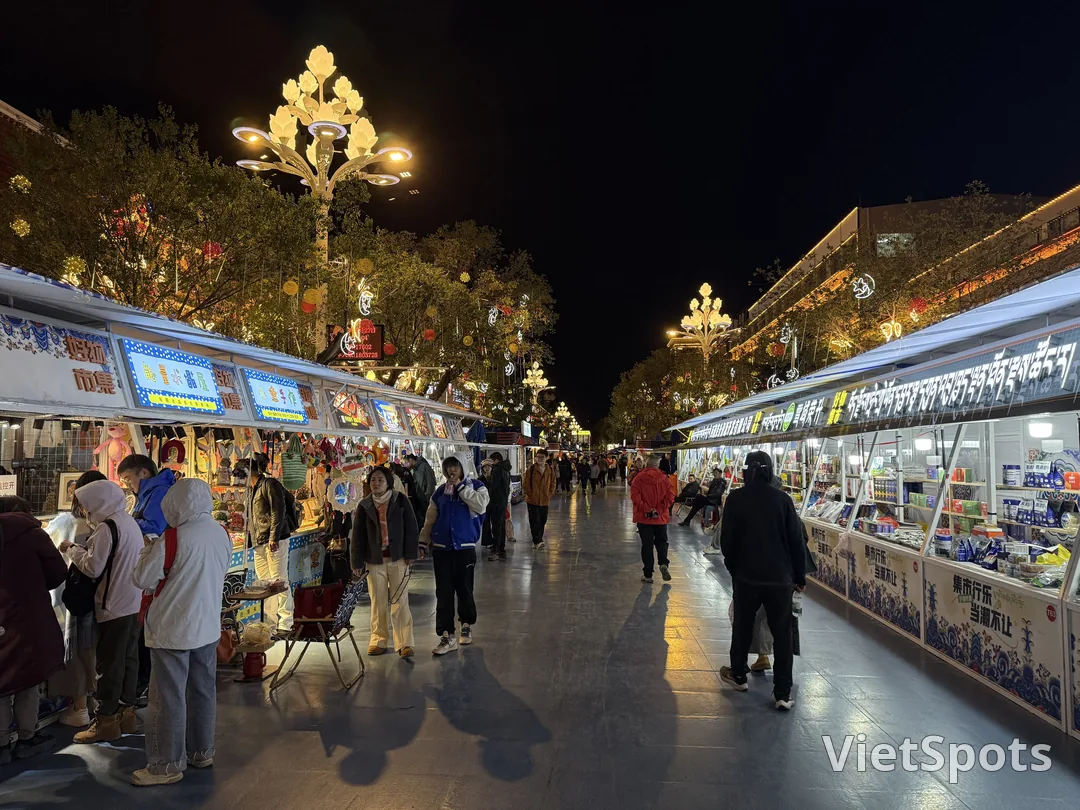
The whole visit takes about 1.5 hours. Barkhor Street × Old Guangming Teahouse: The Most Authentic Lhasa Life After finishing the two major attractions, it's free time to explore Barkhor Street. We first bought the famous Adiao Milk Tea (it tastes great, but at 22–24 RMB, it's really not cheap 😂).
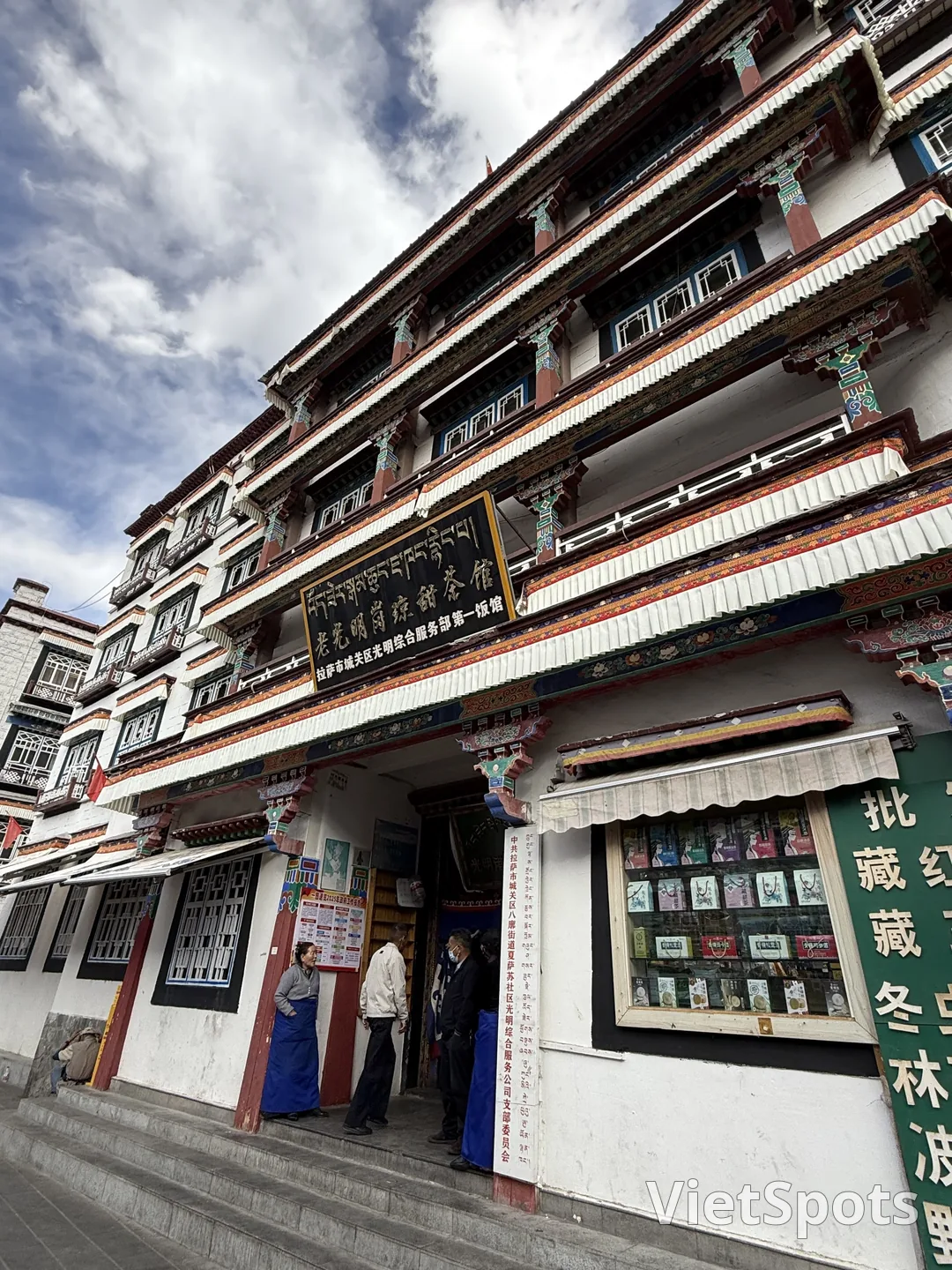
Then we went to the Old Guangming Tea House recommended by the tour guide.
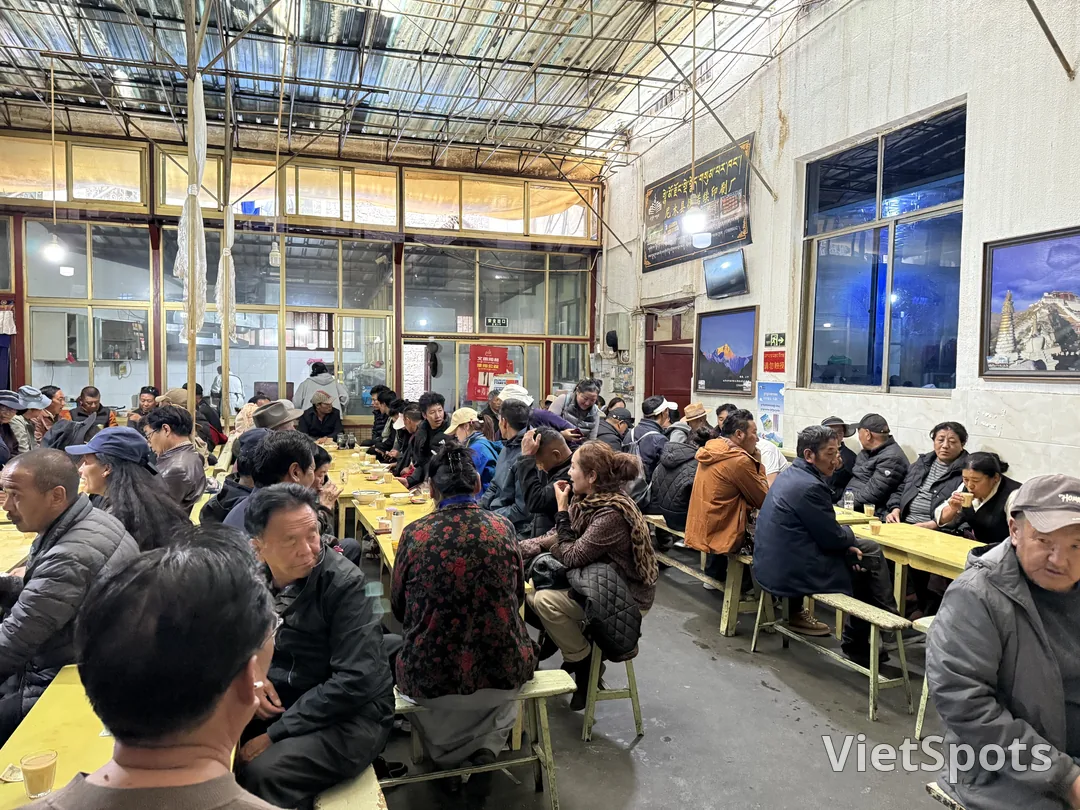
This is the best place to experience Tibetan life — drinking sweet tea, chatting, and chanting sutras. There's no need to order; just grab a cup and put your money on the table, and someone will come to pour tea for you. A cup costs only 1 RMB.
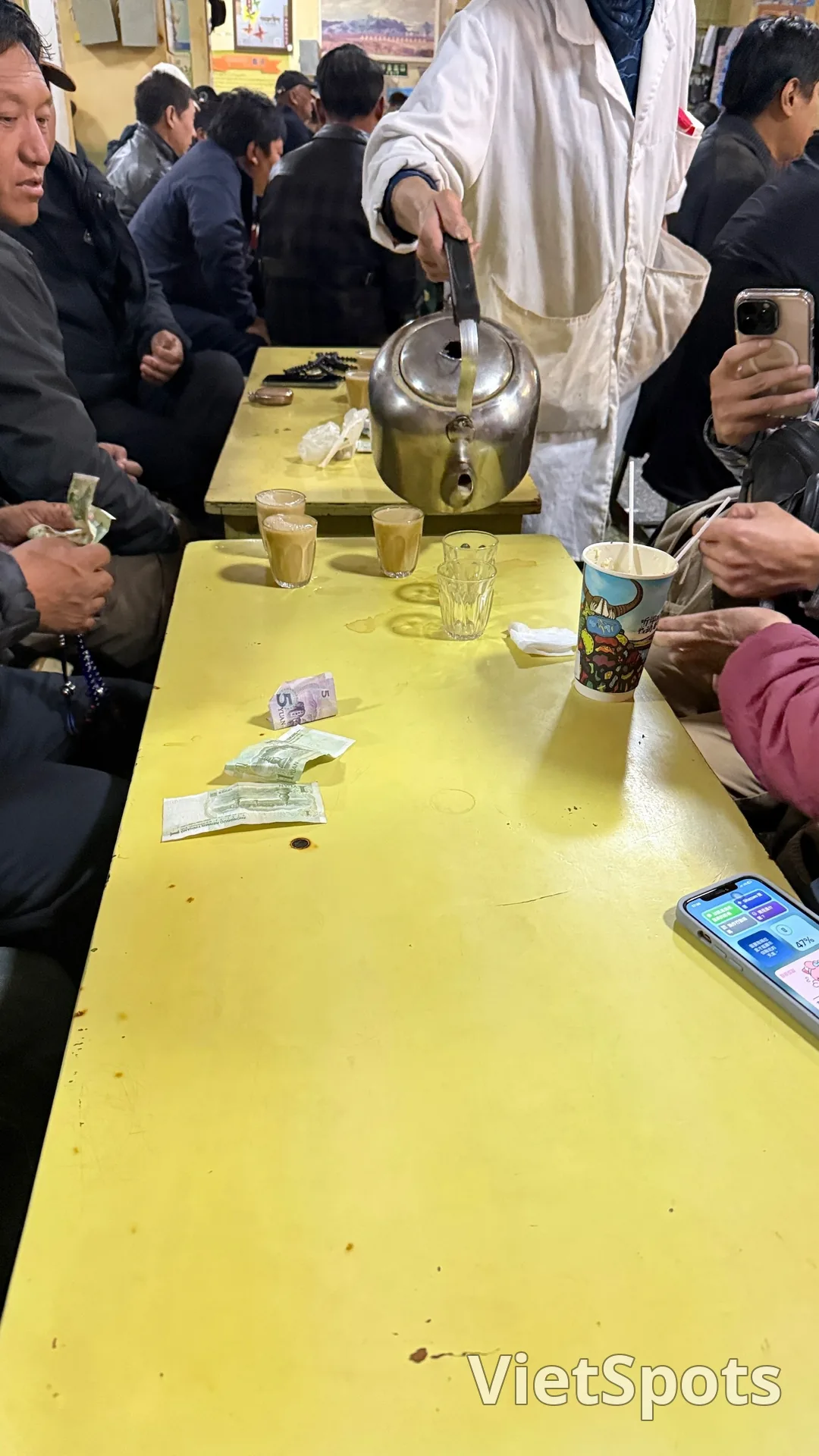
After finishing our tea, we continued shopping, and mom picked up some Tibetan incense and a scarf. The whole afternoon was spent immersed in the atmosphere of Barkhor Street and Lhasa's sleepless city.
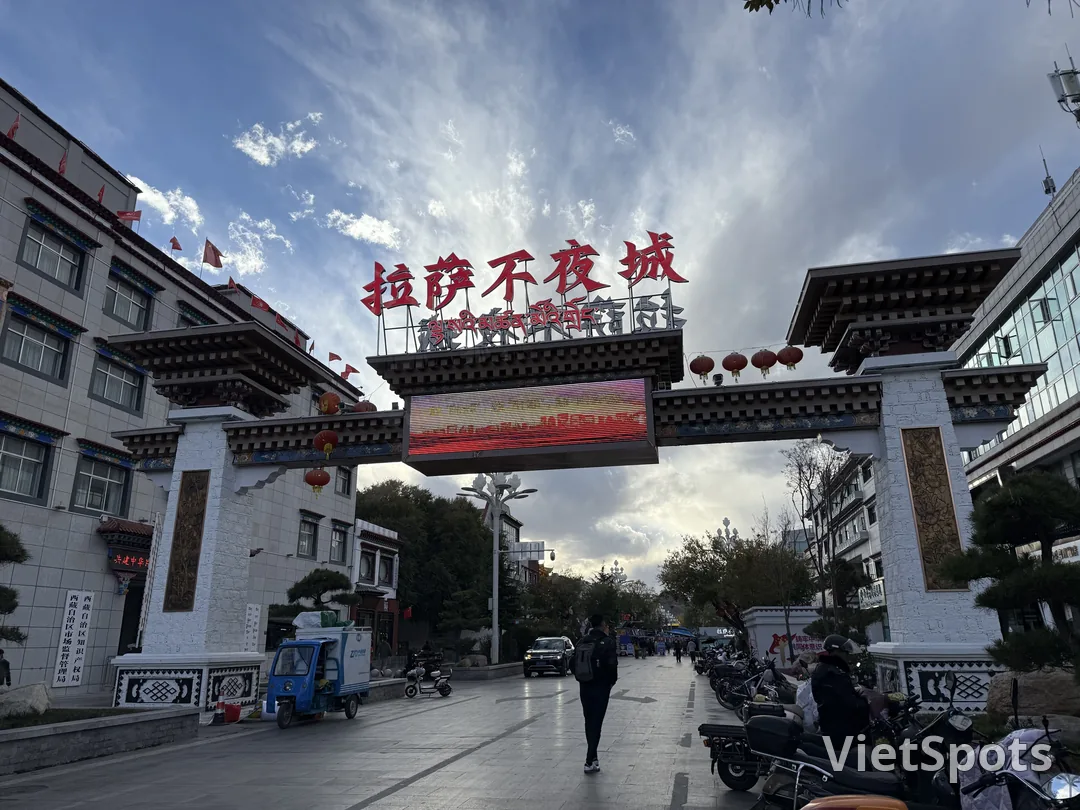
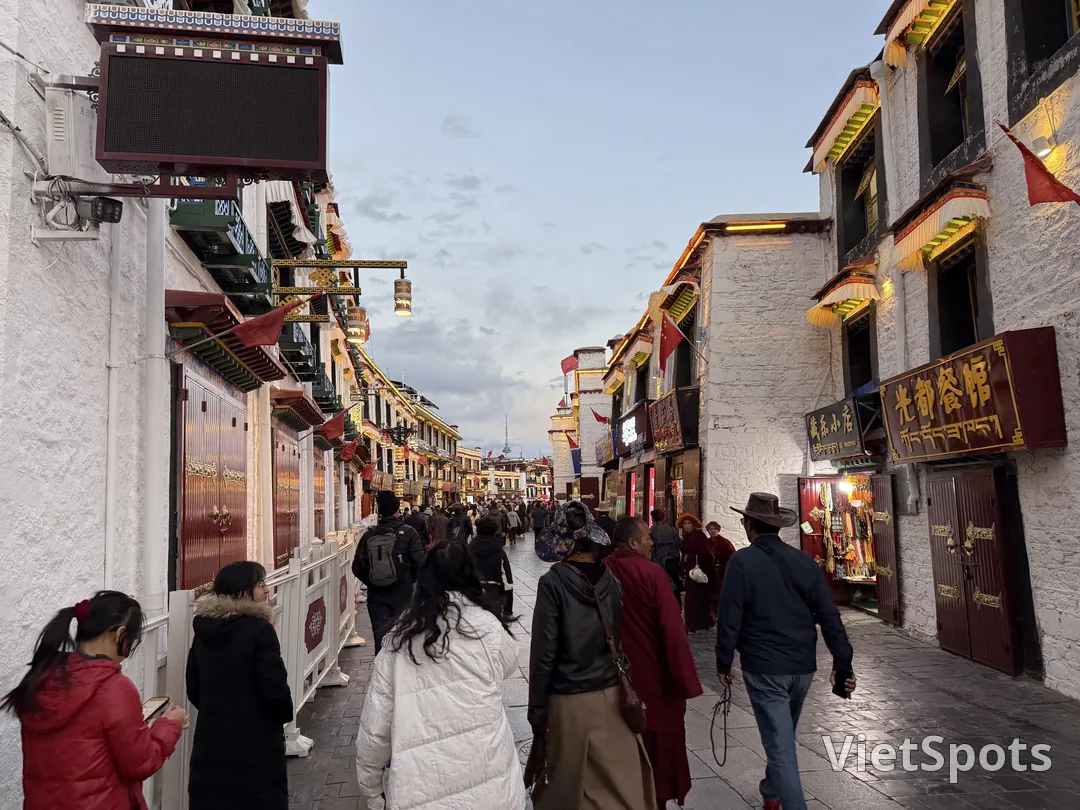
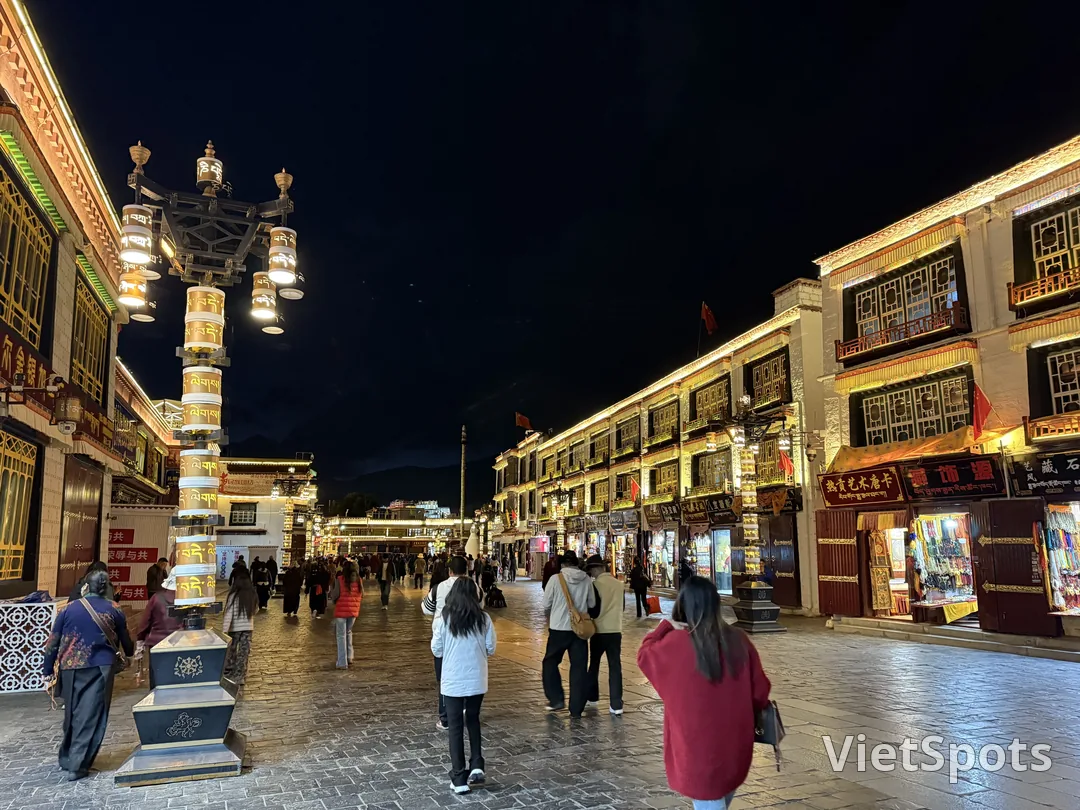
Night shot of the Potala Palace reflection: the most beautiful ending 19:30, the sky finally darkened, and we slowly walked back to the Potala Palace Square to photograph the night reflection. Compared to the daytime, there were even more people shooting at night. Unable to find an empty mirror, I shamelessly went and sat right down next to a Tibetan vendor, and asked him if I could borrow his mirror. To my surprise, he generously said right away: "Come on! Let me take a few shots with your phone!" His technique was slick, and after a series of moves he directly produced "blockbuster-level" results. Truly amazing.
By 21:00, we were exhausted, so we used Didi ride-sharing for the first time and successfully returned to the hotel. Tomorrow we're leaving Lhasa and heading to Shigatse. Summary: The Potala Palace and Jokhang Temple, condensing the soul of Tibet Today's itinerary, though not tightly scheduled, was the most essential day to understand Lhasa. The magnificence of the Potala Palace, the faith of volunteer workers, the historical context of the Red Palace and White Palace, The full prostrations of pilgrims in front of the Jokhang Temple, the living atmosphere of Barkhor Street... These elements piece together the most authentic and warmest face of Tibet. The Potala Palace and Jokhang Temple symbolize the two major centers of Tibetan culture, And walking a journey between these two sacred places, you will understand more clearly— The grandeur of Tibet lies not only in its mountains and rivers, but also in faith and life.
Book Travel in English on VietSpots
- 🎁 Sign up and get 16 Welcome Pack coupons — e.g. Motorbike Rental 45%
- 👑 Member tier discount up to 15% on site (Silver 5% · Gold 15%)
- 🛂 Auto-fill arrival card📶 Compare lowest eSIM prices🚻 Find toilets
Comments