

Could this be… a Vietnamese rice cake?! Foouund it~

The “mochi look-alike” I found in Vietnam. When it comes to New Year's, it's all about mochi. Zoni soup, isobe-yaki, kinako and sweet red-bean paste, grated daikon… When I was a child, it was an annual tradition for all our relatives to gather from morning at the end of the year to pound mochi. I remember how my mother would get a call from my grandmother, who was in charge of organizing it, asking things like, “How many shō do we need this year?” At my parents' home, a family of four, the everyday routine was to rinse and cook five gō of rice. That's exactly why, when New Year's came around, those sudden “big units” flying about were also a part of the year-end scenery. The scene of pounding mochi comes back to me naturally as well— From several days before, we soaked the glutinous rice in water, and in the yard of a relative's house we stacked the steamer high, fed the fire with firewood, and slowly steamed the rice. The one who tended the fire was Grandma. The sound of the pestle striking the stone mortar, the rhythmic hands turning the dough between beats. Even though it was winter, my father broke into a sweat as he stuffed his cheeks with mochi topped with grated daikon. Ah, so this was what the New Year time was like— Well, once you live in Vietnam, "mochi" becomes a far, distant thing. Whether to buy it back from Japan, or hunt for it at a Japanese grocery store. It's not something you can get your hands on easily. That said, Vietnam is a country of rice. The markets are lined with more kinds of rice than you can count. Of course, there's glutinous rice too. Even so, I didn't have the energy to make it from scratch at home, and if at all possible, I just wanted to "buy it~". And so, after much trial and error, the place I finally arrived at was this shop. Giò chả Bà Khánh (a shop for ham and fish/meat paste products)
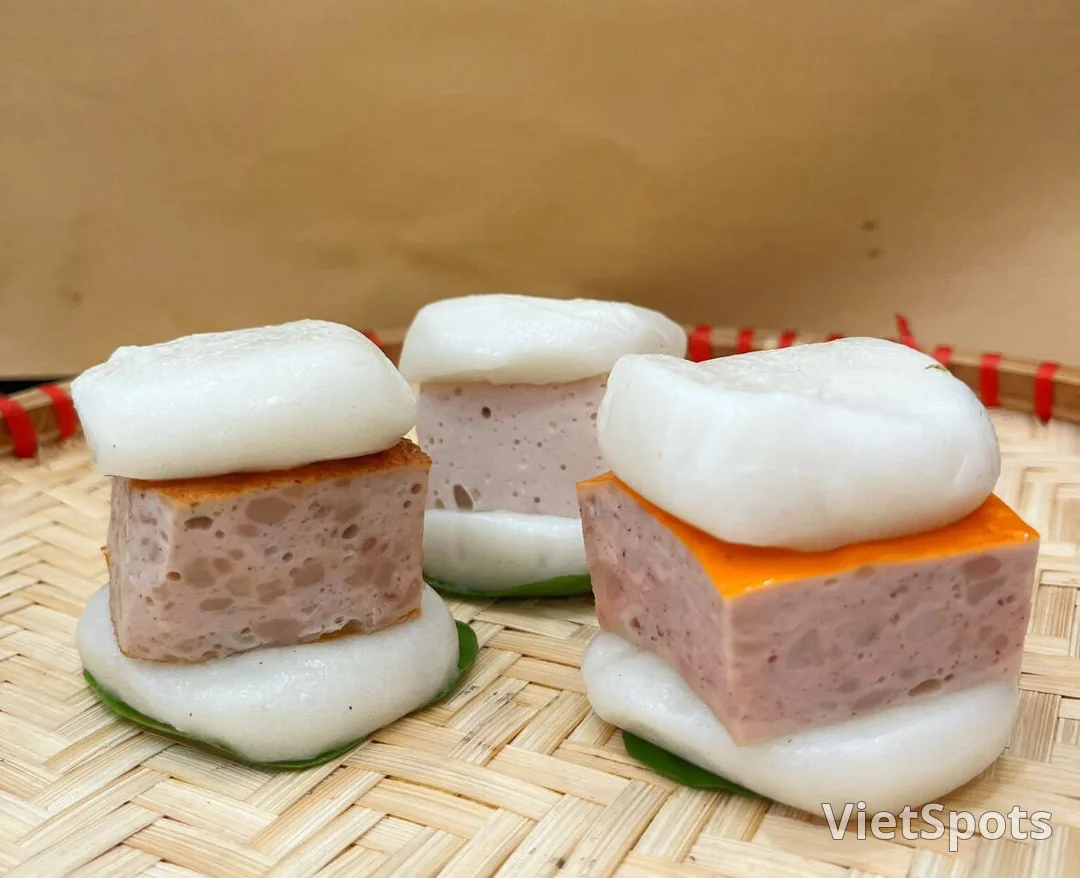
A photo that looks too good to be true. This isn't staged or exaggerated—this is the official menu photo. It's sold with a thick slice of ham tucked in, and… huh????? Could this possibly be…? It looks exactly like "mochi" (rice cake).
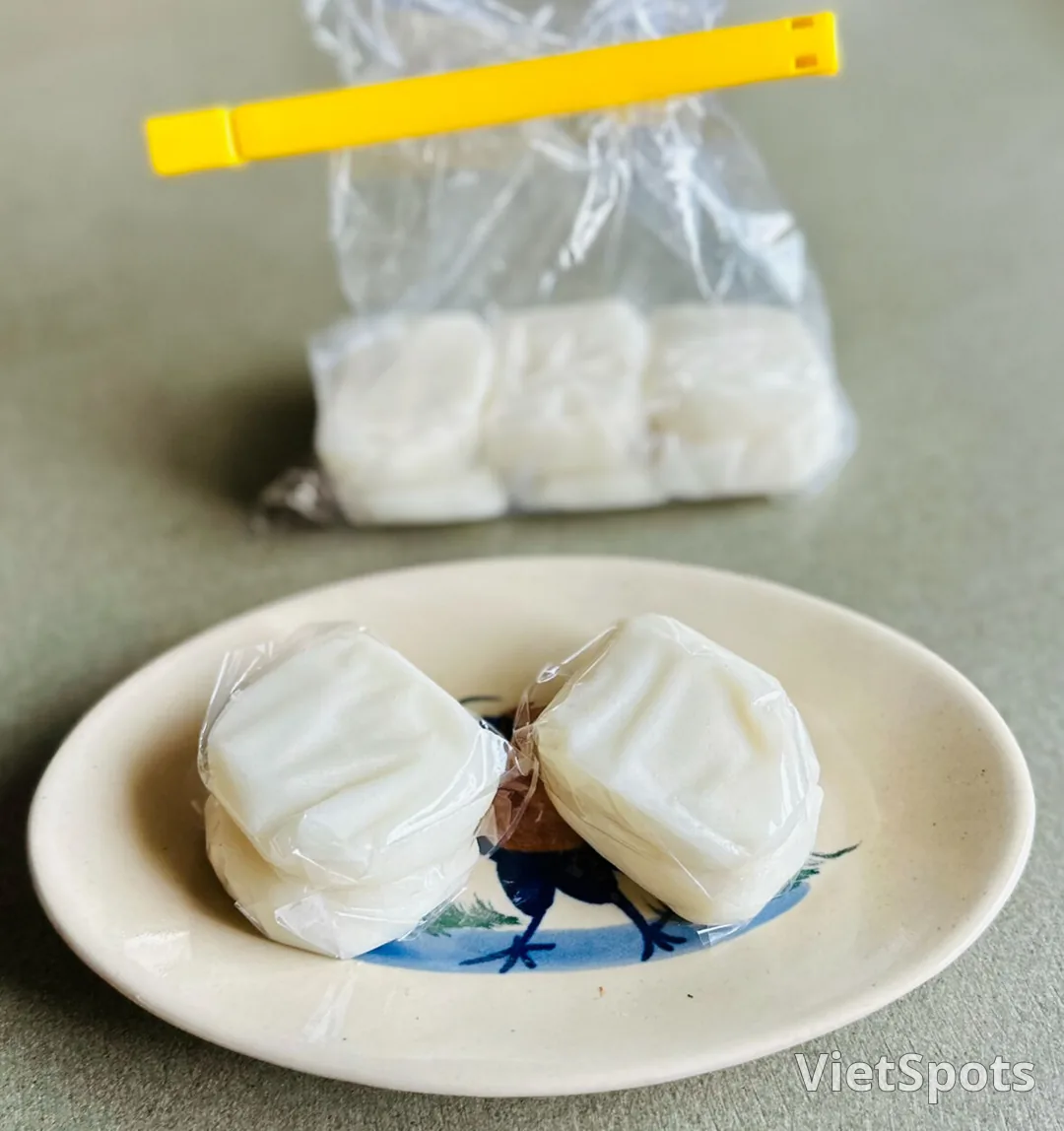
I ordered some to give it a try, and… it's just like real mochi itself!
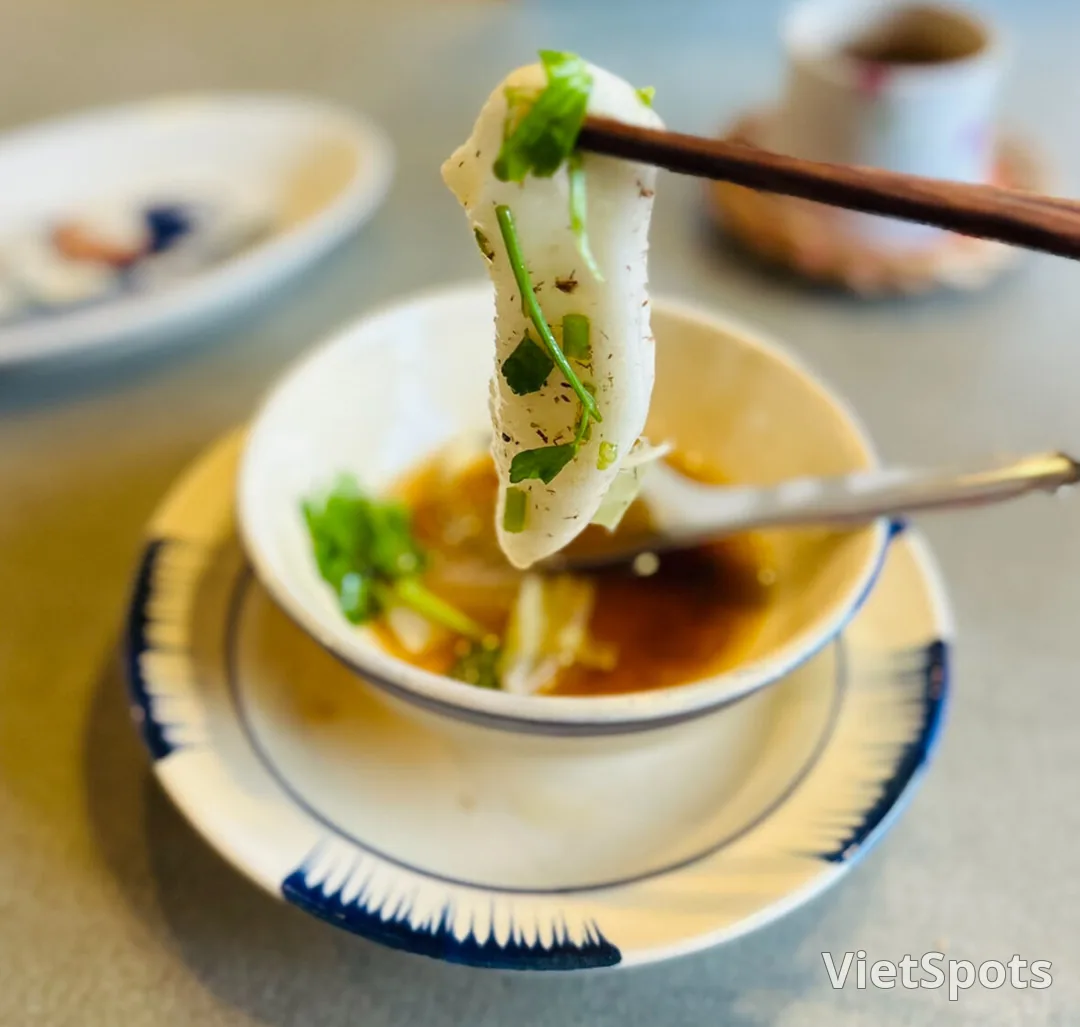
When you put it in ozoni (New Year's soup), it stretches out nicely. My husband got so excited and said, "Make isobeyaki with it!" Once you coat it in sweet-salty soy sauce and wrap it in nori seaweed, it's just the best~~. You can easily gobble down five of them in no time.
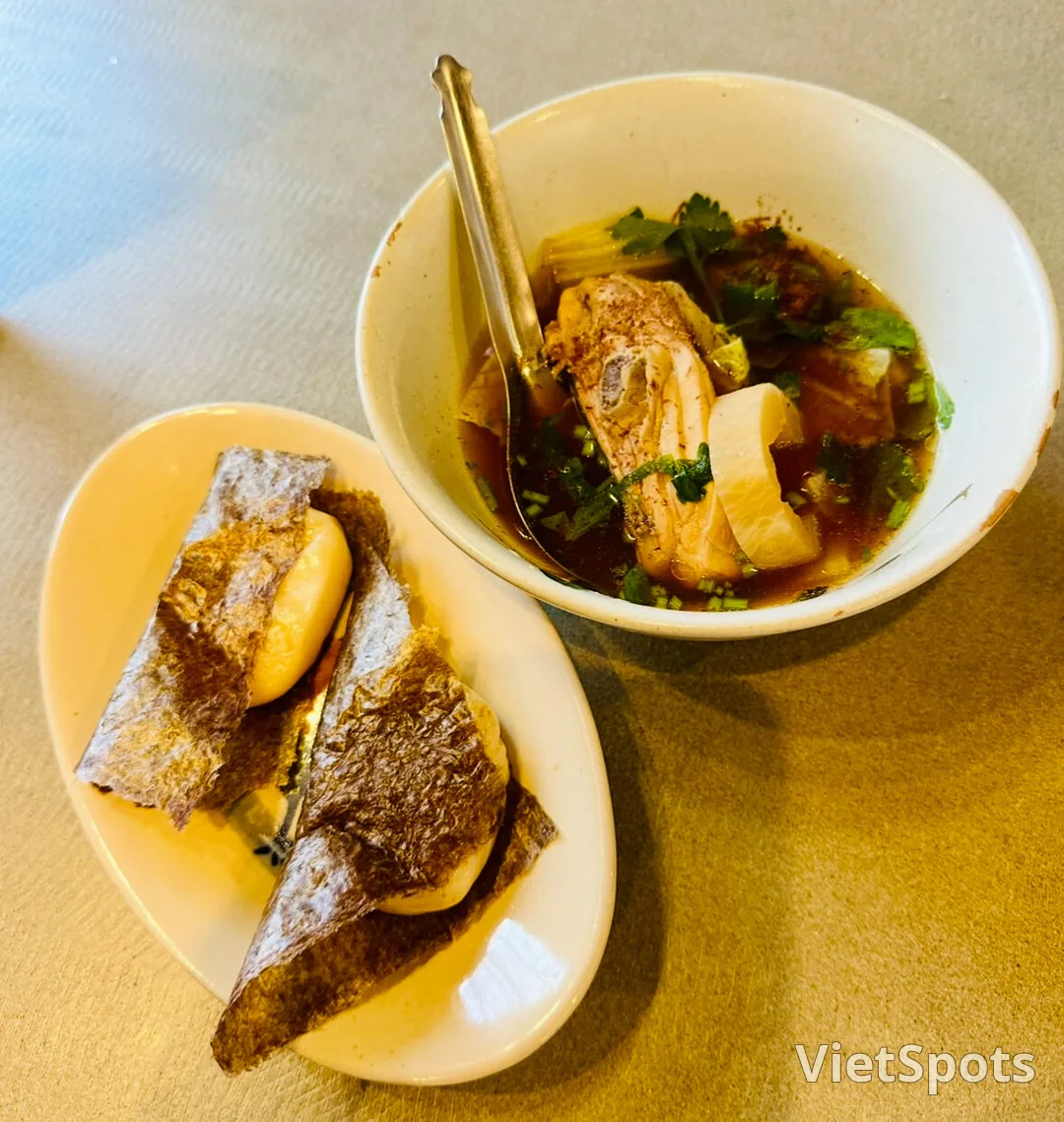
When I looked into it, this white rice cake is apparently something called bánh giầy (or bánh dày) in Vietnamese. It's a traditional rice cake from the north made from glutinous rice, and bánh giầy kẹp giò—where ham (giò) is sandwiched inside (a light snack of ham held between rice cakes)—is said to be a classic way of eating it around Hanoi. It's a little different from Japanese rice cakes: rather than being dense and heavy, it has an elegant, light softness. It might be easiest to understand if I say the texture is like kusa-mochi (mugwort rice cake). "I could eat as much of this as I want…"—a dangerously delicious treat!!
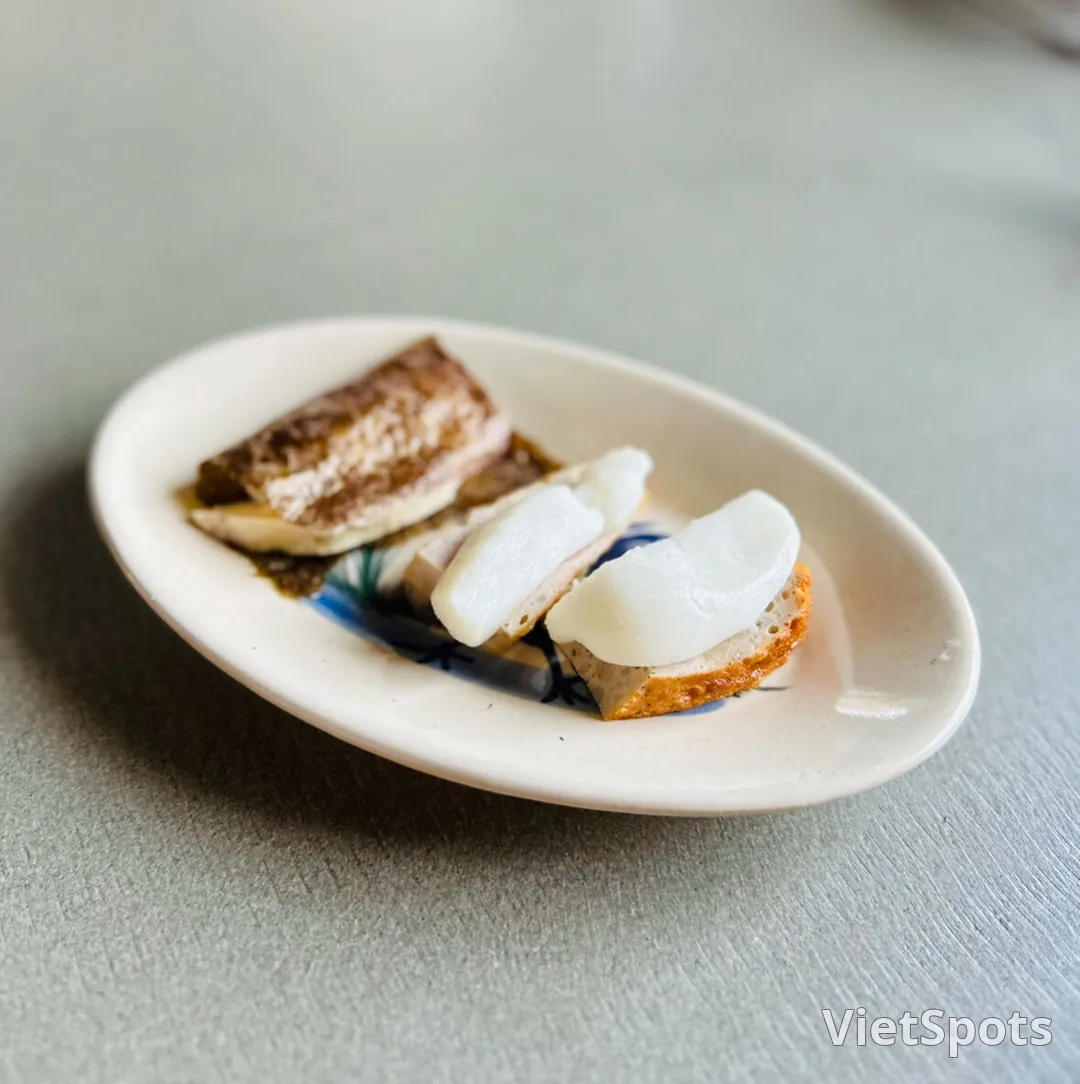
It's a bit different from how it's originally meant to be eaten, but making a little discovery like this while celebrating New Year's in a foreign land is what makes me so happy. 📍Giò chả Bà Khánh (Ho Chi Minh City) Map here https://maps.app.goo.gl/ Expat Life Ranking
Travel Vietnam with vietSpots, in English
- 🎁 Sign up and get 14 Welcome Pack coupons — e.g. Motorbike Rental 45%
- 👑 Member tier discount up to 15% on site (Silver 5% · Gold 15%)
- 🛂 Auto-fill arrival card📶 Compare lowest eSIM prices🚻 Find toilets
Comments