

The "hospitals & insurance" situation for Vietnam immigrants. Overseas travel insurance can't be used


Xin chào! We are Yuki, a Japanese husband, and Ngoc, his Vietnamese wife, living in Ho Chi Minh City, Vietnam. On this blog, we share information about moving to and living in Vietnam, as well as travel information from all over the country. If you find an article that catches your interest, please start by following us ♪ This time, we're covering the local situation regarding "hospitals & insurance," an issue that people who move to Vietnam inevitably run into. This is something that really concerns a lot of people, isn't it! (^^)! Especially for those in the middle-aged and older generations, health tends to decline more easily, and quite a few people also have chronic conditions. Here, I'll share the real situation with hospitals and insurance. ※This is based only on what I personally know and have experienced, so some information may be incorrect or outdated. I apologize in advance if that's the case 🙇 First, let's start with the hospital situation in Vietnam. There are hospitals with Japanese doctors in three cities.
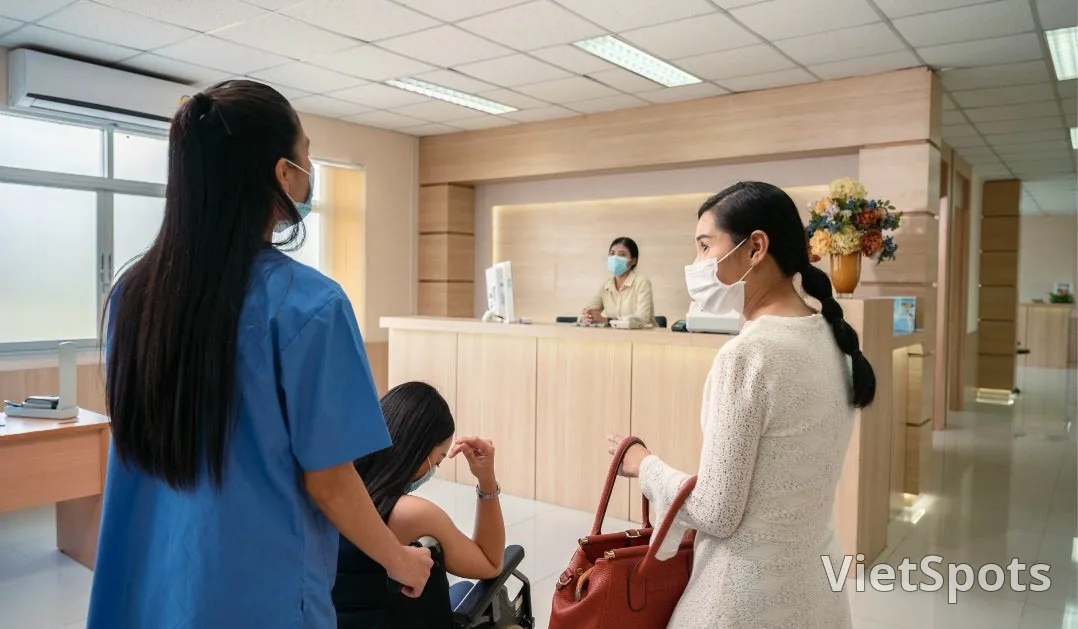
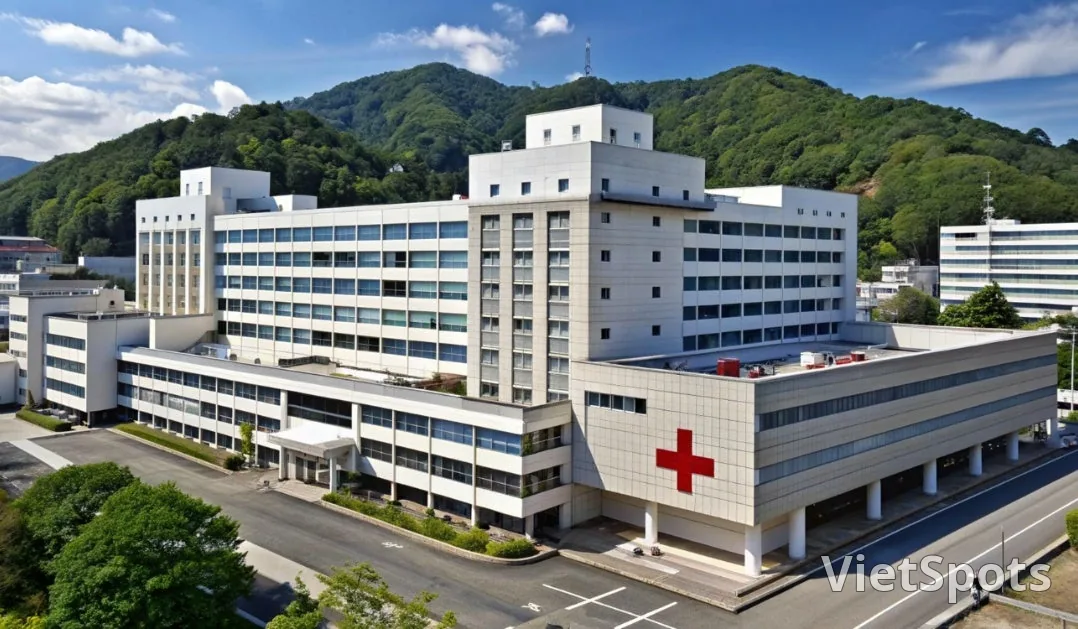
First, the good news. In the north (Hanoi), central (Da Nang), and south (Ho Chi Minh City) — the destinations most Japanese people choose to move to — there are international hospitals with Japanese doctors on staff in each region. Even where there isn't a Japanese doctor, international hospitals can arrange a Japanese interpreter as an option, but of course, being able to see a Japanese doctor is still much more reassuring, isn't it? How much do consultations cost at Vietnam's international hospitals? Are local hospitals no good?
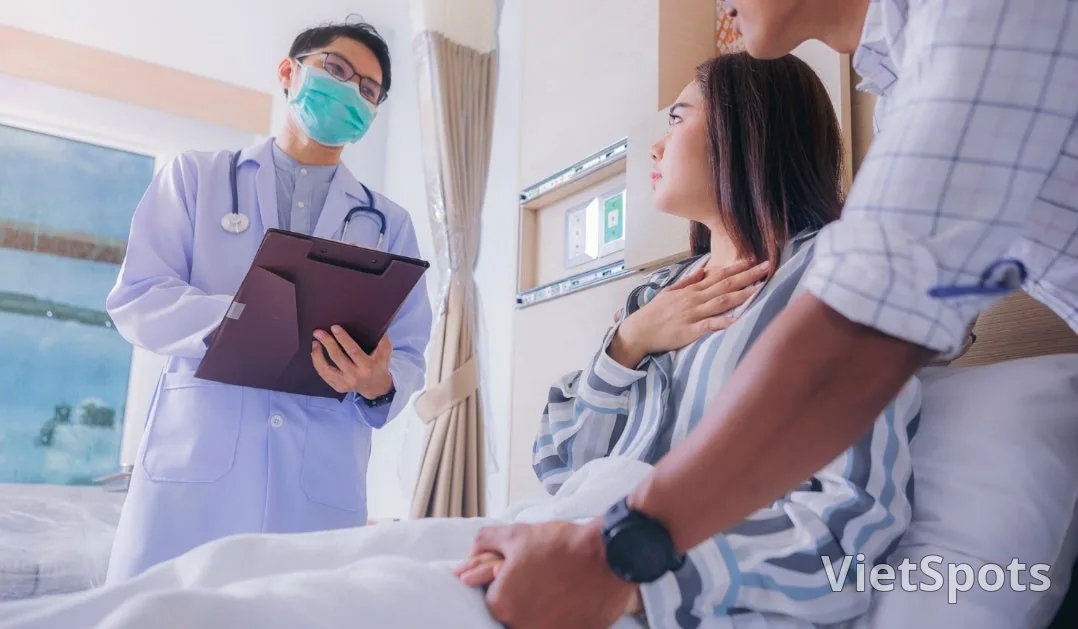
If I had a lot of money, going to an international hospital might be fine, but honestly, without insurance it's really tough. By the way, I currently don't have insurance (crying). The other day, I went to an international hospital to have my child's atopic dermatitis checked, and the consultation fee was a little over 10,000 yen, and the blood test cost over 30,000 yen! Also, way back when I caught dysentery bacteria and was hospitalized for one day, the hospitalization costs plus medicine plus bio tests came to 80,000 yen!So expensive! Choosing a hospital locally is tough So, if you want to save money, one option is to go to a local hospital in Vietnam. For ordinary colds or minor injuries, you can be seen at private or public hospitals, but when it comes to a somewhat serious illness or injury, the number of hospitals that can treat foreigners is limited, and many hospitals will turn you away. My impression is that this is getting stricter year by year. That said, in Hanoi, Da Nang, and Ho Chi Minh City, there are reliable national hospitals where, for a small extra fee, you can be seen in a special wing for foreigners and wealthy patients, which means shorter waiting times and access to skilled doctors. (Some people might dislike the idea of essentially paying their way to better treatment, but when you receive a consultation at a regular national hospital, it's common practice to check in around 4 or 5 in the morning and then wait 4 to 8 hours.)Can you handle this?) National (public) medical costs are also cheap, so even without insurance it's mostly within an acceptable range. For example, when I previously had surgery and was hospitalized for kidney stones, the total cost was only about 120,000 yen. Vietnamese expats can't use overseas travel insurance! So what kind of insurance should you get?
Normally, people who have emigrated to Vietnam cannot use overseas travel insurance. Some insurance plans are available, but all of them are for expatriates on assignment or international students, so emigrants still cannot use them. In addition, insurance that comes attached to credit cards cannot be used either. If you try to apply, you will be asked to present a round-trip air ticket between Japan and Vietnam. Therefore, if Vietnamese immigrants want to have cashless insurance, the following should be the requirements. 1. Work as an employee at a local company that offers insurance benefits 2. Set up your own company and get corporate insurance By the way, before COVID, we used method 2 and were enrolled in Japanese insurance. The premium was about 150,000 yen per year.As the yen is currently weak, I think it would probably be around 170,000 to 180,000 yen. And could it be that people with pre-existing conditions still won't be covered? What about illnesses that insurance doesn't cover? Also, the conditions under which the insurance is exempted from liability or under which enrollment is denied are probably not much different from those of medical and life insurance within Japan. For example, with pre-existing conditions such as diabetes or atopic dermatitis, you may not be refused enrollment itself, but the insurance won't cover prescriptions or medical examinations related to them. Also, in cases like mine involving kidney stones, there is a condition such as a "2-year exclusion period." In this case, the insurance will not cover kidney stones during the first 2 years after enrollment, but it will apply from the 3rd year renewal onward (however, if you cancel partway through, you will have to start over from year 1). Summary and preview of the next post: Vietnamese immigrants should not remove their Japanese resident registration! Let's handle it with National Health Insurance. Generally, when emigrating abroad for 100 days or more, you are required to submit a Moving-Out Report to the government office. By doing this, you can be exempted from tax obligations such as various taxes and pension payments. However, at the same time, you also need to withdraw from the National Health Insurance. If you keep your National Health Insurance, when medical costs become expensive at a hospital in Vietnam, you can later apply for a refund and be reimbursed the same amount as if you had received treatment in Japan.For this reason, we recommend that Vietnamese immigrants who cannot enroll in local insurance maintain their National Health Insurance as much as possible. Coming up next time... What souvenirs should you absolutely buy when you come to Vietnam? Next time, we'll feature must-buy souvenirs for travelers to Vietnam. If you're planning to travel to Vietnam over the year-end and New Year holidays, please be sure to check it out. By the way, in early December when I'm writing this article, wherever you go you can already hear Wham's "Last Christmas" or Mariah Carey's "All I Want for Christmas Is You" playing everywhere (lol). So I'd love to share a bit about what Christmas and New Year's look like here as well, at some point. Well then, Hẹn gặp lại! (This means "See you again!" in Vietnamese (^^)/)
Travel Vietnam with VietSpots, in English
- 🎁 Sign up and get 16 Welcome Pack coupons — e.g. Motorbike Rental 45%
- 👑 Member tier discount up to 15% on site (Silver 5% · Gold 15%)
- 🛂 Auto-fill arrival card📶 Compare lowest eSIM prices🚻 Find toilets
Comments