

Son Tra has two species of monkeys, and the more beautiful one never comes down to the road to beg for food



Go up Son Tra, and almost everyone runs into monkeys. They sit on the railings, chase after vehicles, and reach right into bags of snacks. Many people snap a few photos and head back down the mountain, believing they've met the "Son Tra monkeys." In truth, they haven't yet.
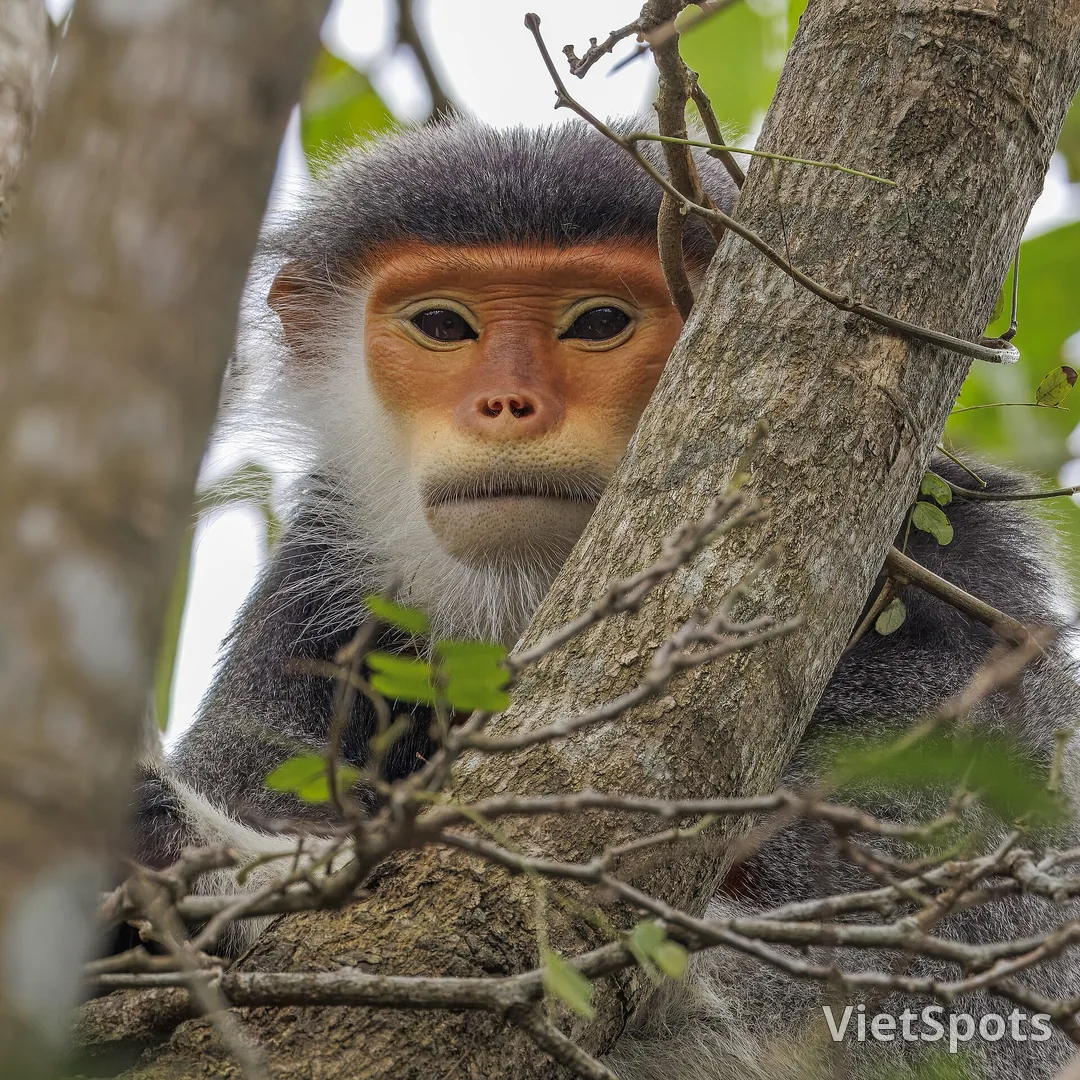
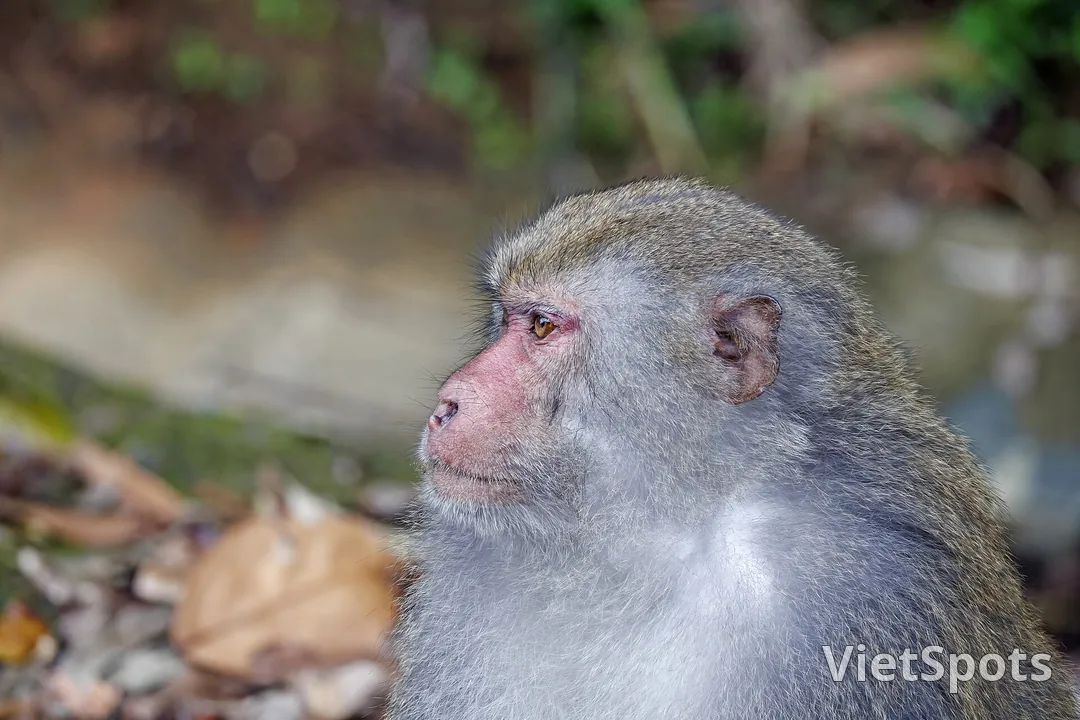
The creature sitting by the roadside is a rhesus macaque: grayish-brown fur, a pink face, and so used to people that it will even snatch your belongings. As for the species that has made Son Tra famous among conservationists around the world, it lives high up in the treetops: the red-shanked douc langur. An orange-gold face, a white ruff around the neck, a gray body, two reddish-brown lower legs that look like socks, and a white tail even longer than its body. People call it the five-colored monkey, or by a grander name, the queen of primates.
Why they don't take to the streets
Langurs eat leaves. Their stomachs are divided into several chambers, like a cow's, to digest young leaves, buds, and flowers. Bananas, cakes, and soft drinks are not on the menu. So no matter how much food is laid out by the roadside, it still can't lure them down. It is precisely this that keeps them wild: unaccustomed to people, not waiting for people, living their entire lives in the treetops, and at nightfall the whole troop sleeps on the highest branches.
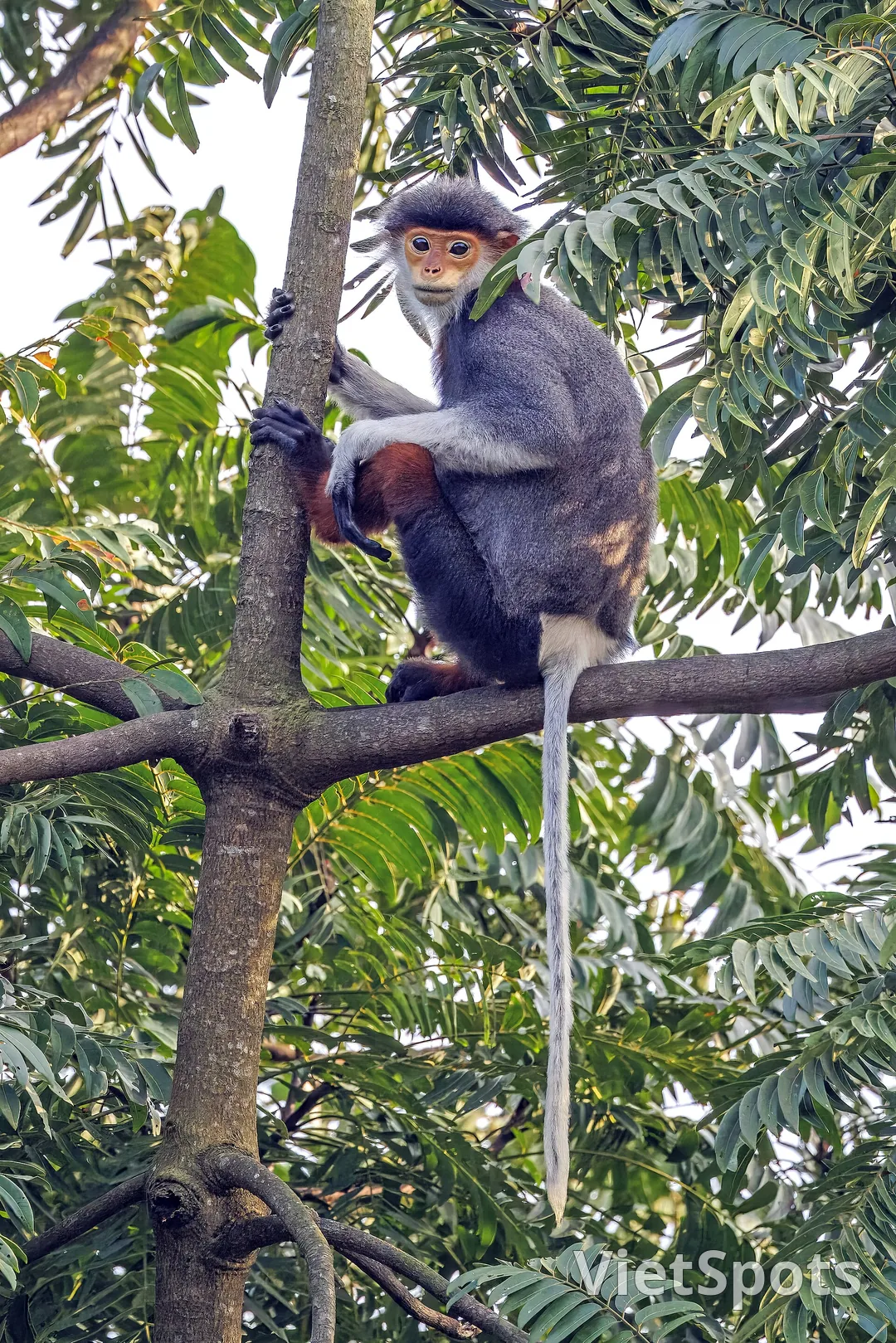
This species is found only in Vietnam, Laos, and part of Cambodia, and is listed as critically endangered on the IUCN Red List. Yet Son Tra, a peninsula connected to the city, is the place with the largest population and where they are easiest to spot. The surveys produced different figures, but all of them were in the hundreds, and some even exceeded a thousand. There are few other places in the world where, after less than half an hour's drive from the city center, you can be standing right beneath where they live.
What should I do if I want to meet?
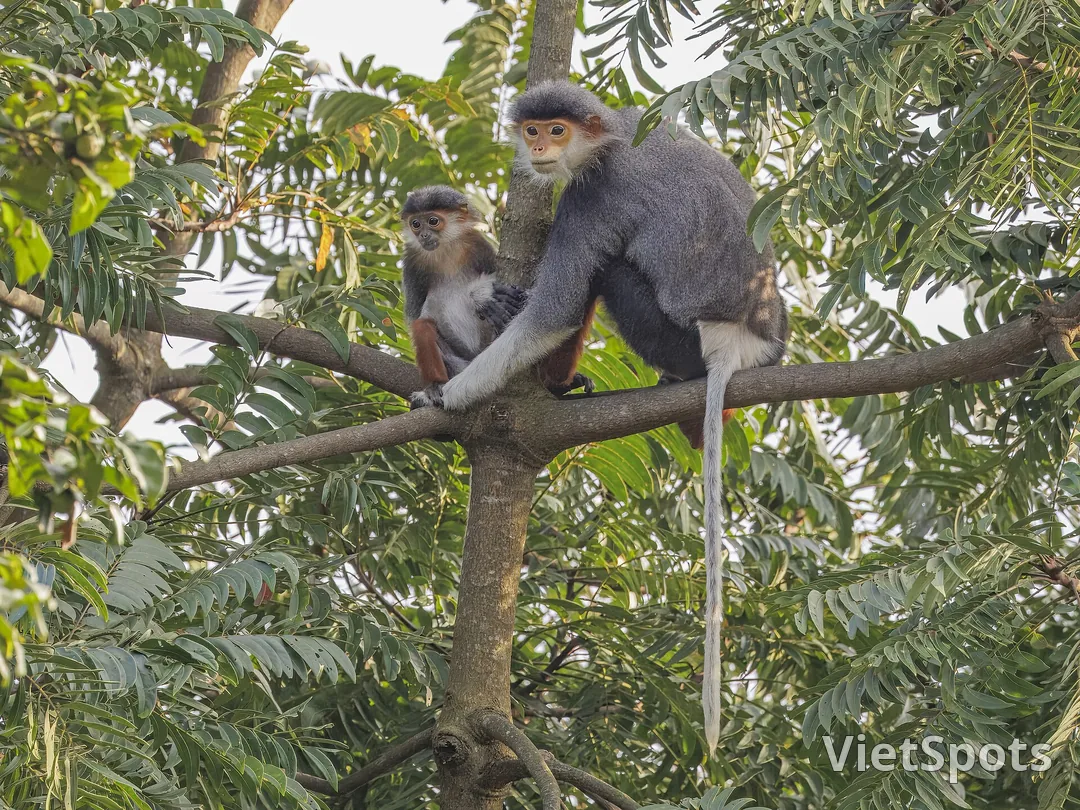
Go early in the morning or late in the afternoon, when they come out to look for food. The stretch of road from the turnoff to Linh Ung Pagoda up toward the peak is where you're most likely to see them. Don't look down at the road, look up: the first sign is usually the treetops shaking hard when there's no wind, then a white tail dangling down among the leaves. Turn off the engine, stay still, don't honk, don't call out. Sometimes a whole group of more than ten of them is right above your head, and people passing by have no idea.
A few things to keep in mind. Don't feed the rhesus macaques: that habit turns them into snatchers and lures them right up to the traffic lanes. Slow down on the stretches where ropes are strung across the road overhead; those are bridges built so langurs can cross the road after several of them were hit by vehicles. And if you have a long lens, bring it along; a regular phone usually only shows a dot of color among the foliage.
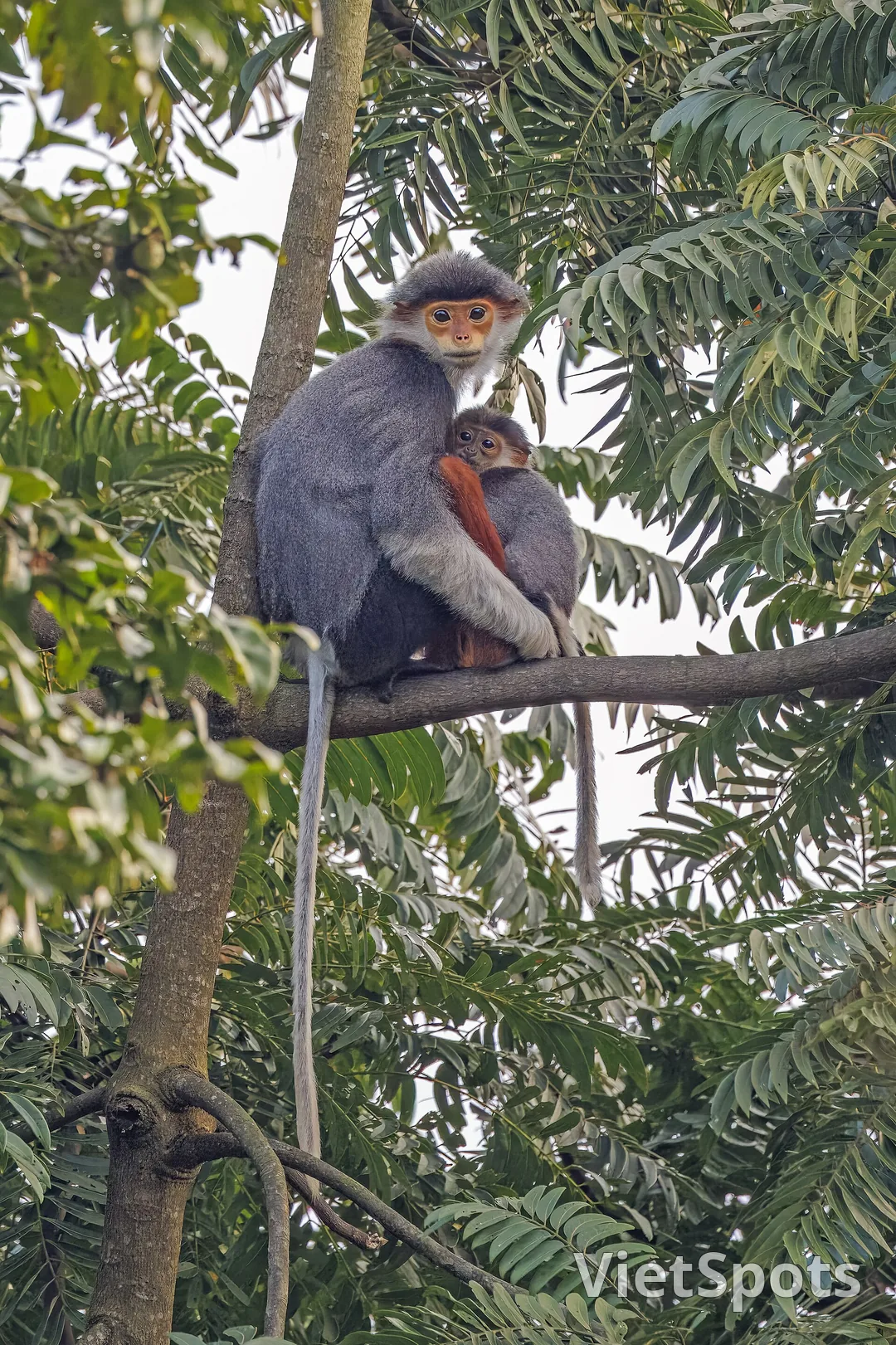
When visiting Son Tra, everyone stops by the 67-meter-tall Buddha statue and then heads down to the beaches at the foot of the mountain. But the rarest thing on this peninsula isn't found at the pagoda or on the sand. It sits still at the top of the tree, eating leaves, looking down at the stream of traffic, and needs nothing from humans except one thing: to be left alone.
Photo: taken by Charles J. Sharp at Son Tra — Wikimedia Commons.
Book Travel in Da Nang — in English on VietSpots
- 🎁 Sign up and get 16 Welcome Pack coupons — e.g. Motorbike Rental 45%
- 👑 Member tier discount up to 15% on site (Silver 5% · Gold 15%)
- 🛂 Auto-fill arrival card📶 Compare lowest eSIM prices🚻 Find toilets
Comments