

In November the wind returns to Mui Ne, and the kitesurfing season begins



In early November, the sea in Central Vietnam starts to get rough. In Da Nang, that's when the surfing season begins. Further south, that same northeast monsoon wind does something different: it blows steadily and strongly across Mui Ne beach, lifting hundreds of kites into the sky.
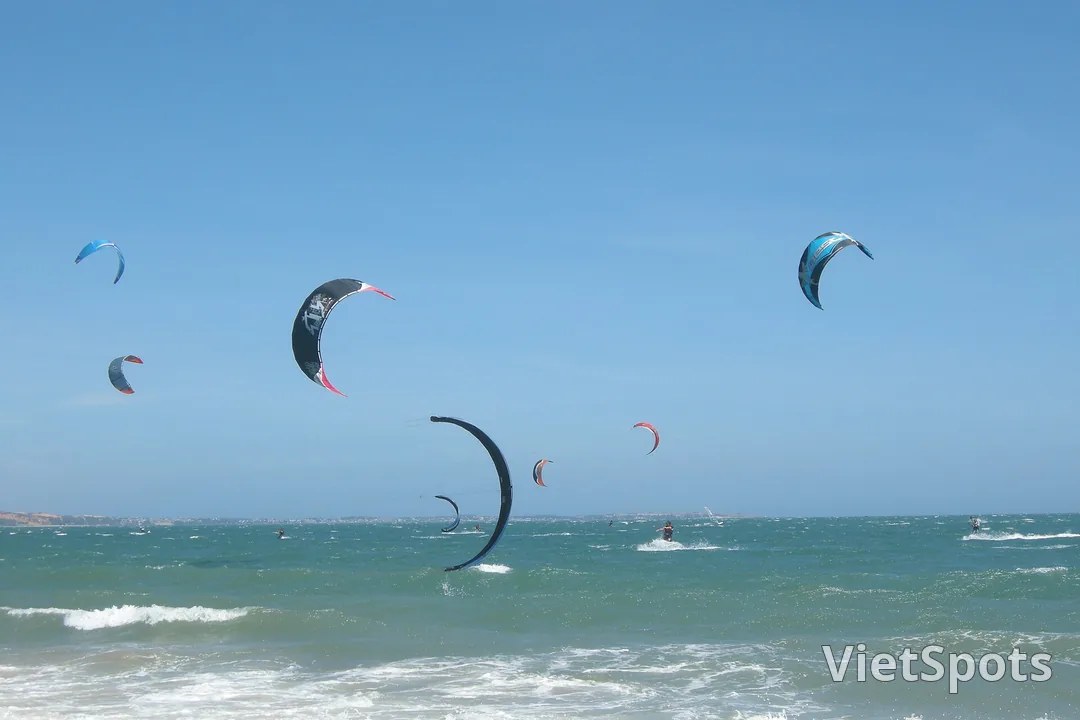
That's a kite used in kitesurfing, known in Vietnamese as "lướt ván diều." The rider stands on a small board, holding a control bar with both hands that's connected to a large kite flying high overhead. The wind pulls the kite, and the kite pulls the rider across the water. The steadier the wind, the longer you can ride.
Why Mui Ne
The kite season in Mui Ne lasts from around November to March, and in some years it extends into April. The wind here is two things combined: the northeast monsoon blowing in from the sea, and the thermal wind created when the sun heats up the beach and the sand dunes behind it. So in the morning the wind is still light, it gradually picks up toward noon, and the afternoon is the best time. Typical speeds are around 18 to 25 knots, which is roughly 33 to 46 km/h.
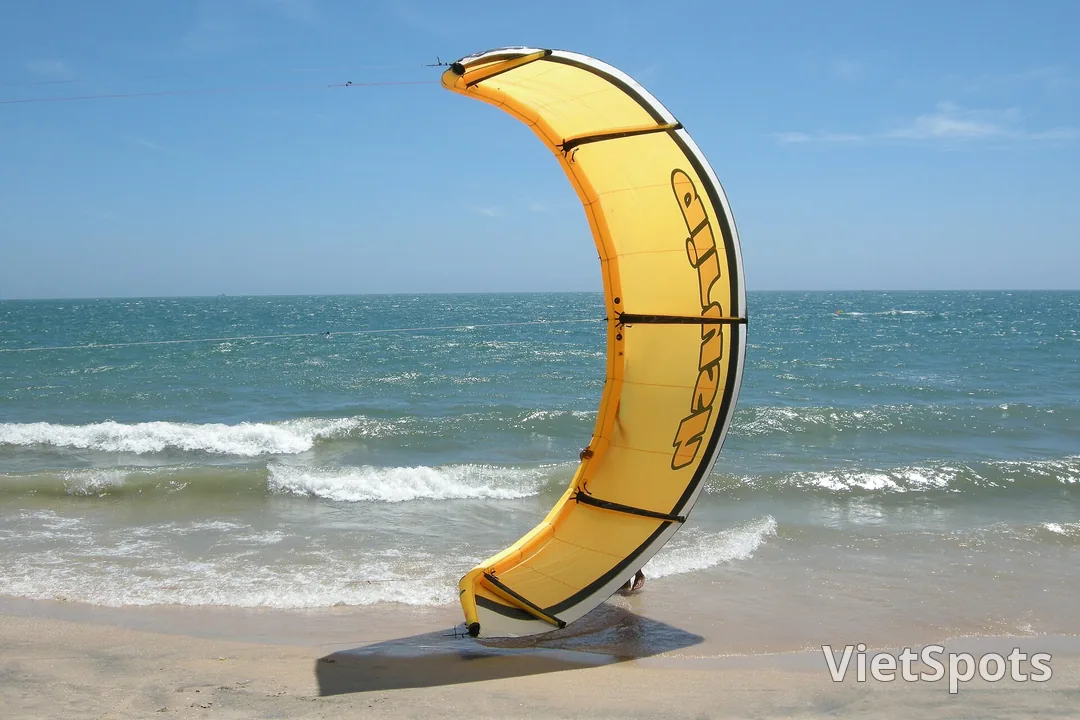
The beach is long with wide stretches of sand, making it easy to lay out kites and launch into the water. Figaro Nautisme, a French publication specializing in water sports, calls Mui Ne one of the most attractive kitesurfing spots in Asia. Every winter, riders from Europe, Australia and many Asian countries flock here.
How should a beginner get started
Kitesurfing looks effortless in photos, but a 20-knot wind pulling a large kite is a very real force. Beginners easily lose their balance, get lifted up by the kite and then slammed back down, and struggle to hold their direction and speed. That's why nobody just buys a kite on their own and heads out to the sea to practice.
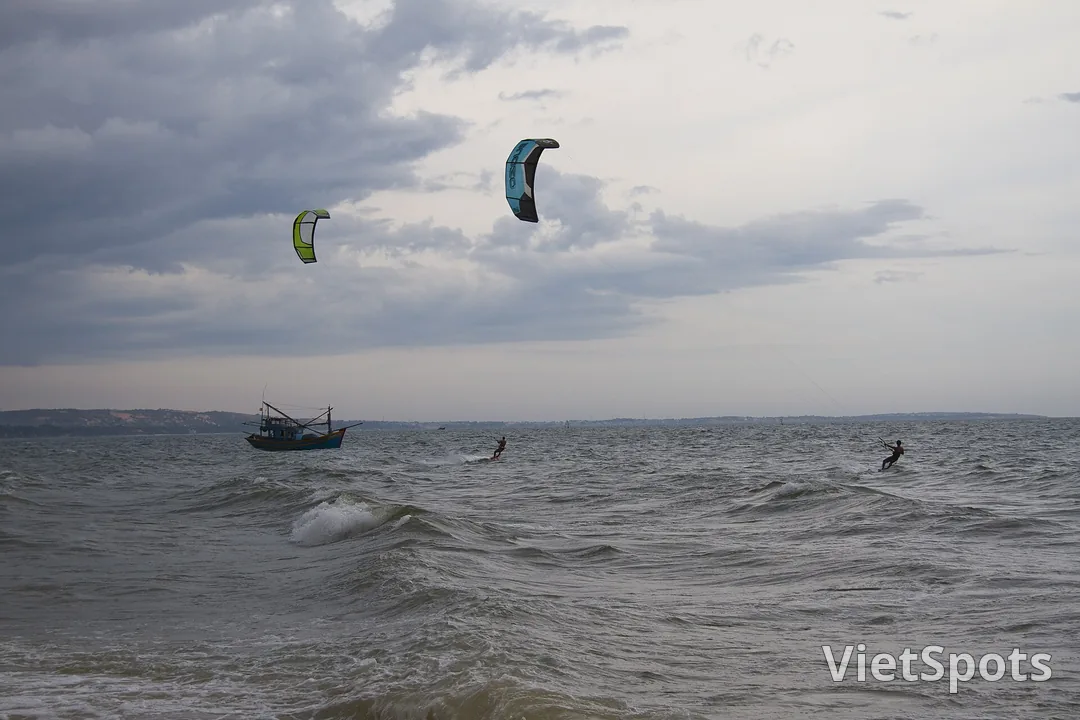
The usual way to get started is to learn at a center with certified instructors. The first session is mainly about practicing kite control on the sand, without going into the water yet. The first skill you must master is the emergency kite release, so that when a gust hits, you can detach yourself from the kite. You also need to know how to swim and be fit enough, because holding the kite in strong wind takes more strength than people think.
A few things to remember
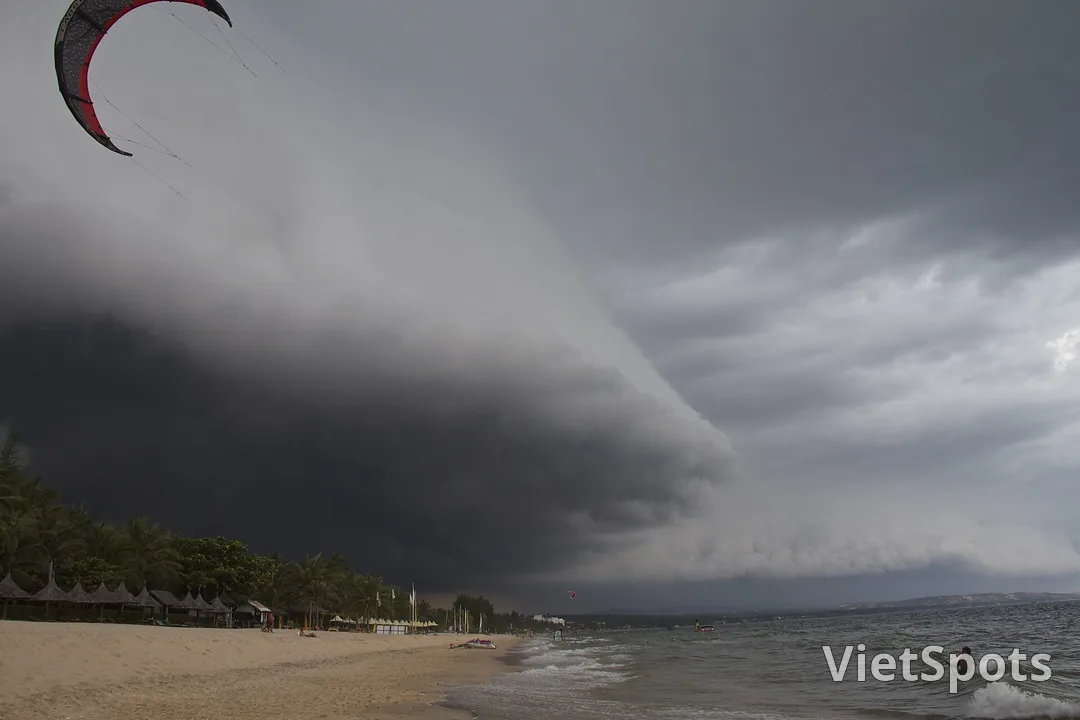
Check the sky before you head out. Steady wind is a lot of fun, but when storm clouds roll in, the wind can change direction and gust hard within just a few minutes. When that happens, head back to shore and pack up your kite.
Stay away from swimmers. Mui Ne beach is also a swimming spot for many people, so surfers must keep their distance on their own. A kite out of control, dragging its rider and lines along, is enough to injure people standing in the water.
And if you just want to watch, a breezy afternoon sitting on the sand at Mui Ne is already worth the trip: the sky is full of kites, and the sea is full of surfers.
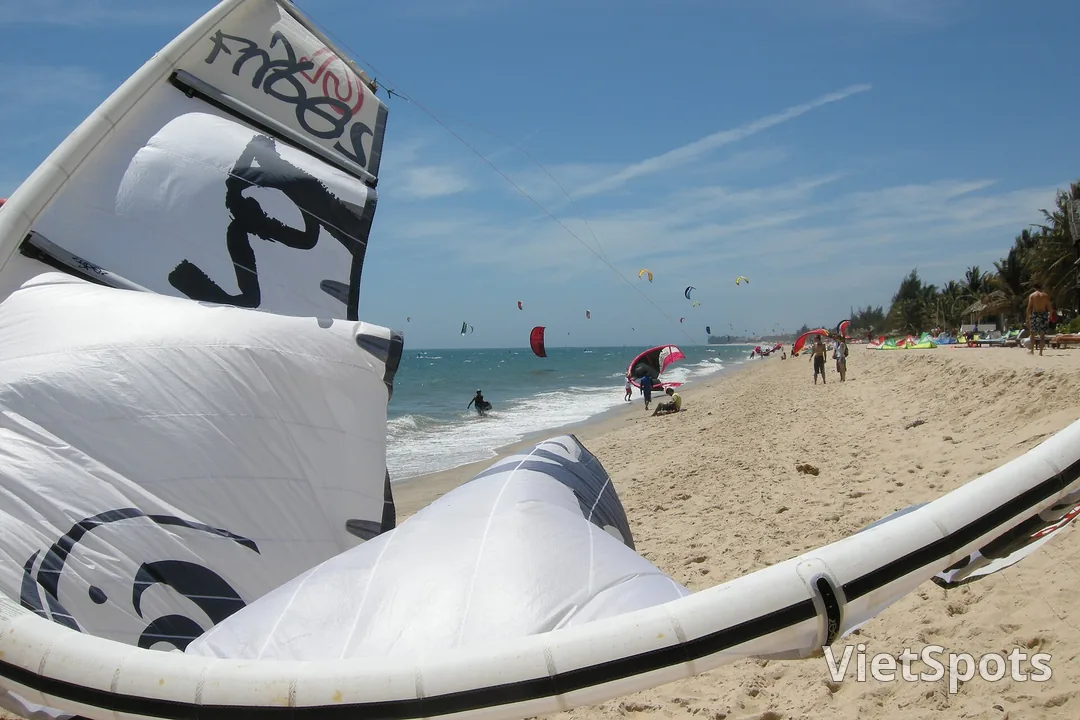
Photo: Vyacheslav Argenberg, Jean-Marie Hullot (Wikimedia Commons).
Book Travel in Phan Thiet — in English on VietSpots
- 🎁 Sign up and get 17 Welcome Pack coupons — e.g. Motorbike Rental 45%
- 👑 Member tier discount up to 15% on site (Silver 5% · Gold 15%)
- 🛂 Auto-fill arrival card📶 Compare lowest eSIM prices🚻 Find toilets
Comments