

Da Nang beach has two trades, and they are only a few kilometers apart



Almost everyone who comes to Da Nang heads to the beach. And almost everyone ends up on exactly the same stretch: the My Khe section running along Vo Nguyen Giap Street, the spot with colorful umbrellas, lounge chairs, a lifeguard hut painted with red-and-white stripes, and a row of high-rises standing right behind the line of coconut trees.
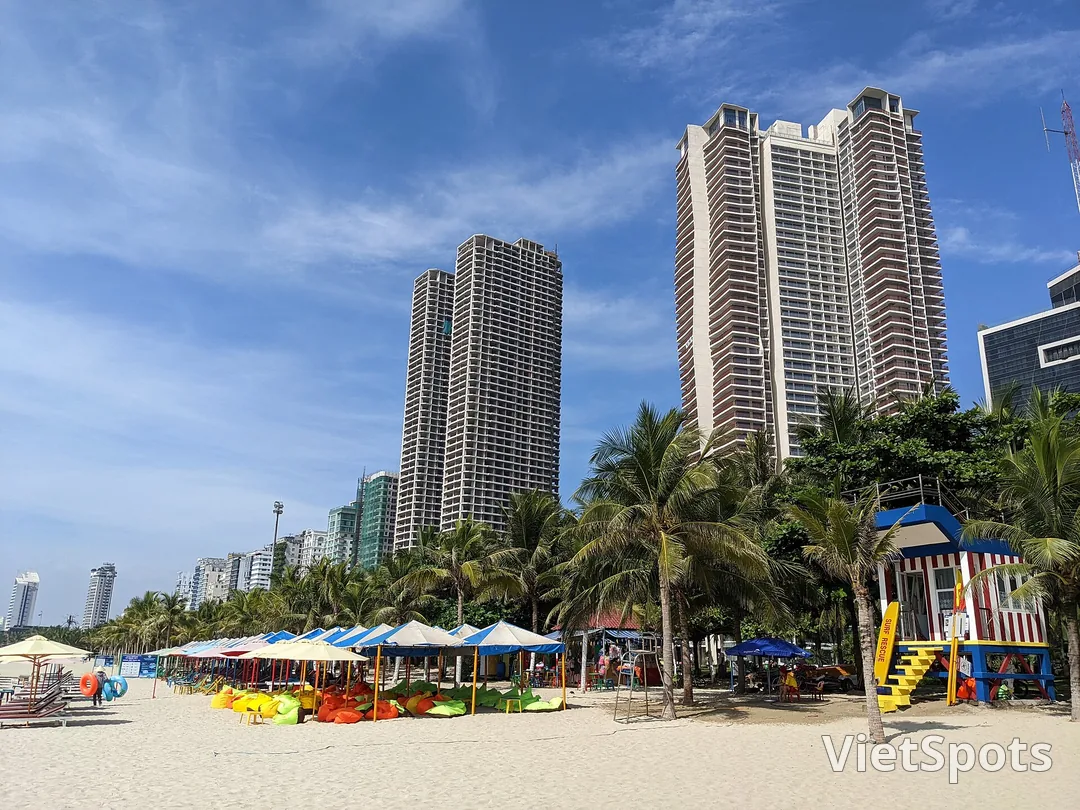
That place is beautiful, and it's also the place where all the photos you see before booking tickets are taken.
But if you go a few more kilometers north, toward the foot of the Son Tra Peninsula, it's still the same strip of sand, still the same water — but it's doing a completely different job.
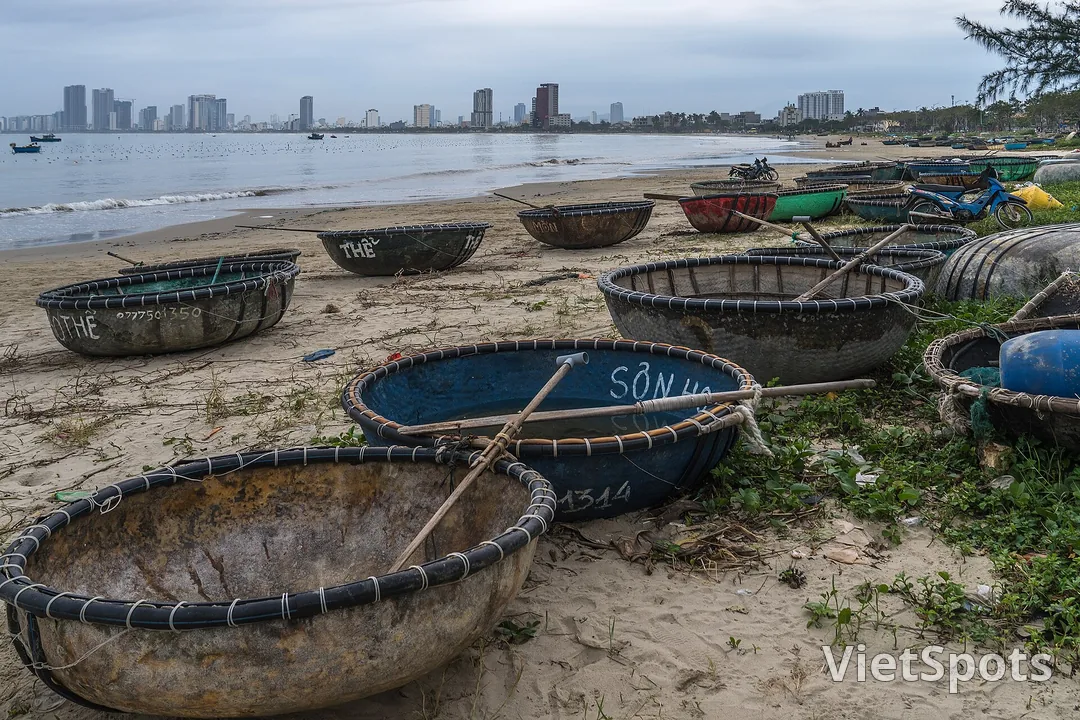
Basket boat with a license plate
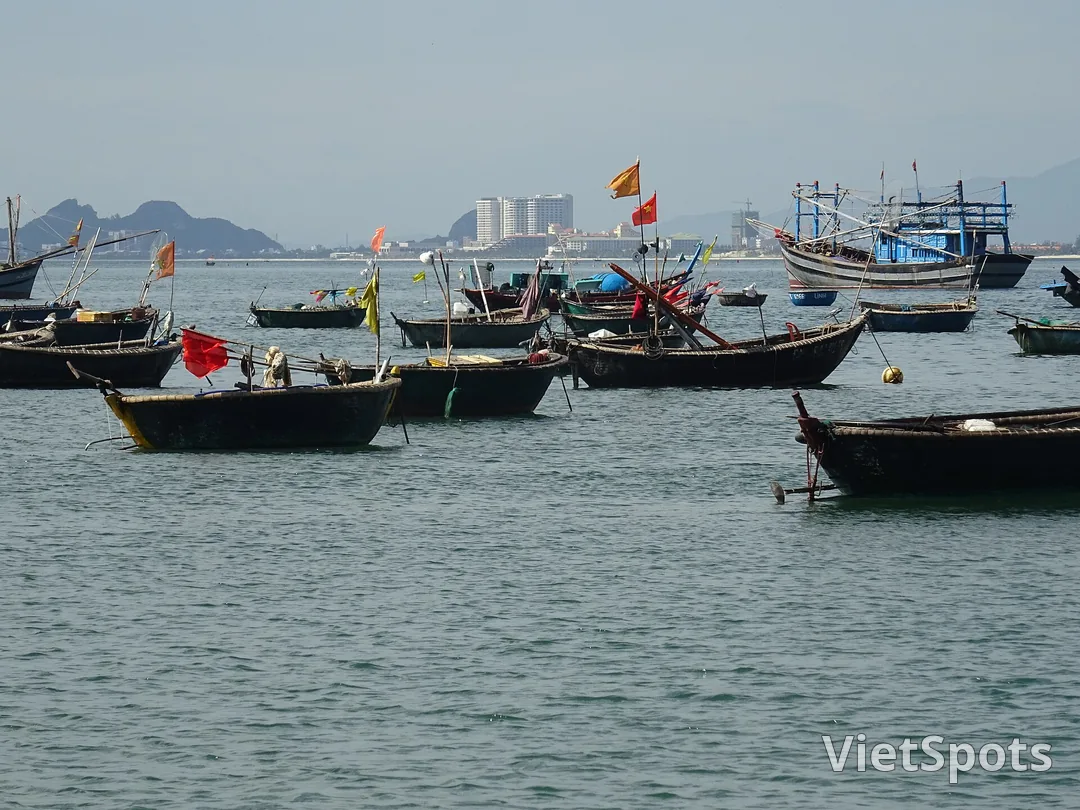
The first thing that caught the eye were baskets lying upside down or upright on the sand, in some places arranged in long lines for hundreds of meters.
Look closely at the rim of the basket boat and you'll notice a detail that I think few tourists pay attention to: almost every one has a name and phone number painted on it in white paint. Some have a person's name written on them, some have the combined names of a married couple, some just have a few numbers.
It wasn't decoration. It was the hull number. The baskets sat together on the beach, with nowhere to lock them up, and when the weather turned rough, people hauled them up high — so the name painted on the rim was both a mark of ownership and a way to call out to each other when needed.
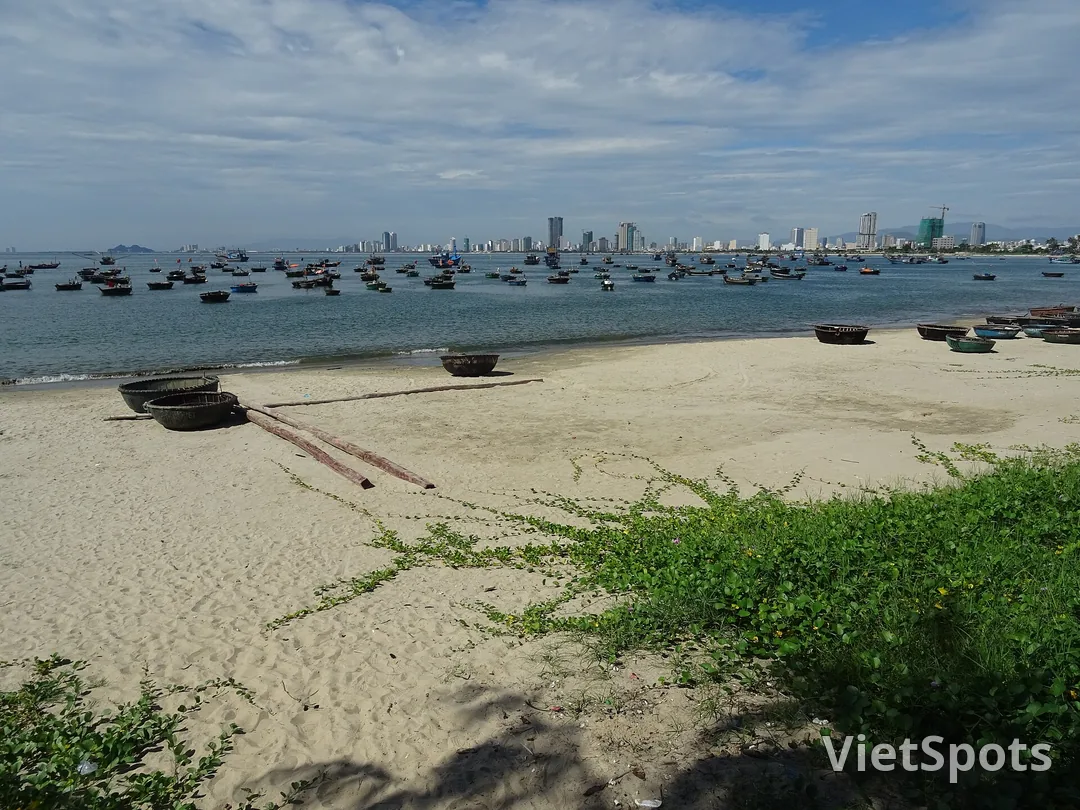
This is also where you can most clearly see why Da Nang Bay looks different from other tourist beaches in the region: offshore, there are almost always a few hundred boats anchored. These aren't tourist boats. That's the fleet resting between two trips.
The market exists for only a few hours each day
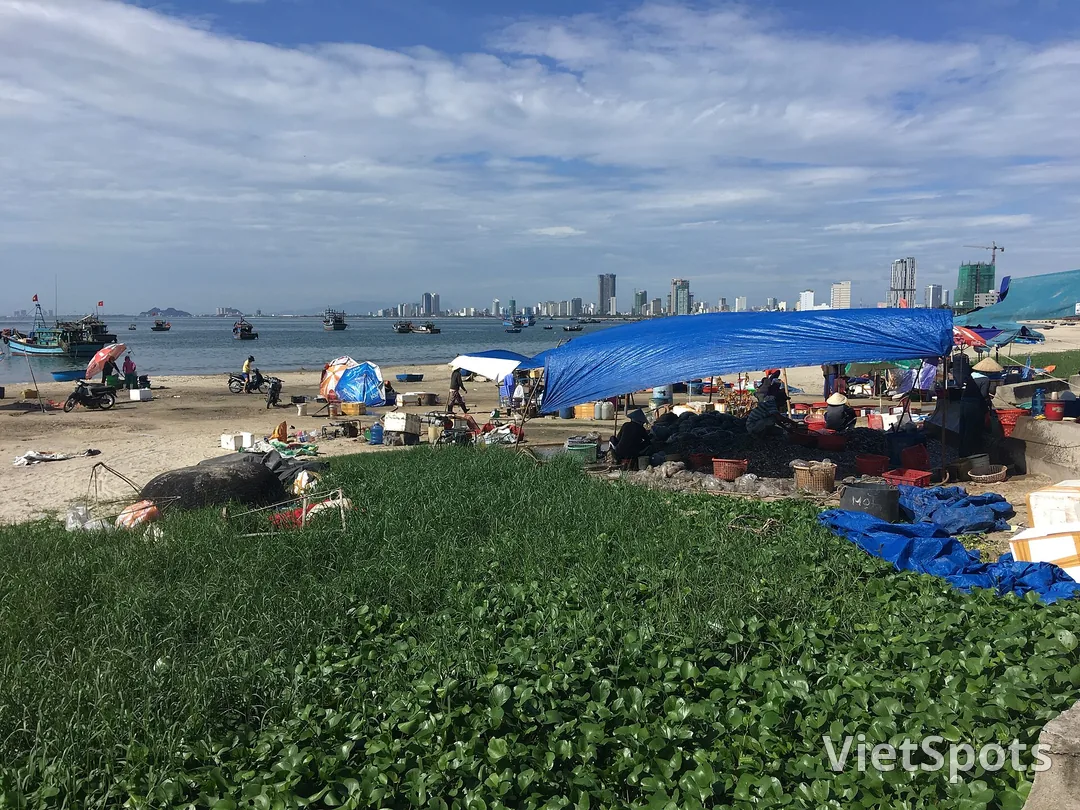
When the boats come ashore, the market sets up right there — on the sand, under a few blue tarps stretched out for the moment. No stalls, no signs, no opening hours. Goods are poured out into plastic baskets, buyers squat down to pick through them, and once done, everyone heads home and the spot is left spotless again.
What's notable is that market disperses before most tourists even wake up. The boats return while it's still not quite bright out; by the time people go to the beach to take photos, there are only a few tire tracks on the sand and a handful of overturned baskets left.
If you want to see it, you'll have to wake up early. But if you just want to buy fresh seafood and have someone cook it for you without needing to get up at 4 in the morning, then the way at Han market is much more convenient.
The beach is also a shipyard
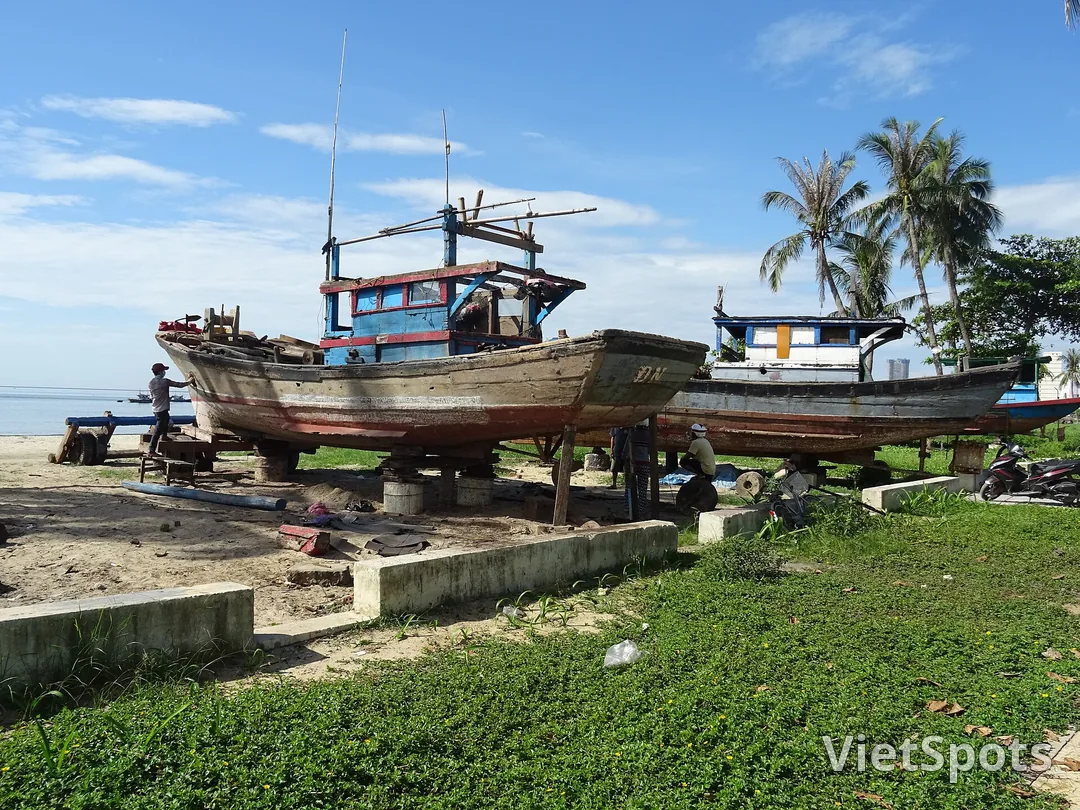
What I find most interesting about this stretch of beach is that it's not just for mooring boats. It's also a place for repairing boats.
The wooden boat is propped up on a few concrete blocks and logs right on the sand, left out in the open for a whole week so people can scrape off the barnacles, re-caulk it, and repaint it. No dry dock, no workshop, no fence. A few kilometers from where guests lie sunbathing, someone is lying beneath the hull of a ship, scraping off the old layer of paint.
Those two events happened on the very same morning, on the very same stretch of coast, and almost no one on this side knew what the other side was doing.
This season is different
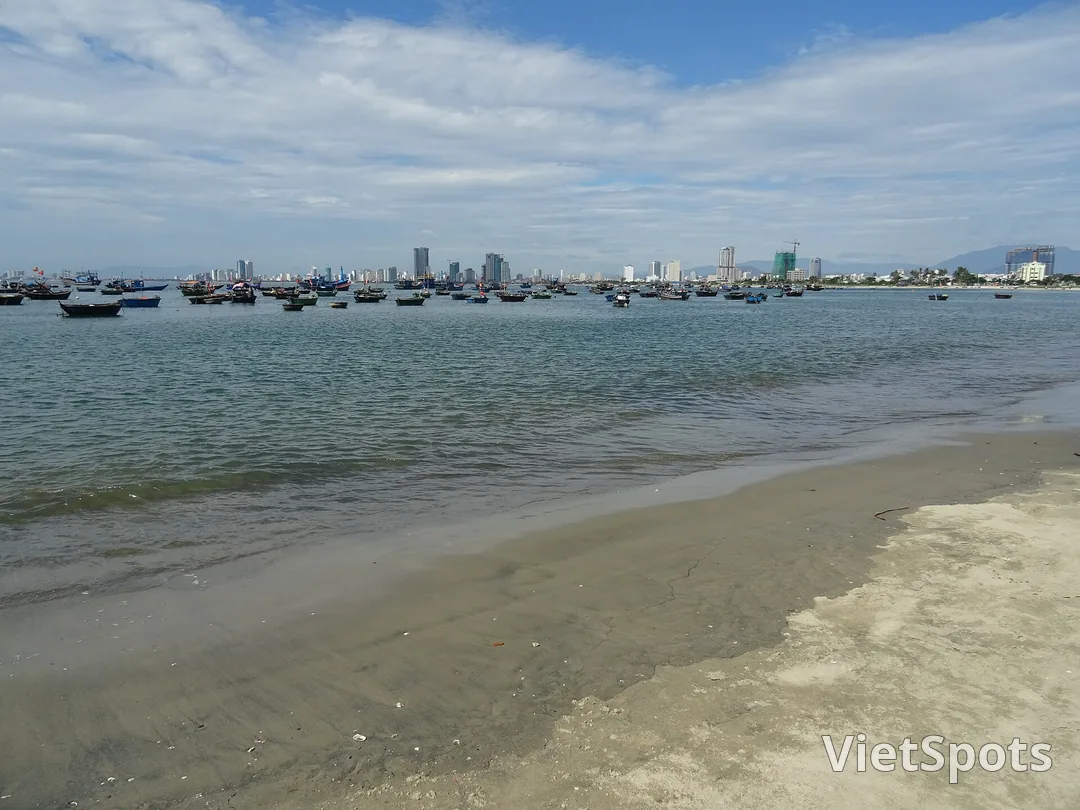
From October onward is when this stretch of coast changes its rhythm. The sea turns rough, waves grow big, and the first thing people do is pull the basket boats up much higher than usual — back deep toward the grassy bank, tie them down, and flip them over.
There are days when the whole team doesn't go out to sea. At those times the beach looks very strange: full of boats, but without a single soul around. About how central Vietnam's weather works this season, I've written about it separately here.
And a third shift, right when the sky is about to turn dark
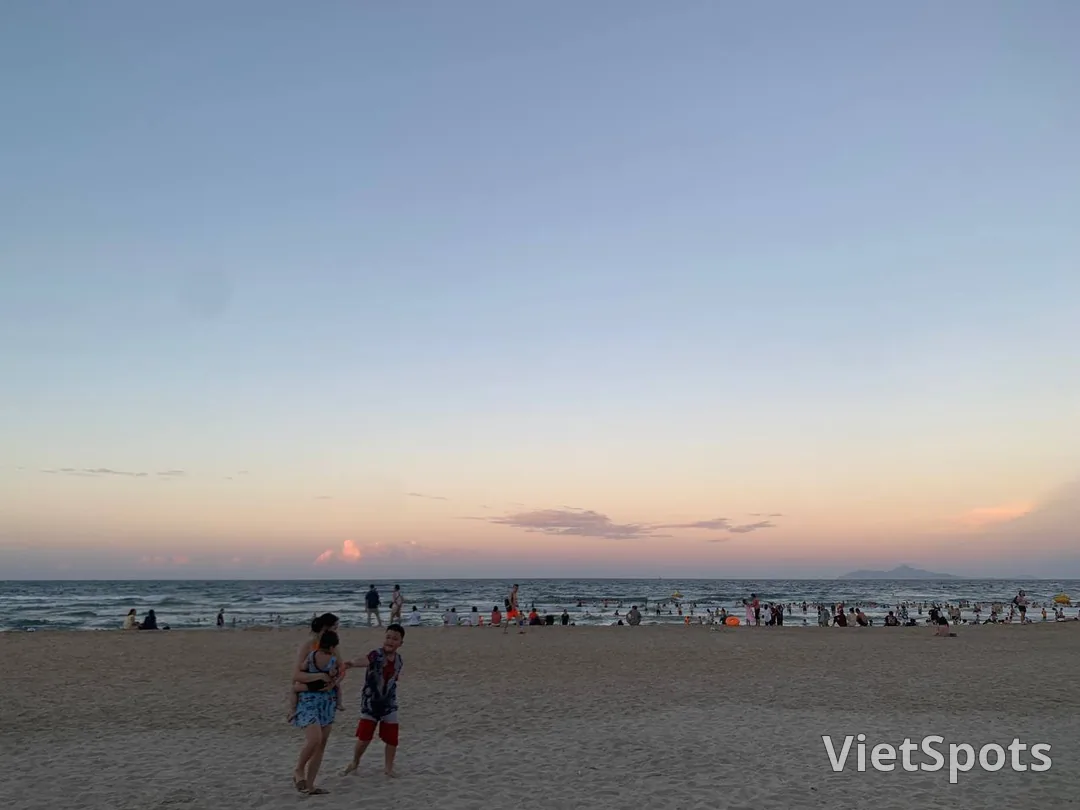
If the northern stretch of the beach belongs to the fishermen's morning shift, and the midday stretch of My Khe belongs to the tourists, then there's still one more shift that many people never get to see: the stretch from half past four in the afternoon until the sky goes completely dark.
That's when the people of Da Nang head to the sea. No lying around sunbathing, no renting umbrellas — most ride their motorbikes over, park, get in the water, swim for a while, then go home to eat. On beautiful days, this stretch of shore gets busier than at any other time of day.
At noon, however, the beach is almost empty. The reason is the same as why the whole city is quiet at that hour — I talked about it in this article.
Should we go see it?
I don't think this is a matter of a "real beach" versus a "beach for tourists." Both are real. It's just that they do two different jobs, and happen to sit side by side on the same stretch of coast.
But if you've visited Mỹ Khê a few times and noticed it starting to look like any other resort beach, then just running a few kilometers toward Sơn Trà is enough to see a completely different Đà Nẵng — no tickets needed, no tours needed, no need to wake up early if you just want to see fishing baskets and boats instead of the market.
But if you want somewhere really secluded, there are a few more small coves tucked farther down at the foot of the peninsula, which I've listed here.
Photo: Christophe95, Jpatokal, Crowundefined73d (CC BY-SA 4.0) and Alexkom000 (CC BY 4.0) — Wikimedia Commons.
Book Travel in Da Nang — in English on VietSpots
- 🎁 Sign up and get 15 Welcome Pack coupons — e.g. Motorbike Rental 45%
- 👑 Member tier discount up to 15% on site (Silver 5% · Gold 15%)
- 🛂 Auto-fill arrival card📶 Compare lowest eSIM prices🚻 Find toilets
Comments