

What does the word "Links" in a golf course's name mean?



Looking at the list of golf courses on VietSpots, the word Links appears quite a lot: Montgomerie Links, KN Golf Links Cam Ranh, Sea Links, Blue Diamond Golf Links, Dragon Golf Links, and the three FLC courses in Sầm Sơn, Quảng Bình and Quy Nhơn. Eight courses in eight different places, yet every one of them sits right by the sea. That is no coincidence.
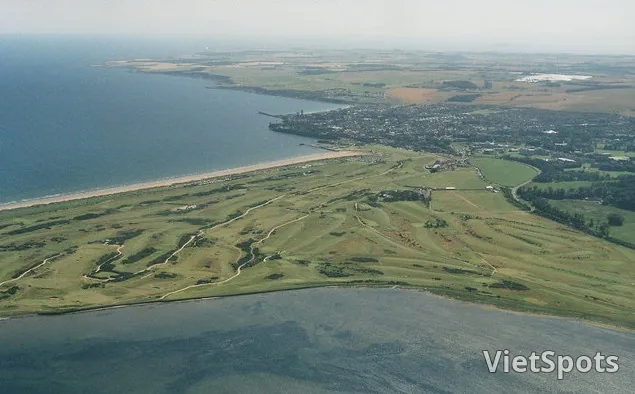
Links is the name of a type of land
This word came into English through Scots, originating from hlinc in Old English, meaning a mound, a raised ridge of land. The Scots use it to refer to the sandy strip of land along the coast, lying between the beach and the farmland further inland. The land there is full of sand dunes and barren, unsuitable for plowing or cultivation, with only wild grasses growing on it. The land couldn't be farmed, so people used it for hitting balls. Scotland's oldest golf courses, including St Andrews, all lie on strips of land like this.
It is that very type of soil that determines how the game is played. Sandy soil drains quickly, so the ground is firm, and once the ball lands it rolls a long way. Being right by the sea, there are also few trees, so the wind blows straight across the course with nothing to block it. That's why a true links course usually has a few characteristics: almost no trees, bumpy fairways, thick rough, small but deep bunkers, and wind at all times.
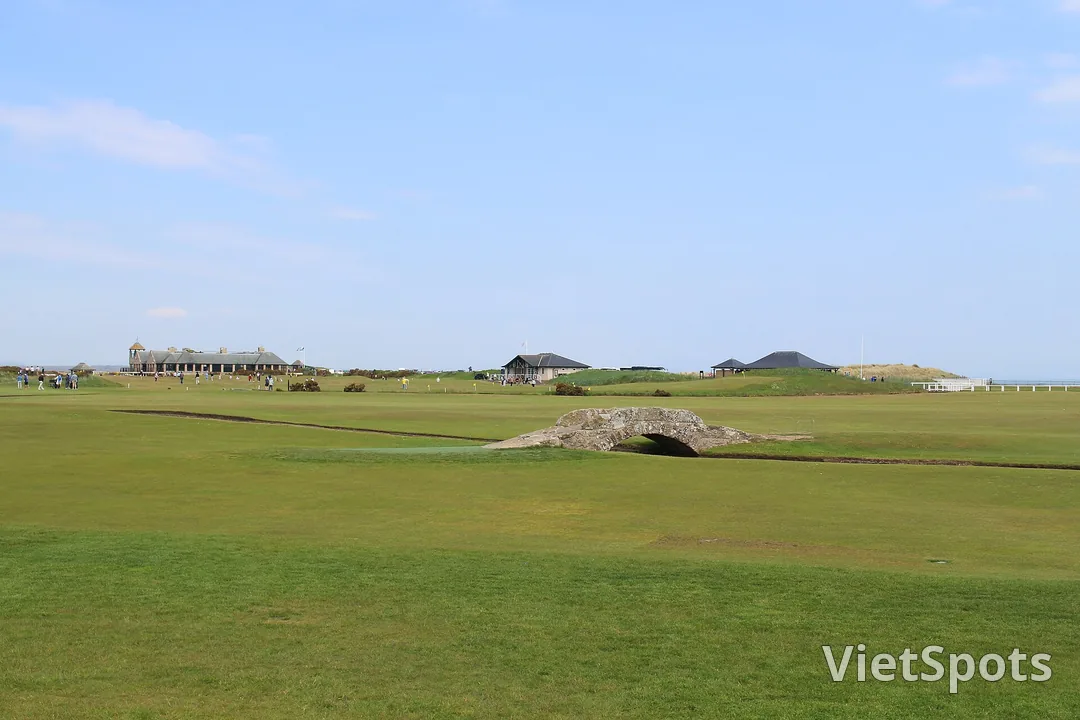
In Vietnam, some courts are the real deal, while others are hybrids
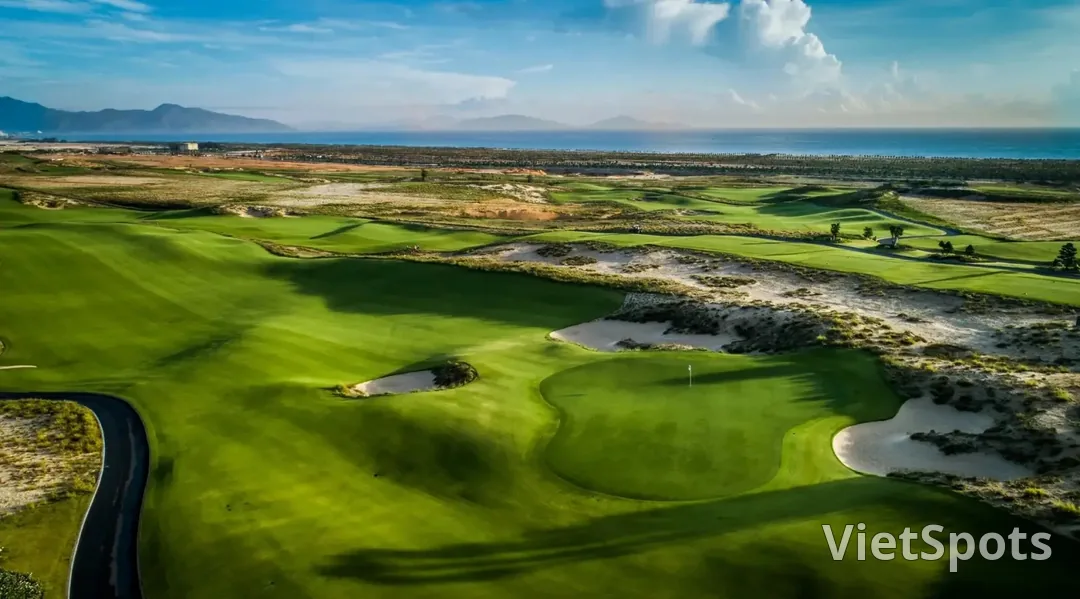
The central coast has long stretches of sand dunes, which is why Vietnam has been able to build true links courses. KN Golf Links Cam Ranh was designed by Greg Norman's company and opened in 2018. Its 18-hole links course has almost no trees, just sand dunes, low scrub grass and the sea breeze.
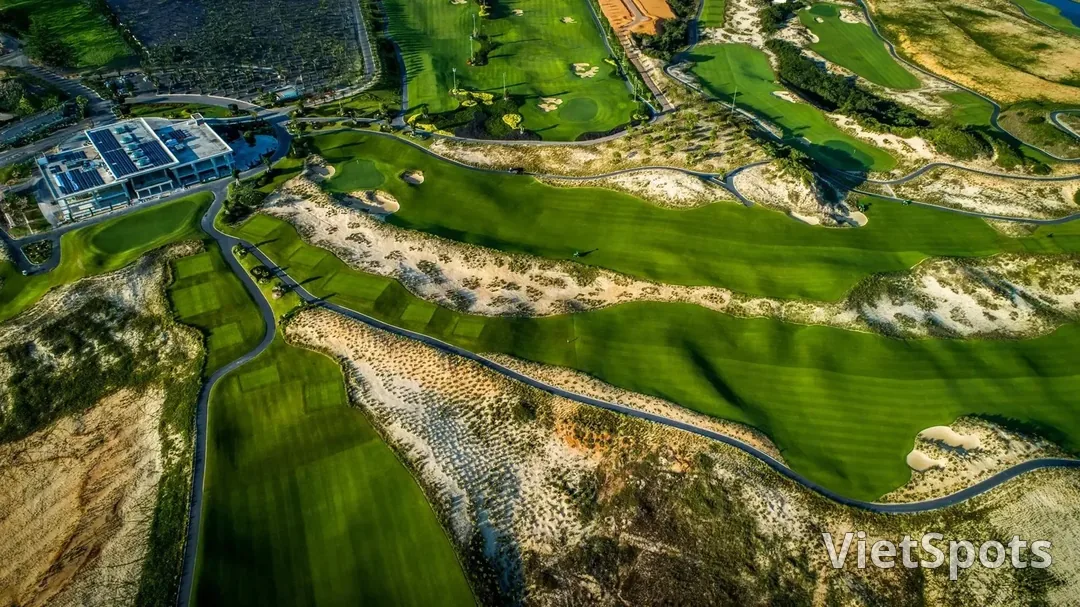
Montgomerie Links in Điện Ngọc is different. Colin Montgomerie is Scottish, and he brought the spirit of his homeland's links courses into the design: sandy soil, sand dunes, and rolling fairways. But most of the fairways are lined on both sides by rows of casuarina trees. That is why the course is usually classified as a links-style course rather than a true links course.
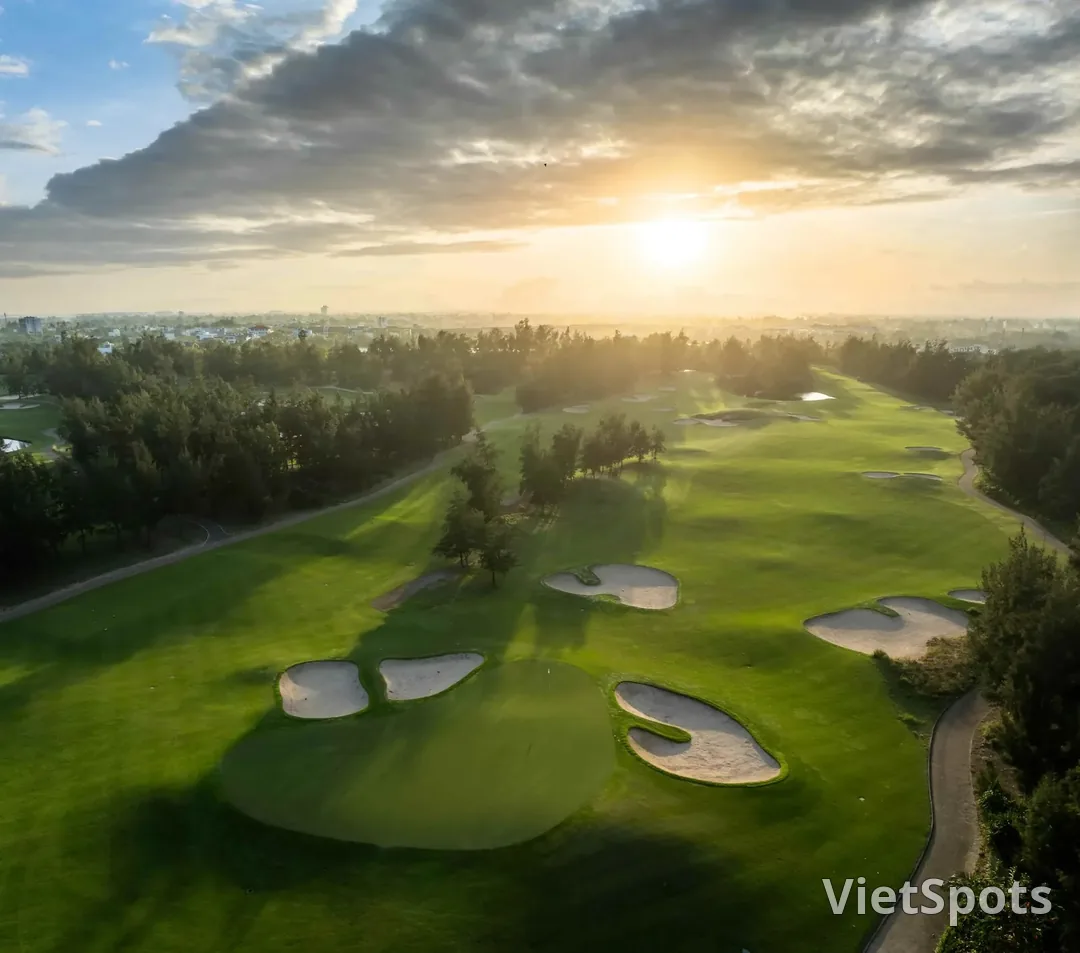
One more thing worth knowing: in the US, the word "links" has long been used loosely, and any course can be called that. So when you see "Links" in a course's name, just take it to mean a course near the sea with plenty of wind. As for whether the course is truly open and treeless like those in Scotland, you'll have to look at photos to find out.
What should you prepare when heading out to a links course?
When it's windy, try to hit the ball low: grip down on the club a little and make about a three-quarter swing. A low ball flight is pushed around less by the wind. Around the green, a bump-and-run shot with a 7- to 9-iron is usually safer than a high lob shot. When choosing your landing spot, remember to account for how far the ball will roll after it hits the ground. And since the course has no trees, there is no shade either, so a hat, sunscreen and drinking water are things you must not forget.
The grass on links courses in Vietnam is also different from Scotland, because heat-tolerant grass varieties have to be used. That topic already has its own article. And if you're in Da Nang and want to know how the courses around here differ from one another, you can read the article about the four 18-hole courses.
St Andrews photos: Chris (geograph.org.uk, CC BY-SA 2.0) and Suicasmo (CC BY-SA 4.0), Wikimedia Commons. KN Golf Links Cam Ranh and Montgomerie Links photos: VietSpots.
Book Travel in Da Nang — in English on VietSpots
- 🎁 Sign up and get 17 Welcome Pack coupons — e.g. Motorbike Rental 45%
- 👑 Member tier discount up to 15% on site (Silver 5% · Gold 15%)
- 🛂 Auto-fill arrival card📶 Compare lowest eSIM prices🚻 Find toilets
Comments