

The resort in Son Tra was designed by an architect who only dared to draw it after visiting more than 30 Vietnamese temples and pagodas



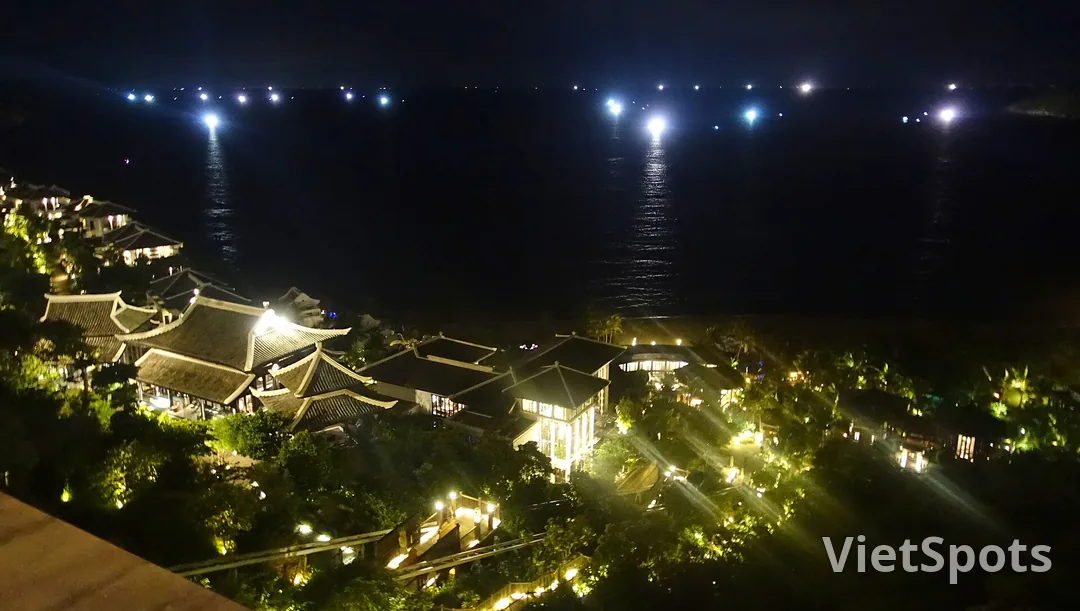
From the center of Da Nang, ride up to the Son Tra Peninsula; once you pass the coastal stretch, the road starts climbing. The road gradually narrows, with a rocky forest cliff on one side and the sea on the other. At the end of that slope, you'll arrive at Bai Bac — a small cove facing north, and nestled entirely within that cove is the InterContinental Danang Sun Peninsula Resort.
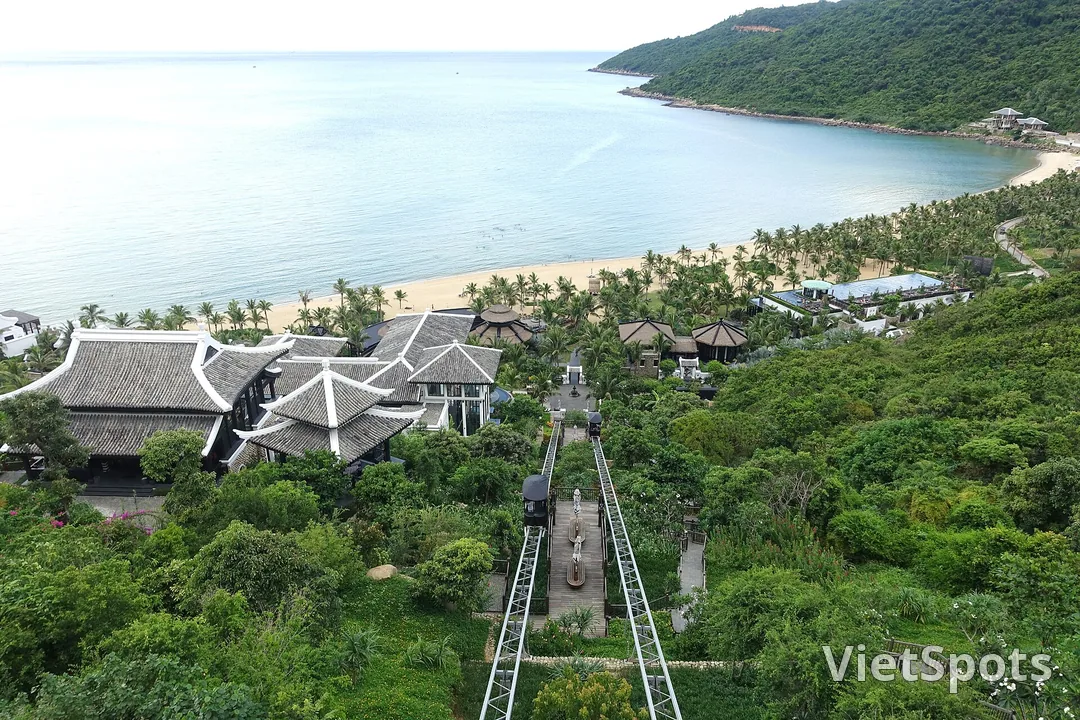
This place is one of the few constructions permitted to be built in the Sơn Trà Nature Reserve. The resort stretches across approximately 39 hectares of hillside, embraces 700 meters of private coastline, and opened in June 2012.
The designer is Bill Bensley, an American architect who has been building resorts in Asia for several decades. What's remarkable is how he began: before painting, he visited more than 30 communal houses, pagodas, palaces, and mausoleums across Vietnam to see how the ancient Vietnamese built their homes. It sounds like advertising talk, but looking at the construction site, it's clear that he really did check it out.
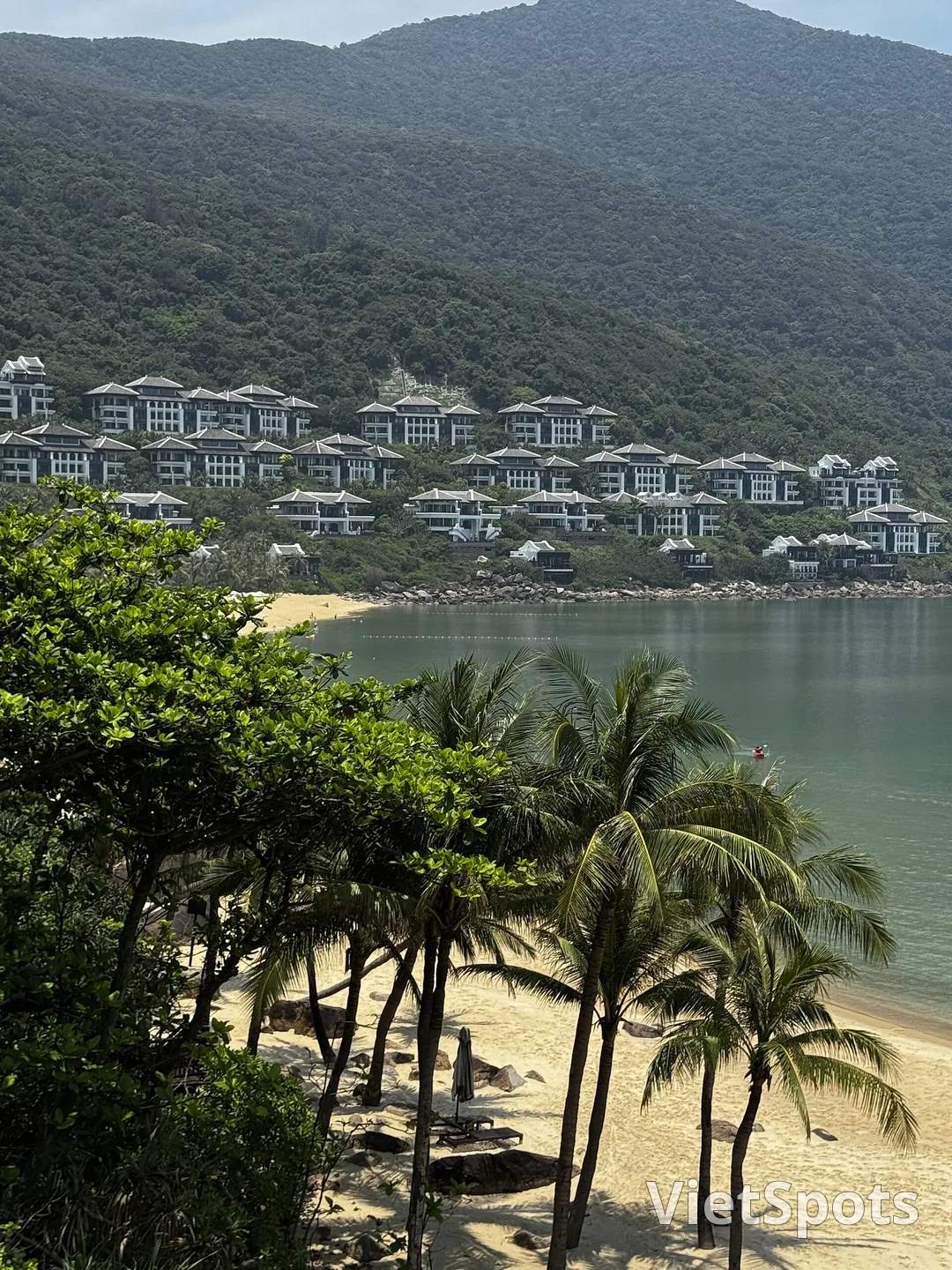
The curved tile roof and wooden frame structure are drawn from Huế's traditional "nhà rường" houses. The paneled doors, vertical lattice panels, and the proportions of the small houses evoke the ancient town of Hội An. The inner courtyards, skylights, and stone-paved walkways truly capture the rhythm of a Northern Vietnamese countryside village. There's a detail that goes quite far: the headboard in the room was made following a pattern he saw in a communal house courtyard in Bat Trang.
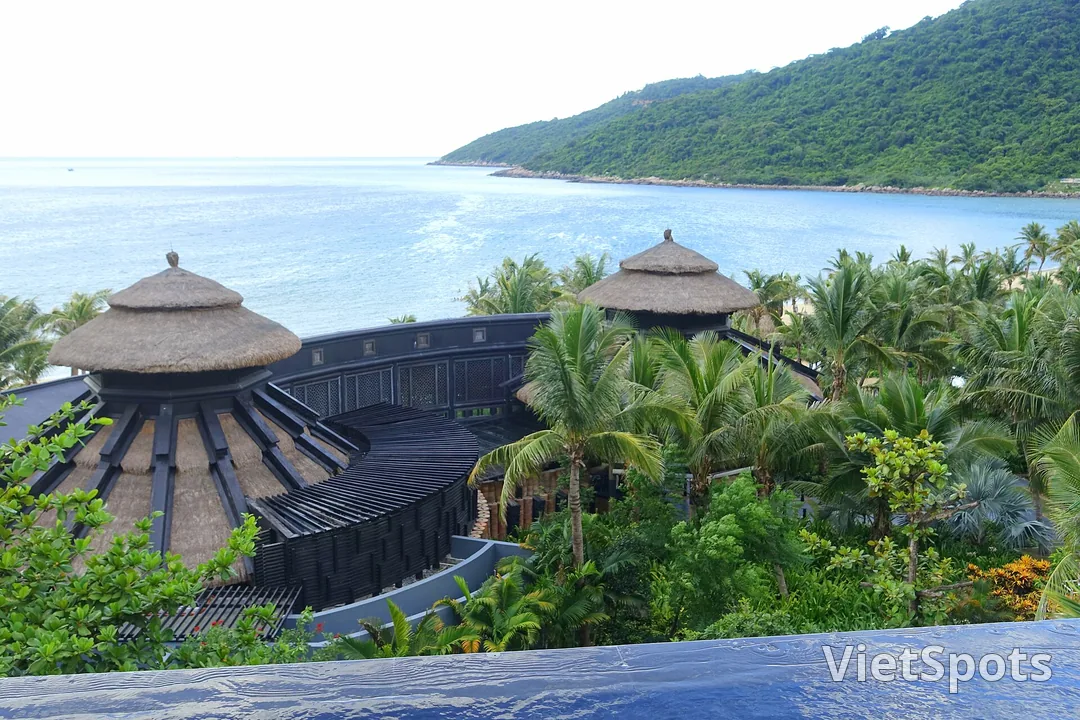
So this isn't some generic "Asian resort" style that any hotel in Southeast Asia could pull off. It picks up individual pieces from real places in Vietnam and stitches them together. Vietnamese visitors will keep feeling a sense of familiarity, without being able to immediately pinpoint where that familiarity comes from.
The way the space is organized is also unusual. The mountainside slopes almost vertically, so instead of flattening it out, Bensley divided the resort into four elevation tiers, named from top to bottom: Heaven, Sky, Earth, Sea. Whichever floor you're on overlooks the sea, and the lower you go, the closer you are to the waves.
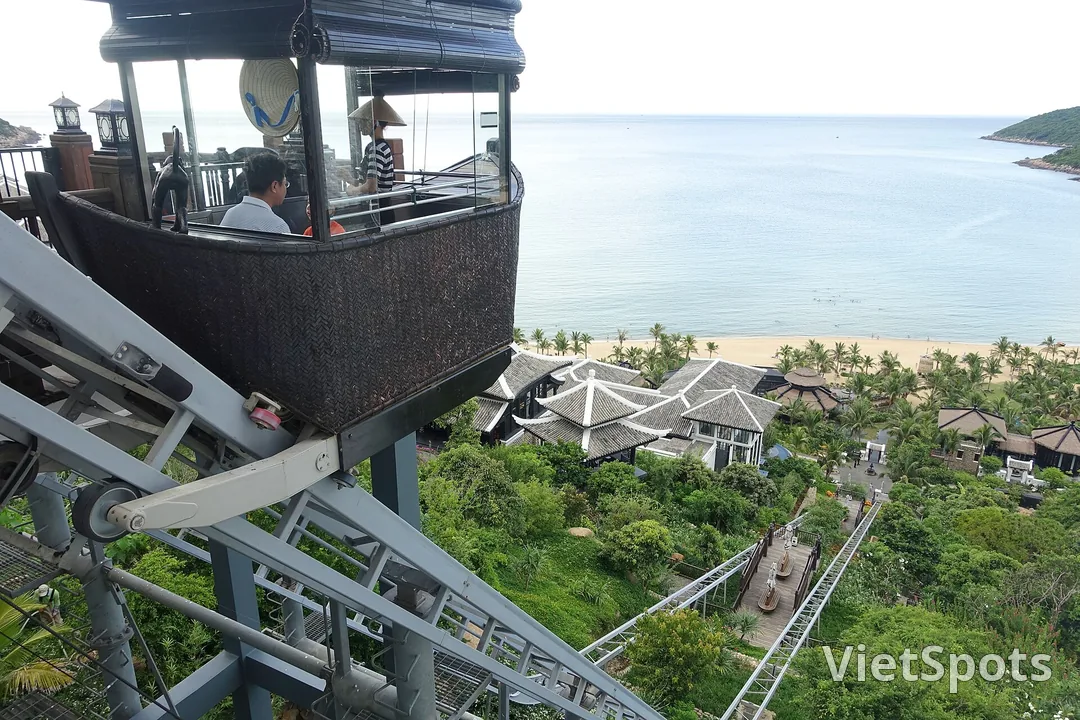
Connecting the four levels is a funicular line running on an inclined rail, and the resort is called Nam Tram. It's the main means of transportation in the area — because walking down from the Heaven floor to the Sea floor is doable, but no one wants to try climbing back up a second time. The woven-rattan cabin, moving slowly, and the view of the bay along the way down are things many guests remember longer than even the bedroom.
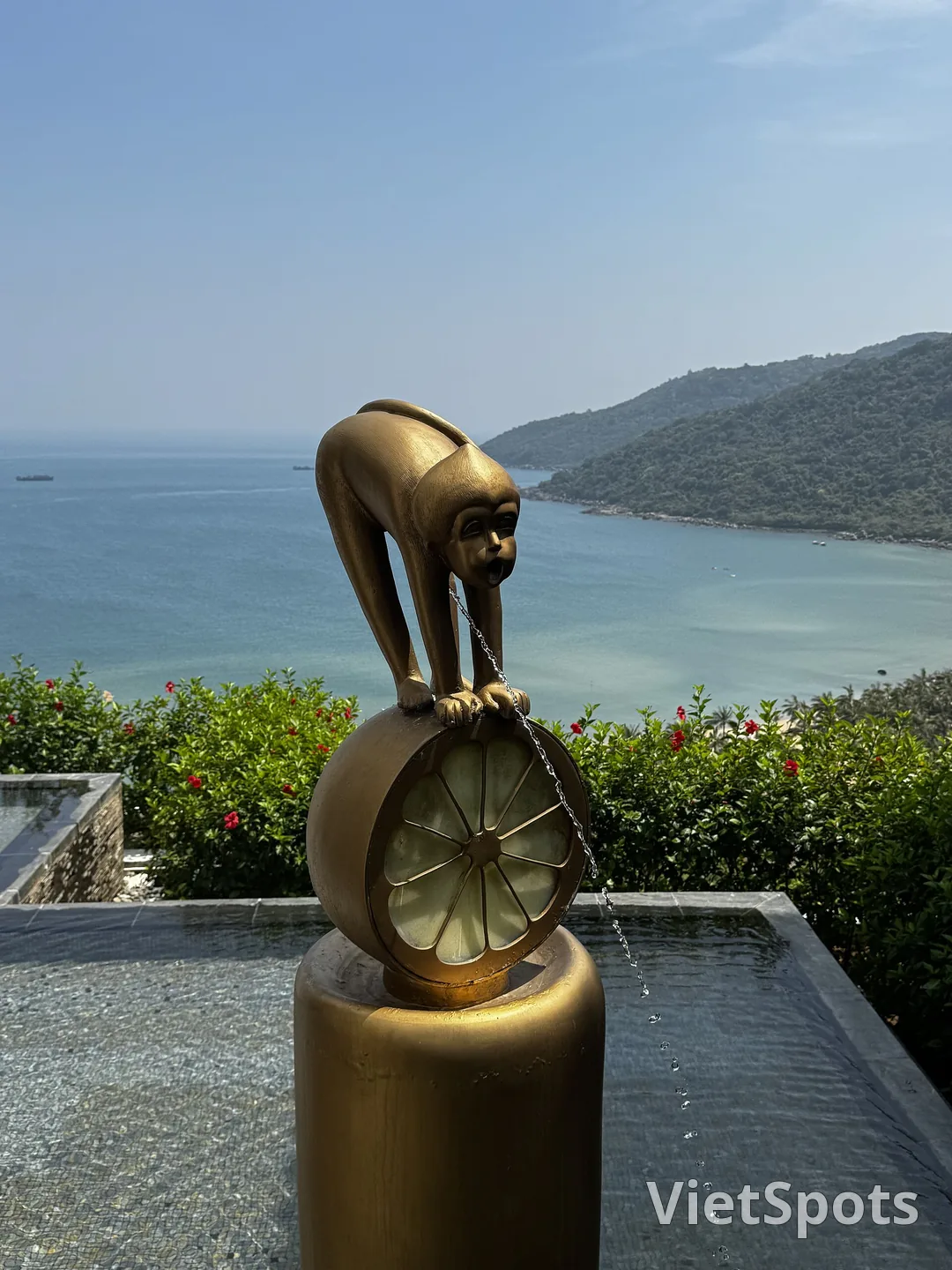
The decorative details are also where Bensley likes to play around. Scattered throughout the area are statues of monkeys, herons, and dogs in all sorts of poses, made with a slightly caricature-like style, and placed in unexpected spots — at the top of the stairs, at the edge of the pond, in the middle of the water basin. This was once his familiar fingerprint, and it took away some of the usual solemn air of a luxurious resort.
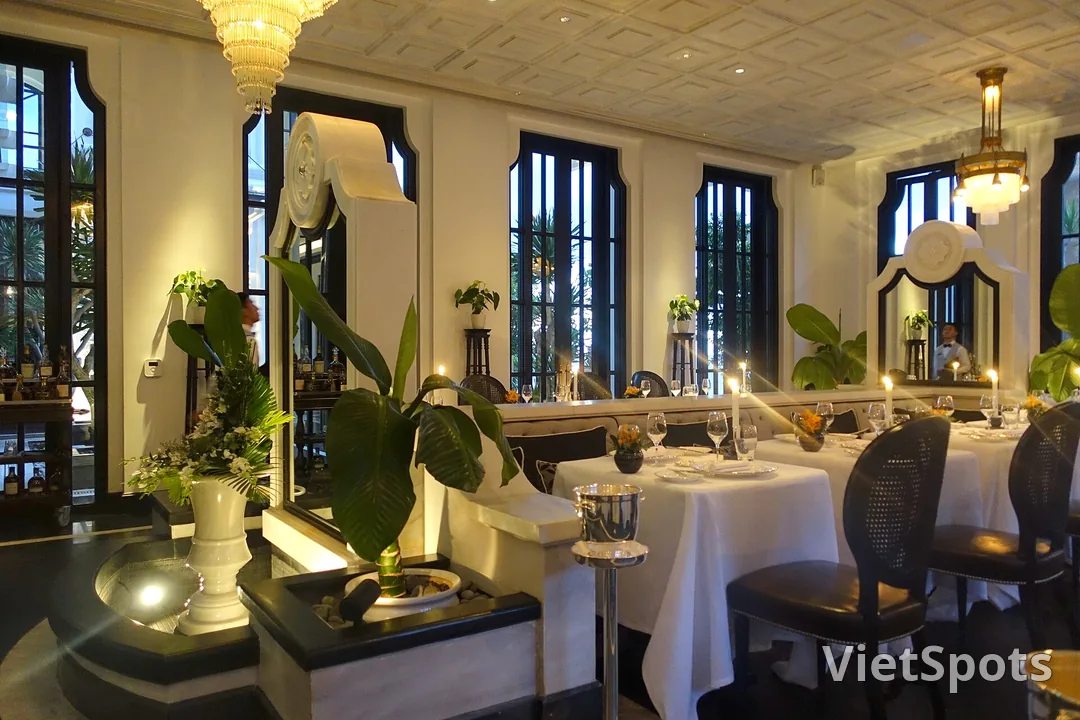
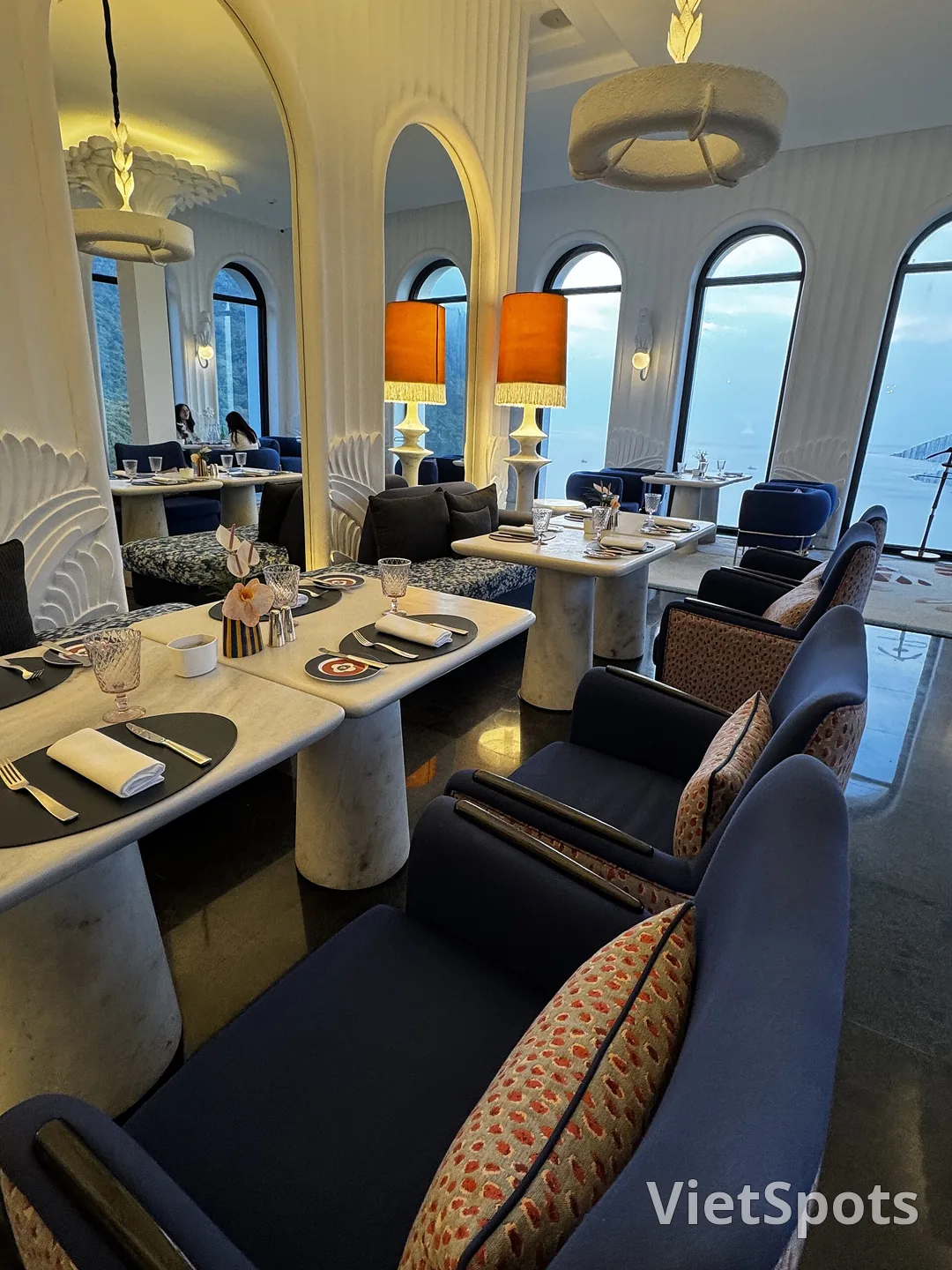
Regarding dining, the restaurants here are designed as distinct settings rather than a hotel dining room repeated many times. Some spots go for a black-and-white look with chandeliers and flat-laid tablecloths, in the classic French restaurant style; others use raised white arches, blue velvet chairs, and arched doorways that open straight out onto the sea.
The resort has a restaurant perched precariously on the cliffside, with seating booths shaped like conical hats (nón lá), each one looking straight down over the bay. Photos of this spot appear so often that, for quite a few people, it's almost become the representative image of the entire Sơn Trà peninsula.
A few practical things if you're planning to come here.
There is no bus service on the road to Bãi Bắc, and it's not a taxi route either, nor do taxis operate there. The simplest way is to book a private car with driver from the city center; the distance is about 20 km, taking roughly 40–45 minutes depending on the time of day. Motorbikes can make it, but the final slope is quite steep and it gets slippery when it rains — if you're not used to mountain pass roads, you shouldn't risk it.
Bãi Bắc faces north, so during the northeast monsoon season (roughly from October to February), the waves and wind are noticeably stronger than at the eastern beaches like My Khe. On the other hand, from March to August, the sea here is usually calm and clear. If you're going for the sea, you should plan according to the season rather than by holiday schedule.
You don't have to stay overnight to dine at the restaurants, but it's best to book a table in advance — the resort is located within a protected reserve with a controlled gate, so just dropping by doesn't always guarantee you'll be let in. And remember that once you get all the way out here, there aren't any other shops or eateries nearby; you should take care of eating along the way at the base of the peninsula.
Finally, if you just want to see it for yourself without planning to actually stay, the coastal stretch from Hoang Sa up to Son Tra is worth the trip on its own. Those bends up high looking down over Da Nang Bay, early morning mist still hanging over the forest — that's something you get to see for free.
Photo: Daderot (CC0) and Jcsantos85 (CC BY-SA 4.0) — Wikimedia Commons



Comments