

On 2 Tháng 9 Street there is a mì Quảng shop that sells phở sắn, a kind of noodle that the people of Quế Sơn make from cassava root.



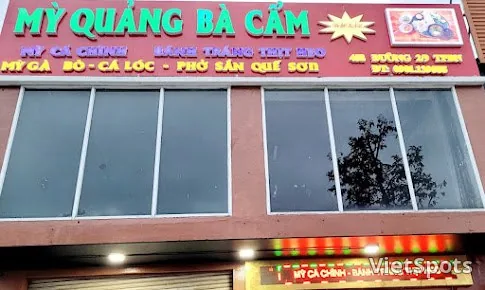
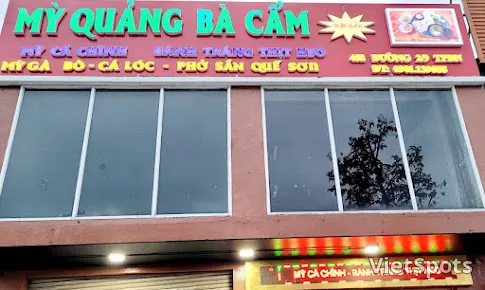
The shop's signboard lists all the usual things a Mì Quảng shop would list: chicken noodles, beef noodles, snakehead fish noodles, and rice paper rolls with pork. But the words that make anyone with Quảng roots passing by turn back for a second look sit at the end of the line: Quế Sơn cassava phở. And at the start of the line is something few places serve either: eel noodles.
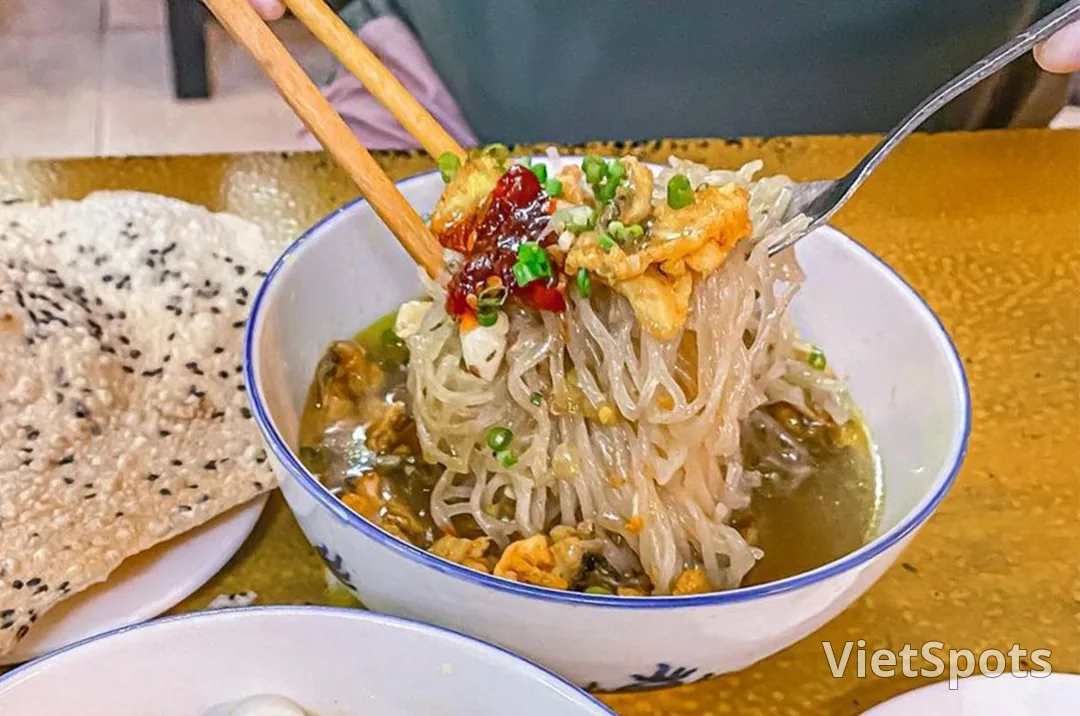
What is cassava pho
Cassava, called "khoai mì" in the South. Quế Sơn is a midland area in the west of the former Quảng Nam, with hilly, infertile land and little water, so for a long time cassava has been the crop that feeds the people there. In the old days, people sliced cassava and dried it, ground it into flour, soaked it until the sourness was gone, cooked it, then poured it into sheets of strands interwoven like a net and laid them out to dry in the sun. The first phở sắn (cassava noodle) workshops date back to the 1960s. They were interrupted by the war, then came back to life and have thrived for more than twenty years now.
Cassava pho noodles are opaque white, chewy, and nutty, with a lightly sweet aftertaste. They look like glass noodles, but one bite tells you they're not.
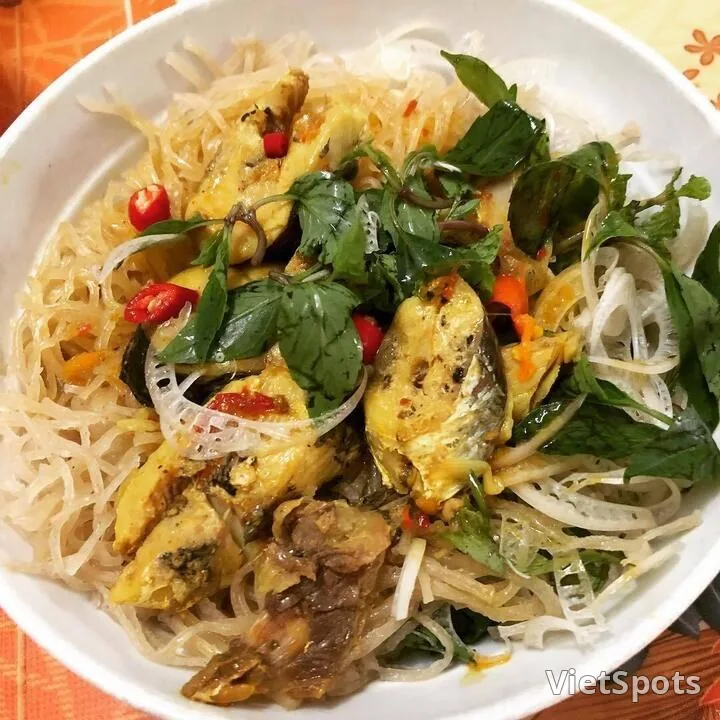
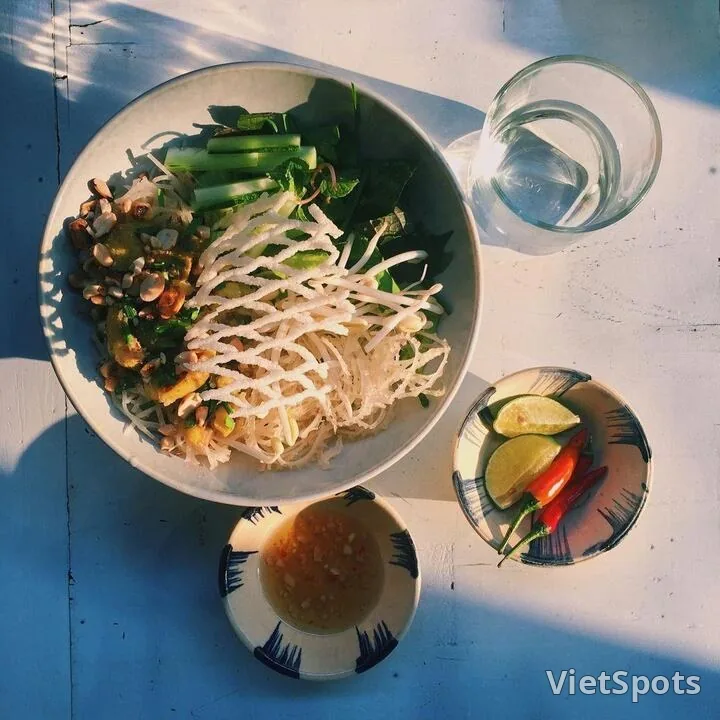
The way of eating is also different. The dried phở sheets are broken into small pieces, soaked in water for about ten minutes until soft, and drained. Then they're topped with broth from snakehead fish or flying fish braised with turmeric, just enough to barely cover the noodles, and eaten with fresh herbs and rice crackers, exactly like Mì Quảng. Or you can toss them dry with meat, roasted peanuts, and fragrant herbs. First-time diners are often surprised that the bowl looks light yet keeps them full for a long time, because the noodles are made from tubers rather than rice.
Restaurant on 2 Thang 9 Street
Mỳ Quảng Bà Cẩm is located at 462 2 Tháng 9 Street, in the Hòa Cường area, on a wide stretch of road running along the west bank of the Han River. Among the dozen-plus Mì Quảng spots currently on VietSpots, this is the only one that puts phở sắn (cassava noodles) right on its signboard. The dishes Google reviewers praise most are the eel noodles and the pork rice paper rolls; the restaurant is spacious and clean, has car parking, is open all day, and offers delivery.
Eel is a long-bodied, smooth-skinned fish that lives in rivers and streams. Its flesh is firmer and richer than snakehead fish, with fewer small bones. When braised with turmeric, the eel turns a deep golden color, and the broth becomes noticeably richer and sweeter. If you're already familiar with snakehead fish Mì Quảng, eel Mì Quảng is the next step worth trying.
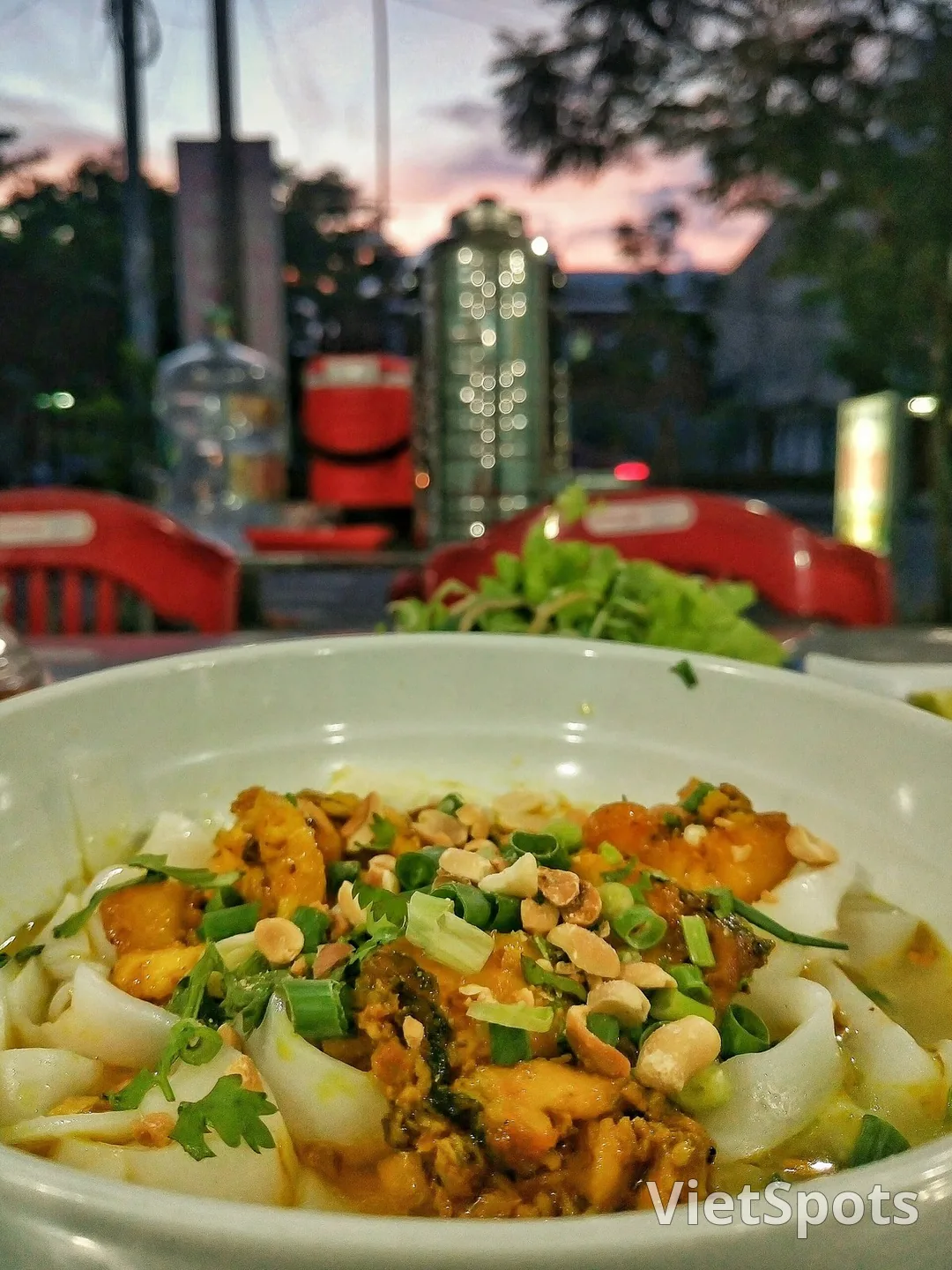
A small tip: phở sắn is a dried cassava noodle brought in from Quế Sơn, and not every shop has it available every day. Before you ride over, give them a quick call to make sure.
After the merger, Quế Sơn is now part of Đà Nẵng too. So sitting on 2 Tháng 9 Street eating a bowl of phở sắn (cassava noodle soup) is no longer eating a dish from the neighboring province, but a dish from a countryside area within the same city, just over an hour's drive from the center. The thing is, people in the countryside make the yarn, while it's the people in the city who have to go looking for it.
Phở sắn (cassava pho) photo: VTC News. Mì Quảng with snakehead fish photo: Beelerb, Wikimedia Commons. Signboard: VietSpots.
Book Food in Da Nang — in English on VietSpots
- 🎁 Sign up and get 16 Welcome Pack coupons — e.g. Motorbike Rental 45%
- 👑 Member tier discount up to 15% on site (Silver 5% · Gold 15%)
- 🛂 Auto-fill arrival card📶 Compare lowest eSIM prices🚻 Find toilets
Comments