

Why the grass on golf courses in Da Lat is completely different from other places in Vietnam



Golfers often compare courses by their designers, their length, their scenery. Few compare them by the grass. Yet what decides whether the ball rolls fast or slow is precisely the grass. And in Vietnam, the type of grass on the greens changes according to exactly two things: altitude and distance from the sea.

Hot Zone: Bermuda
Most golf courses in Vietnam are located in the plains and midlands, where summer days can reach nearly 40 degrees. There, there is almost only one choice for greens: Bermuda grass, a warm-season grass that tolerates intense sun and high humidity. Among the golf courses on VietSpots that list their green grass type, Bermuda makes up the majority, and the name that comes up most often is TifEagle.
The "Tif" in the name comes from Tifton, a town in the U.S. state of Georgia. TifEagle was bred by scientist Wayne Hanna at the agricultural research station there and introduced to golf courses in the late 1990s. With small leaves, dense growth, and the ability to be mowed very low, a warm-season grass can produce fast, smooth greens.
Coastal: Paspalum
Near the sea, there's one more problem to solve: salt. The wind carries salty air into the yard, and groundwater along the coast is often brackish. Seashore Paspalum grass is a perfect fit for exactly that kind of place. It can grow in brackish water areas and tolerates salt much better than Bermuda. Some courses in the US even use brackish water for irrigation. In exchange, it doesn't handle cold well.

In Da Nang, Montgomerie Links is a course that uses a lot of Paspalum grass, set on the coastal strip of sand alongside several other links courses mentioned in the article about four 18-hole courses.
Upper areas: bentgrass
Then comes Da Lat. The city sits at an altitude of about 1,500 meters, with an average annual temperature of around 18 degrees. At that altitude, golf courses can grow a type of grass that hot regions cannot sustain: bentgrass, a cool-climate grass that covers the greens at many famous courses in the United States and Europe.
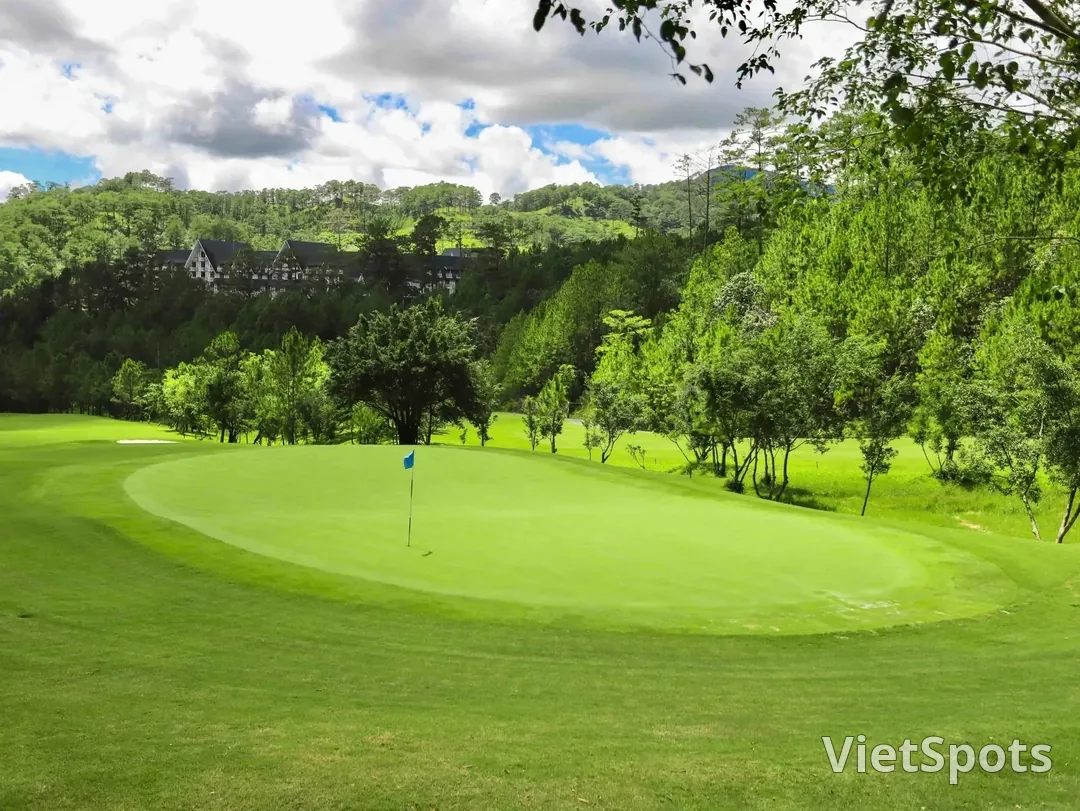
What bentgrass fears most is heat and humidity. When the soil heats up, old roots die off while new roots can't grow back in time, and the closer the green is mowed, the faster it weakens. Even in the southern United States, some courses have had to abandon bentgrass and switch to TifEagle. Bring this grass down to the lowlands of Vietnam, and it would almost certainly not survive.
Dalat Palace, a course nestled right beside Xuan Huong Lake among rows of old pine trees, has long been known as one of the rare courses in the region with bentgrass greens. Lam Dong now has at least three courses using bentgrass for their greens: Dalat Palace, SAM Tuyen Lam by Tuyen Lam Lake, and The Dalat at 1200 in Don Duong.
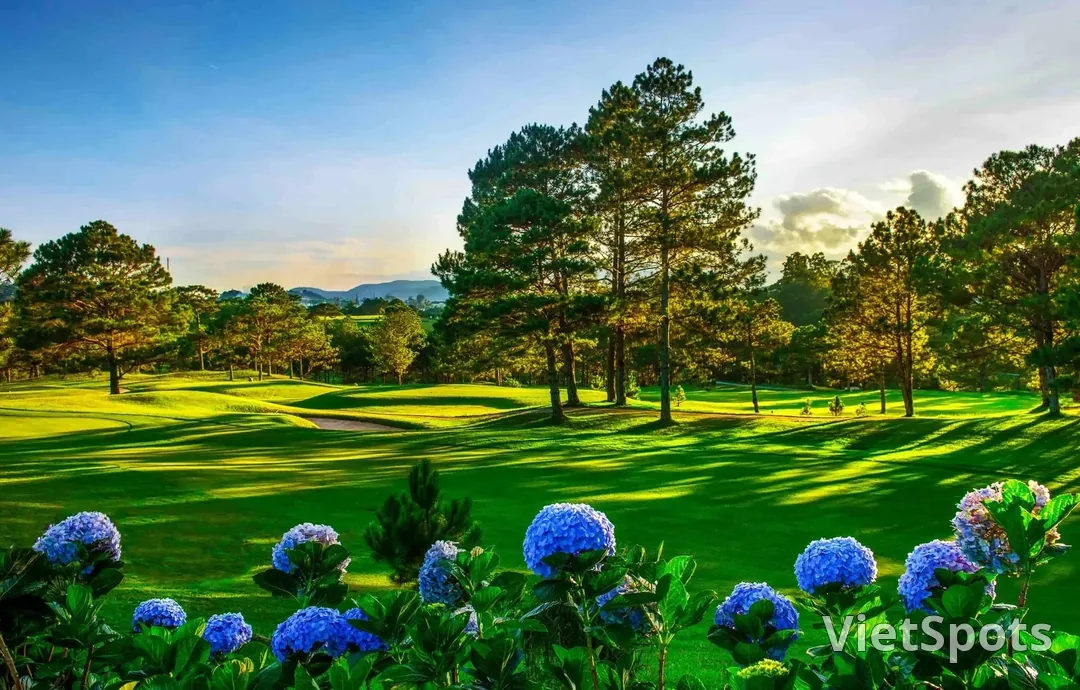
What's different when holding the sweeping stick?
Golfers used to playing on Bermuda often get caught off guard by their first putt in Da Lat. The bentgrass greens here are known for being fast, with a smooth surface, and the ball rolls farther than the stroke you're used to would suggest. A general piece of advice is to spend a few minutes on the putting green before heading out to hole 1, and to putt more gently than you think you need to.
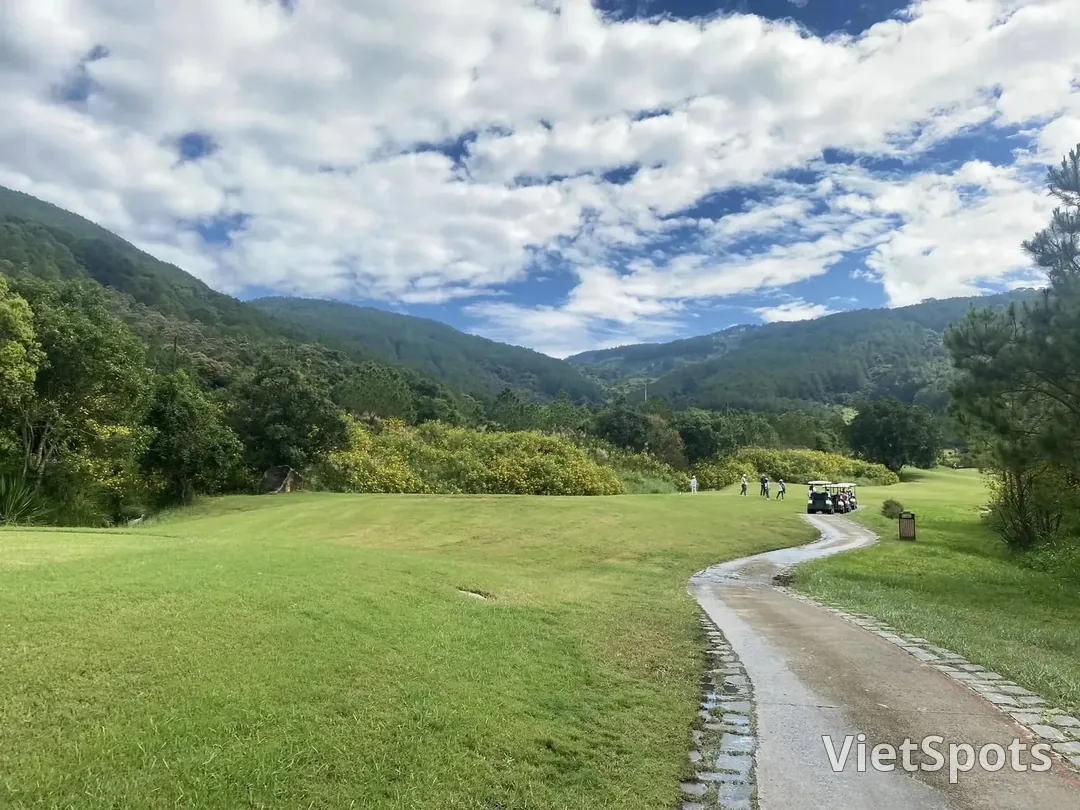
So next time you choose a course, besides who designed it and how long it is, you might want to ask one more question: what kind of grass is on the greens. The answer says quite a lot about where the course is located, and also which season is best to visit.
Photo: VietSpots.
Book Travel in Da Lat — in English on VietSpots
- 🎁 Sign up and get 17 Welcome Pack coupons — e.g. Motorbike Rental 45%
- 👑 Member tier discount up to 15% on site (Silver 5% · Gold 15%)
- 🛂 Auto-fill arrival card📶 Compare lowest eSIM prices🚻 Find toilets
Comments