

Why does a golf ball have hundreds of small dimples



Pick up a golf ball, and your fingers immediately touch the small dimples covering its entire surface. Most golf balls today have around 300 to 500 of these dimples. At a glance they might seem purely decorative, but they are exactly what make the ball fly far.
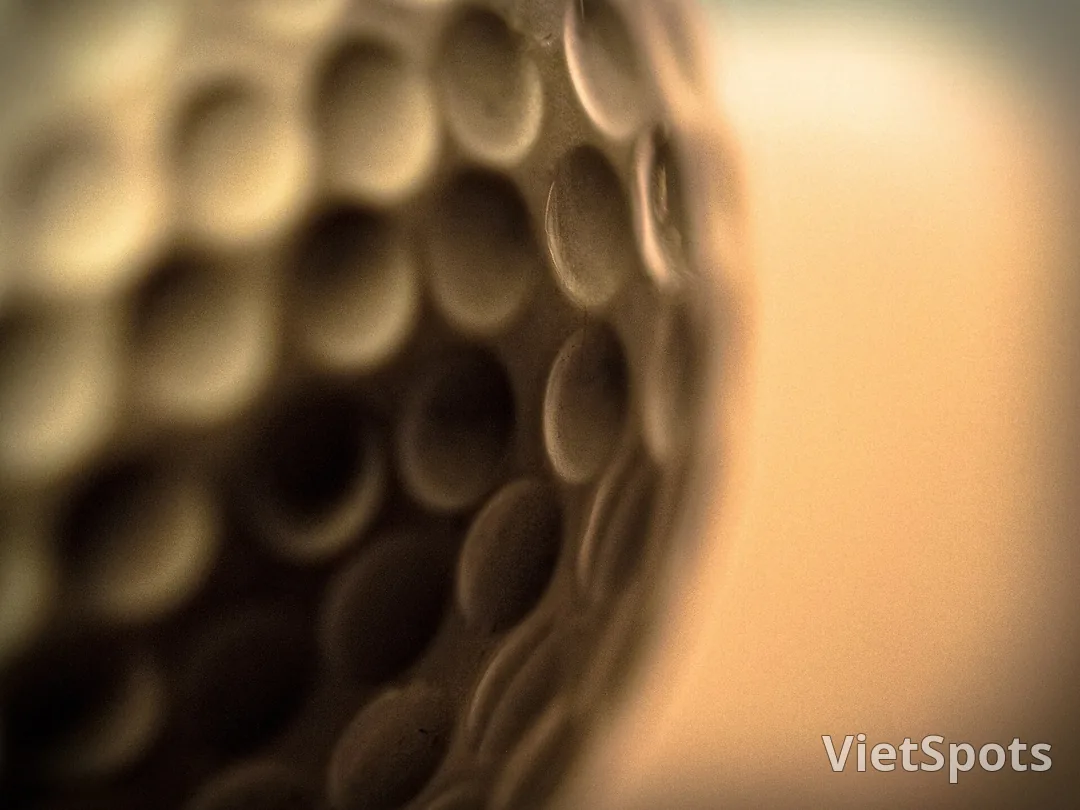
In the old days, golf balls were smooth
Before plastic balls existed, golfers used the featherie ball: a hand-stitched leather pouch tightly stuffed with boiled, softened chicken or goose feathers. A skilled craftsman could make only a few balls a day, so they were very precious.
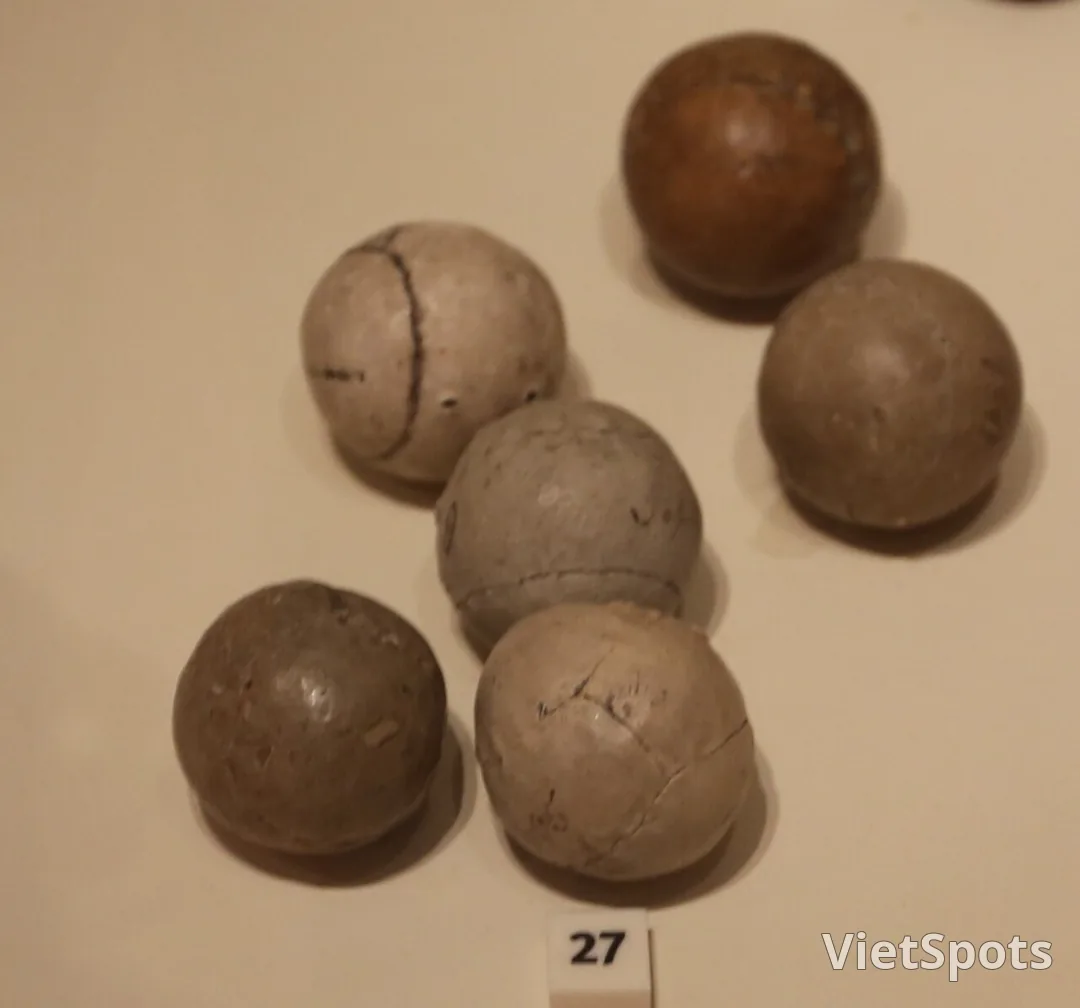
By the mid-19th century, balls made from gutta-percha tree sap replaced the featherie. The new balls were round and smooth. Then players noticed something strange: an old ball, scuffed and scarred after many hits, flew more steadily and farther than a brand-new one. Ball makers began using knives, or hammers and chisels, to carve marks into new balls in advance.
In 1905, English engineer William Taylor registered a patent for a type of dimple.
Why dimples help a ball fly farther
When a ball flies, there is a thin layer of air hugging its surface. With a smooth ball, this layer of air separates from the ball very early, leaving a large turbulent wake behind it. That wake holds the ball back.
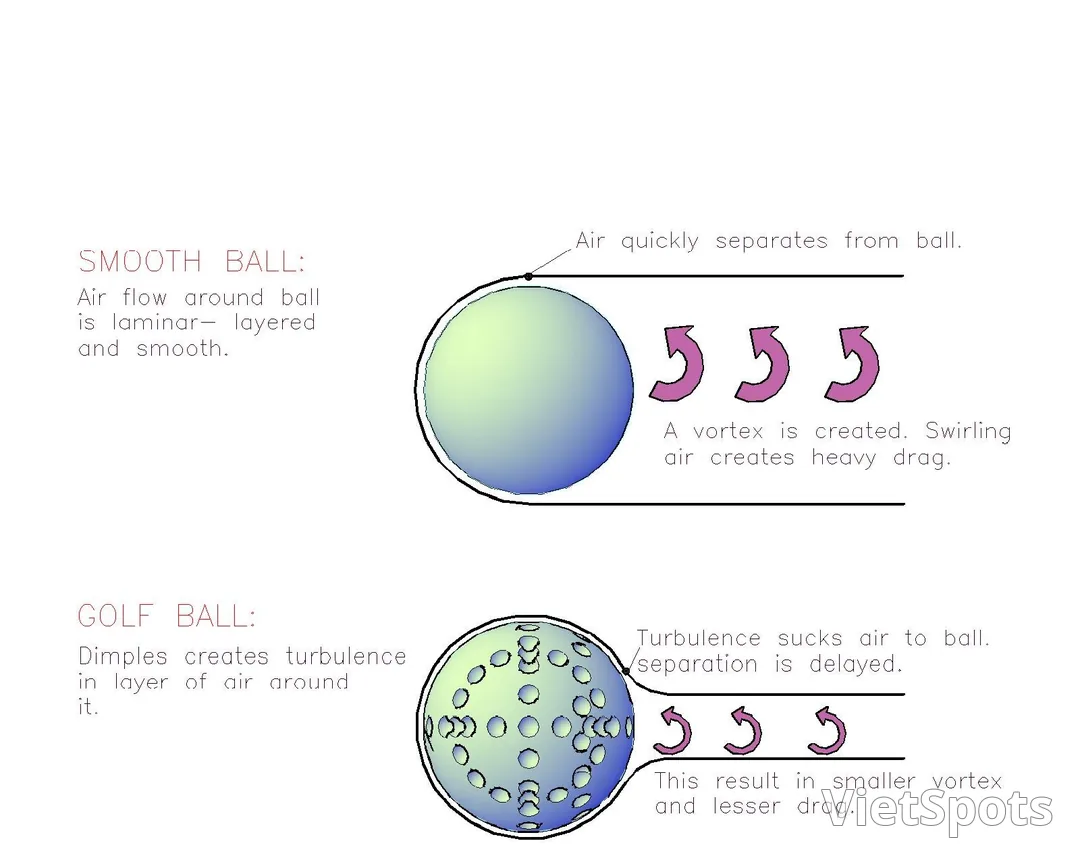
The dimples stir up the layer of air right next to the surface. This turbulent layer clings to the ball longer and separates later, so the wake behind it becomes smaller and the drag drops significantly. One more thing: the strike puts backspin on the ball, spinning it back toward the golfer, and thanks to the dimples, that spin generates more lift, keeping the ball in the air longer.
Putting the two together, many sources estimate that with the same stroke, a smooth ball travels only about half the distance of a dimpled ball.
More marks doesn't mean farther
Each manufacturer has its own design, and the number of indentations differs from one type to another. But the number doesn't decide everything: the width, depth and arrangement of the indentations matter just as much. That's why no single number is considered the best.
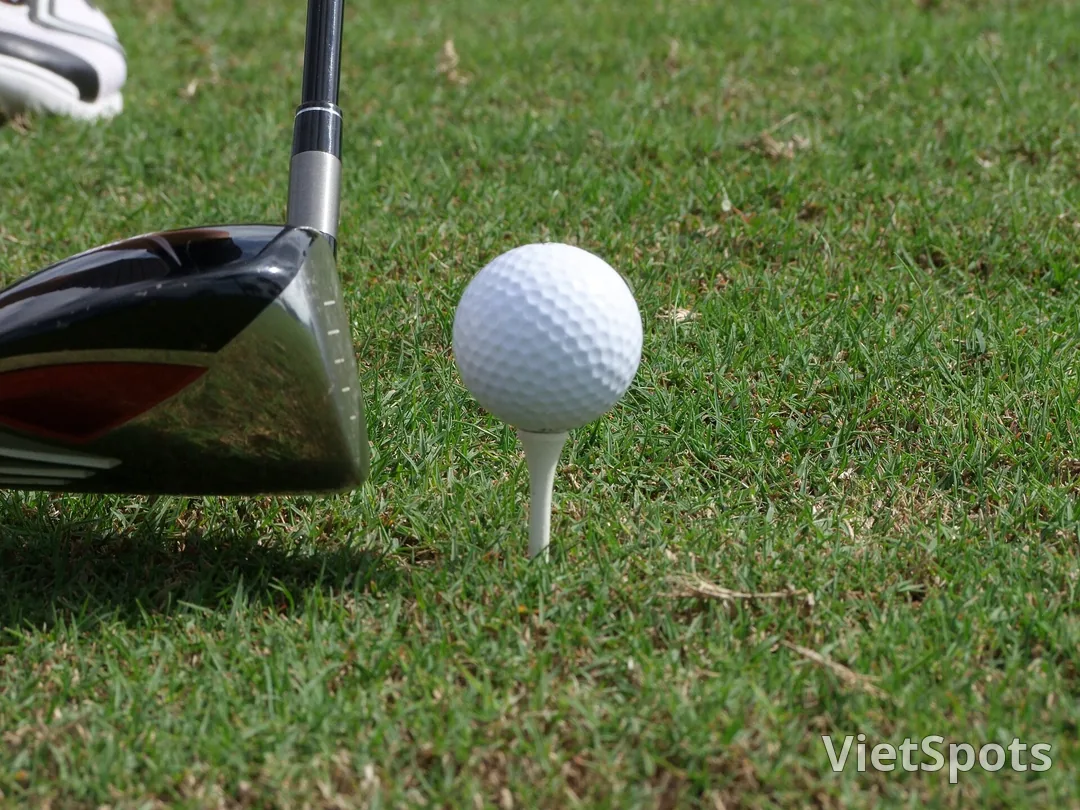
Next time you head out to the course, whether in Da Nang or on a seaside links course, try picking up the ball and taking a closer look at it. On it are more than a hundred years of golfers searching for ways to hit the ball a few meters farther.
Photos: TBIT, Geni, Prakul varshney, Stefanschenkon — Wikimedia Commons.
Book Travel in Da Nang — in English on VietSpots
- 🎁 Sign up and get 18 Welcome Pack coupons — e.g. Motorbike Rental 45%
- 👑 Member tier discount up to 15% on site (Silver 5% · Gold 15%)
- 🛂 Auto-fill arrival card📶 Compare lowest eSIM prices🚻 Find toilets
Comments